Colorful Apartment Ideas That Make Small Spaces Feel Bigger and Bolder
Small square footage doesn’t mean a boring apartment. It just means you have to be smarter about where color goes. The best apartment decor ideas don’t require ripping out walls or breaking your lease agreement, they just need a little strategy and a willingness to commit to a shade you actually love.
This guide walks through nineteen ways to bring real personality into a rental or an owned unit, from picking a color scheme that fits your mood to hiding the ugly stuff nobody wants to look at. Whether you’re working with a full studio apartment or a sprawling penthouse apartment, there’s a trick here that fits your space.
How to Choose a Color Palette for Your Apartment (Mood, Undertones, and Balance)
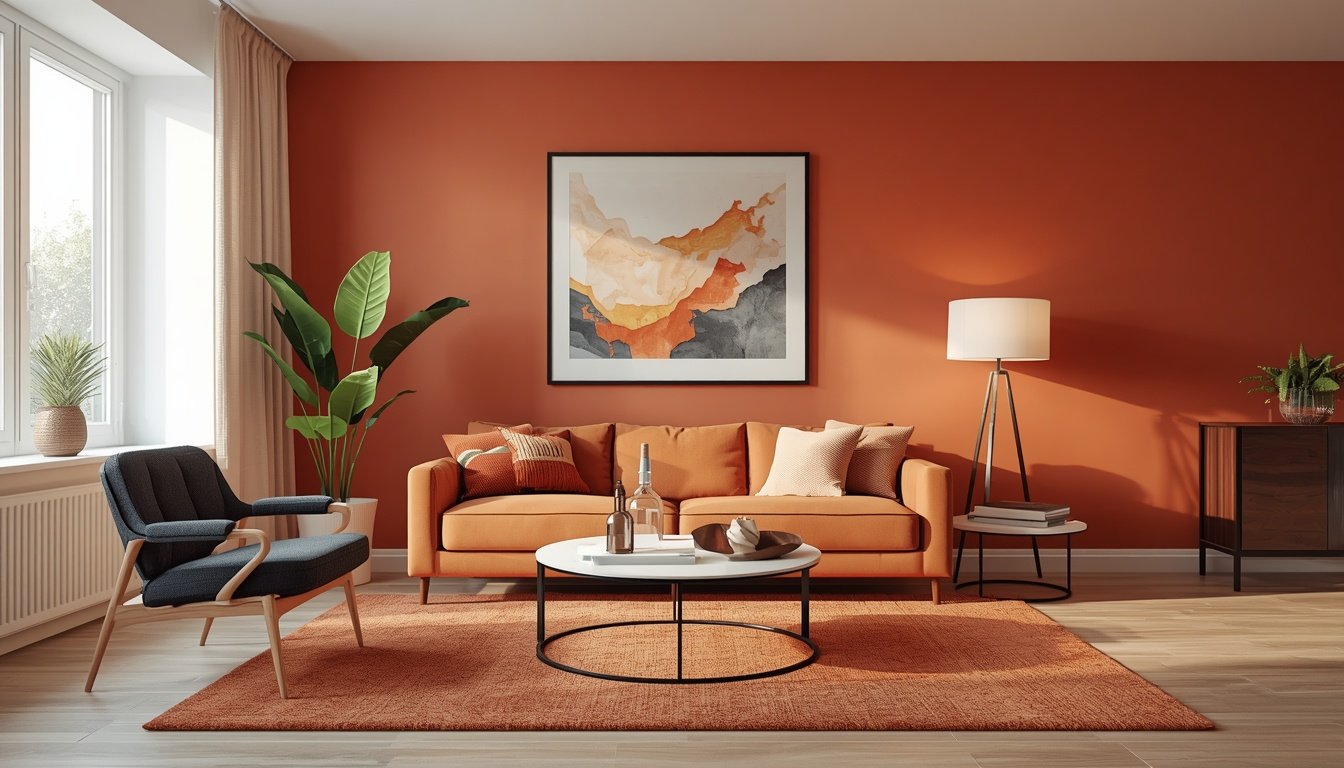
Before you buy a single throw pillow, think about how you actually want a room to feel. Warm tones like red, orange, and yellow tend to make a space feel cozy and alive, while cool tones like blue, green, and purple lean calm and grounded. Most successful interior design ideas start here, with a mood first and a shopping list second, because picking colors in the wrong order almost always leads to a mismatched room. For a deeper breakdown of how specific hues shift a room’s energy, this guide on picking a luxury living room color palette walks through the exact logic professional designers use.
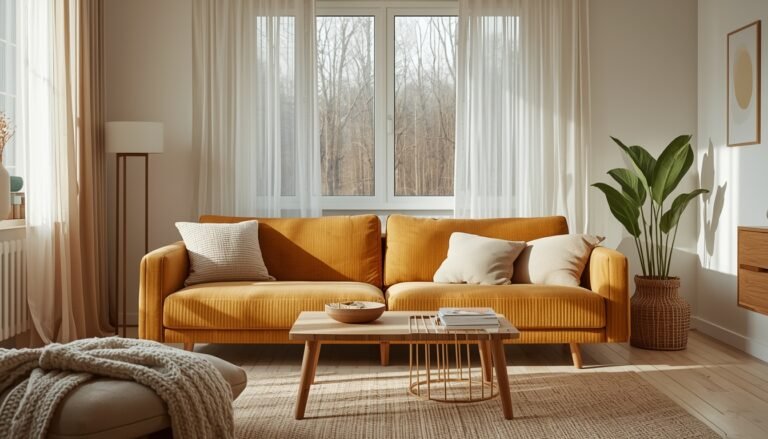
Balance matters just as much as mood. A room built entirely from warm, saturated colors can start to feel closed-in, while an all-cool palette risks reading as sterile and cold. The safest approach mixes one dominant hue, one supporting tone, and a neutral to keep things from tipping into visual chaos. If you’re curious about how something as simple as a sofa’s shade shapes a guest’s first impression, this piece on sofa color psychology breaks down exactly why that one piece carries so much weight in a room.
Warm vs Cool: Quick Reference
| Palette Type | Colors | Mood It Creates |
|---|---|---|
| Warm | Red, orange, yellow, pink | Energetic, cozy, inviting |
| Cool | Blue, green, purple, gray | Calm, grounded, clean |
| Neutral base | White, black, tan | Balancing, timeless |
Accent Walls and Statement Walls Done Right
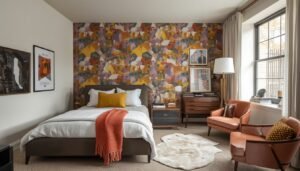
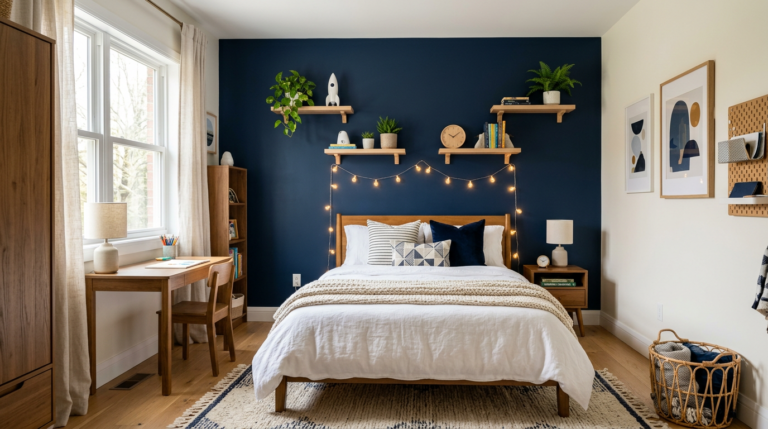
A statement wall remains one of the fastest ways to add serious color without touching the rest of the room. Bold print wallpaper, a rich accent color, or even a textured material like wood veneer can turn one flat surface into the whole personality of a space. Small bedrooms benefit especially, since a single wall of color reads as intentional rather than overwhelming, unlike four walls painted the same saturated shade.
If you’re not ready to commit permanently, or you live in a rental apartment where painting isn’t an option, removable wallpaper solves the problem completely. It goes up and comes down without damaging the surface underneath, which makes it the go-to choice for anyone unsure how long they’ll stay put. This flexibility is exactly why statement walls show up so often in small New York layouts, from a tight West Village apartment to a compact Nolita apartment where every surface has to earn its place.
Renter-Friendly Statement Wall Options
Peel-and-stick wallpaper, fabric panels, and even large-scale framed prints all deliver the same visual punch as paint, minus the security deposit risk.
Bold Rugs and Layered Textiles for Instant Color

An area rug pulls a room together faster than almost any other single purchase, and it’s one of the easiest ways to add color if your furniture stays neutral. A patterned Moroccan Berber rug, for example, can introduce five or six colors into a room without creating chaos, since all that visual noise stays contained to the floor. This trick works especially well in a rented Manhattan apartment, where walls might be off-limits but floors are fully yours to style.
Layering matters here too. Throw pillows, blankets, and smaller textiles let you test a bolder shade before committing to something bigger. An interior designer working on a tight pied-à-terre will often reach for exactly this trick, since it adds richness without needing more square footage. A rug in a confident pattern paired with a couple of solid-colored throw pillows, plus a stack of favorite records left out where guests can flip through them, creates depth without turning the room into a pattern free-for-all.
Gallery Walls and Textured Wall Art
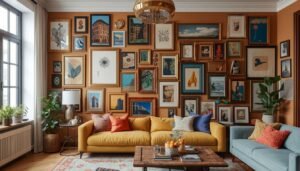
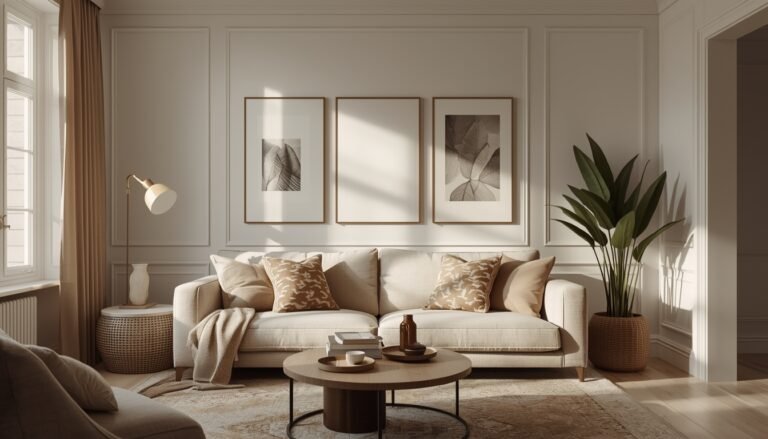
A gallery wall might be one of the most common apartment decor tricks out there, but it earns its popularity honestly. Mixing frame sizes, colors, and even mediums, photography next to a painting next to a print, creates a collected-over-time feel that instantly makes a rental look more like home. For step-by-step guidance on spacing, sizing, and creating a true focal point instead of a random cluster, this guide to layering living room wall art covers the exact technique.
Textured wall art adds another layer entirely. Soft, woven pieces bring dimension that flat framed prints can’t match, and they double as a safety feature above a couch or seating area where a hard frame might get knocked loose. Combine a textile piece with a couple of framed artwork pieces from your own book collection or travel finds, and the wall starts to feel genuinely personal rather than purchased as a set.
Building a Gallery Wall That Feels Curated, Not Cluttered
Lay pieces out on the floor first, keep at least two inches between frames, and resist the urge to fill every inch of blank wall space.
Colorful Furniture: Mixing Chairs, Sofas, and Statement Seating
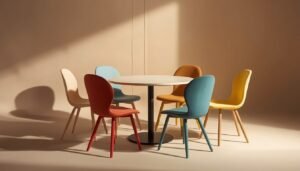
Matching furniture sets can feel stiff, and in a small apartment, mismatched pieces actually read as more intentional. Choosing to mix and match chairs instead of buying a uniform set, whether that means thrifting different pieces over time or doing some light DIY upholstery to unify colors across otherwise unrelated chairs. This approach costs far less than a full furniture overhaul and adds far more personality per dollar spent.
Low seating deserves attention too, especially in apartments with lower ceilings, where oversized furniture can make a room feel cramped. A loveseat tucked into a corner solves the small-sofa problem while still leaving room for a cozy reading nook. And if your dining setup allows for it, a built-in seating bench along one wall of the dining table saves square footage while adding hidden storage underneath. For more ways to make a compact dining area feel intentional rather than squeezed, this guide to small dining room ideas covers layout tricks worth stealing.
Built-In Seating for Small Dining Areas
A bright, upholstered built-in bench does double duty: it adds a pop of color and frees up floor space that a full set of chairs would otherwise eat up.
Ceiling and Overhead Color (Put the Ceiling to Work)
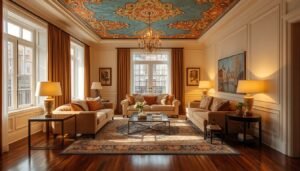
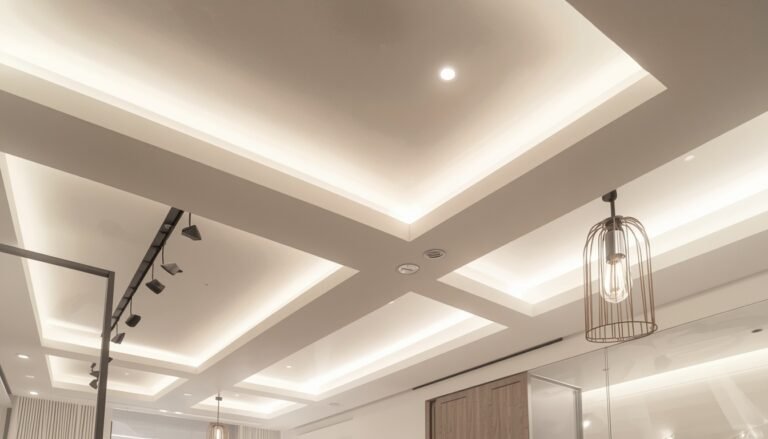
Most people paint four walls and leave the fifth surface, the ceiling, completely untouched. That’s a missed opportunity. A painted ceiling, even a subtle one, instantly makes a room feel more finished and more lived-in, and matching ceiling color to the walls can make a small room feel taller by removing the visual break where wall meets ceiling. Some designers go further with materials like venetian plaster for texture and depth overhead.
A ceiling fan in a coordinating color adds function without breaking the visual flow you’ve built, and in a more formal room, a small chandelier can carry the same overhead impact with a touch more sparkle. Rather than settling for a plain white fan that clashes with everything below it, choose a finish that matches nearby trim or furniture, the same way a well-placed fixture can tie a whole room’s palette together from above.
Open and Low Shelving to Display Color
Open shelving gives you two things at once: storage and a place to show off color through the objects you already own. A shelf that keeps records on display, or a small magazine rack tucked near a reading chair, adds extra storage space without ever feeling purely functional. Whether it’s in a kitchen, bathroom, or bedroom, open shelves add dimension that closed cabinets simply can’t, since nothing about a solid cabinet door invites the eye in the way a curated shelf does.
Low shelving works especially well for anyone who wants that full-bookshelf look without owning hundreds of books. A single low bookcase filled with a mix of books, small plants, and colorful objects can frame a window or define an entryway, doing far more visual work than its size suggests.
Styling Low Shelving Without It Looking Cluttered
Group items in odd numbers, vary height with small risers or stacked books, and leave some breathing room between groupings so the eye has somewhere to rest.
Colorful Lighting: Sconces, Lamps, and Mood Lighting
Whether your taste leans minimalist or full maximalist, sconces make a space feel considered in a way overhead lighting alone rarely manages. They’re also a genuine square footage saver, working in tight hallways and corners where a floor lamp simply wouldn’t fit.
Beyond sconces, a colorful lamp base or a shade in an unexpected hue adds warmth and personality to a corner that might otherwise go unnoticed. Layering two or three light sources at different heights, a sconce, a table lamp, and overhead lighting, creates the kind of warm, dimensional glow that a single bright bulb never will.
Small Furniture Pieces That Pack a Color Punch

You don’t need a room full of statement furniture to make an impact. A single bold pouf or ottoman gives you flexible extra seating for guests and a splash of color in one small package, and its size makes it a natural fit even for the tiniest studio apartment.
A slim coffee table in an unexpected color or material works the same way, adding personality without demanding much floor space. If you’ve got the square footage to spare, a compact bar area with a colorful bar cart or a small wet bar setup turns glassware and bottles into part of the decor rather than clutter tucked in a cabinet.
Mirrors and Reflective Surfaces to Bounce Color Around a Room
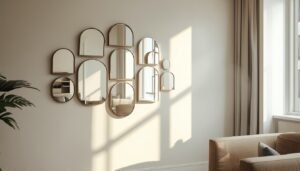
When natural light is limited, and it often is in apartment living, mirrors become one of your most useful design tools. A cluster of mirrors near a window multiplies whatever light does come in, brightening a room without adding a single new light fixture.
Beyond function, an arched or uniquely shaped mirror doubles as art. A repeated row of matching mirrors leading toward a window creates a rhythm that feels calming and considered, proving that a purely practical fix can also become one of the room’s best-looking features.
Accessorizing the Kitchen and Hidden Storage
Even renters who can’t touch cabinets or appliances have plenty of room to add color through kitchen accessories. Bright dishcloths, patterned oven mitts, and a fun floor mat all bring personality to a space that otherwise feels stuck with someone else’s finishes. For a full breakdown of how color transforms an entire kitchen, from kitchenware to countertops, this guide on making a colorful kitchen look magazine-worthy is worth a look, and if you’re drawn to a specific decade’s palette, these retro kitchen ideas cover the checkerboard-and-chrome side of the trend.
Hidden storage solves a different problem entirely: what to do with the stuff you don’t want on display. A cabinet, ottoman, or bench with built-in hidden storage keeps clutter out of sight while still leaving room for color everywhere else in the room.
Concealing Radiators Without Losing Style
Learning to conceal radiators well can transform a whole room. A radiator cover doesn’t have to be an afterthought. Caning panels or a simple painted box with green trim to match nearby accents can turn an eyesore into a piece that actually adds to the room instead of detracting from it.
Bedroom Color Details: Headboards and Floating Nightstands
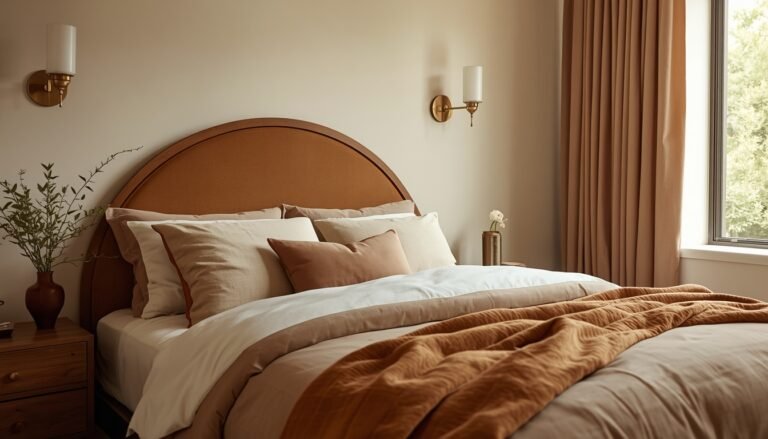
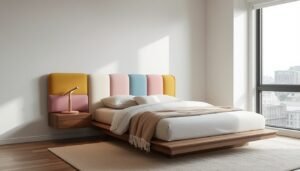
A headboard doesn’t have to be purely decorative. Choosing one with a built-in ledge lets it double as a shelf for candles, a small vase, or a favorite framed photo, skipping the need for a nightstand entirely in especially tight bedrooms. Some homeowners even use wallpaper as artwork behind the bed instead of a traditional headboard, letting a single striking panel do all the visual work. This kind of dual-purpose thinking shows up again and again in well-planned small bedrooms, the same instinct behind these master bedroom makeover ideas that turn plain layouts into something considerably more stylish.
Floating nightstands solve the same square-footage problem from a different angle. Mounted rather than freestanding, they free up visible floor space, which makes even a genuinely small bedroom read as more open and airy.
Dividers, Runners, and Transitional Color Touches
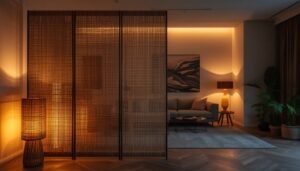
Open-plan apartments often need a way to define separate zones without fully closing them off, and a subtle divider, whether it’s a standing screen or something built directly into the layout, adds structure and a bit of mystery to a space. It doesn’t need to block light or airflow to do its job well.
A hallway runner handles a similar transitional role, dressing up a stretch of the apartment that’s easy to forget entirely. Even in a modest space, a runner in a bold pattern makes the walk from the front door to the living room feel like part of the design rather than an afterthought.
Unusual Bookcases and Statement Storage Pieces

A bookcase with shelves of varying heights and widths adds far more personality than a uniform, symmetrical unit ever could. It takes the pressure off curating a perfectly matched collection, since the irregular structure itself becomes the visual interest. That same appreciation for collected, slightly imperfect display is the whole spirit behind cottagecore decorating, where nothing needs to match perfectly to feel right.
A pedestal works in a similar spirit on a smaller scale. Placed near an entryway, it can hold a plant, a piece of art, or simply stand as a small architectural moment, and a well-placed pedestal can even help disguise an ugly intercom box near the front door.
Creating a Colorful Workspace or Office Nook
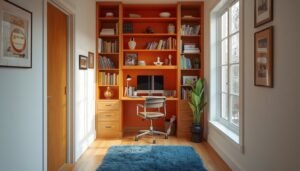
An office nook doesn’t need its own room to feel functional, and a small home office corner can work just as well as a dedicated room. A gap at the end of a hallway, a corner of the bedroom, or even a converted closet can hold a small desk and still leave the rest of the apartment untouched. Building the workspace between two walls creates a natural sense of enclosure that makes focusing easier, especially with a piece of custom wallpaper behind the desk to make the corner feel deliberate rather than squeezed in.
Color plays a bigger role here than people expect. A single wall in a bold shade behind the desk, or a colorful desk itself, keeps the nook from feeling like a sterile, forgotten corner and instead makes it feel like an intentional part of the home.
Bringing Color Outdoors: Balconies and Patios

If your apartment includes any kind of outdoor space, a balcony or a patio, treat it as an extension of the interior rather than an afterthought. Furniture, planters, and even a small rug can carry your indoor color scheme outside, making the whole apartment feel bigger than its square footage suggests. Seasonal touches matter too, and this guide to winter window box ideas offers a good starting point for keeping that outdoor color going even in colder months.
Drawing the eye toward a balcony or patio, rather than letting it sit ignored, makes the whole apartment feel more immersive. Good outdoor styling doesn’t dilute a cozy indoor feel, it extends it.
Renter-Friendly Ways to Add Color Without Painting
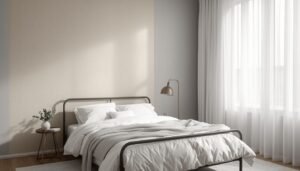
Plenty of renters assume color means painting, and painting means a fight with a landlord or a security deposit on the line. That’s simply not true anymore. Removable wallpaper, colorful rugs, bold textiles, and swappable hardware all deliver serious color with zero permanent commitment. Many of the same space-stretching, commitment-light tricks used in compact housing show up in these mobile home design tricks, since small rentals and small owned homes solve a lot of the same problems.
Furniture and accessories carry even more weight in a rental, since they’re the pieces you actually control. A bold sofa, a patterned rug, and a couple of statement lamps can transform a beige box of a rental apartment into something that feels genuinely yours, all without touching a single wall.
Budget-Friendly Colorful Decor Ideas

A full apartment refresh doesn’t require a full budget. Paint remains the cheapest, highest-impact option where it’s allowed, but even where it’s not, small swaps add up fast. Vintage pieces from thrift stores or an antique shop bring in color and character for a fraction of retail prices, and they tend to have more personality than anything mass-produced.
Textiles offer the same value. A new throw pillow cover, a small area rug, or a set of colorful curtains costs far less than new furniture but changes the whole feel of a room. Save any bigger splurge, like a statement sofa or a bold rug, for the one piece that’ll anchor the whole space.
Common Mistakes When Decorating a Colorful Apartment
The most common misstep is going too big, too fast. Painting every wall a different saturated color at once, without any neutral to rest the eye, usually creates chaos instead of the vibrant, curated look most people are after. Successful colorful apartments almost always build around one or two dominant colors, with everything else playing a supporting role.
The second common mistake is ignoring scale. A pattern or color that looks great in a large showroom photo can feel completely overwhelming in a genuinely small apartment. Testing swatches and fabric samples in your actual space, under your actual lighting, prevents a lot of expensive regret.
Bringing It All Together
A truly colorful apartment isn’t about throwing every bright shade you like into one room. It’s about picking a palette with intention, layering in visual interest through rugs, art, and furniture, and using every surface, walls, ceilings, even a radiator cover, as an opportunity rather than a problem to hide. Whether you’re working with a tiny Silver Lake apartment or a roomy Paris apartment, the same principles scale up or down without losing their impact.
The best part is that none of this requires permanence. Rugs move, wallpaper peels off, and furniture gets rearranged. Treat your small apartment as a space you can keep adjusting, and you’ll end up with a genuinely cozy space that reflects exactly where you are right now, not a showroom frozen in time.
People also ask
How do I add color to a small apartment without it feeling cluttered? Stick to one or two dominant colors, keep a neutral base on the walls or floor, and let a few bold pieces, like a rug or an accent chair, do most of the work.
Can renters really decorate with color without losing their deposit? Yes. Removable wallpaper, rugs, textiles, and swappable hardware all add serious color and come off cleanly when you move out.
What’s the easiest colorful decor idea for beginners? A bold area rug. It adds several colors at once, sits low in the visual field, and doesn’t require any commitment to furniture or walls.
Should ceilings match the walls in a colorful apartment? It works well in small rooms specifically, since removing the visual break between wall and ceiling can make the space feel taller and more cohesive.
How many colors should one room have? Most designers recommend one dominant color, one supporting tone, and a neutral, which keeps a room feeling vibrant without tipping into visual chaos.