Cottagecore Decorating Ideas: The Complete Guide to Cozy Country-Style Living
There’s something magical about a cottagecore living room that makes you want to slow down the moment you walk in. It’s not about following a strict rulebook, it’s about blending comfort with charm in a way that feels lived-in rather than staged. Think soft layered textiles, a touch of rustic decor, and furniture that tells a story instead of matching perfectly.
Whether you’re working with a cozy apartment corner or a full-sized living room, these Cottagecore Living Room Ideas bring warmth, texture, and a bit of old-world charm into everyday life. Let’s break down exactly how to get there, piece by piece.
What Is Cottagecore Decor? (And Why Everyone’s Obsessed With It)
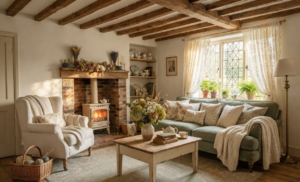
At its heart, cottagecore is a celebration of slower living. It borrows from the visual language of old farmhouses, English countryside cottages, and grandma’s kitchen, then reshapes it for modern homes. Think soft lighting, handmade textures, and a general sense that nothing here was mass-produced in a warehouse. It’s less about following strict rules and more about capturing a feeling: safety, nostalgia, and a deep connection to nature. That’s why so many people searching for home decor trend ideas land here first. It scratches an itch that sleek, minimalist design just doesn’t.
People often confuse cottagecore with its design cousins, so let’s clear that up. Farmhouse decor leans more structured, with a lot of black-and-white contrast and shiplap. Grandmacore is cottagecore’s quirkier sibling, embracing doilies, crochet, and a slightly maximalist attitude toward collectibles. Then there’s coastal grandmother style, which takes the same relaxed spirit but swaps earthy browns for linen whites and ocean-inspired blues. Cottagecore sits in the middle of all these, borrowing a little rustic decor from farmhouse style, a little sentimentality from grandmacore, and a whole lot of nature-inspired decor from its rural roots.
| Style | Core Vibe | Signature Colors | Best For |
|---|---|---|---|
| Cottagecore | Whimsical, nostalgic, nature-driven | Soft earth tones, florals | Bedrooms, kitchens |
| Farmhouse | Structured, rustic | Black, white, wood tones | Living rooms, kitchens |
| Grandmacore | Sentimental, collected | Warm neutrals, florals | Cozy nooks, sitting rooms |
| Coastal Grandmother | Relaxed, breezy | Creamy whites, blues | Bedrooms, sunrooms |
If you’re not sure which direction fits your space, it might help to take an interior design quiz before committing to a full room overhaul. It’s a quick way to confirm whether cottagecore genuinely matches your taste or whether you’re leaning toward one of its neighboring styles instead.
As for staying power, this isn’t a fad that’s going to vanish in a year. Google Trends data has shown consistent, sustained interest in cottagecore since it first broke into the mainstream, and interior designers keep pointing to it as one of the few aesthetics that’s grown more popular post-pandemic, not less. People want their homes to feel like a retreat, and this modern cottage style delivers exactly that.
The Cottagecore Color Palette — Earthy, Soft & Timeless Tones
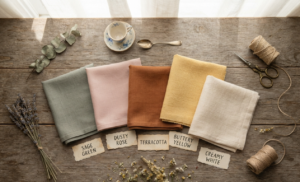
Color sets the entire mood of a cottagecore room, so it’s worth spending real time here before you touch furniture or fabric. The palette leans heavily on soft earth tones: think sage green, dusty rose, buttery yellow, and warm terracotta. These shades all have one thing in common. They mimic what you’d find outdoors, in a wildflower field or along a wooded trail, which is exactly the point.
Pastel hues play a huge role too, but not the neon-adjacent pastels you’d see in a nursery. Cottagecore pastels are muted and a little dusty, almost like they’ve faded gently in the sun over years of use. Pair these with creamy whites on trim, ceilings, or larger furniture pieces, and you get a palette that feels calm rather than chaotic. A common mistake people make is going too bold with an accent wall. This style rewards restraint far more than drama.
“Cottagecore color schemes work best when they look like they happened naturally, not like they were color-matched from a swatch book,” notes one interior stylist featured in a recent Better Homes & Gardens roundup on countryside-inspired interiors.
Here’s a simple breakdown of colors that tend to work well together in this style:
| Color Category | Examples | Where to Use |
|---|---|---|
| Base neutrals | Creamy white, oatmeal, soft beige | Walls, large furniture |
| Earthy accents | Sage green, terracotta, mustard | Textiles, accent chairs |
| Pastel touches | Dusty pink, powder blue, buttery yellow | Curtains, small decor |
| Grounding tones | Warm brown, walnut | Wood furniture, trim |
If you’re worried about commitment, start small. A floral wallpaper in one corner or a set of pastel throw pillows can test the waters before you repaint an entire room.
Key Cottagecore Materials — Wood, Wicker, Linen & Natural Textures
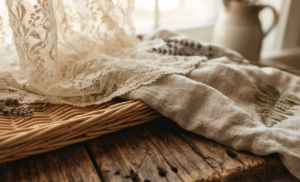
Materials do a lot of heavy lifting in this style, arguably more than color does. Cottagecore leans almost entirely on natural, tactile textures, which is what separates it from more industrial or ultra-modern interiors. Reclaimed wood and distressed wood show up constantly, whether as flooring, shelving, or furniture with a bit of history baked into the grain. There’s something honest about a table that clearly wasn’t churned out on an assembly line, and that honesty is central to the whole look.
Hardwood floors are practically non-negotiable if you’re going for an authentic feel, though you don’t need to rip out carpet to get there. Peel-and-stick wood-look vinyl has come a long way and can mimic the effect convincingly in a rental. If your home already has exposed wood beams, consider yourself lucky. They’re one of the most sought-after architectural features for this style, and homeowners without them sometimes install faux beams just to get the effect.
Then there’s texture from woven materials. Wicker baskets aren’t just storage, they’re a design statement, showing up as light fixtures, chairs, and even wall art. Linen fabric covers everything from curtains to bedding, prized for its slightly rumpled, lived-in look. Pair it with lace curtains for a softer, more delicate finish near windows, especially in bedrooms and kitchens where natural light needs a gentle filter rather than a hard block.
Beyond wood and fiber, small organic textures round everything out. Dried flowers, woven baskets, stoneware pottery, and even a simple bowl of pinecones add depth without adding clutter. The goal is a room that feels gathered over time rather than purchased in one weekend trip.
Cottagecore Living Room Ideas
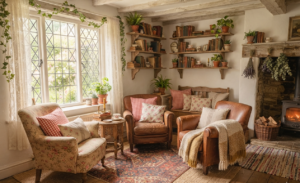
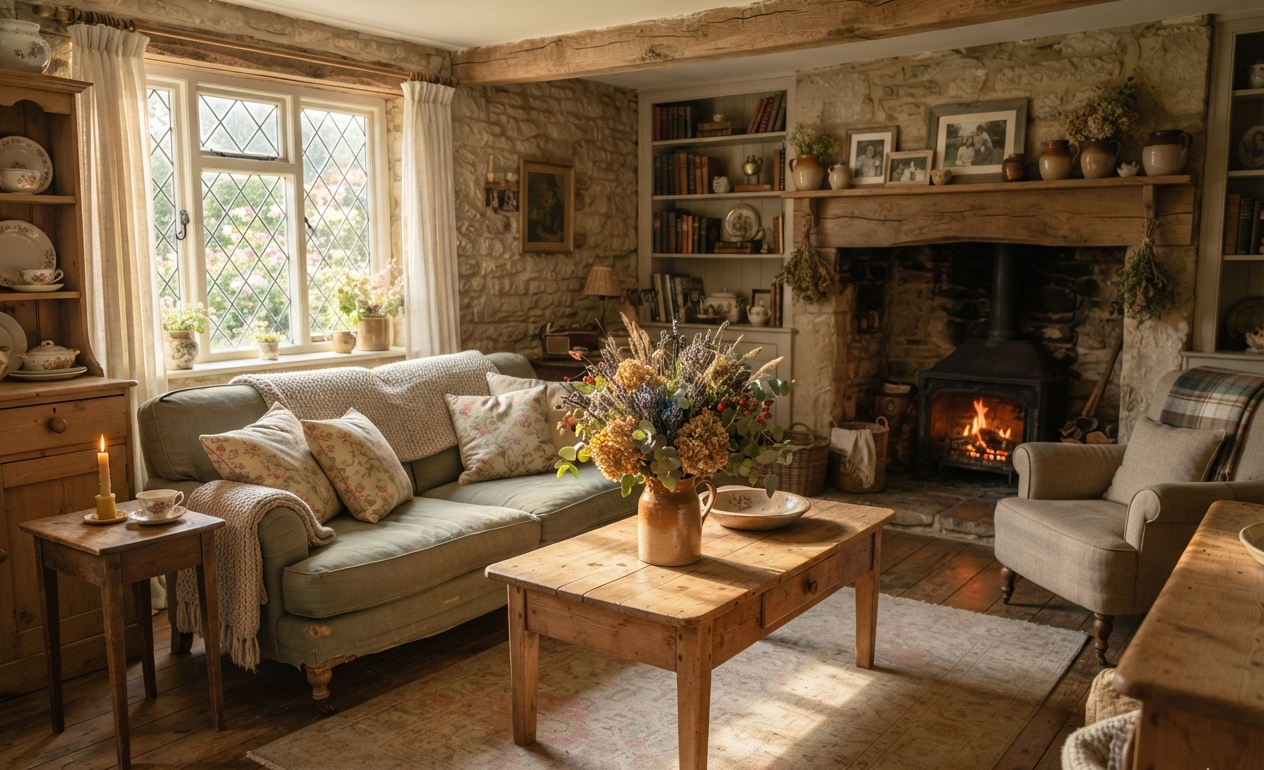
A cottagecore living room should feel like the kind of place where you’d curl up with a book and lose track of time. Structurally, this starts with furniture. Look for pieces with soft, rounded silhouettes rather than sharp modern lines. Vintage furniture works beautifully here, and you don’t need matching sets. In fact, mismatched pieces collected over time actually read as more authentic than a coordinated furniture set from a big-box store.
Layering is the secret weapon in any cottagecore living room. Layered textiles across the sofa, a mix of plaid and gingham throw pillows, and a chunky knit blanket draped over an armchair all work together to create visual warmth. Don’t be afraid to mix patterns as long as the color palette stays consistent. This is where the country chic side of the style really shines, blending comfort with a bit of visual interest rather than sticking to one safe pattern.
A reading nook deserves its own mention here because it’s become one of the most requested features in cottagecore living rooms. All it takes is a comfortable armchair, a small side table, a reading lamp, and good natural light. Tuck it into a bay window if you have one, or carve it out of an underused corner. Add wall-mounted shelves nearby for books and small plants, and you’ve built a retreat within a retreat.
For flooring and walls, wainscotting and hardwood floors anchor the room in that old-world charm the style is known for. If your walls feel a little bare, a botanical prints gallery wall or a section of floral wallpaper on one accent wall adds personality without overwhelming the space.
| Element | Cottagecore Choice | Budget Alternative |
|---|---|---|
| Seating | Vintage upholstered armchair | Thrifted chair reupholstered in linen |
| Flooring | Reclaimed hardwood | Peel-and-stick wood vinyl |
| Wall Feature | Floral wallpaper accent wall | Framed botanical prints |
| Textiles | Layered rugs and throws | Single vintage-style area rug |
Cottagecore Bedroom Ideas
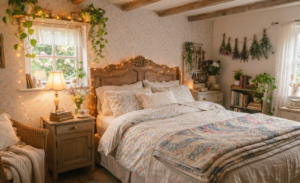
If any room in the house deserves the full cottagecore bedroom treatment, it’s this one. Bedrooms are private, personal, and give you full permission to lean into the whimsical decor side of the style without worrying about guests. Start with the bed itself. Floral bedding in a soft, muted print instantly sets the tone, especially when paired with a vintage quilt folded at the foot of the bed. Quilts add texture and a sense of history, and even a new one designed to look aged fits the mood.
Lighting plays a bigger role here than people expect. Fairy lights strung along a headboard or wrapped around a bedpost create that soft, almost storybook glow the style is known for. Pair them with a vintage lamp on the nightstand for a warmer, more grounded light source during the evening. Battery-operated candles are a smart addition too, giving you the flicker of real flame without the fire risk near bedding.
Walls deserve attention as well. A ditsy florals wallpaper, which features small, densely packed flower patterns, works beautifully as a headboard-wall feature. If wallpaper feels like too much commitment, peel and stick wallpaper has become a favorite workaround for renters who still want that same visual impact without a long-term change to the wall.
Finish the room with soft furnishings. Throw pillows in complementary florals or solid earth tones, a woven area rugs underfoot, and sheer curtains that let morning light filter in gently all pull the space together. The overall goal is a bedroom that feels less like a showroom and more like a page out of a storybook aesthetic, somewhere between a countryside cottage and your favorite childhood memory.
Cottagecore Kitchen Ideas
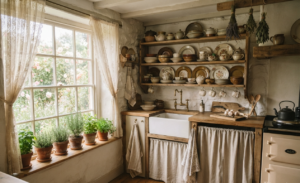
Kitchens have quietly become one of the most popular rooms to redesign in this style, and it makes sense. Cooking and gathering are already central to the country living decor philosophy, so the kitchen naturally becomes a showcase. Open shelving is the single most requested feature here, replacing upper cabinets with exposed shelves that display ceramic dishes, glassware, and stoneware in an organized, almost curated way.
Greenery brings the kitchen to life. A small herb garden on the windowsill, whether it’s basil, thyme, or rosemary, adds both visual charm and practical use. If you tend to forget to water things, self-watering planters solve that problem without sacrificing the aesthetic. It’s a small upgrade that keeps your herbs alive and your kitchen looking intentional rather than neglected.
Soft textiles round out the space in ways people don’t always expect from a kitchen. Lace curtains over the sink window filter light beautifully, while linen fabric tea towels and table runners add a gentle, homespun texture. A farmhouse sink, deep and practical, ties the whole room together and remains one of the most iconic features of this style. Pair it with a classic bridge-style faucet in an aged brass or matte black finish for that lived-in, old-world feel.
| Feature | Purpose | Style Impact |
|---|---|---|
| Open shelving | Display and storage | High visual charm |
| Farmhouse sink | Functional centerpiece | Strong old-world charm |
| Herb garden | Fresh ingredients | Adds greenery and life |
| Lace curtains | Light filtering | Soft, delicate touch |
Cottagecore Bathroom Ideas
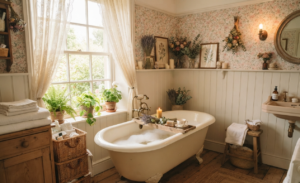
Bathrooms don’t always get the design attention they deserve, but in a cottagecore home, this room can become one of the most peaceful spaces you own. The centerpiece, when space allows, is almost always a clawfoot tub. It’s a bold investment, sure, but it instantly transforms a standard bathroom into something that feels pulled from a countryside inn. Surround it with candles, a small side table for a book, and soft lighting to make it feel like an actual retreat rather than just a place to get clean.
Storage benefits from the same natural materials found throughout the rest of the home. Wicker baskets hold towels, extra toiletries, or rolled washcloths beautifully, adding texture to what’s often a very tile-heavy, hard-surfaced room. Wooden stools, small shelves, and even a simple wood ladder repurposed as a towel rack all bring in the warmth this style depends on.
Wall treatments matter too. Wainscotting paired with a soft floral wallpaper above it creates a classic, layered look that feels both traditional and fresh. Finish the room with classic faucets in an aged finish, paired with a farmhouse-style vanity sink if your layout allows for it. Even small details, like a woven bath mat or a single potted plant on the windowsill, help tie the bathroom into the same nostalgic design language as the rest of the house.
How to Get the Cottagecore Look on a Budget
Here’s the good news: cottagecore might be the most budget-friendly design style out there, mostly because it was never about buying everything new in the first place. Thrift store finds and flea market decor are practically built into the DNA of this aesthetic. A chipped ceramic vase, a slightly worn wooden chair, or a set of mismatched teacups all fit right in, and they usually cost a fraction of what you’d pay retail.
Start your budget hunt at estate sales, church rummage sales, and local flea markets, which tend to have better prices and more unique finds than big thrift chains. Facebook Marketplace and local buy-nothing groups are also goldmines for free or nearly-free vintage furniture, especially wooden dressers, side tables, and chairs that just need a little sanding and a coat of paint.
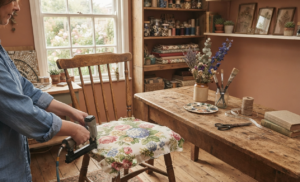
For DIY cottagecore projects, consider small weekend upgrades rather than full renovations. Reupholstering a thrifted chair in a floral or gingham fabric costs far less than buying new furniture and gives you a genuinely one-of-a-kind piece. Painting an old dresser in a soft sage or dusty rose shade instantly updates it without replacing it. Drying your own flowers from a farmers market bouquet gives you free botanical decor that lasts for months.
If you’re renting or hesitant to make permanent changes, peel and stick wallpaper remains one of the best budget tools available. It delivers the visual punch of a full wallpaper installation without the commitment, and it’s fully reversible when you move out. A few well-placed fairy lights, a secondhand quilt, and a handful of dried botanicals can transform a plain room into something that feels intentional and cozy, all without spending much at all.
| Budget Tip | Estimated Cost | Impact |
|---|---|---|
| Thrifted vintage chair | $20–$60 | High, becomes a focal point |
| Peel and stick wallpaper | $30–$50 per roll | High, instant visual change |
| DIY dried flower arrangements | Free–$10 | Medium, adds organic texture |
| Secondhand quilt | $15–$40 | Medium, adds texture and warmth |
Conclusion
At the end of the day, cottagecore isn’t about copying a Pinterest board pixel for pixel. It’s about slowing down and letting your home reflect a little warmth, a little nostalgia, and a lot of comfort. Whether you start small with a vintage quilt and some fairy lights, or go all in with a clawfoot tub and open shelving in the kitchen, every little touch adds up to a space that actually feels like home. Pick one room, start there, and let the rest come naturally over time.