Cool Bedroom Ideas for Big Kids That Skip Unicorns & Dinosaurs
So your kid officially declared war on their old bedroom theme. Maybe they walked in one morning, looked around at the pastel walls and cartoon posters, and just said no. Mine did this at age 8. Suddenly the rainbow unicorn bedding was “baby stuff” and honestly? Fair enough. Kids grow fast. Their taste grows even faster.
The problem is — what do you replace it with? Not baby stuff, not teenager stuff, but something that actually feels cool and age-appropriate without looking like a random adult’s office. That sweet spot is tricky but it exists. And once you find it, their room can genuinely look like something out of a Pinterest board — in a good way, not a “this is clearly staged” way.
The other thing nobody tells you? Most of these ideas don’t cost a fortune. A big bedroom overhaul can happen with a fresh coat of paint, some smart thrifting, and a few well-chosen pieces. You really don’t need to gut the whole room and start over.
The “Explorer” Room Vibe That Never Gets Old
Think maps, globes, wooden accents, old compass prints, maybe a world map decal on the wall. This theme works for kids anywhere from about 7 to 13 and honestly? Some adults have this aesthetic in their own rooms and it looks great there too.
My nephew had this done in his bedroom and the first thing every single visitor said was “oh this is SO cool.” His parents didn’t spend a ton either. A big vintage-style world map poster was like $12 on Amazon. They got a dark wooden bookshelf from a thrift store, painted it forest green, and added some small plants. Done. The whole thing cost maybe $60 total and it felt curated and intentional — not like someone just grabbed stuff off a shelf at a big box store.
What makes the explorer theme work for older kids specifically is that it doesn’t scream “theme.” It just looks like a well-decorated room. There’s no cartoon character, no obvious mascot, nothing that will feel embarrassing in two years. It leans into curiosity and adventure which pretty much every kid this age connects with on some level.
Dark Walls Are Underrated for Kids
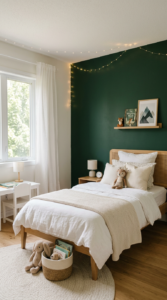
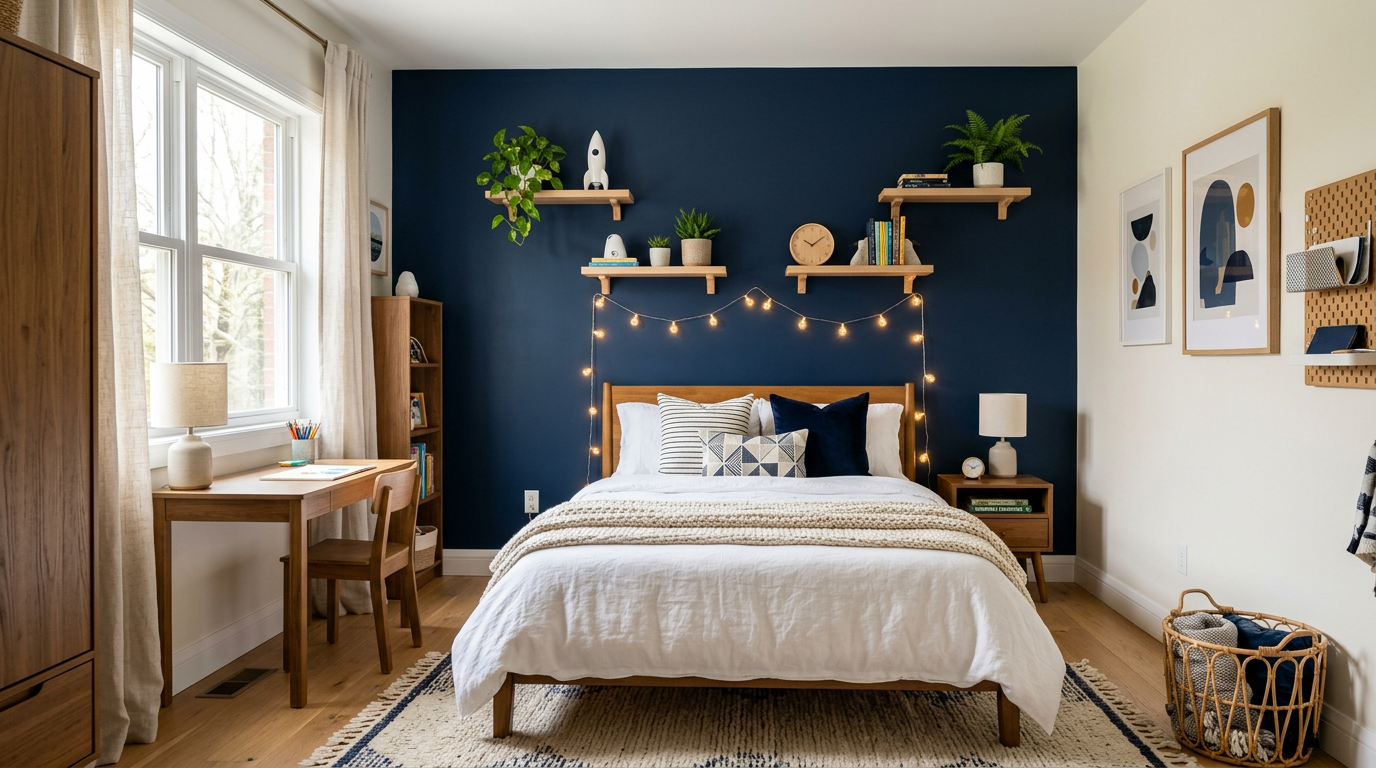
People hear “dark bedroom” and immediately panic. But hear me out — a deep navy or forest green wall behind the bed can completely transform a kid’s room. It suddenly looks grown up, cozy, and really cool without trying too hard.
You don’t have to paint all four walls. Just the one behind the bed. Pair it with light bedding — think white or cream — and add some warm string lights along the ceiling or headboard. Suddenly it looks like a dreamy cabin retreat and zero unicorns required. Kids who have seen this in person almost always want it immediately.
The dark wall also makes any artwork or shelving you hang on it pop so much more. A basic white floating shelf on a navy wall looks intentional and stylish. That same shelf on a standard white wall just looks like a shelf. Context is everything when it comes to making a room feel designed rather than just filled with furniture.
Sports Themes That Don’t Look Like a 5-Year-Old’s Room
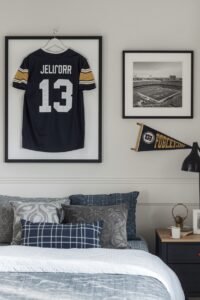
There’s a version of a sports room that screams “toddler” — giant cartoon soccer balls, foam floor mats, everything in primary colors. And then there’s the cool version.
The cool version pulls from actual team aesthetics. Real jerseys framed on the wall. A black and white photo print of a stadium. The color palette of their favorite team used subtly — like an accent pillow or a painted shelf, not wallpaper-to-wallpaper coverage. My neighbor’s son is obsessed with basketball and instead of a generic “sports” room they leaned into actual NBA team colors, got a vintage-style pennant, and printed a cool black and white action shot in a simple black frame. It looked like a sports bar for kids, but in the best possible way.
Not gonna lie, even his dad wanted to hang out in there.
The key shift here is going from “sports decoration” to “sports culture.” Real fans don’t cover every inch of their space in team logos. They have a few meaningful pieces. That restraint is what makes it look cool instead of overwhelming.
The Camp-Meets-Cozy Look
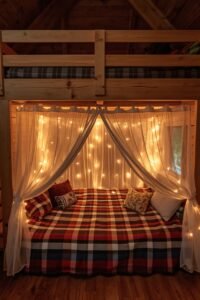
Bunk beds or loft beds with curtains underneath. String lights strung across the ceiling. A small reading nook with a floor cushion and a lantern-style lamp. Plaid or buffalo check blankets. Honestly this one is such a winner for the 8-12 crowd and I keep seeing it done beautifully on Pinterest.
Kids this age love having their own little nook — somewhere that feels slightly separate and cozy, like their own private world inside their room. You can turn the space under a loft bed into basically a little hideout with just a curtain panel and some fairy lights. I’m not gonna lie, I kind of want this in my own house. The plaid throws and neutral wood tones give it that cabin camp feel without leaning into anything babyish.
The magic of this aesthetic is how layered it feels. A knit throw here, a stack of books there, a small crate being used as a side table. It doesn’t look like one coordinated set — it looks like a space that evolved and has personality. Kids feel comfortable in rooms like this in a way they don’t in perfectly matching themed setups.
If you’re updating an outdoor or shared space too, there are some really sweet cozy outdoor ideas that carry the same relaxed, earthy vibe and work beautifully alongside this kind of interior look.
Color Psychology Is Real, Even in Kid Rooms
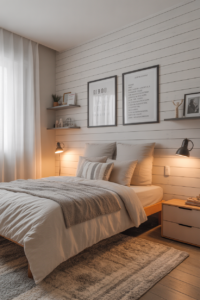
This surprised me when I first started digging into it — but color actually matters a lot in a kid’s bedroom. Bright primary colors are overstimulating for a lot of kids, especially at bedtime. Soft greens and blues tend to be calming. Warm neutrals like terracotta, cream, and sandy tones feel cozy and genuinely work at every age.
For big kid rooms, moving away from neon and primary colors is one of the fastest ways to make a space feel more mature without spending anything. Just painting an accent wall in a muted sage or warm clay instantly elevates the whole room. It sounds boring in theory but the effect is surprisingly dramatic in real life.
Cool thing about muted tones is they also play well with almost any theme. A sage green wall works with the explorer vibe, the camp look, the bookworm room — basically everything. You’re not locked into one direction. This is the same logic behind why living room color palettes work better when they’re intentional rather than random — the principle applies in every single room of the house, including a kid’s bedroom.
The “Mini Studio” Idea for Creative Kids
If your kid is into art, music, reading, or gaming, lean into that identity as the theme instead of picking some pre-packaged “motif.” A kid who loves art gets a wall of cork board, some open shelving for supplies, good task lighting, maybe a small easel in the corner. A kid into music gets a wall of band posters — ones they actually care about, not generic music note wallpaper — a guitar stand, and some moody warm lighting.
This approach ages so well because it grows with the kid. Their taste will evolve but the concept of a space built around their actual interests stays relevant forever. It also feels personal and real rather than like something ordered as a “theme kit” from a website. The room looks intentional and specific to them, which kids this age genuinely appreciate more than people realize.
I remember when my cousin’s daughter went through this phase — she was obsessed with painting and her mom turned one corner of her room into this little art studio setup with a pegboard for supplies and a floor lamp. It was maybe $40 total. Her daughter spent hours in there every single day. The investment was tiny but the impact on how much she loved her room was massive.
Galaxy But Make It Actually Cool
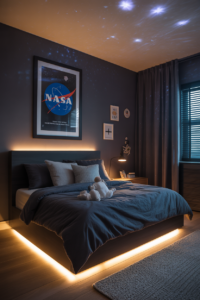
Okay, the original galaxy bedroom trend got tacky fast. Glow-in-the-dark stars stuck to the ceiling in no particular pattern, neon purple sheets, plastic rocket ships everywhere. But a sophisticated take on the space theme? That’s completely different and genuinely cool for kids who are into astronomy or science.
Think: deep charcoal gray walls. A star projector lamp — these have gotten SO good lately, the newer ones actually move and layer colors and look almost realistic. One large framed NASA poster or a solar system print in a clean black frame. Dark bedding in navy or charcoal. Maybe one of those sleek LED strip lights tucked under the bed frame set to a very subtle warm white.
It reads “space enthusiast who has good taste” rather than “party supply store clearance aisle.” There is a genuinely huge difference between those two outcomes and the price gap is not that large. The key is restraint — two or three intentional space pieces land better than twenty random ones.
Accent Walls That Do All the Heavy Lifting
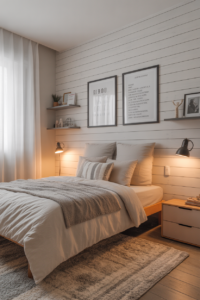
When you don’t want to overhaul everything — or you’re renting and can’t paint — a well-chosen accent wall treatment does so much work. A peel-and-stick geometric wallpaper in black and white. A wood panel feature wall made from thin pine strips painted white or left natural. A DIY board and batten treatment that adds texture and character without committing to a bold color. Even a hand-painted mural if your kid is into art — let them help with it, imperfection adds so much character and makes it feel truly theirs.
The rest of the room can stay relatively neutral and the accent wall carries the whole vibe. One strong moment visually anchors the whole space and makes it feel intentional. I’ve genuinely seen rooms completely transformed by what was basically $30 of peel-and-stick wallpaper and an afternoon of work. The same idea applies to layering visual elements — whether it’s wall art, texture, or a statement piece — a single strong focal point does more work than ten small scattered things competing for attention.
The Bookworm Den — More Common Than You’d Think
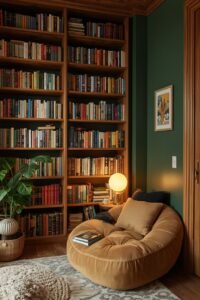
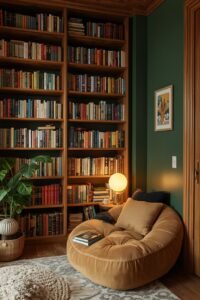
For the kid who actually loves reading, lean fully into a cozy library aesthetic. Dark wood tones, floor-to-ceiling bookshelves if the space allows, a reading nook with proper cushioning and a really good reading lamp — not a ceiling fixture but an actual lamp positioned right. A small side table for a drink and a snack. This pairs beautifully with the darker wall trend — a deep green with warm wood shelving genuinely looks like a mini library and kids who love books go completely wild for it.
One small thing that makes a surprisingly huge difference: organizing books by spine color. It sounds extra and maybe a little much but it genuinely makes the shelves look curated and intentional rather than chaotic. My friend did this in her daughter’s room over one weekend and it photographs like something from a proper design blog. People in her family who didn’t even know about the room redecoration kept commenting on photos.
Throw in a bean bag or an oversized floor pillow, a plant in the corner, and a warm rug and you’ve got a room that every kid in the neighborhood is going to want to spend time in.
The Simple Swaps That Make Any Theme Land Better
Regardless of which direction you go, there are a few small changes that elevate a kid’s room fast and don’t require a full budget or a full weekend:
- Swap the ceiling light. The builder-grade flush mount does nothing for any room. A rattan pendant, an Edison bulb fixture, even a nice paper lantern — it immediately changes the mood.
- Add a plant. Even a fake one. A little bit of green softens a room and makes it feel lived in rather than staged.
- Get a rug. A good rug under the bed is one of those things that sounds minor but completely transforms how a room feels. It adds warmth, color, and texture all at once.
- Update the hardware. Replacing plastic drawer handles with simple wood or matte black metal ones takes maybe 15 minutes and costs under $20. It sounds almost too small to matter — it doesn’t look small in practice.
- Frame things. Random posters tacked to the wall look like a dorm room. The exact same poster in a simple black frame looks like a design choice.
These small swaps don’t require a full renovation but they change how the room feels from the second you walk in. The same principle works outdoors too — the right styling details make even the most budget-friendly spaces look pulled together and intentional rather than thrown together.
Letting Your Kid Actually Have a Say
This part gets skipped a lot and it really shouldn’t. Kids in this age range — roughly 7 to 12 — are old enough to have real opinions about their space and young enough that those opinions are still really fun and easy to work with. Give them two or three direction options with visual references, let them pick, and then let them weigh in on a few specific choices within that direction.
The result is a room they’re genuinely proud of. Not one they tolerate. Not one they’re already outgrowing emotionally before the paint dries. When kids feel ownership over their space they take better care of it, they spend more time in it, and they’re way more likely to keep it tidy — or at least tidier. It also just makes the whole process more fun for everyone involved.
Making It Work Without Starting Over
You don’t have to toss everything and start from scratch. A lot of the time the bones of the room are completely fine — it’s the decorative layer that needs refreshing. New bedding, one statement wall treatment, a couple of better accessories, and updated lighting. That’s genuinely all it takes in most cases to go from “this feels like a little kid’s room” to “this feels like a really cool space.”
Start with the one thing that bothers you most about the current room. Usually it’s either the wall color or the bedding. Fix that one thing first and see how much it changes the overall feel before you commit to more. You might be surprised how far one good change goes.
The goal at the end of the day is a room they’re proud of — somewhere they actually want to spend time, somewhere they’re not embarrassed to bring their friends, and somewhere that still feels like them in two years, not just right now. That’s the whole target. Everything else is just details.