
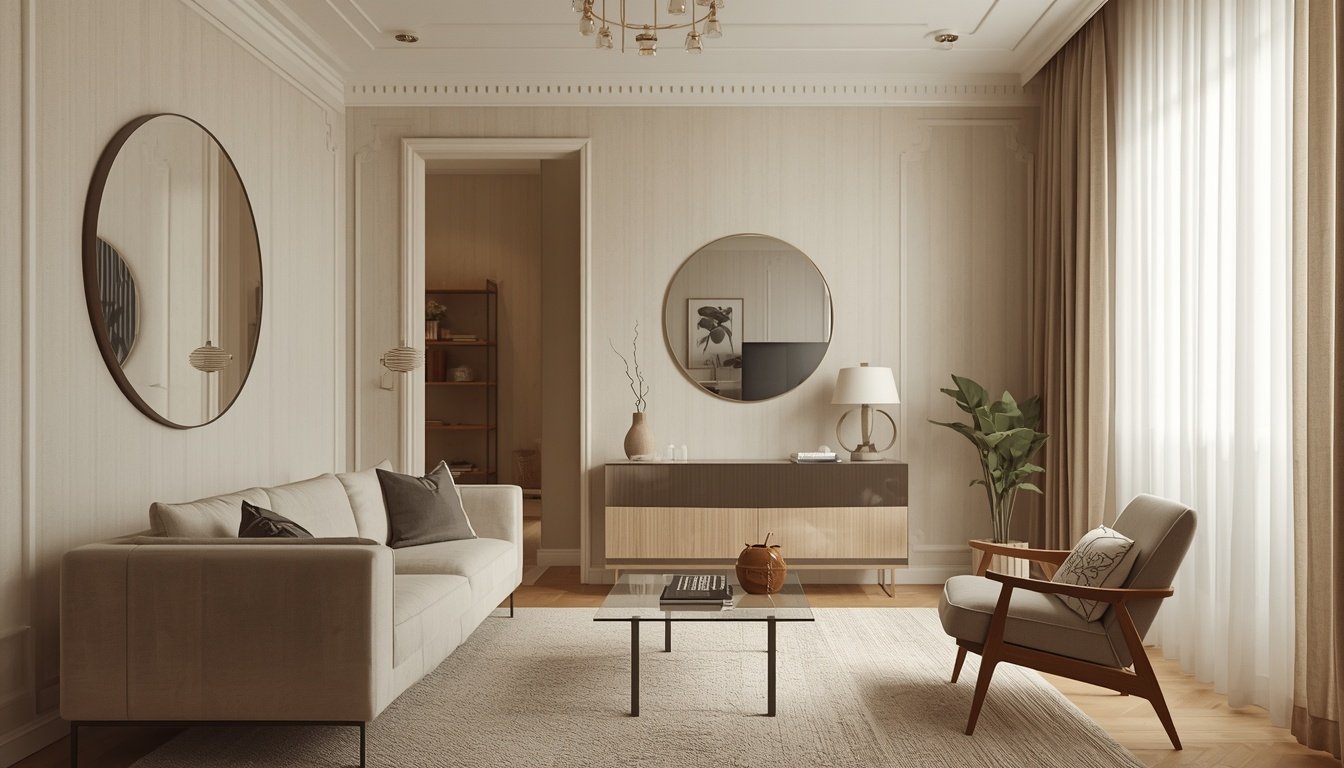
14 Small Living Room Luxury Ideas That Make an Apartment Feel Bigger and More Expensive
A cramped small living room doesn’t have to look — or feel — small. With the right layout choices and a few smart styling moves, even a tight apartment can read as spacious, polished, and genuinely luxurious. This guide covers 14 apartment decor tricks that trick the eye into seeing more square footage than actually exists, from furniture with visible legs to a well-placed large mirror. If you’re working with a bigger budget too, these 15 luxury living room ideas under $2,000 pair well with the tricks below. None of these require knocking down walls or spending a fortune — just a sharper approach to small space living. Every idea here focuses on visual space, proportion, and intentional styling that makes a compact room feel expansive and expensive at once.
Why Small Living Rooms Need a Different Luxury Approach
Luxury in a large room and luxury in a small living room aren’t the same game. In a big space, scale is forgiving — oversized furniture and heavy layering both work. In a small one, every piece either earns its place or steals square footage the room can’t spare. The goal shifts from “more” to “smarter”: choosing pieces and colors that open the room up instead of closing it in.
Compact living room design also relies more heavily on sightlines and light than large rooms do. Where the eye travels, how furniture is grouped, and how much floor is actually visible all shape whether a room feels airy or boxed in. The 14 ideas below tackle exactly these levers — proportion, light, color, and flow — to make an apartment living room feel bigger and noticeably more expensive.
14 Ways to Make a Small Living Room Feel Bigger and More Luxurious
1. Choose Furniture With Visible Legs
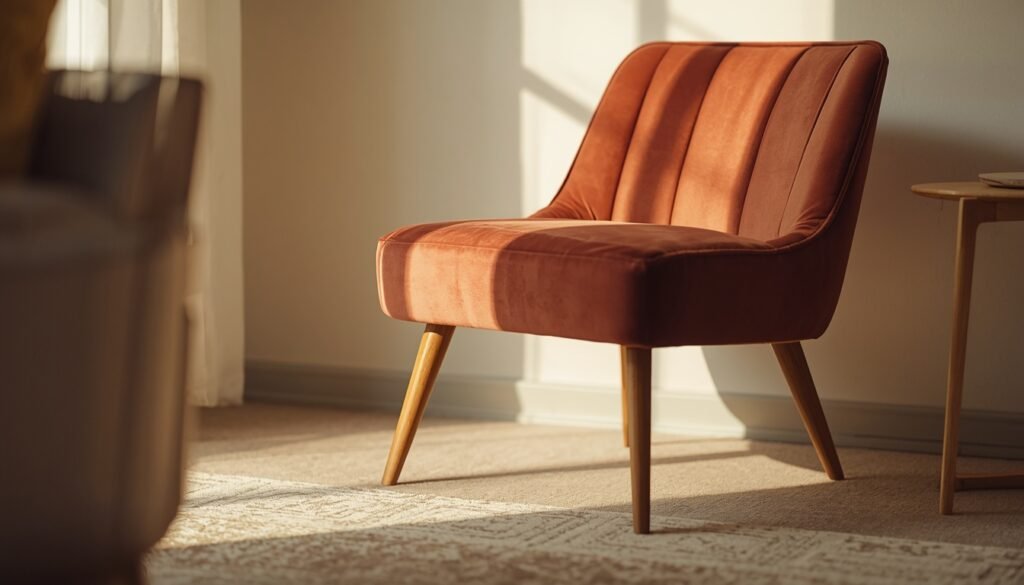
Furniture with legs lets light and floor space show underneath instead of blocking it with a solid base. A sofa or chair that visually “floats” a few inches off the ground reads as lighter and less bulky, even at the same actual size. This one swap does more for perceived openness than swapping out an entire piece of furniture.
2. Hang Curtains High and Wide
High curtains — mounted close to the ceiling and extending beyond the window frame — make ceilings look taller and windows look larger than they are. This is one of the cheapest, highest-impact tricks for small space living, since it costs nothing more than a longer curtain rod. Skip short, stiff panels; they cut the room off visually right where it needs to stretch.
3. Use a Large Mirror to Bounce Light
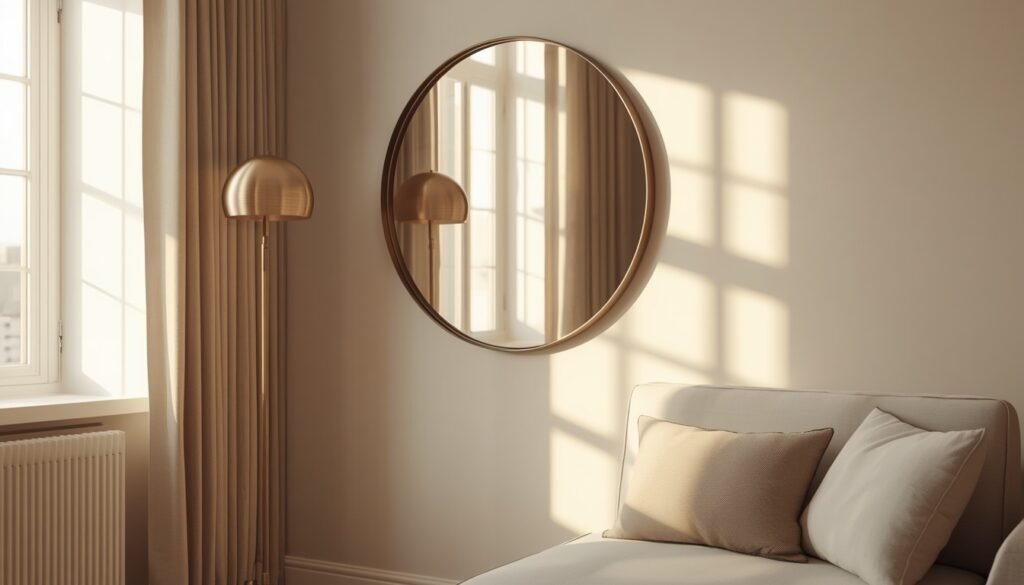
A large mirror, positioned to reflect a window or light source, doubles the sense of depth in a room instantly. Placed opposite natural light, it bounces daylight deeper into the space and creates the illusion of an additional window. This trick alone can make a small living room feel dramatically more open without moving a single piece of furniture.
4. Stick to a Tight, Cohesive Color Palette
A cohesive color palette — walls, sofa, and curtains in the same tonal family — keeps the eye from jumping around the room. For help narrowing down a scheme, this guide to picking a luxury living room color palette breaks down which tones read as high-end without overwhelming a small footprint. When everything sits in a similar range, the boundaries between elements blur, and the whole space reads as one continuous, larger area.
5. Pick a Rug That’s Actually Big Enough
An undersized rug chops a small room into even smaller-looking sections. Area rug placement should extend under at least the front legs of every major piece of furniture, unifying the seating area into one visual zone. Going a size larger than instinct suggests almost always improves the room.
6. Float Furniture Away From the Walls
Pushing every piece against the wall feels intuitive in a small room, but it often has the opposite effect. Floating furniture even a few inches off the wall creates a sense of circulation and depth that a wall-hugging layout can’t achieve. The extra breathing room around each piece makes the whole space feel less cramped, not more.
7. Go Vertical With Tall Bookshelves or Art
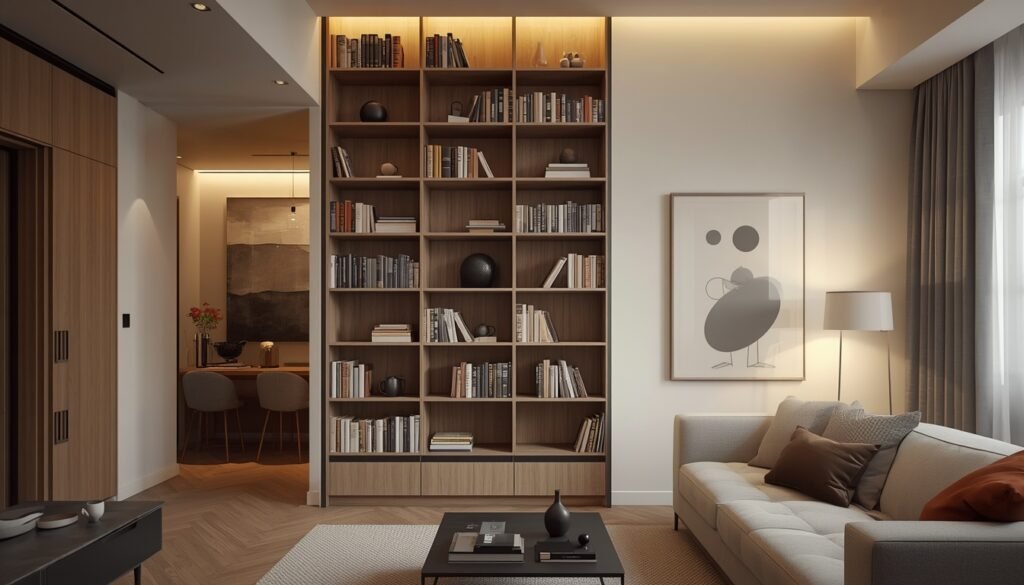
Vertical decorating — tall bookshelves, floor-to-ceiling curtains, artwork hung slightly above eye level — pulls attention upward and makes low ceilings feel taller. This guide to layering living room wall art covers height and grouping in more depth. Most small rooms leave the upper third of the wall completely empty, which visually compresses the space, so filling that zone with height-oriented pieces is one of the most underused tricks in floor-to-ceiling decor.
8. Choose Multi-Functional Furniture
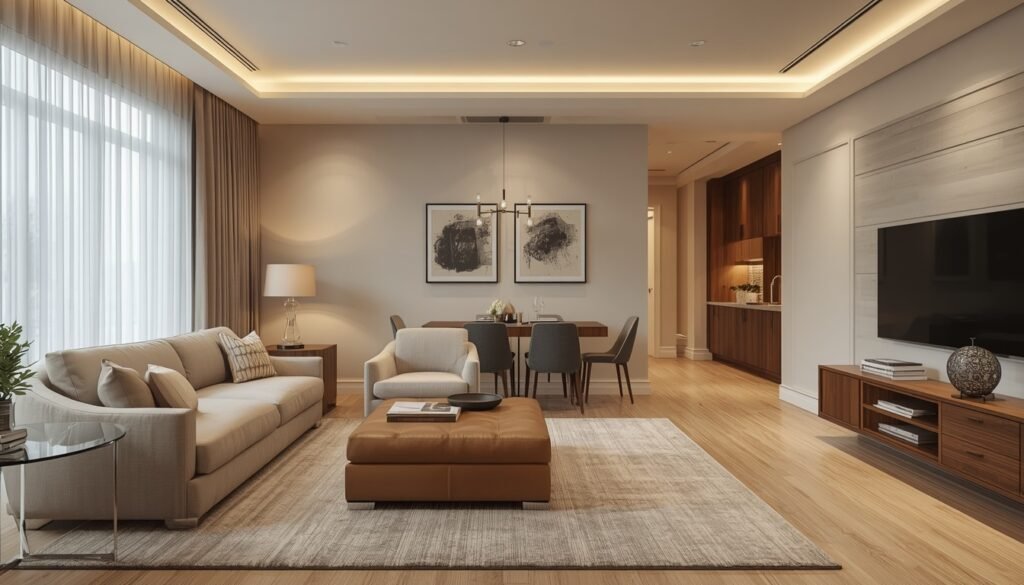
Multi-functional furniture — a storage ottoman, a nesting coffee table, a sofa bed — reduces the total number of pieces needed in the room. Fewer individual items means less visual clutter and more open floor space, both of which read as luxury in a tight footprint. This is especially useful in apartments where the living room doubles as a workspace or guest room.
9. Use Light, Airy Fabrics Instead of Heavy Ones
Light and airy fabrics — linen, sheer cotton, lightweight wool — feel less visually heavy than thick velvet or dense brocade, even when the color palette stays similar. Heavy fabrics absorb light and can make a small room feel darker and more enclosed. Save the richer textures for a single accent piece rather than covering every surface.
10. Add a Statement Light Fixture to Draw the Eye Up
A statement light fixture hung at the right height draws the eye toward the ceiling, reinforcing the vertical space a small room actually has. It also replaces the need for multiple floor and table lamps, which frees up valuable surface area. One striking fixture does more for the room’s sense of scale than several smaller light sources scattered around.
11. Keep Surfaces Clear and Styled Minimally
Minimal styling — three to five well-chosen objects rather than a dozen scattered trinkets — keeps visual noise low in a room that has little room to spare. Clear surfaces read as calm and intentional, while cluttered ones read as cramped regardless of the room’s actual size. This costs nothing and is often the single fastest fix on this entire list.
12. Use Glass or Acrylic for Visual Lightness
Glass and acrylic furniture — a clear coffee table, an acrylic side chair — takes up physical space without taking up visual space. Because light passes through instead of being blocked, these pieces almost disappear into the room while still being fully functional. This makes them especially useful in the center of a small living room, where solid furniture tends to feel heaviest.
13. Layer in One Bold Textural Element
A single textural element — a sheepskin throw, a woven pouf, a boucle accent chair — adds warmth and personality without adding visual bulk. The key is restraint: one standout texture reads as curated, while several competing ones read as cluttered. This keeps the room feeling luxurious rather than sparse, even with a pared-back color palette.
14. Zone the Room With a Rug or Furniture Placement
Zoning a room with a rug or a deliberate furniture arrangement defines the living area without adding a single wall or partition. This matters most in apartments where the living room shares space with a dining or work area. A clearly defined zone feels more intentional and expensive than an undefined, catch-all space.
Quick Reference: What to Prioritize by Room Size
Not every small living room faces the same constraints — a narrow rectangular apartment and a boxy studio corner need different priorities. The table below maps out which of the 14 ideas matter most depending on the room’s specific shape and challenge.
| Room Challenge | Top Priority | Secondary Priority |
|---|---|---|
| Low ceilings | Vertical decorating | High curtains |
| Narrow/rectangular layout | Zoning with a rug | Floating furniture |
| Little natural light | Large mirror | Light, airy fabrics |
| Very limited floor space | Multi-functional furniture | Glass or acrylic pieces |
| Shared living/dining/work zone | Zoning the room | Cohesive color palette |
| Feels cluttered despite few items | Minimal styling | Clear surfaces |
| Dark or enclosed feeling | Cohesive color palette | Large mirror |
Use this as a starting filter rather than a strict rulebook — most small living rooms benefit from combining two or three of these priorities rather than tackling just one.
Frequently Asked Questions
Does furniture size matter more than furniture quantity in a small living room?
Yes — in most cases, size and proportion matter more than sheer item count. One appropriately scaled sofa with furniture with legs will almost always make a room feel more open than several smaller pieces crammed into the same footprint. Quantity becomes a problem mainly when it crowds sightlines or blocks natural light, so it’s worth auditing what each piece contributes before adding another one.
What’s the single best trick for making a small living room feel bigger for free?
Minimal styling — simply removing excess objects from surfaces and shelves — usually delivers the biggest visible change for zero cost. Decluttering does more for perceived space than most paid upgrades, since visual noise is one of the fastest ways a small room reads as cramped. Pair it with floating furniture for an even bigger shift, and both changes can be done in an afternoon.
Can dark colors work in a small living room, or should it always be light and neutral?
Dark, moody colors can absolutely work in a small living room, provided the cohesive color palette stays consistent and the room gets enough contrast from lighting or metallics. What actually shrinks a room isn’t a dark wall color on its own — it’s a mismatched, busy palette that fragments the space visually. A single deep tone paired with warm lighting often reads as more luxurious than an all-white scheme.
How do I make a small living room that also functions as a dining or work space feel less cramped?
Zoning a room with a rug, a piece of furniture, or a change in flooring is the most effective way to separate functions without physical walls. Sticking to multi-functional furniture — a console that serves as both a desk and a console table, for example — also reduces the total number of items competing for the same square footage. The goal is visual separation, not physical division, which keeps the whole room feeling open and connected.
Final Thoughts
A small living room can absolutely feel luxurious — it just requires prioritizing openness and proportion over sheer volume of stuff. Furniture with legs, a well-placed large mirror, and a cohesive color palette do more heavy lifting than any single expensive purchase ever could.
Start with two or three changes from this list — a taller curtain rod, a properly sized rug, an edit of what’s sitting on the shelves — and the room will already feel noticeably bigger. Small space living isn’t about doing less; it’s about making every choice count.
One Comment