Modern Ceiling Design Ideas: 15 Stylish Designs for Modern Homes
What Makes a Ceiling Design Look Modern?
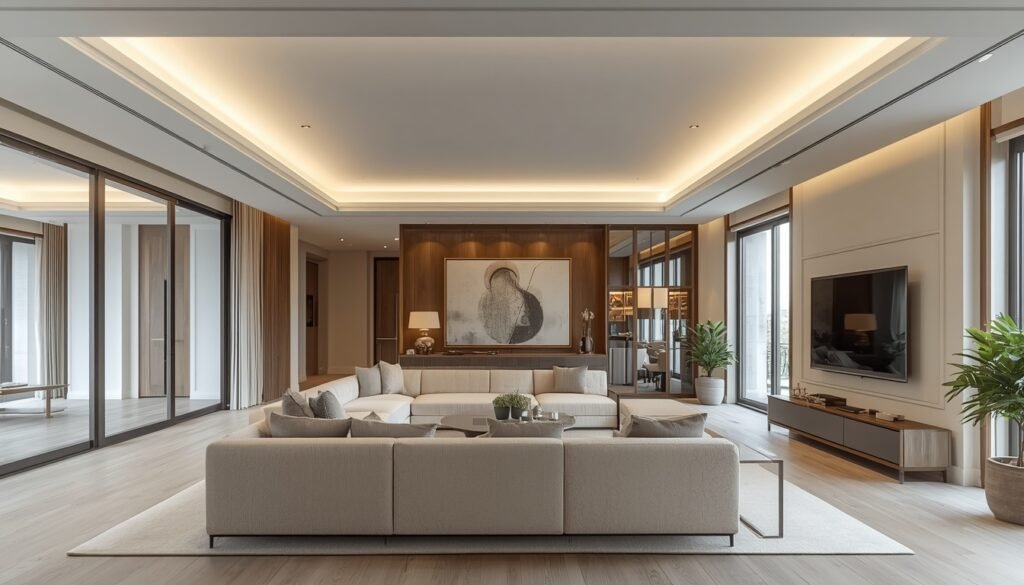
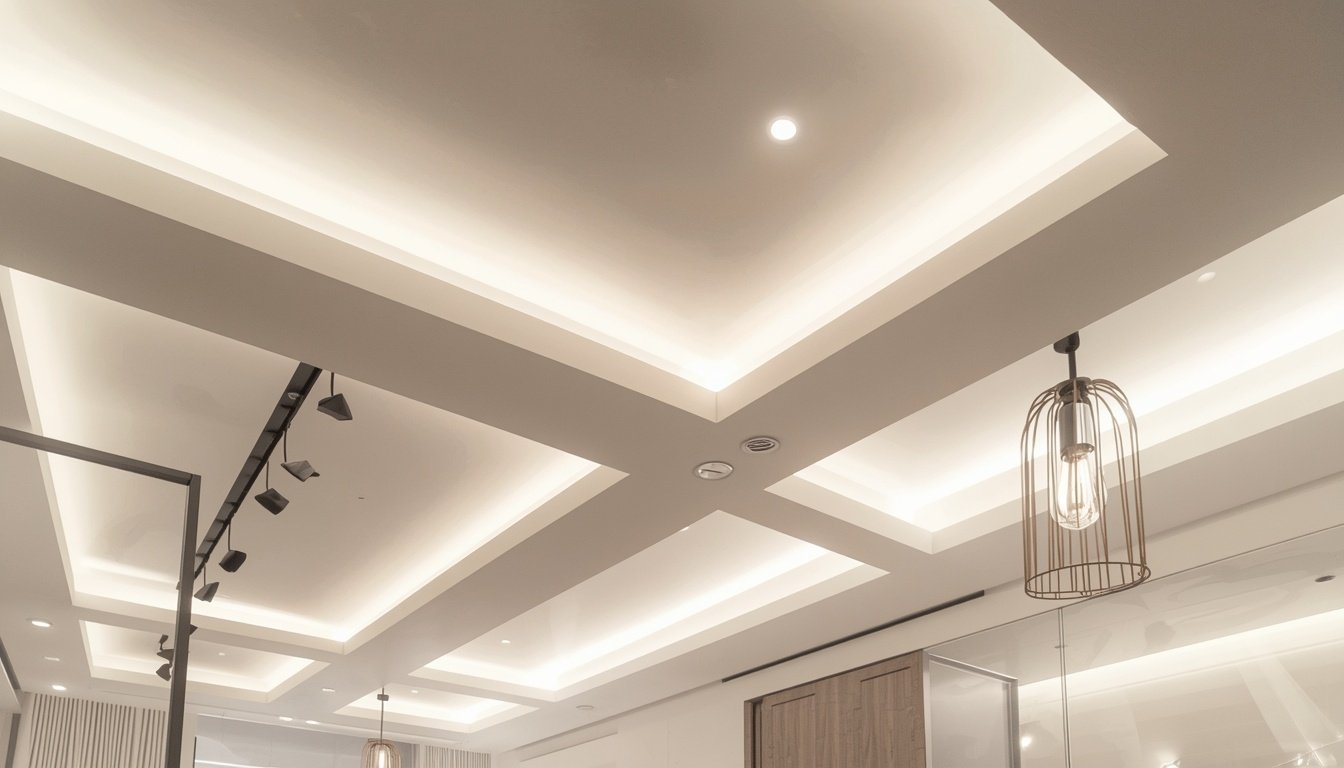
Modern ceilings usually focus on clean lines, balanced proportions, subtle layers, and purposeful lighting rather than excessive decoration. Instead of filling every inch with patterns, a contemporary ceiling often uses one strong feature to create interest. That might be a recessed border, a floating panel, natural wood slats, or concealed LED lighting.
Lighting also plays a major role. A plain ceiling can suddenly look architectural when soft light washes across its edges. Materials matter too. Gypsum and POP work well for smooth custom shapes, while wood brings warmth and texture. Concrete creates a raw industrial character, whereas a simple painted ceiling keeps the room calm and uncluttered.
15 Modern Ceiling Design Ideas for Every Room
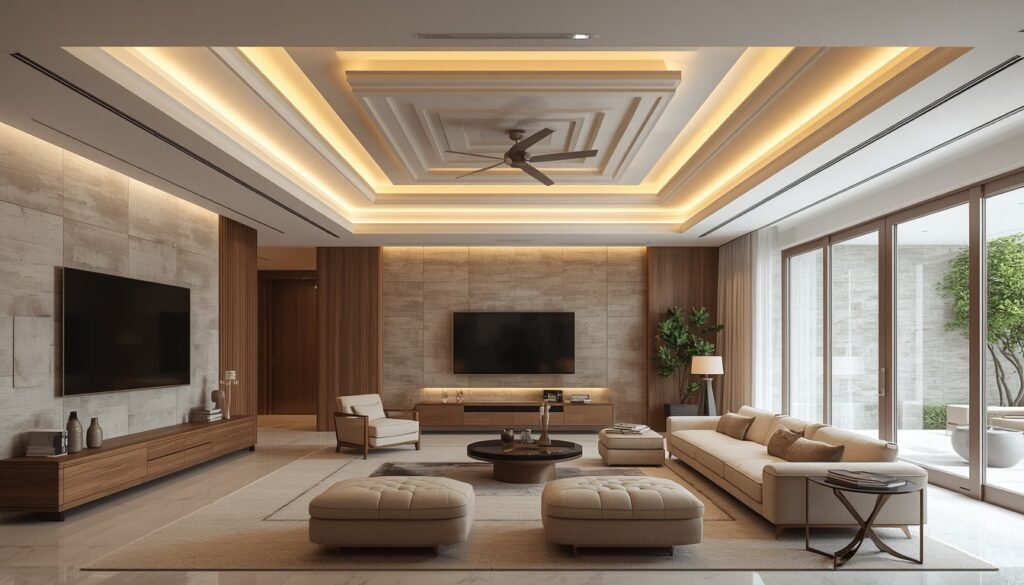
1. Minimalist Tray Ceiling With Recessed Lighting
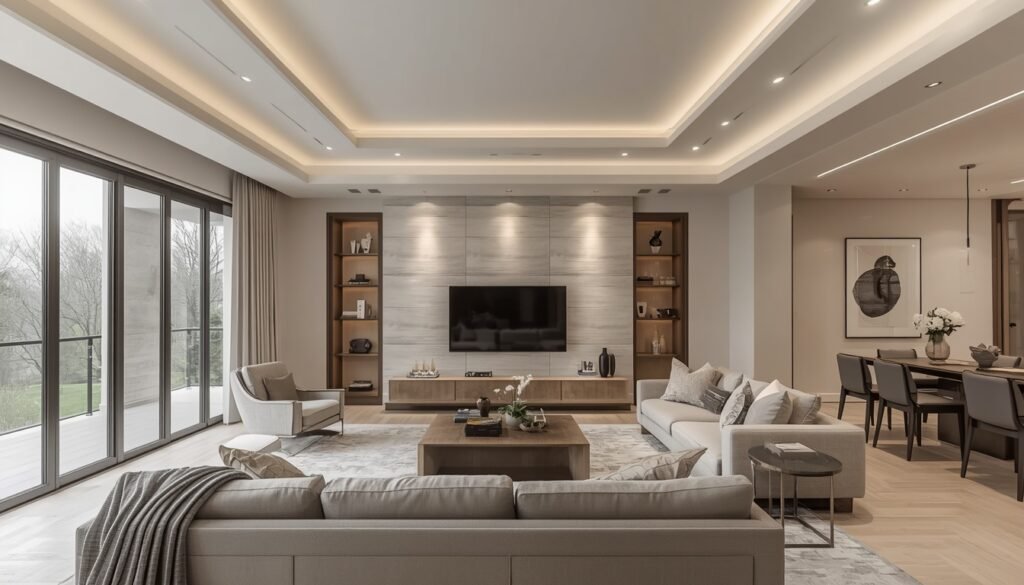
A tray ceiling is one of the easiest ways to give a modern room architectural depth without making the ceiling overly busy. The center section sits slightly higher than the surrounding border, creating a subtle framed effect. Add recessed spotlights around the perimeter and the result feels polished without looking flashy.
This modern ceiling design works particularly well in living rooms, master bedrooms, and dining areas. Keep the colors simple and let the difference in height create most of the visual interest.
2. Modern Cove Ceiling With Soft LED Lighting
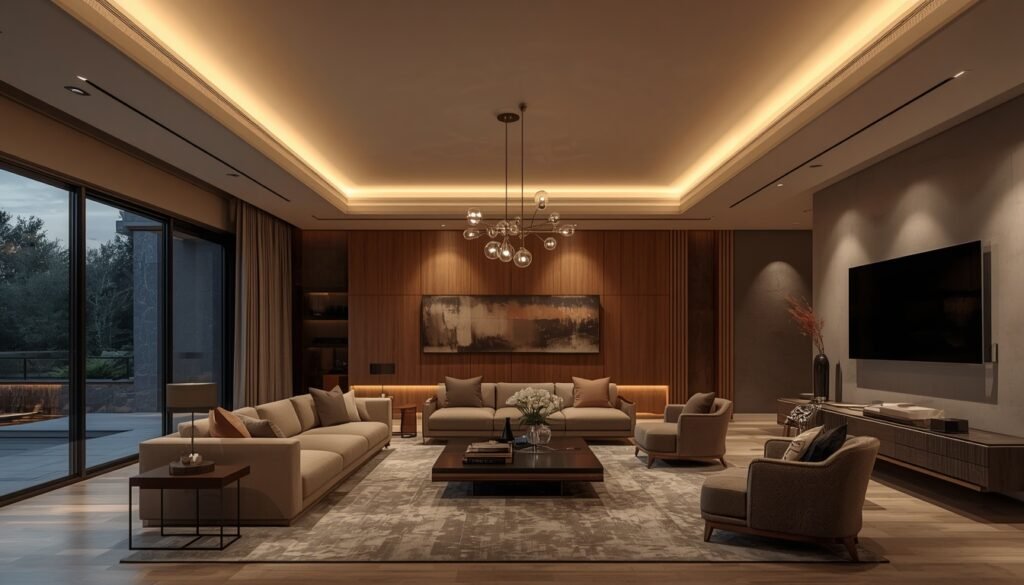
For a softer and more atmospheric look, consider a cove ceiling. Hidden LED strips sit inside a recessed section and send light toward the ceiling rather than directly into the room. This creates a gentle glow that feels sophisticated in the evening.
Warm white lighting usually works beautifully in bedrooms and living rooms. If the room already contains strong furniture or artwork, a simple cove ceiling can provide enough character without competing for attention.
3. Wooden Slat Ceiling for a Warm Modern Look
Modern interiors don’t have to feel cold. A wooden slat ceiling introduces natural texture while keeping the overall design contemporary. Slim timber slats can run across part or all of the ceiling depending on the room’s proportions.
This idea works especially well when the room already includes wood flooring, cabinetry, furniture, or natural accents. To avoid making the ceiling visually heavy, use the wood as a feature rather than covering every surface.
4. Geometric False Ceiling Design
Geometric ceilings can add personality to an otherwise simple interior. Squares, rectangles, recessed borders, and linear forms create a structured appearance without relying on traditional decorative details.
The trick is restraint. One or two geometric shapes can look sophisticated. Too many intersecting patterns may make the ceiling feel chaotic, particularly in smaller rooms.
5. Simple POP Ceiling for a Clean Finish
POP, or plaster of Paris, remains a useful option when you want customized ceiling shapes. It can create smooth borders, recessed sections, curves, and simple decorative details while maintaining a clean appearance.
For a modern home, avoid overly elaborate POP patterns. A thin perimeter border combined with recessed lighting often looks more contemporary than a heavily ornamented design.
6. Exposed Concrete Ceiling for an Industrial Look
If you love industrial interiors, an exposed concrete ceiling can become the room’s defining feature. Its natural texture creates an unfinished, architectural character that pairs nicely with black metal, leather, wood, and simple lighting.
Concrete works particularly well in loft-style living spaces and contemporary homes. However, it can make a room feel visually heavier, so balance it with lighter walls, warm wood, or plenty of natural light.
7. Coffered Ceiling With a Modern Twist
Traditional coffered ceilings feature recessed square or rectangular panels. A modern version simplifies the pattern and uses wider sections, subtle trim, or integrated lighting.
This approach works beautifully in larger living rooms and dining rooms where the ceiling has enough visual space to support the pattern. Paint the entire ceiling in one tone for a quiet effect or use slightly contrasting shades to emphasize the geometry.
8. Floating Ceiling With Hidden LED Strips
A floating ceiling creates the illusion that a section of the ceiling is suspended below the main surface. Hidden LED lighting around its edges enhances that effect by creating a soft halo.
It’s a strong choice when you want a contemporary focal point without relying on ornate decoration. The floating effect looks especially striking in rooms with clean furniture and uncluttered walls.
9. Two-Tone Painted Ceiling
Sometimes the simplest idea makes the biggest difference. Instead of installing a new ceiling structure, use two complementary paint colors to define different areas.
For example, a warm neutral ceiling can sit inside a slightly deeper border. Alternatively, a soft white ceiling can contrast with a muted beige or greige section. This technique costs less than a complex false ceiling while still creating visual depth.
When choosing colors, think about the entire room rather than the ceiling alone. A cohesive palette can make even a simple ceiling feel intentional. For more inspiration on creating coordinated palettes, see these designer tricks for choosing a luxury living room color palette.
10. Ceiling With Statement Pendant Lighting
Not every modern ceiling needs built-in architectural features. A simple ceiling paired with an impressive pendant can create an equally memorable result.
Large pendant lights work particularly well above dining tables, kitchen islands, and double-height spaces. Choose the fixture according to the room’s scale. A tiny light can disappear in a large room while an oversized fixture can overwhelm a compact one.
11. Curved Ceiling Design for a Softer Look
Straight lines dominate many contemporary interiors, so a curved ceiling can introduce a welcome sense of movement. A gentle curved section can soften a hallway, living room, or bedroom while creating a distinctive architectural feature.
Keep the curve relatively simple. A smooth transition generally feels more modern than several complicated shapes layered together.
12. Modern Ceiling With Wood and Gypsum
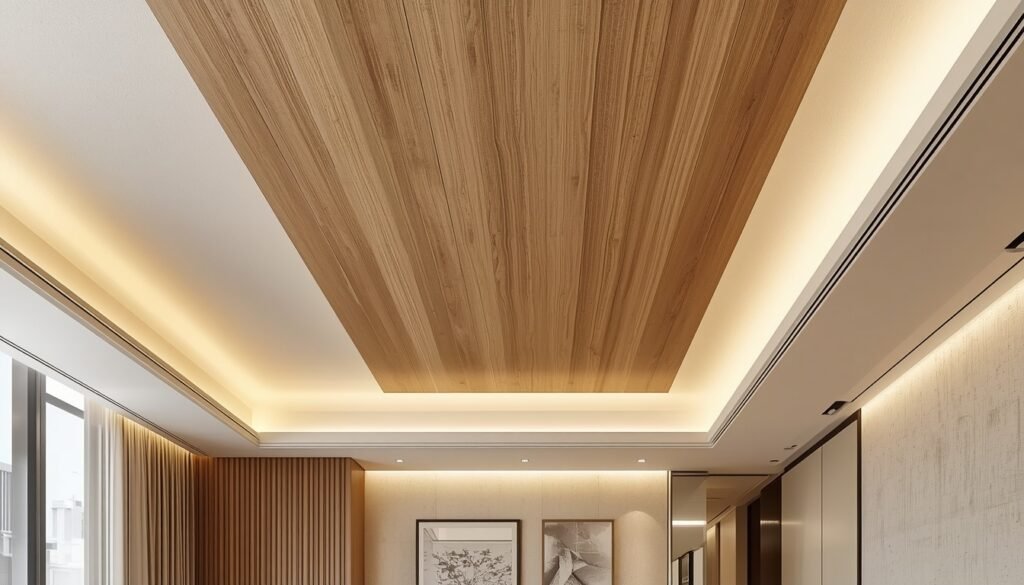
Why choose between warmth and simplicity when you can combine both? Wood and gypsum make a versatile pairing for contemporary interiors. Gypsum provides the clean architectural structure while wood adds texture and warmth.
You might use a recessed gypsum frame around a central wood panel or introduce narrow wood strips within a smooth ceiling. This combination works particularly well in open-plan living areas where you want the ceiling to connect different zones visually.
13. Textured Ceiling for a Subtle Focal Point
A textured ceiling can add depth without requiring an elaborate shape. Subtle plaster texture, decorative panels, or fine linear patterns can create interest while keeping the overall room calm.
This works best when the rest of the interior is relatively restrained. If your walls, flooring, and furniture already contain several strong patterns, a quieter ceiling will usually create better balance.
14. Smart Ceiling Lighting Design
Modern ceiling design increasingly combines architecture with technology. Smart lighting allows you to adjust brightness, color temperature, and timing depending on how you use the room.
For example, brighter neutral lighting can help during work or cleaning while warmer, softer lighting creates a relaxed evening atmosphere. Recessed lights, linear LEDs, and concealed strips can all work within a smart lighting plan.
The important thing is to plan the lighting before the ceiling installation begins. Moving fixtures later can mean unnecessary cutting, patching, and extra expense.
15. Simple Modern Ceiling for Small Rooms
Small rooms often benefit from the simplest ceiling designs. A bulky multi-level false ceiling can reduce the sense of height and make an already compact space feel enclosed.
Instead, consider a shallow perimeter recess, a single floating panel, recessed lighting, or even a clean painted ceiling. Light colors and carefully positioned fixtures can make the room feel more spacious without requiring major structural changes.
Modern Ceiling Designs by Room
Modern Ceiling Design Ideas for Living Rooms
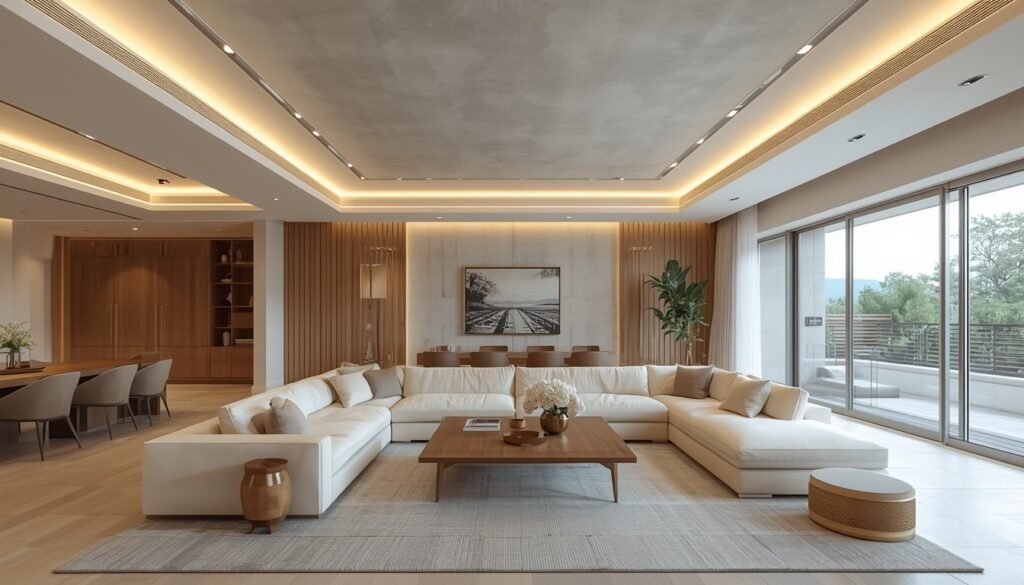
The living room gives you more freedom to experiment. Tray ceilings, floating panels, wood slats, coffered designs, and layered LED lighting can all work beautifully when the room has sufficient ceiling height.
If the living room already has a statement chandelier, fireplace, or dramatic artwork, however, keep the ceiling relatively restrained. A ceiling should support the room’s focal point rather than compete with it. The same principle applies to wall decor. Thoughtful living room wall art placement can help create a balanced focal point without making the room feel visually crowded.
Modern Bedroom Ceiling Ideas
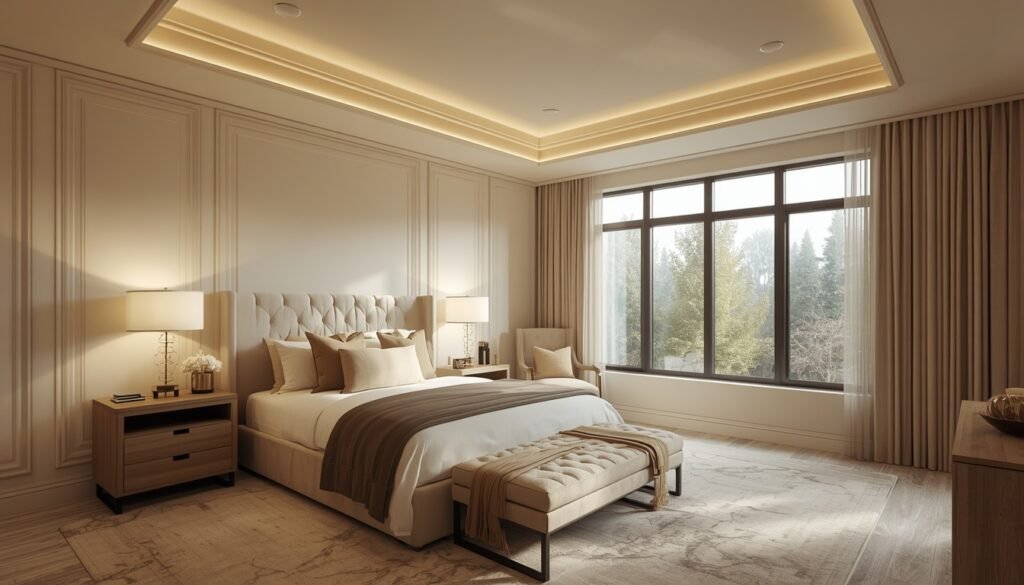
Bedrooms usually benefit from softer designs. Cove lighting, a simple tray ceiling, wood accents, and warm recessed lights can create a relaxed atmosphere without making the ceiling feel theatrical.
Warm lighting is particularly useful here because it gives the room a calmer evening appearance.
Modern Kitchen Ceiling Ideas
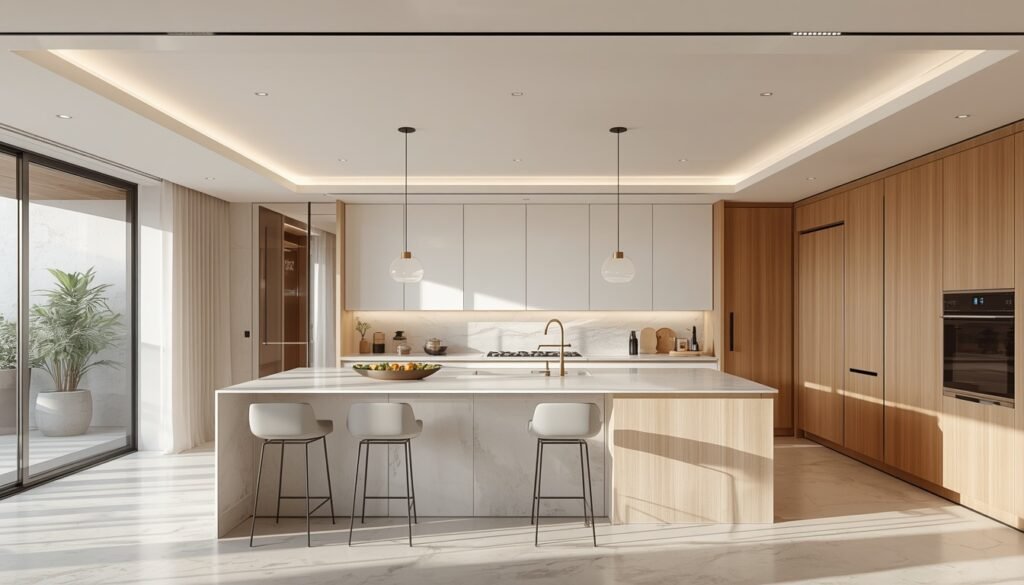
Kitchens need practical lighting as much as they need style. Recessed downlights, linear LEDs, and simple ceiling layers can provide focused illumination without creating visual clutter.
If you have an open-plan kitchen, consider extending one ceiling feature across the dining or living area. This can visually connect the spaces without making them look identical.
Modern Ceiling Ideas for Dining Rooms
Dining rooms are ideal for statement lighting. A simple tray or recessed ceiling can frame a pendant or chandelier and make the dining table feel like the center of the room.
Simple Modern Ceiling Design Ideas for Small Rooms
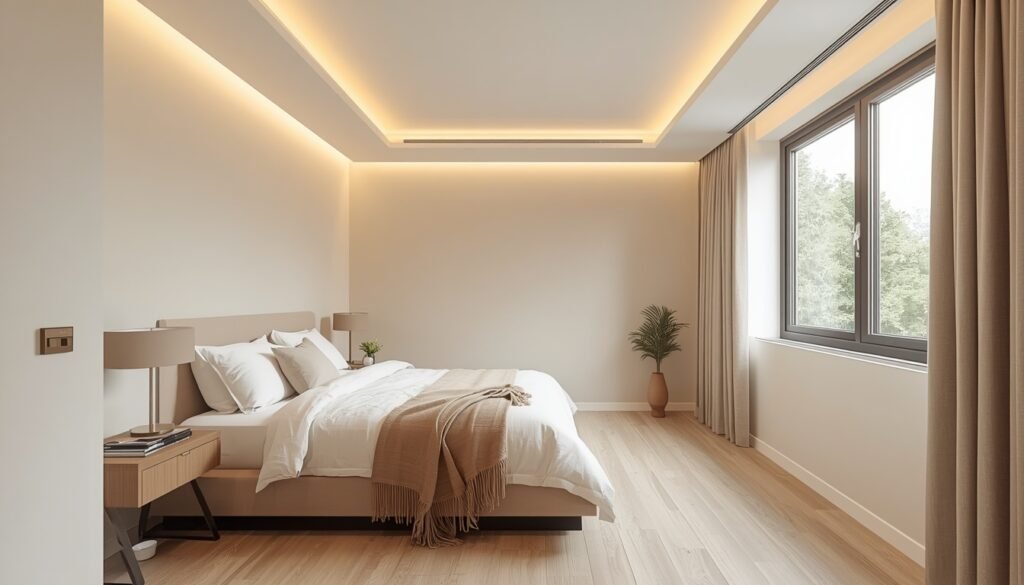
When space is limited, less really can be more. A low ceiling doesn’t need dramatic layers to look attractive. In fact, excessive drops can steal valuable vertical space.
Choose shallow designs with clean edges. Recessed lights can replace bulky hanging fixtures, while a light ceiling color can help reflect natural and artificial light around the room. If you want a decorative element, use one strong feature instead of several competing ones.
A small bedroom might need nothing more than a slim recessed border and warm LED lighting. That tiny change can make the entire room feel more intentional.
How to Choose the Right Modern Ceiling Design
Consider Your Ceiling Height
Measure the available height before choosing a layered or dropped ceiling. Higher rooms can accommodate deeper architectural details, while lower ceilings usually look better with shallow recesses and simple lighting.
Match the Design to Your Room Size
Large geometric patterns need enough visual space to breathe. In a compact room, simpler lines usually create a cleaner result.
Choose Materials That Suit Your Home
Gypsum and POP offer flexibility. Wood adds warmth. Concrete creates an industrial feel. Metal can give a contemporary edge. Choose the material based on the atmosphere you want rather than following a trend blindly.
Plan Lighting Before Installing the Ceiling
Lighting should be part of the ceiling plan from the beginning. Decide where you need general illumination, task lighting, accent lighting, and decorative fixtures before construction starts.
Match the Ceiling With Your Interior Style
A modern ceiling should feel connected to the rest of the room. If your furniture is warm and natural, wood details may work beautifully. If your interior is minimalist, crisp lines and concealed lighting may be a better fit.
The same principle applies to furniture colors. For example, the color of your sofa can influence the surrounding palette, which means the ceiling should support rather than clash with those tones.
Modern Ceiling Materials: Which One Should You Choose?
| Material | Best For | Look | Main Benefit |
|---|---|---|---|
| Gypsum | False ceilings | Clean and modern | Flexible shapes |
| POP | Decorative ceilings | Smooth and detailed | Custom designs |
| Wood | Living rooms and bedrooms | Warm and natural | Adds texture |
| Concrete | Industrial interiors | Raw and bold | Strong character |
| Metal panels | Contemporary spaces | Sleek and structured | Durable statement |
The best material depends on more than appearance. Consider moisture, maintenance, installation requirements, room height, and your overall budget before making a decision.
Modern Ceiling Lighting Ideas
Recessed Spotlights
Recessed lights provide clean general illumination without visually filling the ceiling. They’re especially useful in minimalist interiors where you want the architecture to remain the focus.
Cove and Indirect LED Lighting
Cove lighting produces a softer glow because the light source remains hidden. It’s ideal for bedrooms, living rooms, and entertaining spaces where atmosphere matters.
Pendant Lights
Pendant fixtures bring both light and personality. Use them to highlight dining tables, kitchen islands, seating areas, or other important zones.
Linear LED Lighting
Linear LEDs complement modern architecture because their long, clean lines reinforce the geometry of contemporary ceilings. They work particularly well with floating panels and recessed ceiling channels.
Common Modern Ceiling Design Mistakes to Avoid
Using Too Many Layers
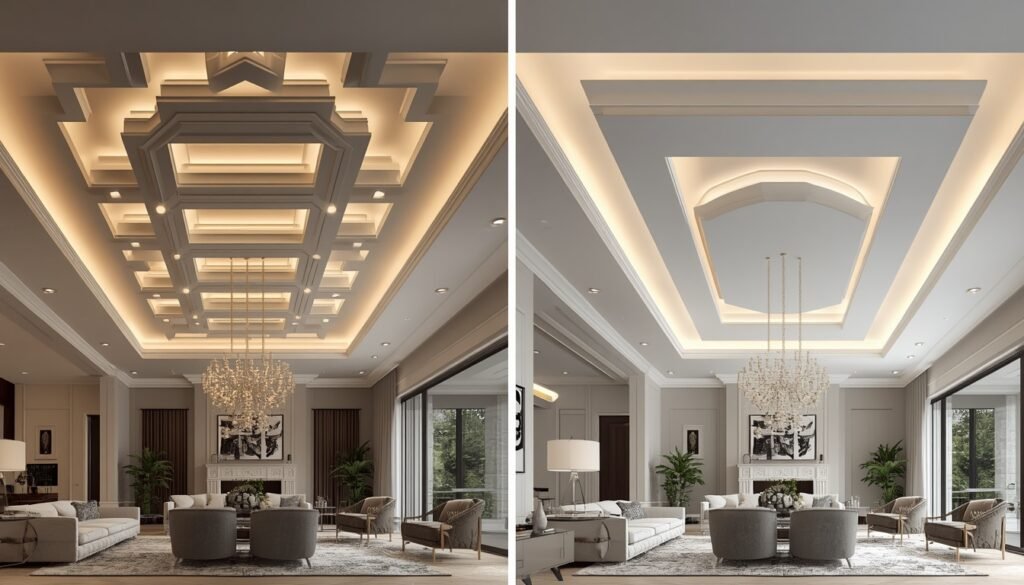
A complicated ceiling doesn’t automatically look more luxurious. Too many levels can create visual clutter and reduce usable ceiling height.
Ignoring Ceiling Height
Always consider the actual room dimensions before choosing a false ceiling. A design that looks impressive online may not suit your space.
Adding Lighting as an Afterthought
Poorly planned lighting can leave dark corners or create harsh glare. Decide on fixture placement during the design stage.
Choosing a Design That Doesn’t Suit the Room
A dramatic industrial ceiling may look fantastic in a loft but feel out of place in a soft traditional bedroom. The ceiling should make sense with the architecture and decor around it.
Making a Small Room Too Busy
Small rooms need breathing space. Use simple shapes, lighter colors, and carefully positioned lighting to keep the ceiling visually open.
Frequently Asked Questions About Modern Ceiling Design Ideas
What is the most popular modern ceiling design?
Tray ceilings, cove lighting, floating ceilings, and minimalist false ceilings remain popular because they combine architectural interest with clean modern lines.
Which ceiling design is best for a small room?
A simple recessed border, shallow tray, or clean painted ceiling usually works best. Avoid deep multi-level designs that reduce the room’s visual height.
What is the best material for a modern false ceiling?
Gypsum is a versatile choice because it allows clean lines, recessed sections, curves, and integrated lighting. POP can also work well for customized decorative shapes.
What ceiling design makes a room look bigger?
A light-colored ceiling with minimal detailing can make a room feel more open. Recessed lighting and shallow architectural features can also help maintain a sense of height.
Which ceiling is best for low-height rooms?
Choose a simple design with minimal drop depth. A clean painted ceiling or shallow recessed border often works better than a heavily layered false ceiling.
Final Thoughts on Modern Ceiling Design Ideas
The best modern ceiling design ideas aren’t necessarily the most dramatic ones. A ceiling should fit the room, complement the architecture, and make everyday lighting work better. Sometimes that means a sophisticated tray ceiling. Other times, a few recessed lights and a beautifully painted surface are all you need.
Before choosing a design, look at your ceiling height, room dimensions, natural light, materials, furniture, and lighting needs together. When those elements work as one composition, even a simple ceiling can give the entire home a polished modern character.