
13 Guest Bedroom Ideas That Feel Like a Boutique Hotel (2026)
Every guest room I walk into falls into one of two categories: a room that quietly says “please don’t stay long,” or one that makes you want to check in for a week. With the right guest bedroom ideas, even a small spare room or a corner of the home office can feel like a boutique hotel. This guide covers 13 ideas that turn an ordinary guest room into a cozy, hotel-like retreat — from layered bedding and statement lighting to the small touches hotels use to make you feel pampered. Let’s make your spare room the favorite part of every visit.
Key Takeaways
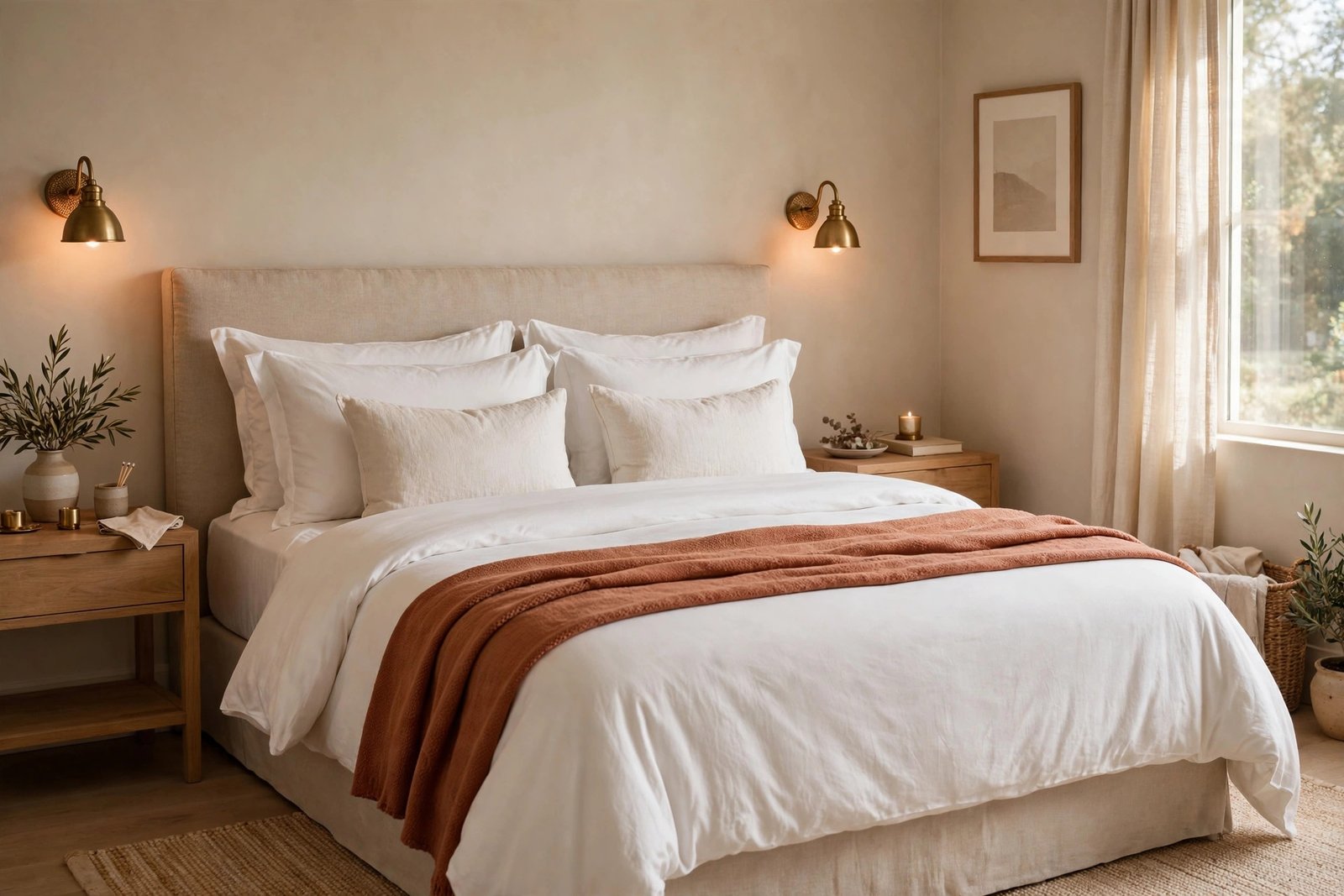
- Copy the hotel bed formula: crisp white sheets + duvet + 2 sleeping pillows + 2 shams + 1–2 cushions + a folded throw — it’s the first thing guests notice.
- Mount curtain rods 4–6 inches above the frame and extend them past the window: a $60–$100 change that makes the room feel twice as tall.
- Swap table lamps for wall sconces to free the entire nightstand for a carafe, a book, and a phone.
- Layer blackout curtains over sheers instead of blackout alone — full light control without a cave-like daytime feel.
- A folding luggage rack ($30–$60) is the single cheapest hotel signal you can add to a guest room.
- Leave one empty drawer and 6–8 empty hangers; guests live out of suitcases when they can’t unpack.
Choose a Statement Headboard Worth Checking In For
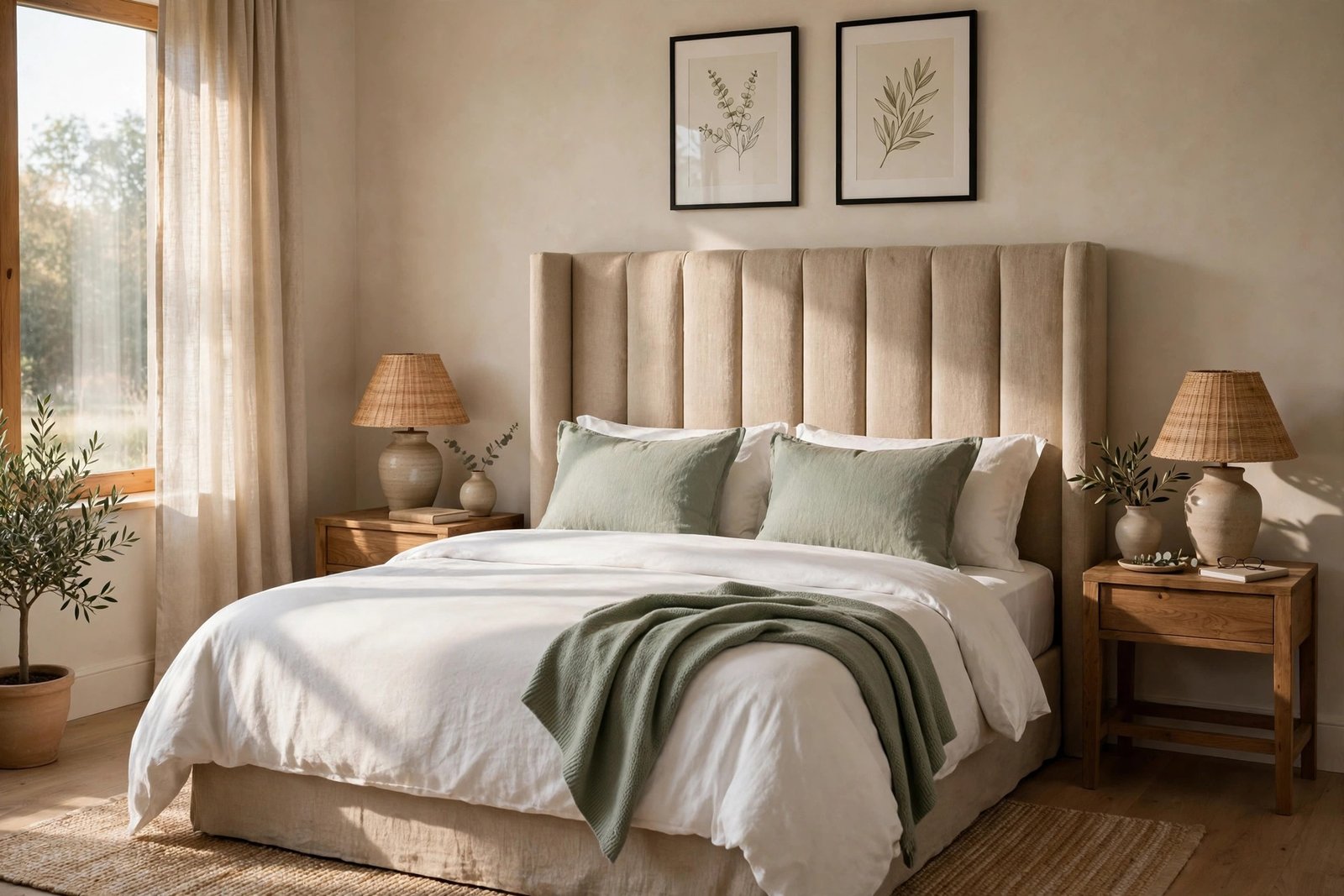
Boutique hotels understand that the bed is the room’s billboard, and the headboard is the logo. An upholstered headboard in linen, velvet, or even a bold color instantly gives the room a designed feel — no gallery wall required. Size it right: the headboard should extend at least 3 inches past the mattress on each side, and sit high enough that pillows don’t swallow it (roughly 48–54 inches tall for a queen). Budget $150–$400 for a good upholstered queen or king piece. In my experience, guests photograph the bed more than any other corner of the room, so this is the single purchase with the biggest visual return.
Layer Bedding the Way Boutique Hotels Do
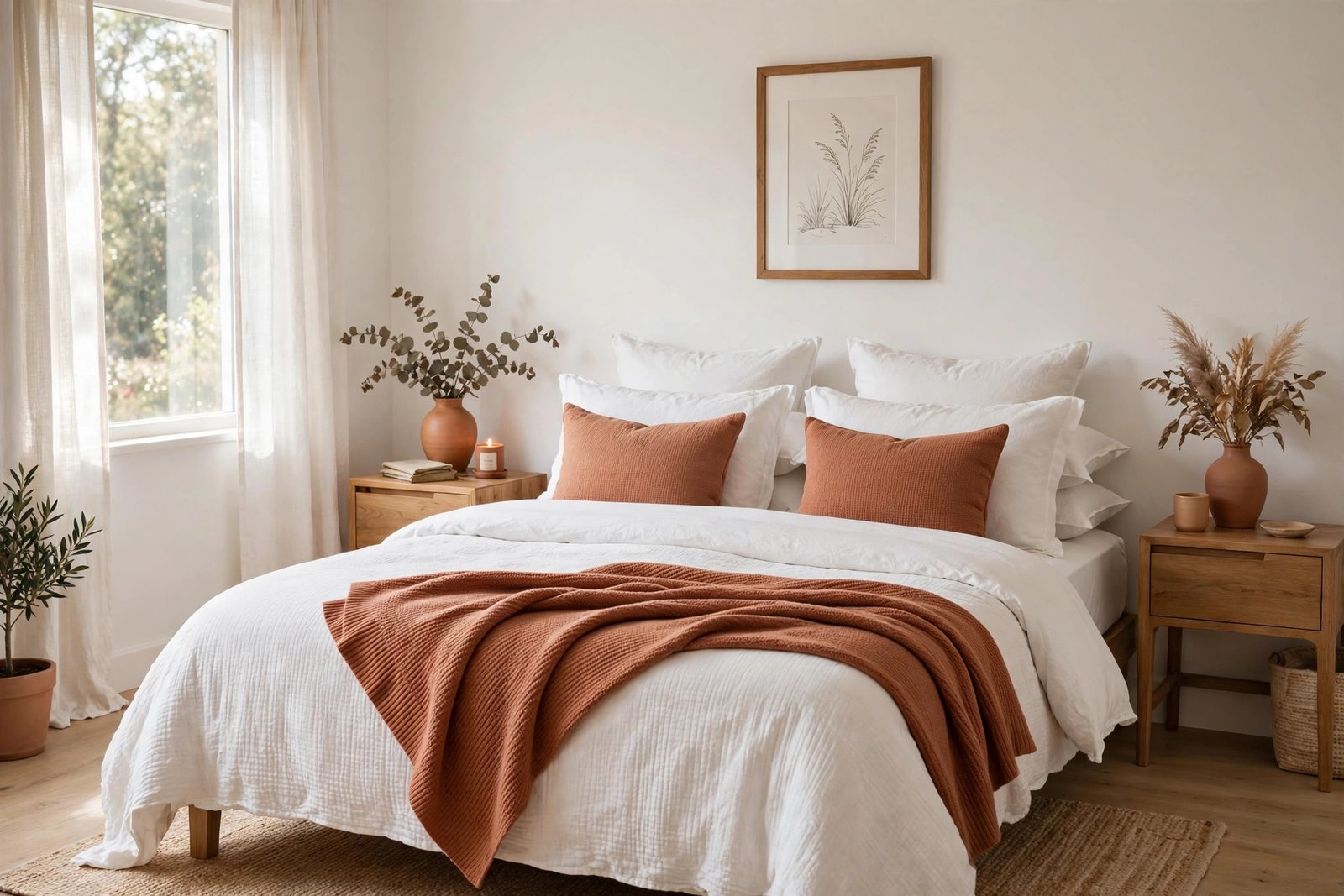
The difference between a guest bed and a hotel bed is almost entirely layering. Start with crisp white or ivory cotton sheets — a 300–400 thread count sateen feels luxurious without hotel-laundry prices — then add a duvet that’s one size larger than the bed. This oversized-duvet trick is what makes hotel beds look so abundant. Stack two sleeping pillows upright, two standard shams in front, and one or two small decorative cushions, then finish with a folded throw across the foot. Tip: keep spare blankets folded in a basket nearby so guests can adjust their own warmth without hunting through your closets. Expect to spend $80–$200 for a full layered set.
Keep Bedding White and Go Bold Everywhere Else
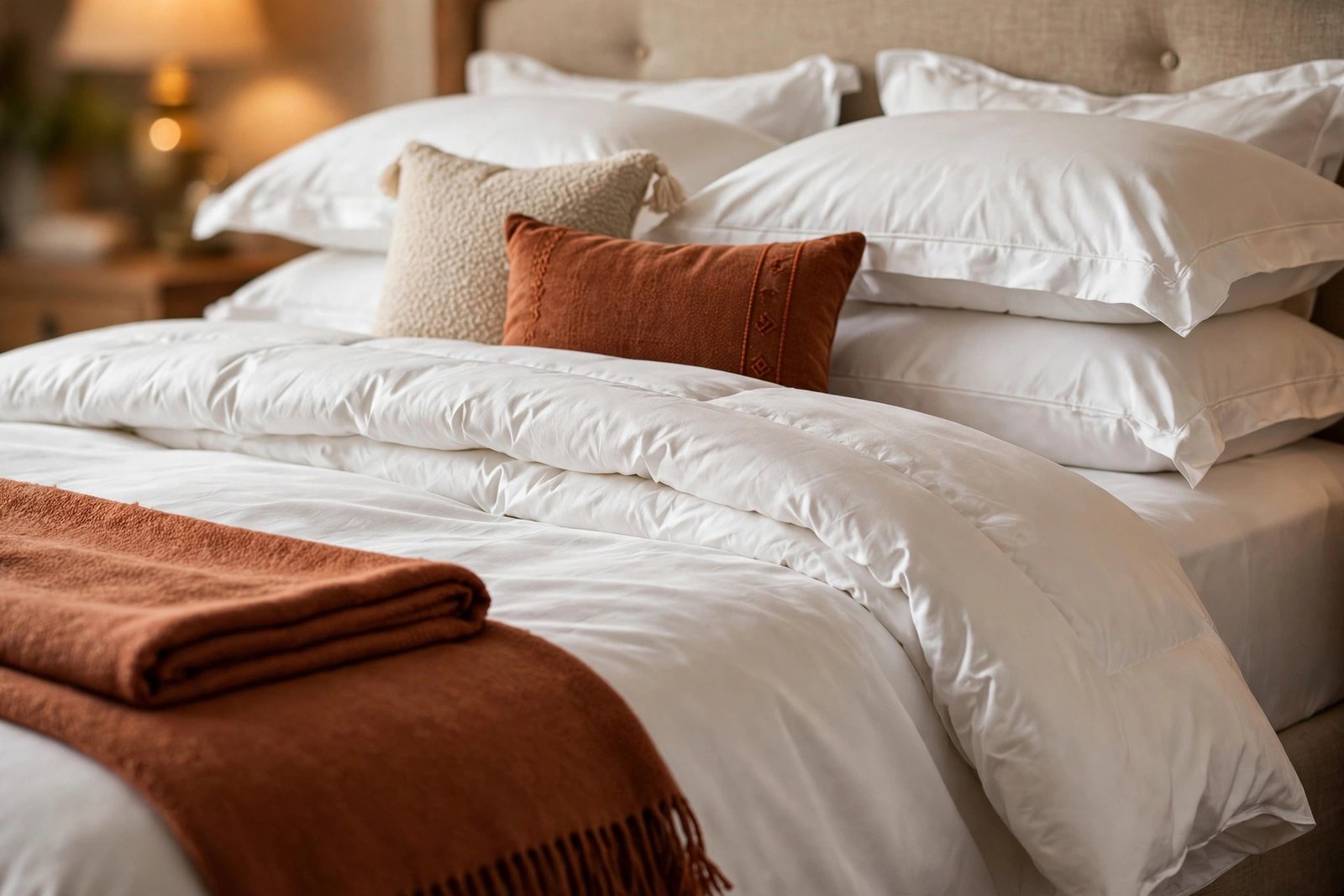
Hotels keep bedding white for a reason: it signals clean, and it photographs beautifully. The trick is not letting the room turn sterile. Keep sheets, duvet, and pillowcases white, then bring warmth through the layers around them — a terracotta or sage throw, a patterned lumbar cushion, warm wood nightstands, or a deep accent color on one wall. White bedding also stretches your budget further, since it never clashes when you swap accent pieces seasonally. Just commit to a stain-treatment routine (an oxygen-based stain remover handles nearly everything) so the whites stay hotel-crisp between visits.
Swap Table Lamps for Wall Sconces or Bedside Pendants
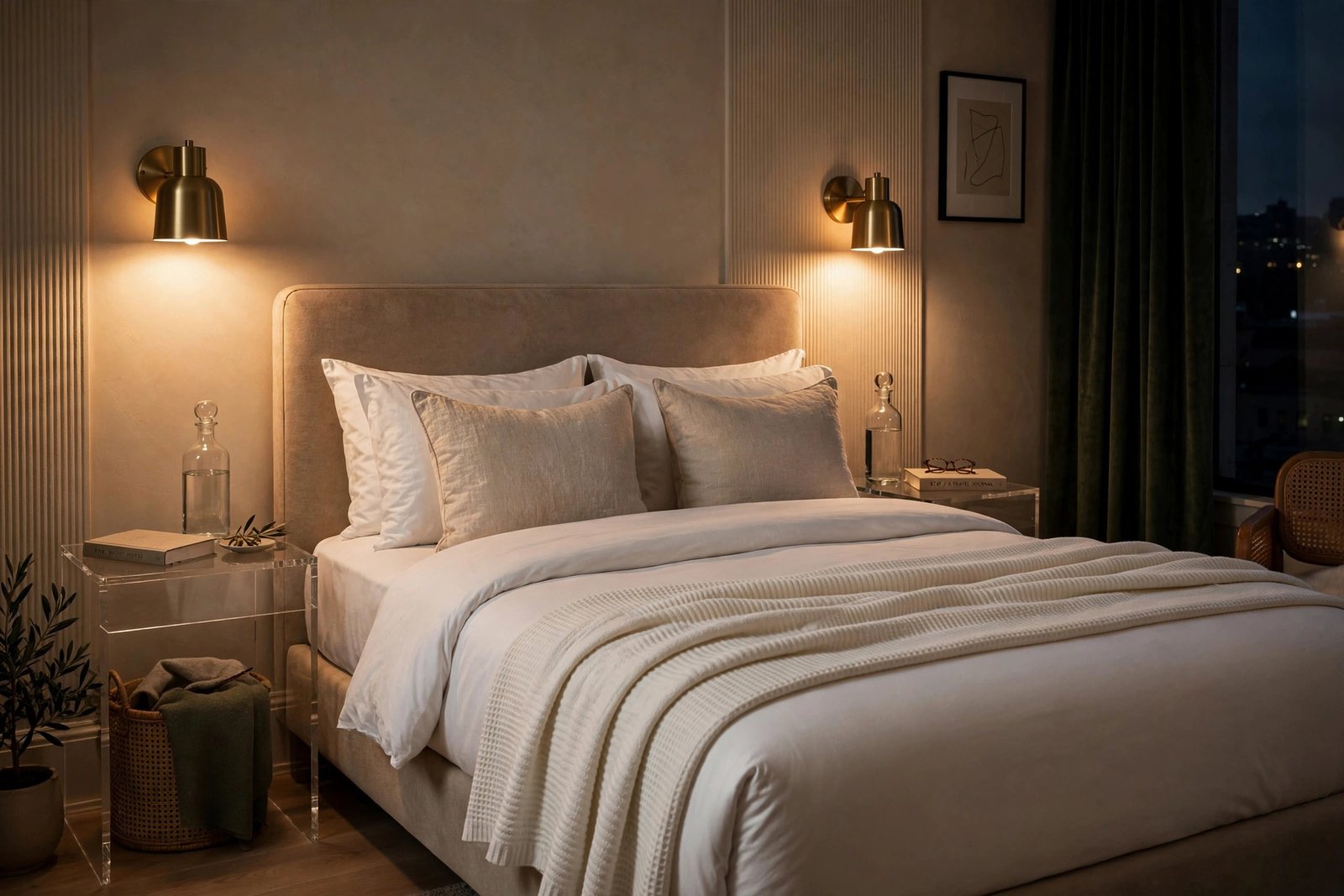
One overhead light is the fastest way to make a guest room feel like a holding cell. Wall sconces or hanging pendants on either side of the bed do double duty: they create the warm pools of light hotels are known for, and they free the entire nightstand surface for a carafe, a book, and a phone. Mount sconces about 20–24 inches above the top of the mattress so guests can read without glare. Dimmable bulbs are worth the extra few dollars — guests have different sleep habits, and giving them control is a luxury signal in itself. Hardwired pairs run $40–$120; plug-in versions need zero electrician visits.
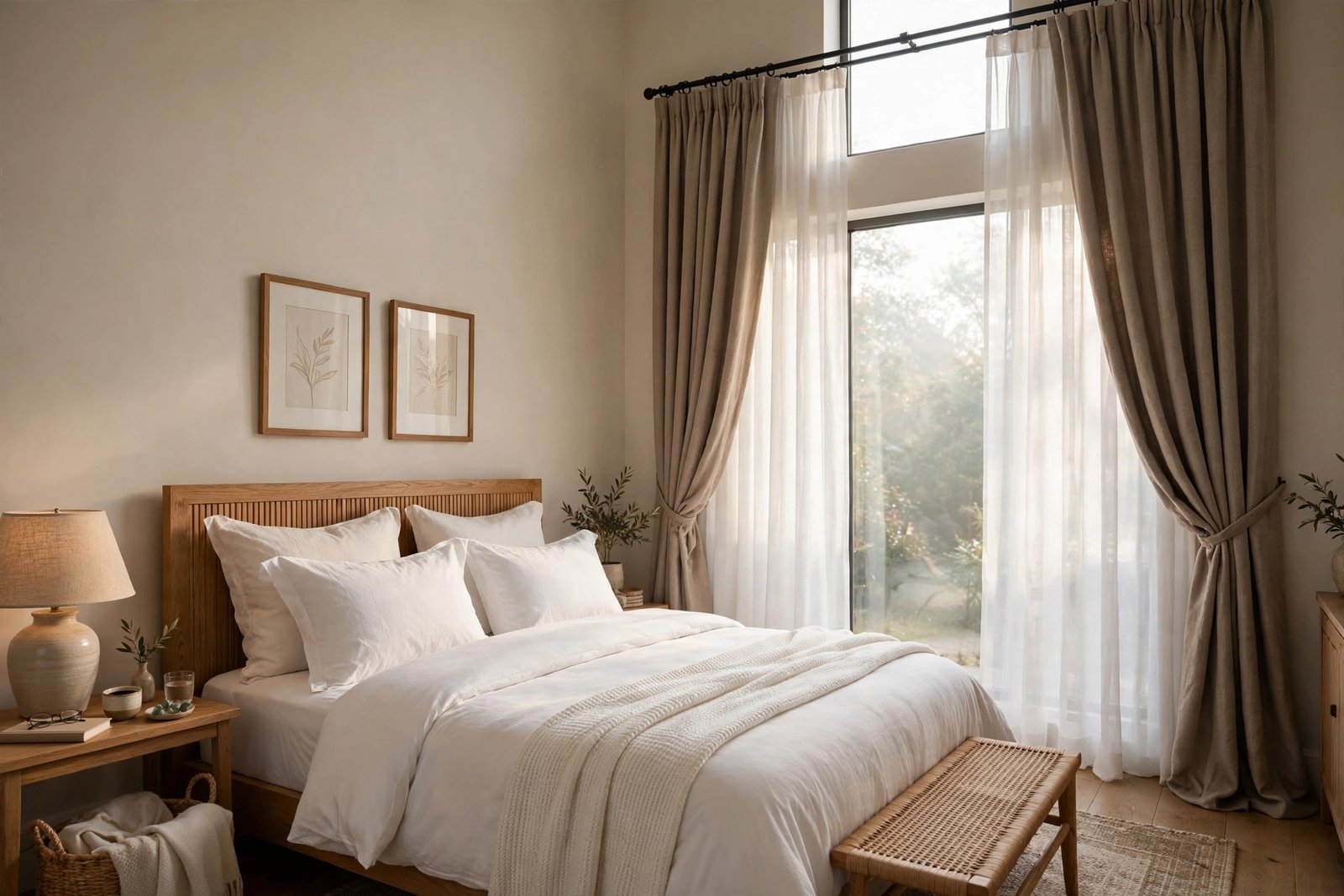
Hang Blackout Curtains Over a Sheer Layer
Light control is one of the top complaints about sleeping away from home, and the fix is cheaper than you think. Hang two curtain layers — a light-filtering sheer underneath and a true blackout panel on top — on a rod mounted 4–6 inches above the window frame and extended 6–8 inches wider than the frame on each side. During the day the sheers soften the light; at night the blackouts give guests the cave-dark sleep hotels are famous for. Expect $60–$120 for both layers on a standard window. This single upgrade can make a street-facing guest room genuinely restful.
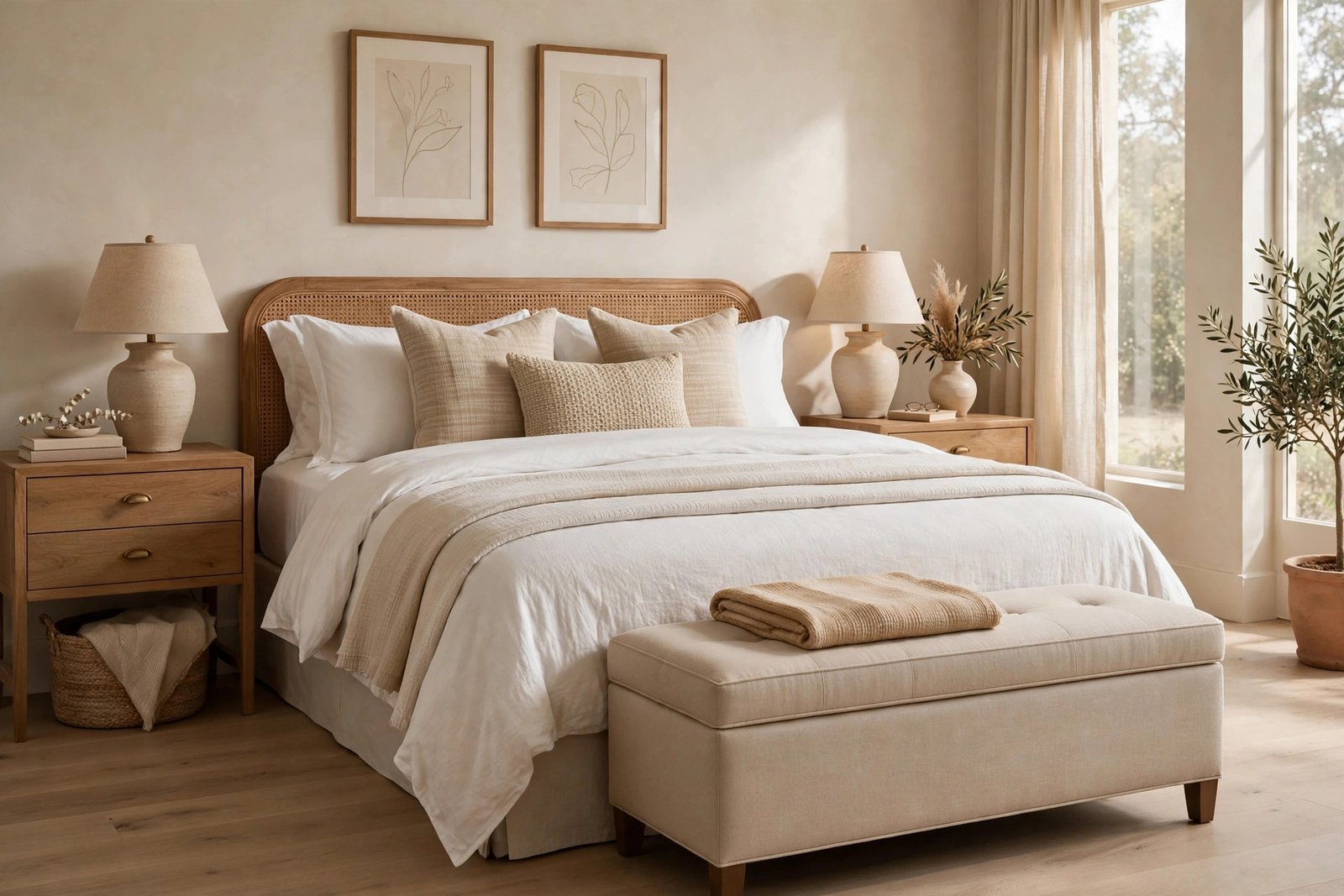
Place a Bench or Chair at the Foot of the Bed
Hotels rarely leave the foot of the bed empty, and neither should you. A bench or low chair gives guests a place to sit while dressing, a landing spot for a suitcase, and a surface for that extra blanket they might want at 2 a.m. In a small room, a storage bench pulls triple duty — seating, luggage stand, and hidden space for spare linens. Look for one roughly the width of the bed (about 48–60 inches for a queen) so it reads as intentional rather than accidental. Upholstered benches in washable fabrics run $80–$180, and they become one of the most-used pieces in any guest room.
Build a Bedside Charging Hub
Nothing dates a guest room faster than a guest crawling behind the nightstand to find an outlet. Dedicate the top drawer or a small tray on one nightstand to a multi-port USB charger ($15–$30) with cables for the common phone types, and make sure there’s an accessible outlet within arm’s reach of the bed — at least two free sockets. I’ve found that guests remember this detail more than the thread count. Add a small card with the Wi-Fi password right beside it, and you’ve solved the two most common “can I ask my host for…” moments before they happen.
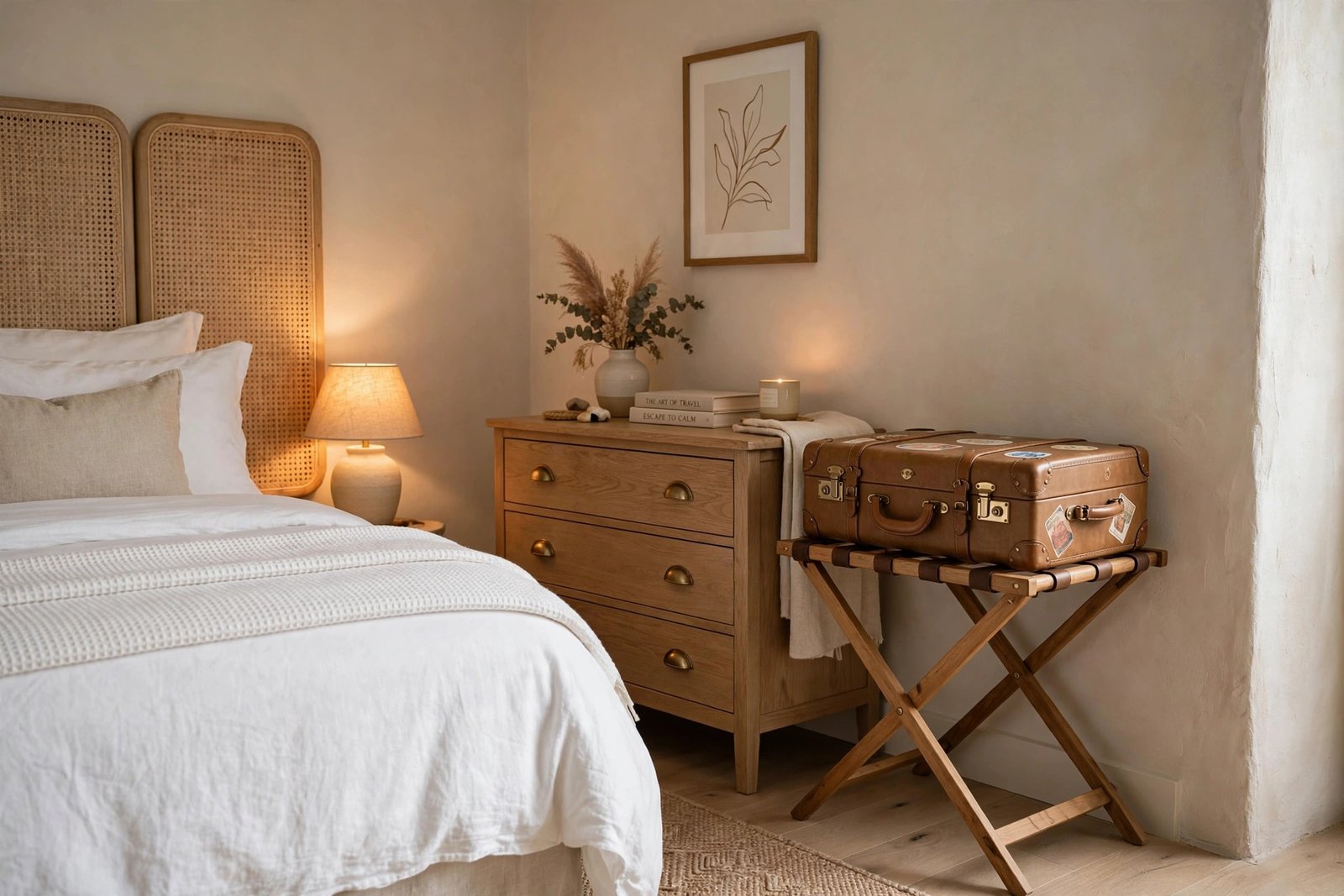
Add a Folding Luggage Rack
If there’s one $30–$60 purchase that screams boutique hotel, it’s this. A folding luggage rack gives guests somewhere to park their suitcase other than the bed or the floor, keeps clothes at a comfortable height, and folds flat into a closet when no one’s visiting. Wood or bamboo versions look far better than the metal hotel-surplus look — match the rack’s finish to your nightstands for a coordinated feel. Place it near the door or beside the dresser, never blocking the walkway to the bathroom. Guests who travel often will notice this immediately and quietly respect you for it.
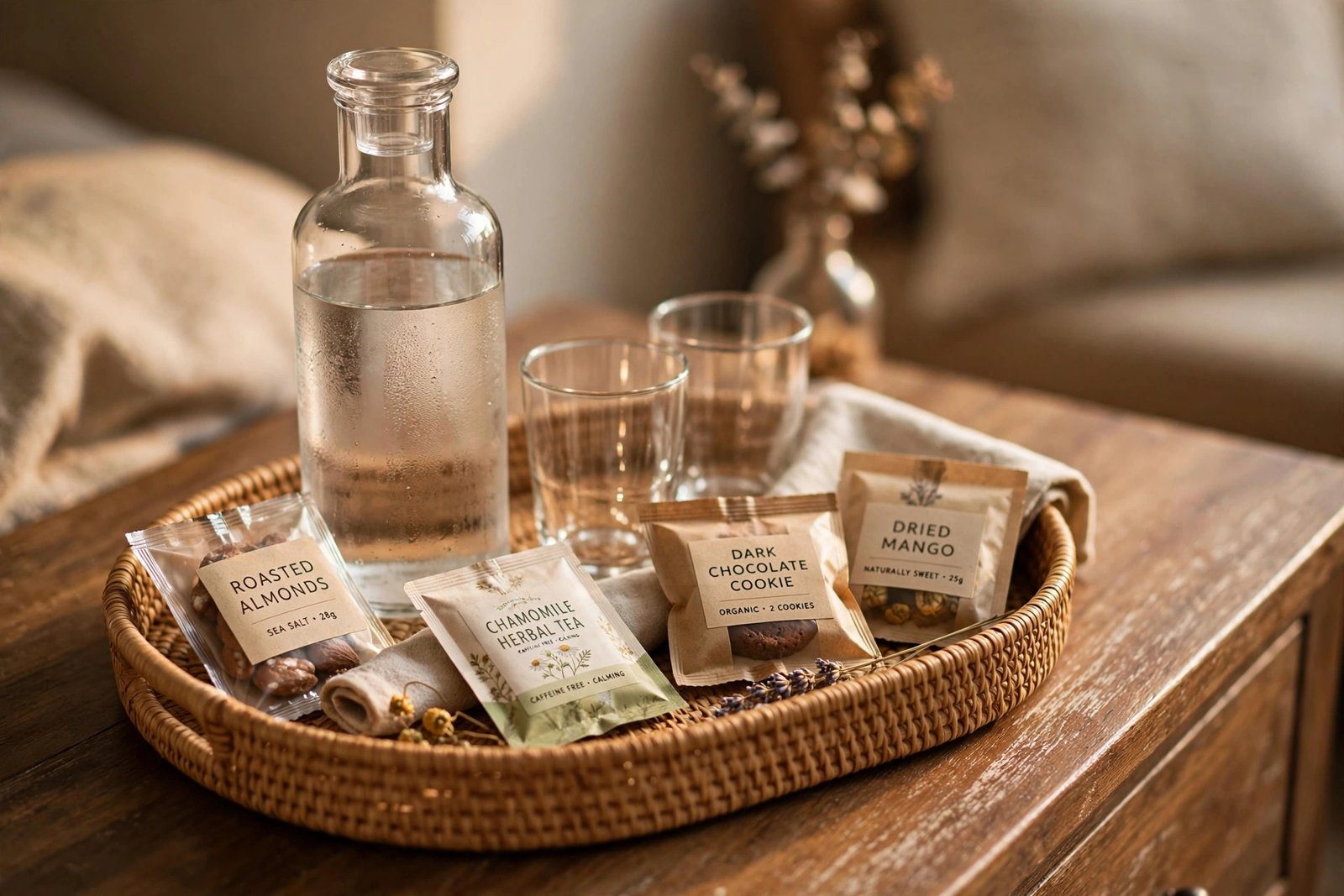
Set Out a Welcome Tray With Water and Snacks
Hotels put chocolate on the pillow for a reason: a tiny arrival ritual makes people feel cared for. Assemble a small tray — a carafe or two bottled waters, a few packaged snacks, maybe a sachet of herbal tea — and set it on the dresser or nightstand before guests arrive. It costs under $15 and delivers outsized warmth. This is the touch guests mention most when they thank you afterward, more than the decor. Keep a backup stash in the closet so you can reset the tray in two minutes when someone books a last-minute stay.
Commit to One Calming Color Palette
The rooms that feel most hotel-like are the ones with a disciplined palette: three colors, max. Warm white walls, a natural wood tone, and one accent — terracotta, sage, navy, or muted gold — carried through the throw, the art, and one or two accessories. Anything more and the room starts to feel like a showroom rather than a retreat. If you’re unsure where to start, paint the walls a warm off-white (it flatters every skin tone and every photo) and let the textiles do the talking. If you want more drama, a bedroom wallpaper accent wall behind the headboard adds hotel-worthy depth without repainting the whole room.
Hang One Large Artwork Above the Bed
Small, scattered frames make a guest room feel like leftover storage. One oversized piece above the headboard — a landscape print, an abstract canvas, or a woven textile hanging — gives the wall the same confident focal point hotel designers rely on. Aim for art that’s about two-thirds the width of the bed, centered at roughly 57 inches from the floor to its middle (the gallery standard). A large canvas print in a simple frame costs $60–$150 and does more for the room than five small prints ever will. Keep the subject calm: guests sleep under this, so skip anything jarring.
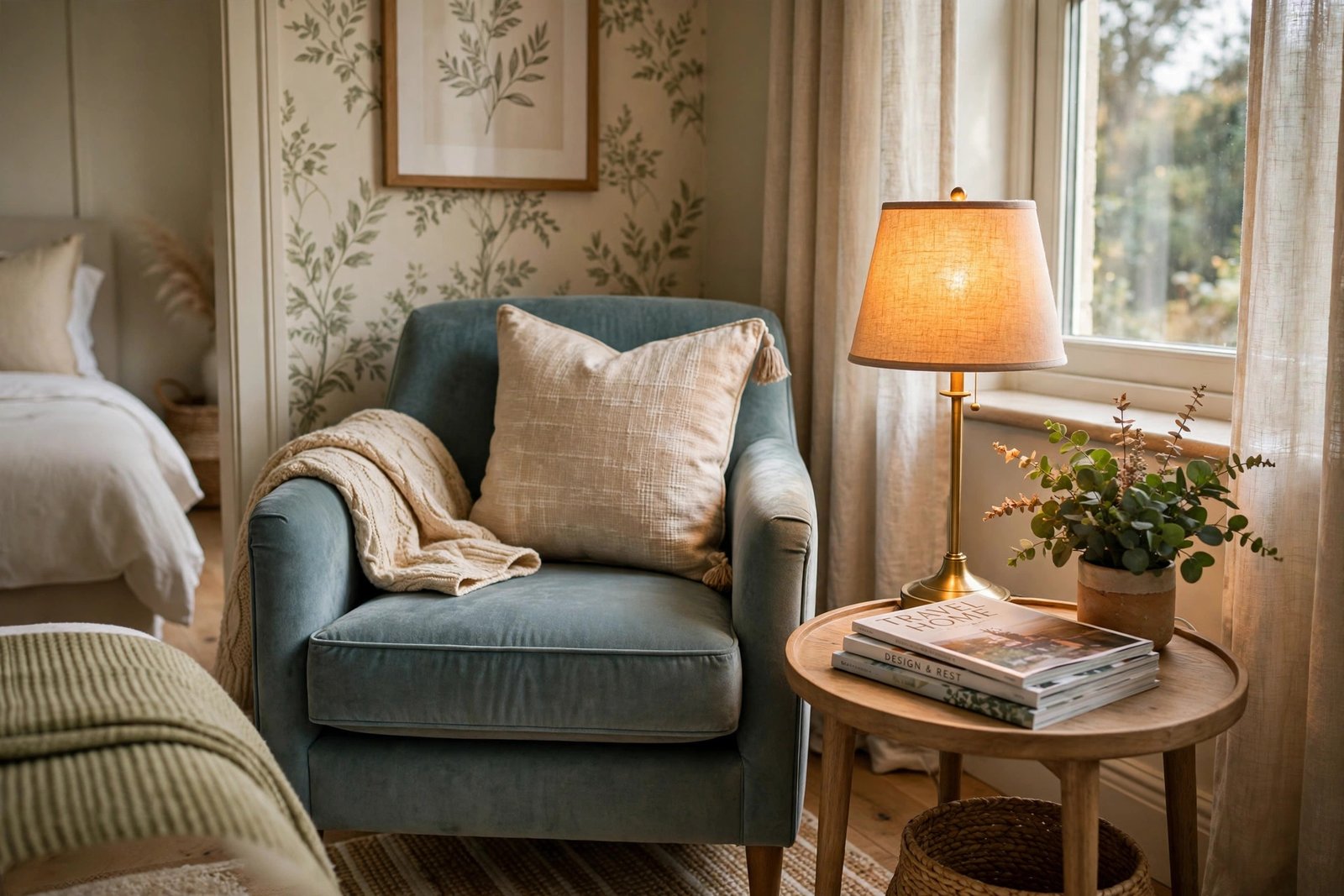
Carve Out a Reading Corner With a Chair and Lamp
Hotels give you somewhere to sit that isn’t the bed, and that chair gets used more than hosts expect. Tuck a comfortable armchair into an unused corner with a small side table and a floor or table lamp — instant reading nook, morning-coffee spot, and somewhere to take a work call. A compact accent chair ($120–$300) plus a $25–$50 lamp is enough; you don’t need a full sitting area. Round the corner out with a small plant or a stack of two or three current magazines. If floor space is tight, one stylish chair reads better than squeezing in a loveseat nobody asked for.
Make Small Guest Rooms Do Double Duty
Not every guest room gets to be a guest room full-time. If yours doubles as an office or craft room, choose furniture that serves both lives: a sleeper sofa or daybed ($300–$800) instead of a permanent bed, a desk that doubles as a nightstand, and a wardrobe with one shelf permanently cleared for guest use. The rule that keeps it working: when guests arrive, the room should convert in under 15 minutes. Keep a labeled bin with guest linens, welcome-tray supplies, and the Wi-Fi card, so hosting never requires a weekend of prep. For more flexible-bedroom strategies, see these renter-friendly bedroom ideas.
5 Guest Room Mistakes That Kill the Hotel Feel
- One harsh overhead light — the single biggest giveaway of an amateur guest room; layer sconces, lamps, and dimmers instead.
- No empty storage — a closet full of your stuff forces guests to live out of a suitcase for their entire stay.
- Decorative-only pillows with nowhere to put them — provide a bench or basket so the nightly pillow pile has a home.
- Mismatched, leftover furniture — one cohesive palette and two intentional anchor pieces beat five random hand-me-downs.
- Forgetting the senses — hotels control scent, sound, and light; a subtle diffuser and blackout curtains cost little and change everything.
Guest Bedroom FAQs
How do I make my guest room feel like a hotel?
Start with the bed: white layered bedding, a statement headboard, and 4–6 pillows arranged tallest to smallest. Then add layered lighting (sconces or pendants plus dimmers), blackout curtains over sheers, and a few hotel signals like a luggage rack and a welcome tray. These five moves deliver most of the effect.
What do guests actually need in a guest bedroom?
The essentials are a comfortable bed with extra blankets, blackout curtains, a bedside lamp, accessible outlets with USB charging, empty drawer and closet space, a mirror, and the Wi-Fi password in writing. Everything beyond that — the welcome tray, reading chair, nice toiletries — is what turns a stay from adequate to memorable.
How can I decorate a guest bedroom on a small budget?
Prioritize the highest-impact, lowest-cost moves first: fresh white bedding ($80–$200 for a layered set), a folding luggage rack ($30–$60), and a welcome tray (under $15). Paint one accent wall or hang one large artwork for the focal point, and layer lighting with affordable plug-in sconces. You can get the full hotel feel for roughly $300–$500.
What size bed is best for a guest room?
A queen is the sweet spot for most guest rooms — it sleeps couples comfortably and fits rooms as small as 10×12 feet. In tight spaces, a full or a quality daybed works well; for rooms that host kids or multiple guests, two twin beds or twin XLs offer the most flexibility. Match the bed to your most common guest, not the rarest scenario.
Your guest room doesn’t need a renovation to feel like a boutique hotel — it needs intention. Layer the bedding, warm up the lighting, and add the small touches hotels have perfected, and your spare room will become the space guests rave about. For more bedroom inspiration, browse these bedroom wallpaper accent wall ideas, TV wall ideas for the bedroom, and renter-friendly bedroom ideas to keep the whole room feeling designed.






One Comment