
17 TV Wall Ideas for Bedrooms That Look Intentional (2026)
TV wall ideas bedroom searches all come from the same dilemma: you want a TV in the bedroom, but you don’t want it to look like a dorm room or an electronics store. Bedrooms play by different rules than living rooms — you watch lying down, the viewing distance is shorter, the light is dimmer, and the TV shares the room with sleep. Every idea below is built for those realities: correct mounting heights measured from the mattress, layouts for genuinely small bedrooms, cable-hiding that works around dressers and nightstands, and styling that makes the screen feel like part of the room rather than an intruder.
Key Takeaways
- Mount at mattress-eye level — screen center 40–45 inches from the floor for most beds, roughly 6–10 inches lower than living-room height.
- Opposite the bed beats beside the bed for neck comfort, but side-wall and corner layouts save small bedrooms.
- 32–43 inches is the sweet spot for bedroom TVs; bigger screens overwhelm typical 8–10 foot viewing distances.
- A dresser-top setup is the easiest renter-friendly option — no mounting, no holes, and the dresser doubles as a console.
- Hide cables with paintable channels routed behind the dresser or nightstand — ten minutes, under $15.
- Face the screen away from windows — bedroom glare is worse than living-room glare because you watch in the dark.
1. Mount at Mattress-Eye Level, Not Standing Height
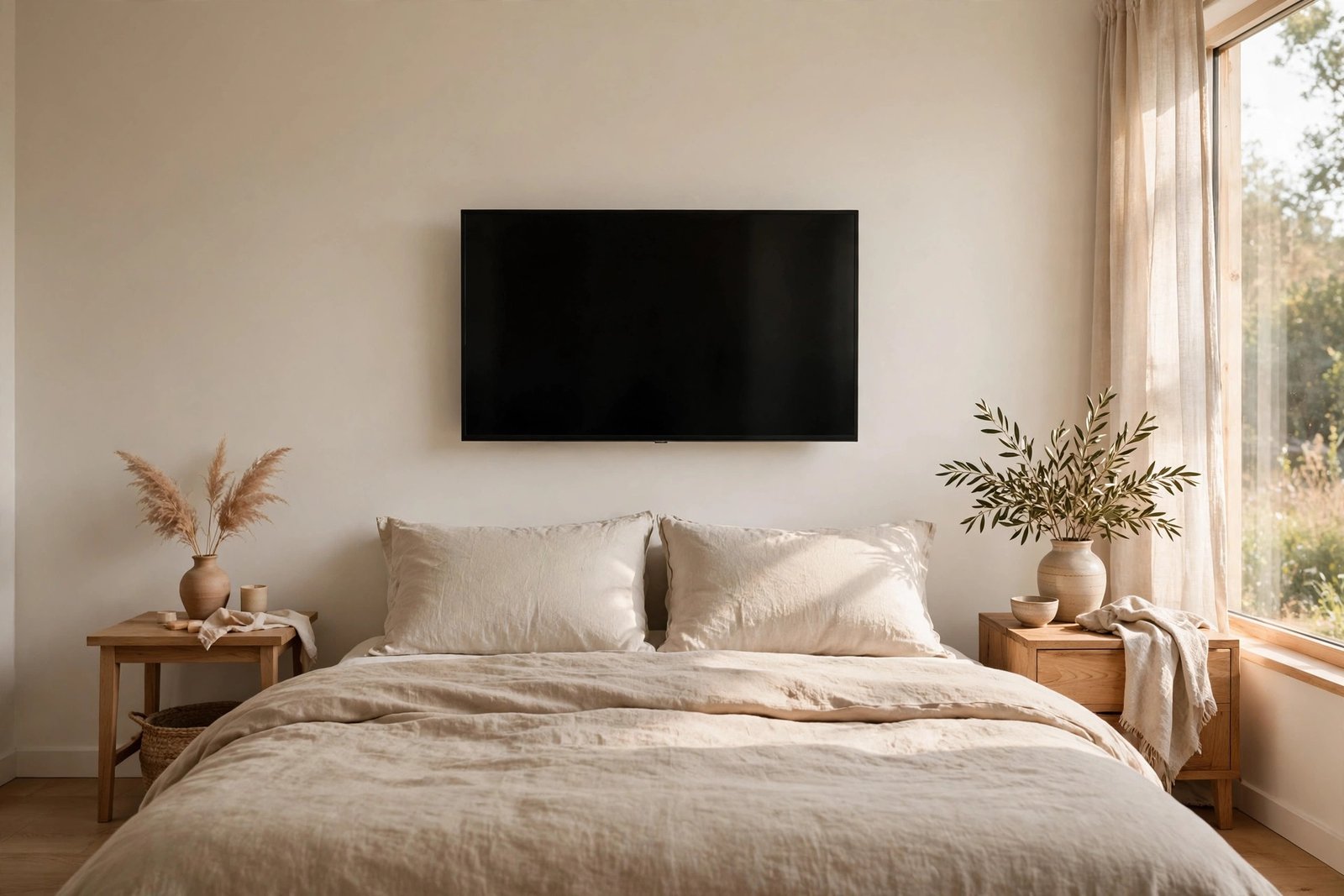
The number-one bedroom TV mistake is mounting at living-room height. You watch from lying down, so the screen center should sit at 40–45 inches from the floor for a standard bed — roughly where your eyes rest against the pillows. Sit on your bed, look straight ahead at the opposite wall, and have someone mark the spot; that’s your center. Too high means craning your neck every night, which is exactly how a bedroom TV becomes a regret instead of a ritual. A simple tilting mount lets you angle it down a few degrees for perfect alignment.
Price: $25–$60 for a tilting mount
2. Set the TV on the Dresser Instead of the Wall
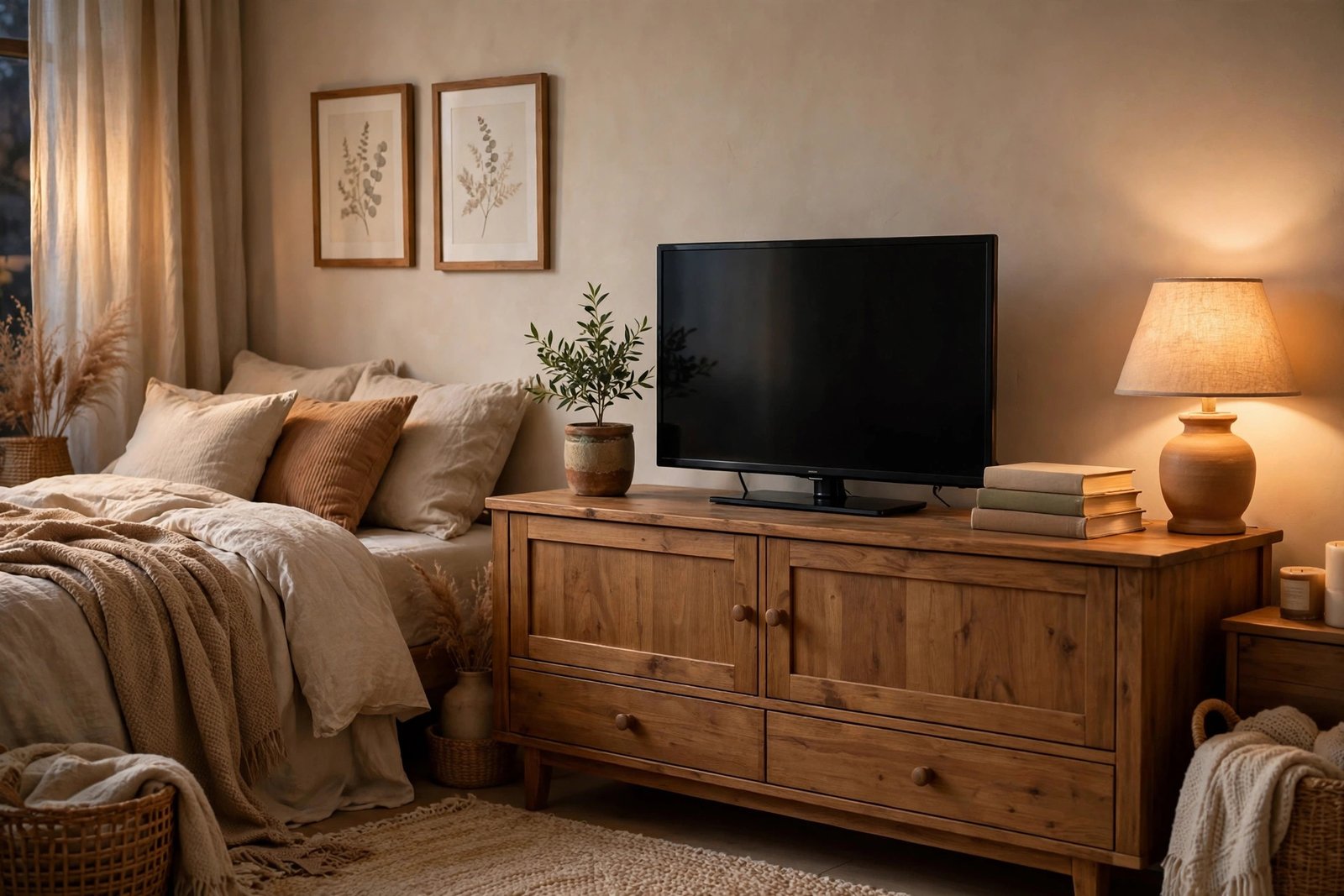
Wall-mounting isn’t mandatory — and in rentals, it’s often not allowed. A TV sitting directly on the dresser is the simplest bedroom setup there is: no mount, no holes, no stud-finding. The trick to making it look intentional is proportion — the TV width should be roughly two-thirds the dresser width, and the dresser top gets styled like a console (more on that in idea 14). Keep the screen at least 4 inches from the dresser’s front edge for stability, and route cables straight down behind. Done well, nobody can tell it wasn’t planned.
Price: $0 (use the dresser you have)
3. Use a Swivel Mount for Bed-and-Chair Viewing
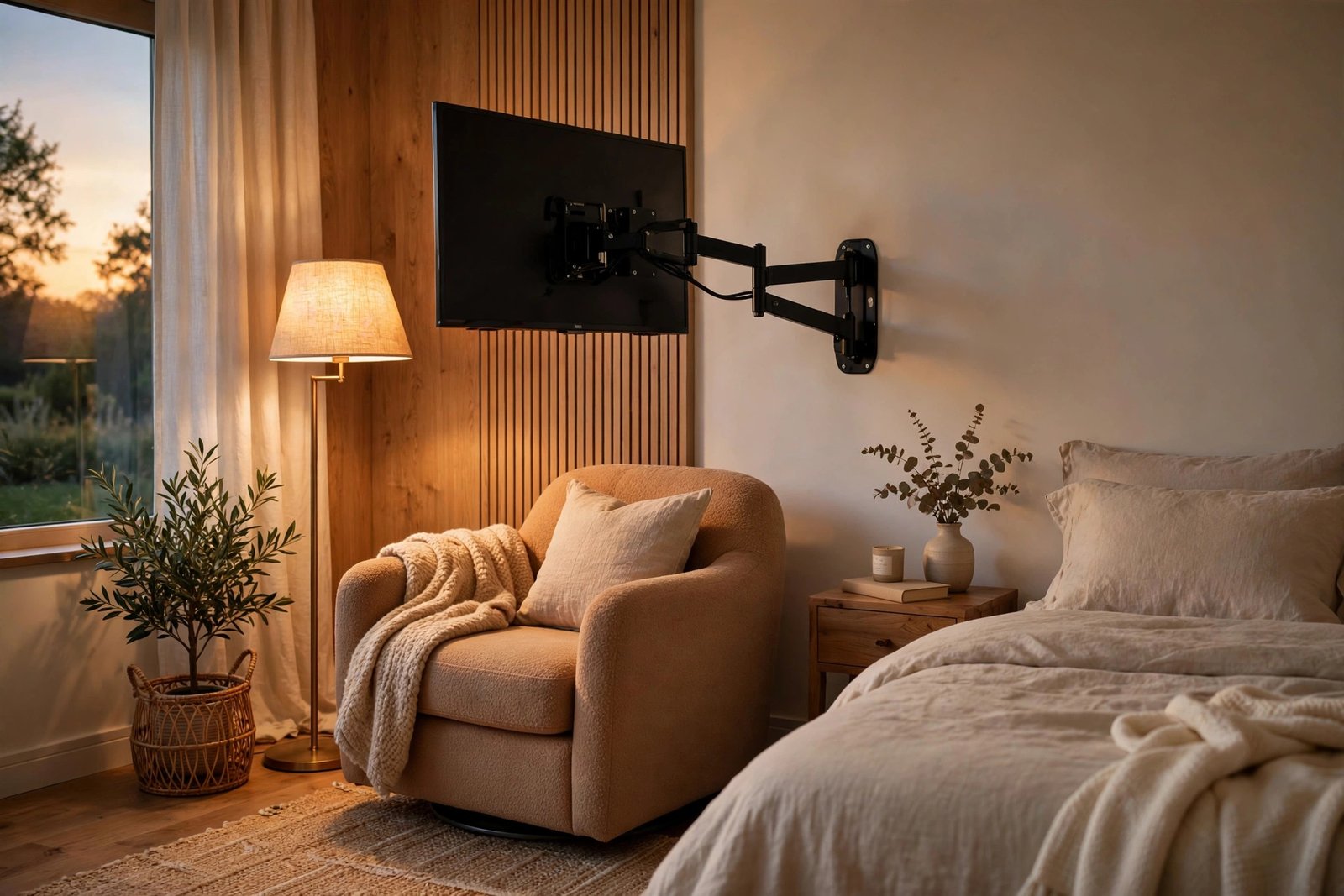
If your bedroom doubles as a reading or dressing space, a fixed mount forces a choice between the bed and the chair. A full-motion swivel mount solves it: pull the TV out and angle it toward the armchair during the day, swing it back flat to the wall for bedtime viewing. Look for a mount rated at least 20% above your TV’s weight, and mount into studs or use rated drywall anchors — a swivel arm puts real leverage on the wall. In my experience, this is the mount most bedroom-TV owners wish they’d bought first.
Price: $35–$80 for a full-motion mount
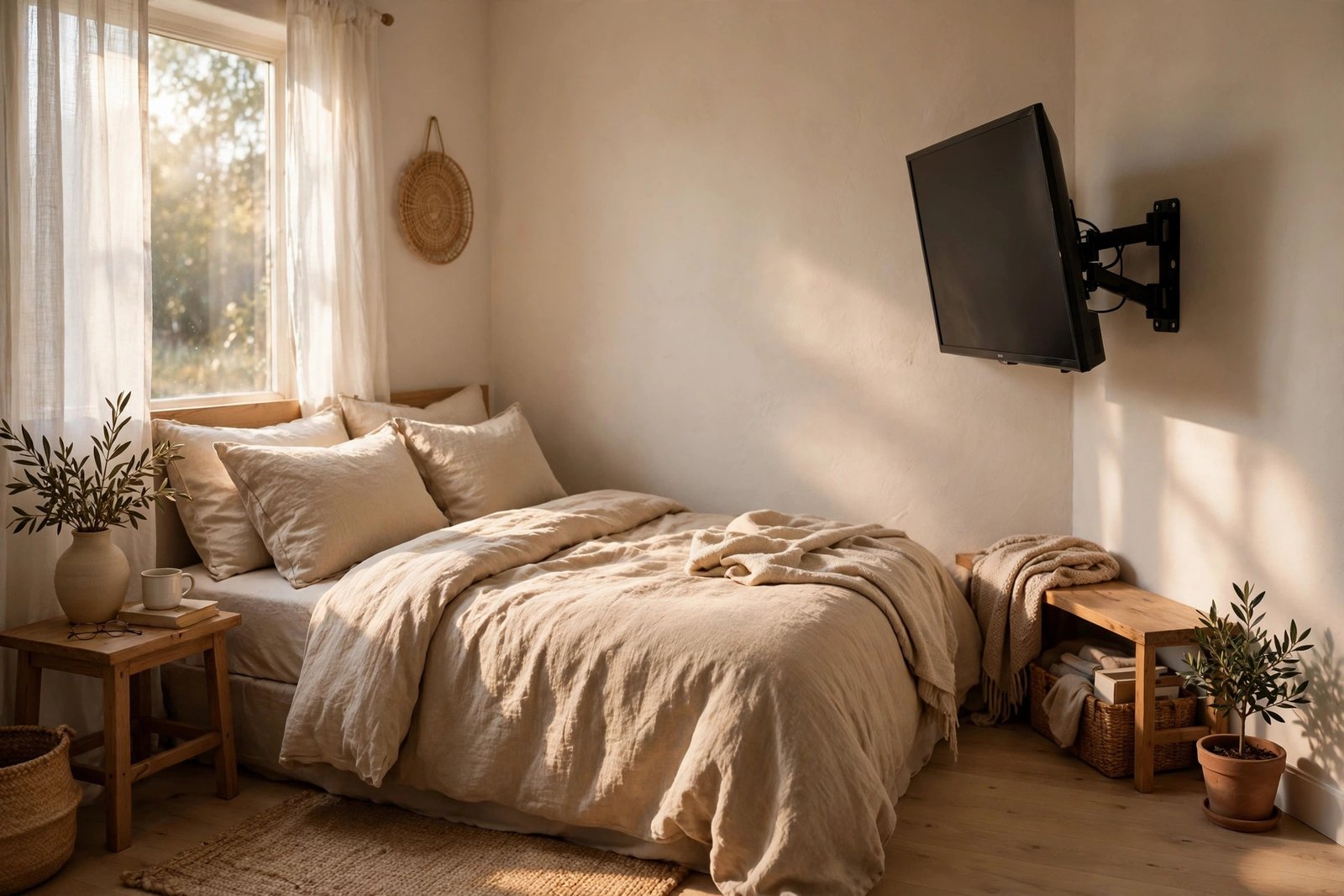
4. Angle It Into the Corner of a Small Bedroom
Small bedrooms often have no usable flat wall opposite the bed — the door, closet, and windows eat every option. A corner placement rescues the layout: mount the TV on a corner-friendly arm or set it on a small corner console, angled at 45 degrees toward the pillows. It frees the main walls for the dresser and art, and the angled screen actually feels more cinematic from bed. Measure your viewing distance from pillow to corner — 6–8 feet suits a 32–40 inch screen perfectly.
Price: $30–$70 for a corner mount or console
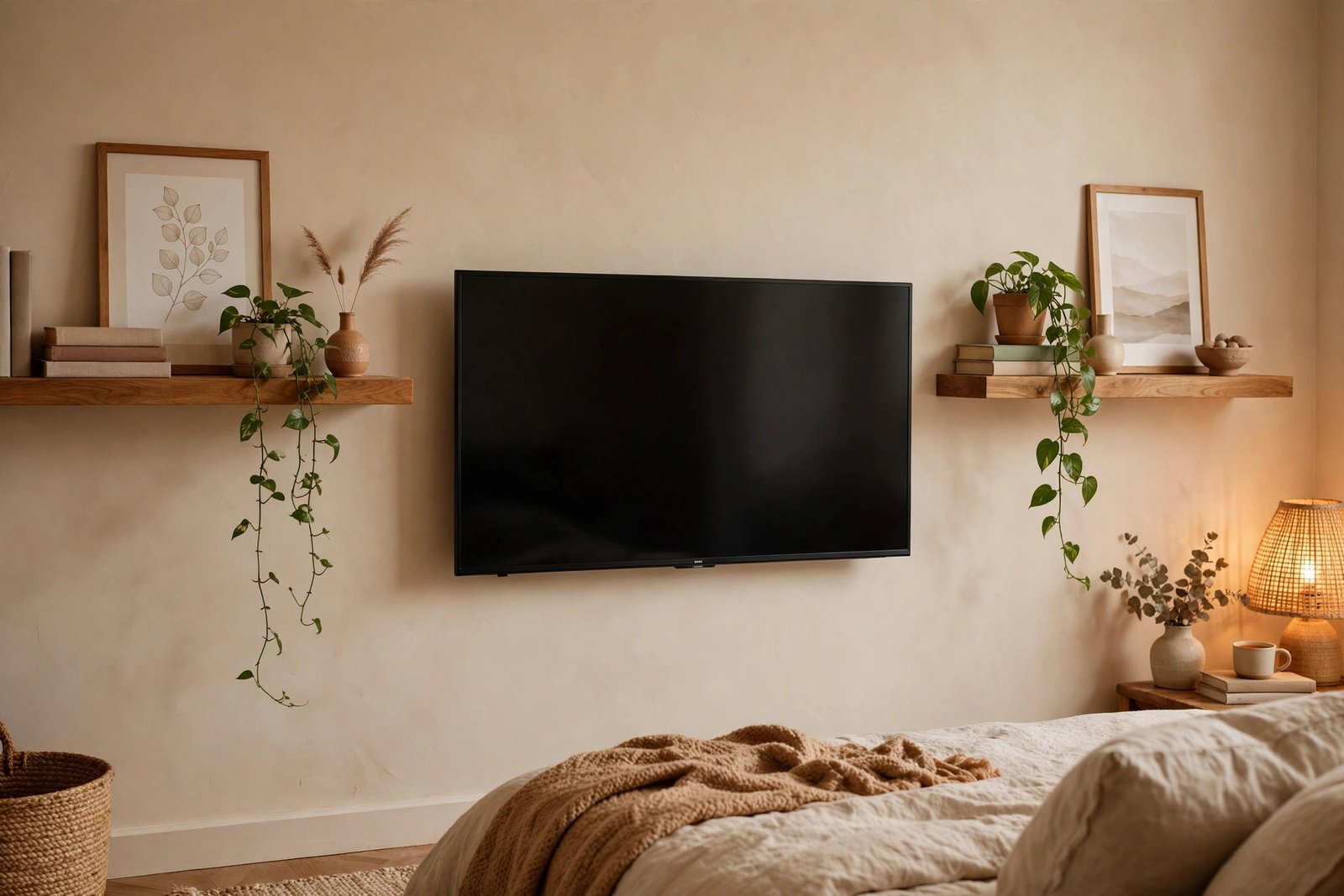
5. Float Two Shelves Around the TV
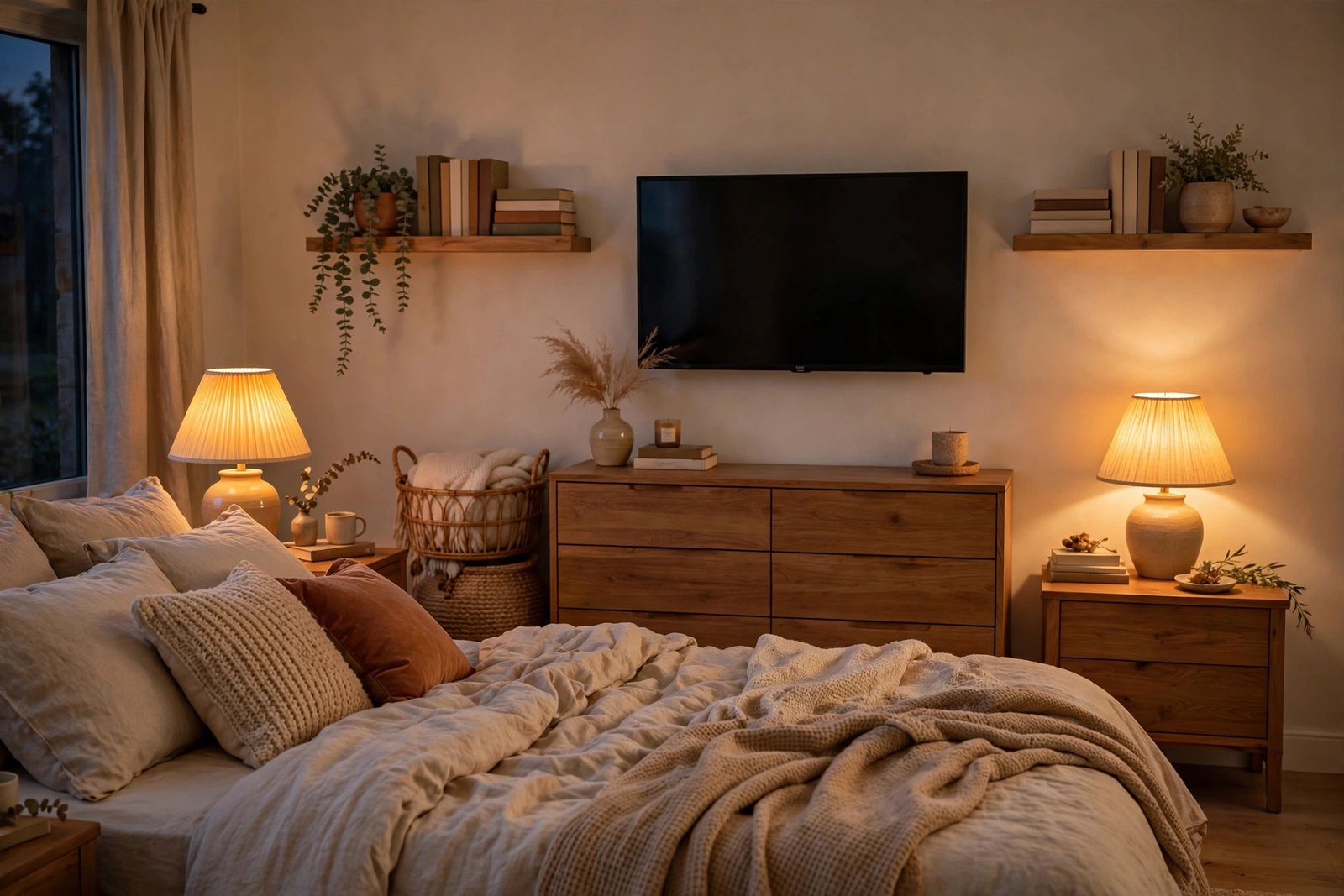
A bare TV on a bare wall reads as “electronics”; the same TV with two floating shelves reads as “designed.” Mount one shelf below the screen (it doubles as a soundbar perch) and one above or to the side, then style them with books, a small plant, and one framed print. Keep shelf styling light and bedroom-calm — this isn’t the living room, so skip the busy gallery. The shelves also give cables a hidden path: run them behind the lower shelf straight down to the outlet.
Price: $30–$70 for two shelves

6. Run Cables Through Paintable Channels
Nothing ruins a bedroom TV wall faster than a black cable drooping down white paint — and it’s most visible at night when the screen glows. Paintable adhesive cord channels stick to the wall, snap shut over your HDMI and power cables, and disappear with one coat of wall-colored paint (keep the leftover paint for touch-ups). Route the channel behind the dresser or nightstand where possible so most of it is hidden by furniture anyway. Ten minutes of work, and the wall looks like the cables were never there.
Price: $10–$18
7. Size It Right: 32–43 Inches for Most Bedrooms
Bigger is not better in the bedroom. At a typical 8–10 feet from pillow to wall, a 55-inch screen fills too much of your field of vision and dominates the room even when it’s off. The sweet spot is 32–43 inches: large enough for comfortable viewing, small enough to style around and to disappear into the decor. Measure your actual pillow-to-wall distance and use the 1.5–2.5x diagonal rule — then round down, not up. Your bedroom should still feel like a bedroom first.
Price: $200–$450 for a quality 40–43 inch TV
8. Put It on the Side Wall Next to the Bed
When the wall opposite the bed is all windows or closet doors, the side wall is your answer. Mount the TV on the wall beside the bed (the long wall the bed’s headboard sits against works well) and watch at a slight angle — a swivel mount (idea 3) makes this genuinely comfortable. This layout keeps the foot of the bed open, which matters in narrow bedrooms where a dresser-plus-TV wall would block the walkway. Style the wall under the TV with a low bench or storage ottoman to ground it. If that side wall has a window, a seat beneath it turns the spot into a reading nook: window seat ideas for the bedroom show how to build and style one that fits a small room.
Price: $35–$80 for a swivel mount
9. Flank It With Two Narrow Bookcases
A TV floating alone on a big bedroom wall looks lost; two narrow bookcases on either side turn it into a proper media wall. The bookcases frame the screen, add closed storage for the clutter bedrooms accumulate, and give you styling surfaces at exactly the right height. Keep the bookcase tops styled and the TV centered between them — symmetry does the heavy lifting here. Freestanding bookcases also mean renters get this look with zero wall damage, which wall-mounted built-ins can’t promise. If you go the built-in route instead, how to style built-in bookshelves shows how to dress the shelves so the TV stays the focal point.
Price: $80–$200 for two narrow bookcases
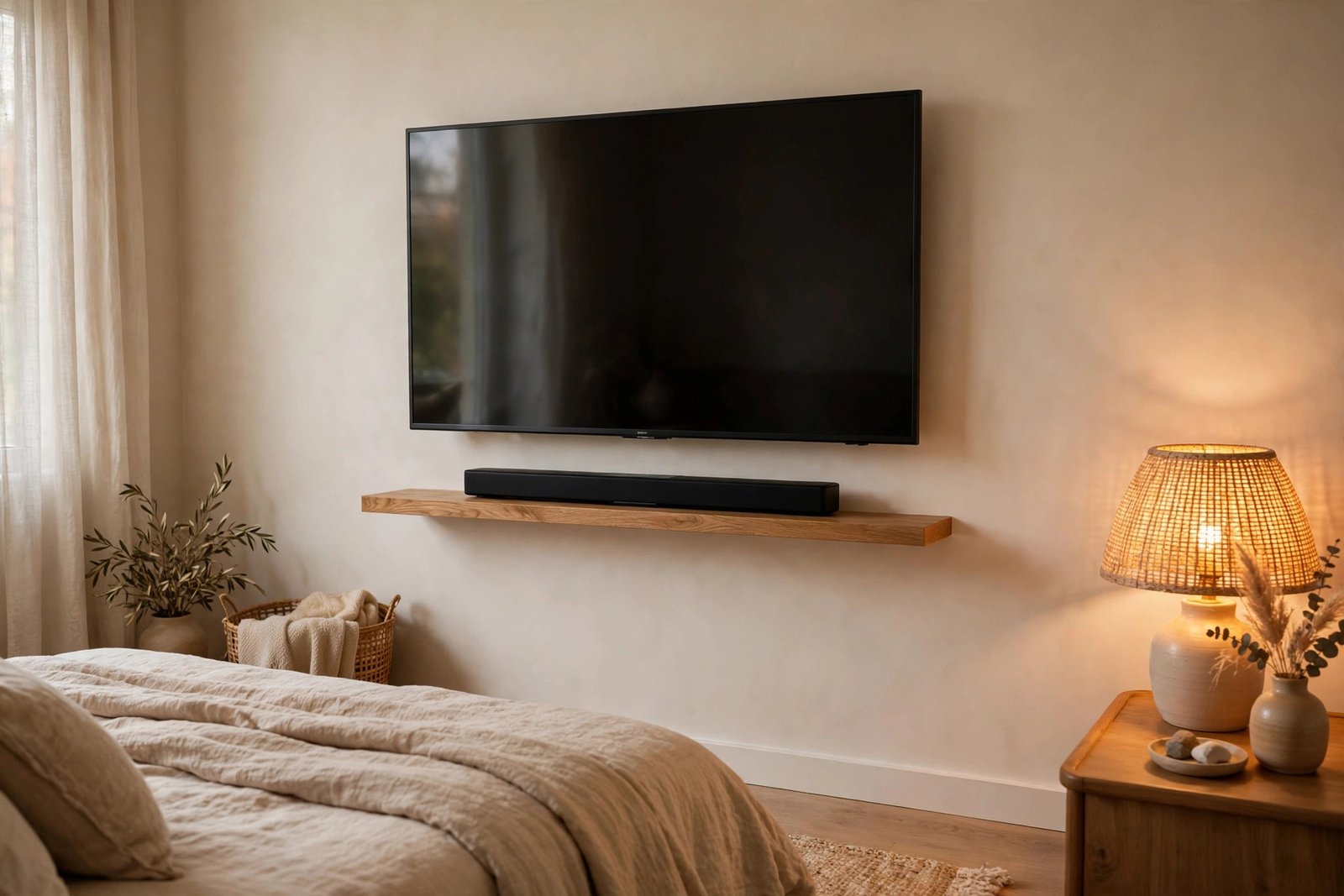
10. Add a Slim Soundbar Shelf Underneath
Bedroom TV speakers are thin and tinny, but full surround sound is overkill where you watch at low volume. A single slim soundbar on a narrow floating shelf under the TV is the middle path: far better dialogue clarity, one visible device, and the shelf hides the cable run to the outlet. Mount the shelf 2–3 inches below the screen so the two read as one unit, and choose a soundbar with night mode — I’ve found dialogue clarity matters more than bass when you’re half-asleep by the third act.
Price: $60–$150 for shelf + soundbar

11. Frame It With a Peel-and-Stick Wallpaper Panel
Here’s the renter-friendly feature wall: a peel-and-stick wallpaper panel sized just larger than the TV, applied directly to the wall behind it. It creates a framed, intentional backdrop — deep green, warm terracotta, subtle limewash texture — that makes the black rectangle look like part of a designed composition instead of an afterthought. Size the panel about 12 inches wider than the TV on each side. When you move, it peels off cleanly, and you’ve had a “custom media wall” for the price of one roll. A wood slat version gives the same framed look with more texture; see wood slat TV wall ideas for the bedroom.
Price: $25–$50 for one roll
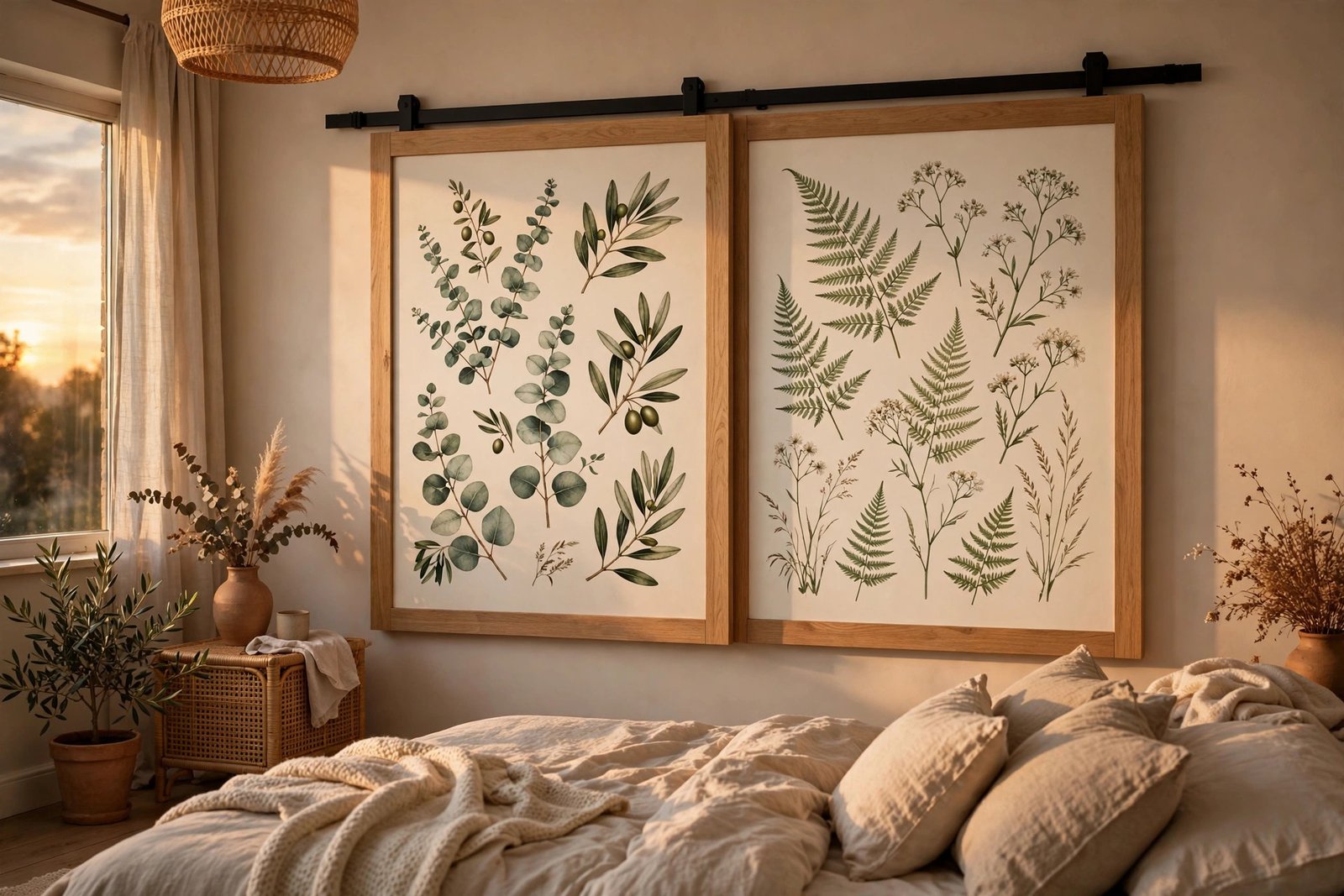
12. Hide It Behind Sliding Art Panels
If you’d rather not see a black screen while falling asleep, hide it. Two sliding art panels on a simple track mount in front of the TV and glide closed when it’s off — your choice of prints, fabric, or even peel-and-stick wallpaper on lightweight boards. It’s the bedroom version of the classic “hidden TV” trick, and it genuinely changes how the room feels at night: art instead of electronics. The track mounts with a few screws into studs, so this one suits homeowners more than renters — or use a freestanding shoji-style screen leaned in front instead. If you would rather show the TV as part of a decorated wall than hide it, TV gallery wall ideas show how to frame the screen with art so it reads as part of the room.
Price: $60–$150 for panels + track
13. Tuck It Inside a Wardrobe or Armoire
The ultimate “now you see it” bedroom solution: put the TV inside a wardrobe or armoire and close the doors when you’re done. It works beautifully in traditional or vintage-styled bedrooms where a glowing screen clashes with the aesthetic. Measure carefully — you need the interior depth for the TV plus ventilation space, and you’ll want to drill a small cable port in the back panel (on your own furniture, not a rental’s). Add a slim power strip inside so everything stays tidy. Closed doors, zero visual noise, perfect sleep hygiene.
Price: $0–$300 (use existing furniture or thrift one)
14. Style the Dresser Top Like a Real Console
If your TV lives on the dresser (idea 2), the dresser top has to pull double duty — and most people leave it as a cluttered afterthought. Style it in zones: the TV anchored to one side or centered, then a low stack of books, a small plant, and a candle on the other side. Keep everything lower than the bottom third of the screen so sightlines stay clean. Corral small items on a tray so the surface reads as styled rather than storage. This costs nothing and is the difference between “TV on a dresser” and “media console.”
Price: $0–$25 (tray + candle)
15. Face It Away From Windows to Kill Glare
Bedroom TV glare is a special misery: you mostly watch in dim light, so any window reflection across the screen feels ten times worse than in a bright living room. Before you mount anything, sit on the bed at your usual viewing time and check where reflections land. The fix is placement, not products — put the TV on the wall perpendicular to windows rather than opposite them, and add blackout or light-filtering curtains you can draw for daytime viewing. A matte screen protector is a distant second choice; getting the angle right is free. For the windows themselves, bedroom curtain ideas help you pick blackout or layered curtains that cut glare without making the room feel dark by day.
Price: $0 (placement) or $30–$80 (blackout curtains)
16. Go No-Drill With a Freestanding TV Stand
Renters, this one’s for you: a freestanding TV stand with a built-in mount gives you the wall-mounted look with zero holes. The TV bolts to the stand’s column, the column hides the cables internally, and the whole unit sits wherever you want it — opposite the bed, angled in a corner, wherever. Many designs include shelves for a soundbar and console. It’s heavier to move than a wall mount, but it moves with you to the next apartment, which a wall mount never does.
Price: $60–$140
17. Park Remotes in a Bedside Caddy
The least technical idea here might be the most appreciated. A bedside caddy — the kind that slips between the mattress and frame, or a small wall pocket on adhesive hooks — keeps the remote, your glasses, and your phone within arm’s reach without cluttering the nightstand. No more remote sliding between the mattress and wall at midnight. It’s a five-dollar finishing touch, but it’s the detail that makes the whole bedroom TV setup feel thought through rather than improvised.
Price: $5–$15
Frequently Asked Questions
How high should I mount a TV in a bedroom?
Mount it lower than in a living room: screen center 40–45 inches from the floor for a standard bed height, aligned with your eyes as you recline against the pillows. Sit on the bed and look straight ahead to find your exact spot. A tilting mount angled down a few degrees fine-tunes it.
What size TV is best for a bedroom?
For the typical 8–10 foot pillow-to-wall distance, 32–43 inches is ideal — big enough for comfortable viewing, small enough not to dominate the room. Use the 1.5–2.5x diagonal viewing rule and round down. In bedrooms under 10 feet deep, a 32–40 inch screen usually wins.
Should I wall-mount my bedroom TV or put it on the dresser?
Wall-mounting gives the cleanest look and best viewing angle, but a dresser-top setup is the easiest renter-friendly option with zero holes. Choose wall-mount for a permanent, tailored feel; choose the dresser when you rent, rearrange often, or want the storage underneath.
How do I hide cables on a bedroom TV wall?
Run paintable adhesive cord channels from the TV down to the outlet — under $15 and ten minutes. Route them behind the dresser or nightstand so most of the run is hidden by furniture. For dresser-top setups, bundle cables with Velcro ties and drop them straight behind the dresser.
A Bedroom TV Wall That Belongs
A bedroom TV works when it respects the room it’s in — mounted at lying-down height, sized for short viewing distances, cabled invisibly, and styled like furniture rather than electronics. Pick the layout that fits your walls, get the height right before you drill a single hole, and finish with the small touches that make it disappear into the decor. Movie nights in bed just got a serious upgrade. If the TV wall is part of a wider refresh, master bedroom makeover ideas can help you plan the bedding, lighting and storage around it.
Related posts you may like:
- 15 TV Wall With Fireplace Ideas That Look Designed, Not Awkward
- 17 Renter Friendly Bedroom Ideas That Feel Like Home
- Living & Bedroom Ideas




4 Comments