13 Ways to Style Thrifted Home Decor That Look Expensive (2026)
Learning how to style thrifted home decor is the difference between a house that looks collected and a house that looks cluttered. Anyone can buy a $4 vase at the thrift store — but grouping it, layering it, and giving it a job in your room is what makes it look intentional.
The good news? Styling thrifted smalls is a skill, not a talent. You don’t need paint, power tools, or a single furniture flip (those live in our separate thrift store furniture makeover guide — this one’s all about the little things). You need a few repeatable formulas, an eye for odd numbers, and about twenty minutes per vignette. Here are 13 ideas that work in any room.
Key Takeaways
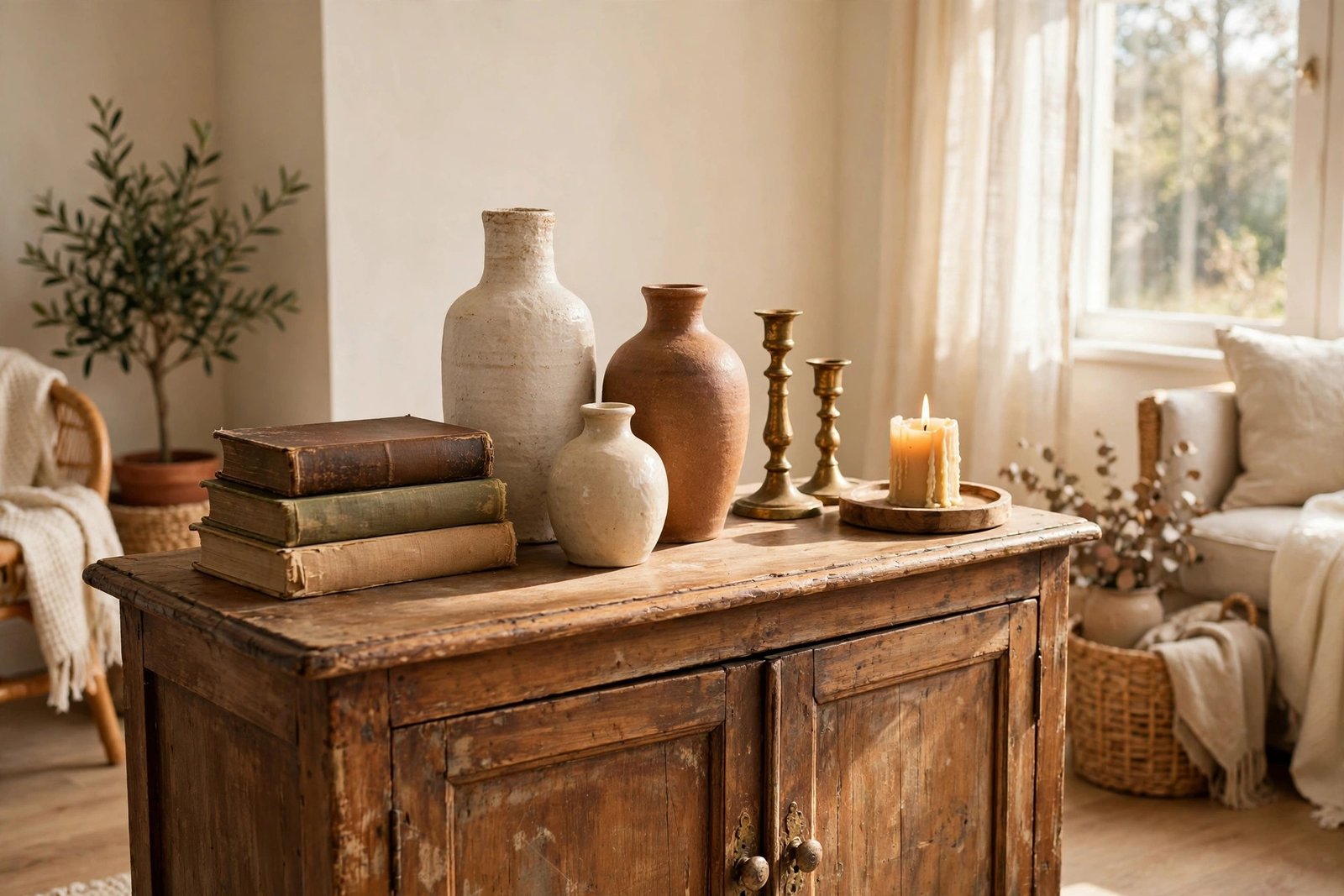
- Style in odd numbers: groups of 3 or 5 read as curated; pairs read as accidental.
- Trays are the fastest fix — they turn scattered thrift finds into one intentional display.
- Mix eras and materials on purpose: one brass piece, one ceramic, one wood keeps it designer, not dated.
- Price reality check: most thrifted smalls cost $2–$8; styling them well makes them read like $40+ pieces.
- Edit ruthlessly: every vignette needs breathing room — one hero piece, two supporters, then stop.
- Clean everything before styling (warm soapy water for ceramics, polish for brass) — dullness reads as “used.”
- Keep furniture flips out of this: this guide covers smalls and vignettes only, no paint or refinishing.
The Ideas
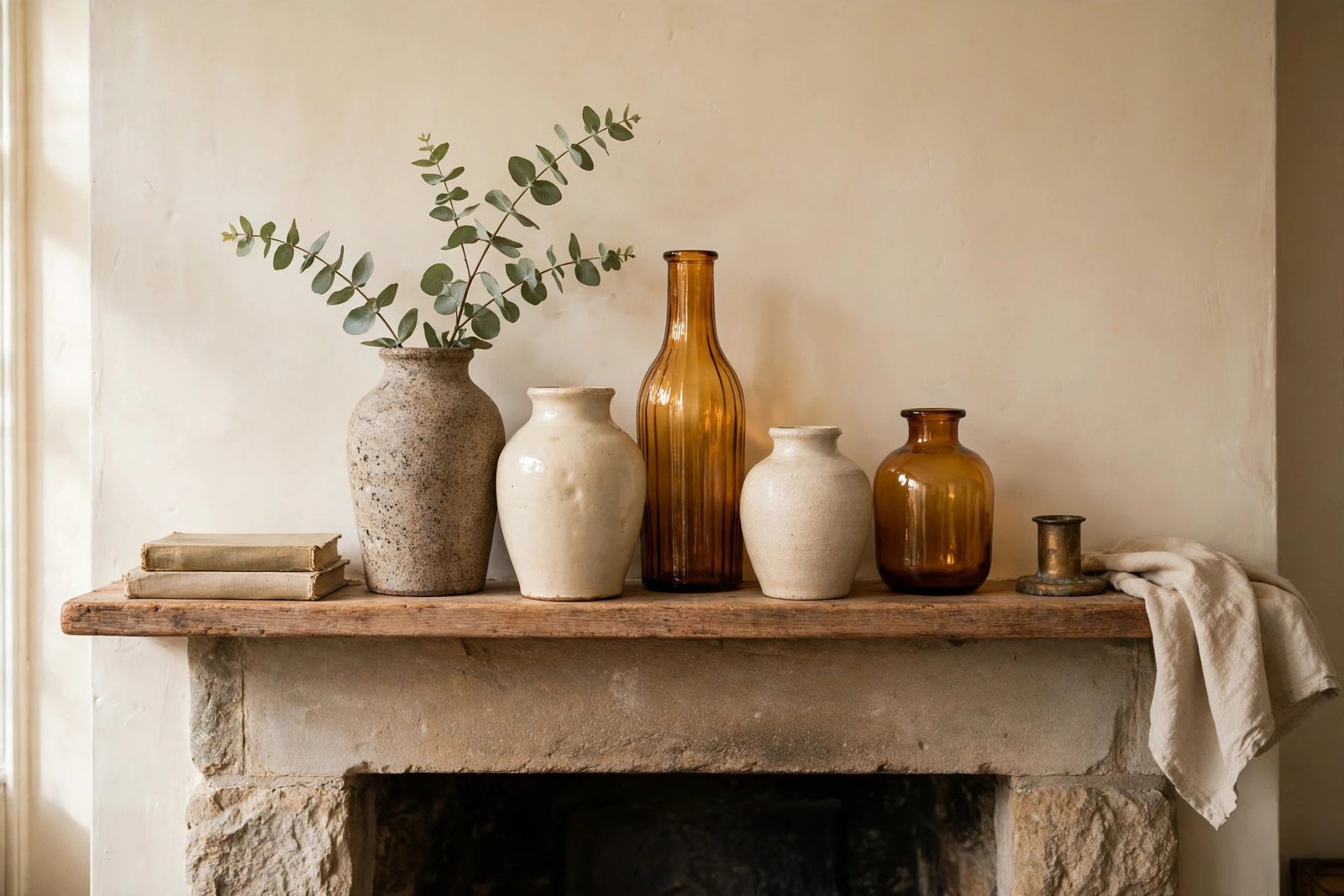
1. Group Vases in Odd Numbers
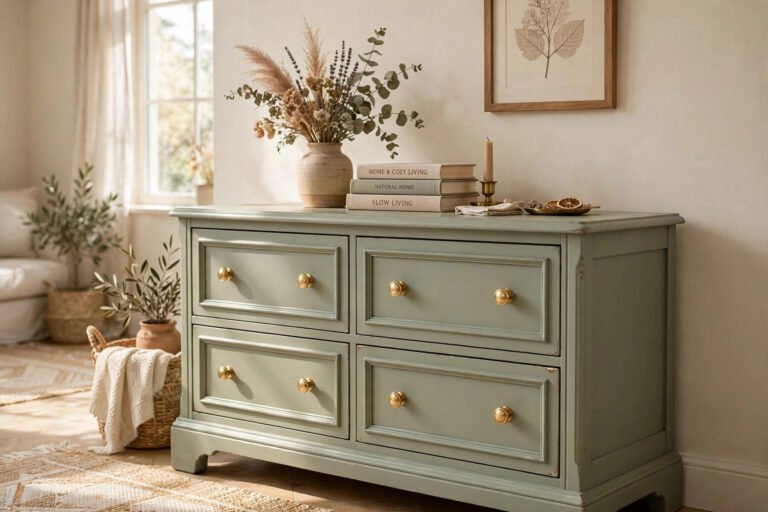
Three or five vases of different heights, one color family, zero matching sets — that’s the whole formula. Thrift stores are full of orphan vases, and orphans are exactly what you want: a tall amber bottle, a squat cream ceramic, a speckled bud vase. Cluster them tight on a mantel or sideboard so they read as one sculpture, not five separate objects. Tip: vary heights by at least 3–4 inches between each vase so the silhouette stays interesting. Budget: $2–$5 per vase; total look, about $15.
2. Build a Coffee-Table Tray Vignette
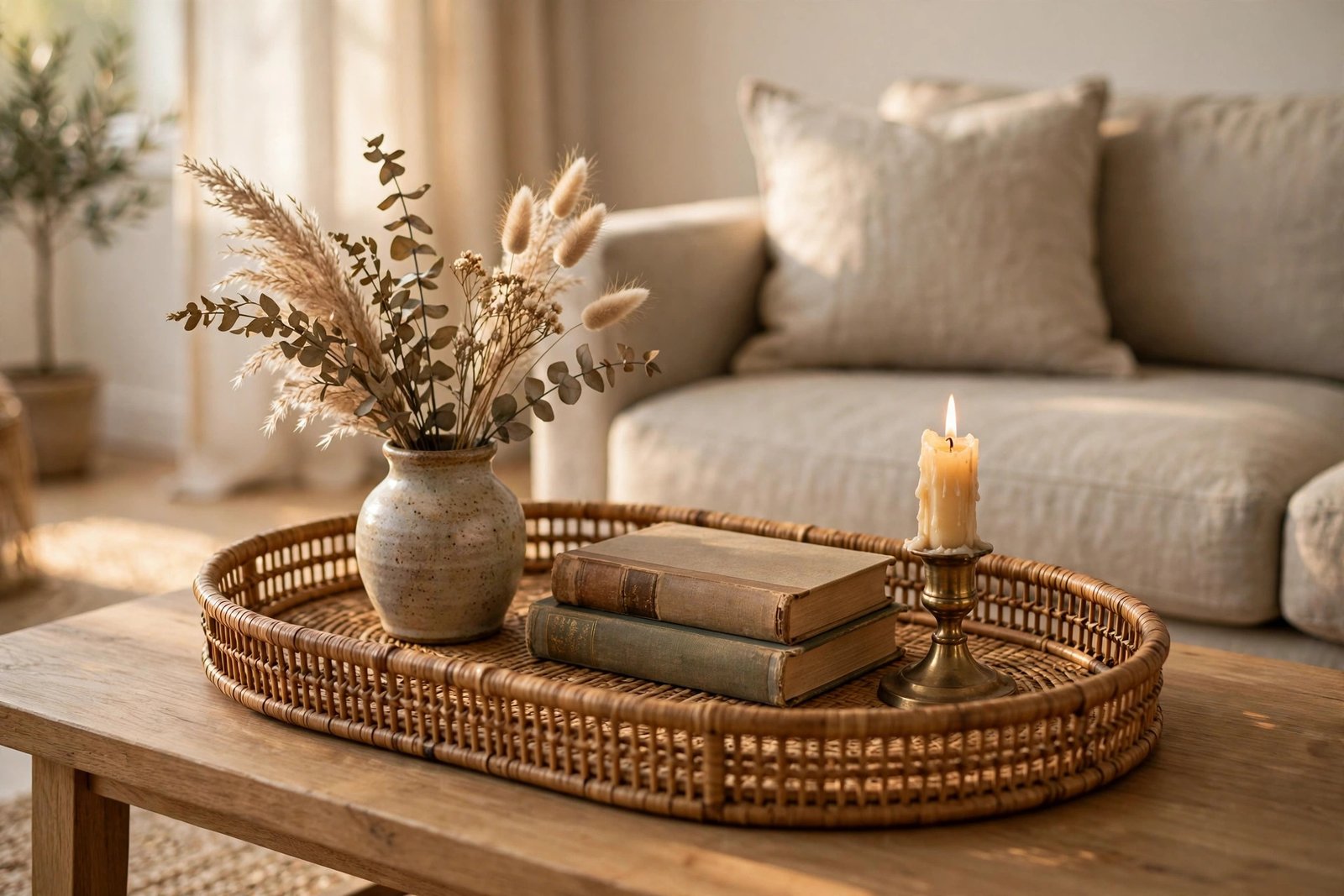
A tray is a frame for your thrift finds. Start with a rattan, wood, or brass tray (thrifted for $4–$10), then add three zones: something tall (a vase with dried stems), something flat (a stack of two vintage books), something warm (a candle in a brass holder). Everything inside the tray reads as one arrangement; everything outside it is clutter. I’ve found that oval trays work best on rectangular coffee tables because the softened corners keep the whole thing from looking boxy.
3. Let Brass Candlesticks Be Sculpture
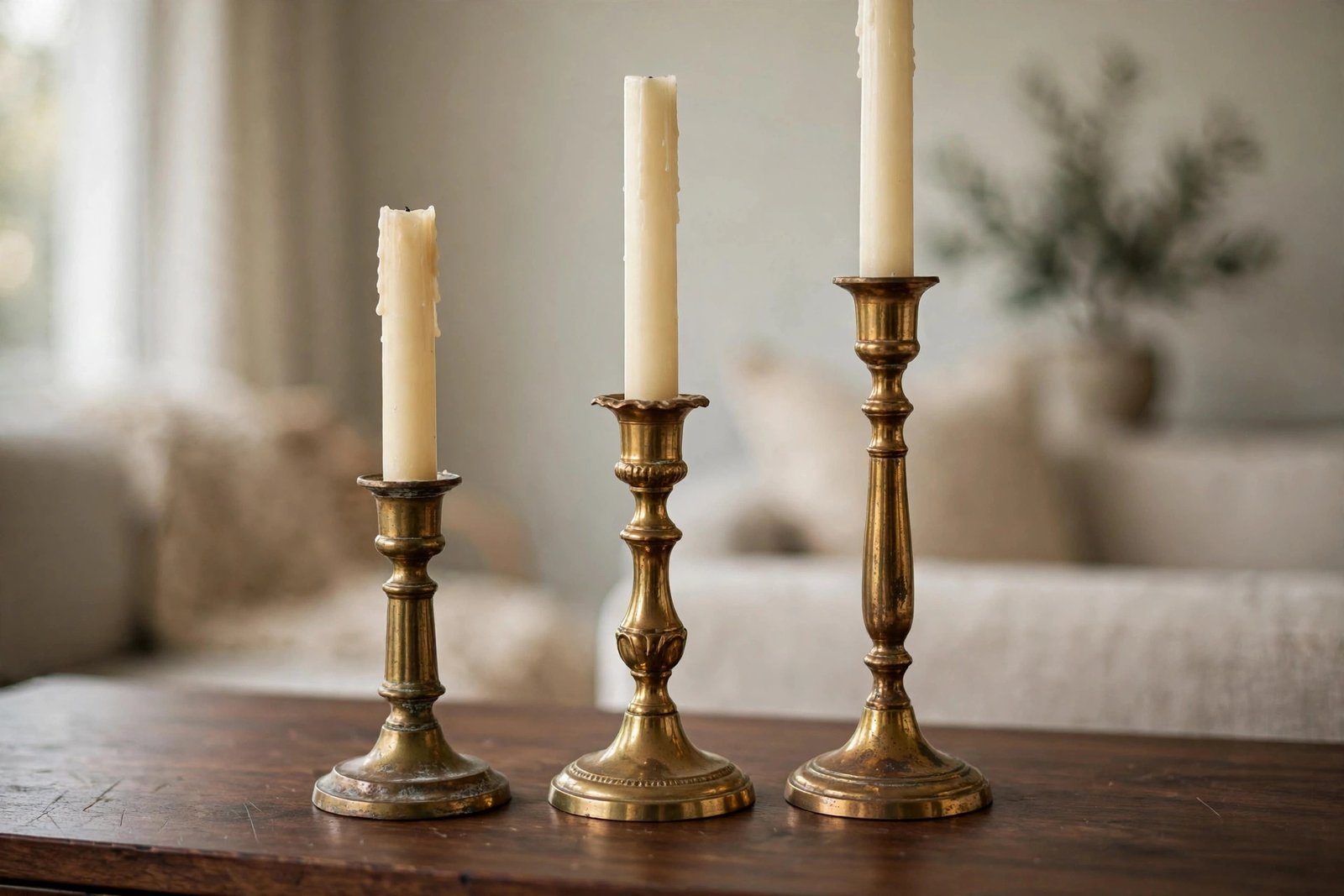
Brass candlesticks are thrift-store royalty: usually $1–$3 each, always available, and they photograph like jewelry. The trick is treating them as sculpture, not just candle holders. Group three at staggered heights on a dark surface — the contrast makes the patina glow — and use plain cream tapers so the brass stays the star. Don’t polish them to mirror shine; a little age is the entire point. For extra credit, place one oversized candlestick alone on a stack of books and let it have its moment.
4. Stack Vintage Books With Intention
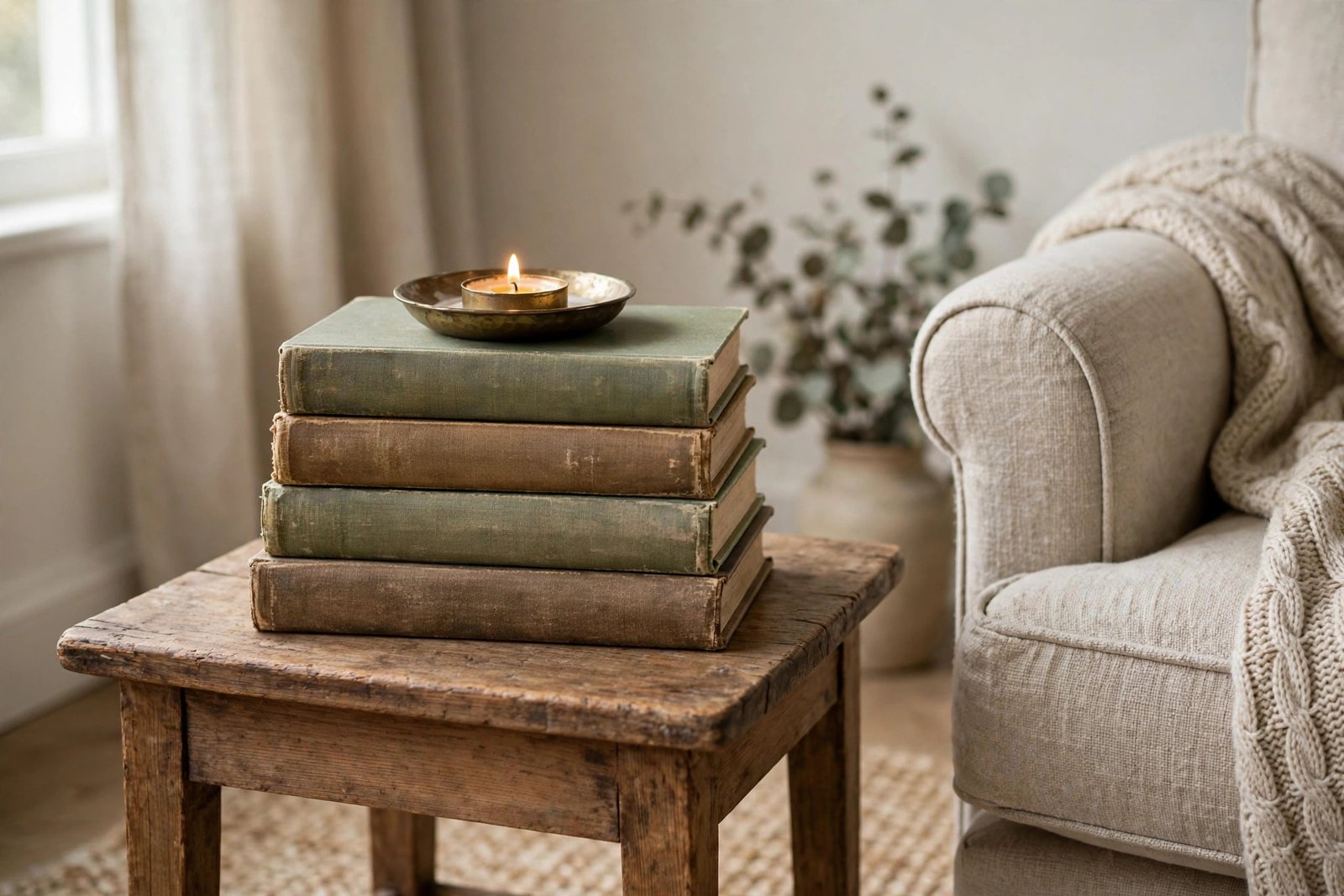
Thrifted books are $0.50–$2 each and they’re the hardest-working styling prop you own. The formula: 3–5 books, spines in the same color family (all neutrals, or all deep jewel tones), largest on the bottom. Top the stack with one small object — a brass dish, a tiny plant, a candle — and suddenly it’s a pedestal, not a pile. Skip books with torn dust jackets; pull the jacket off and the cloth binding underneath is almost always prettier. Tip: turn one book spine-inward for a calm, linen-textured block of color.
5. Hang a Basket Wall
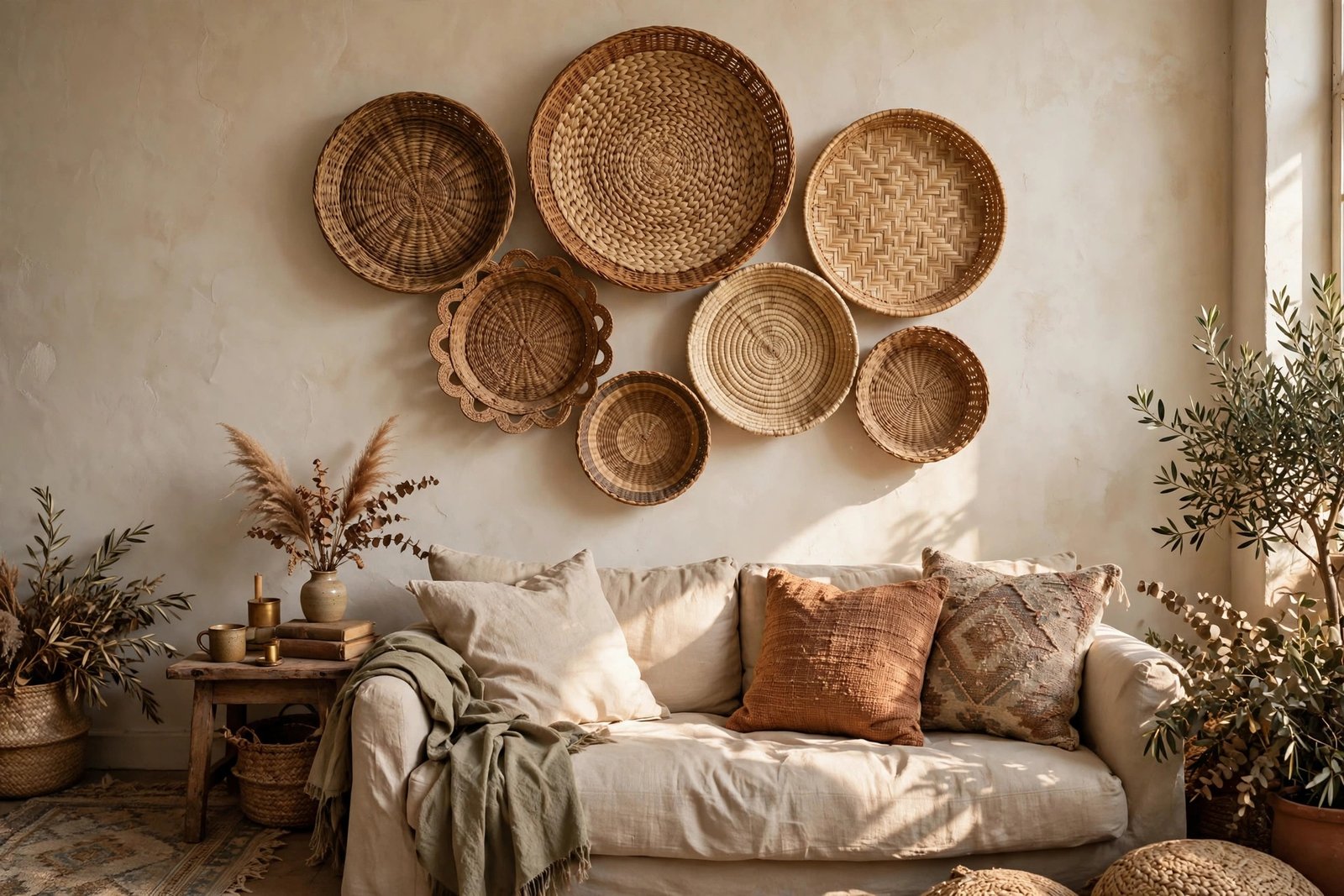
Flat woven baskets ($2–$6 each at thrift stores) make one of the cheapest statement walls in decorating. Lay them on the floor first and arrange in an organic cluster — biggest basket slightly off-center, smaller ones radiating out — then hang with a single nail each. Seven baskets fill a wall above a sofa for under $30 total, where one piece of store-bought art would cost five times that. This works beautifully in dining rooms and entryways too, anywhere a gallery wall would feel too formal — and if you’d rather hang framed pieces, our thrifted wall art ideas cover gallery walls made from secondhand finds.
6. Mix Old Ceramics With New Textiles
Here’s the styling move that separates “thrifted” from “dated”: pair your secondhand ceramics with something crisp and new. A 1970s stoneware pitcher looks tired on a bare shelf — but next to a fresh linen runner or a folded new throw, it reads as curated vintage. The new textile signals intention; it tells the eye the old piece is a choice. Aim for one new element per vignette — a modern candle, a new plant, a clean tablecloth — and let the thrifted ceramics do the character work around it.
7. Style Thrifted Pillows by Cover, Not Print
Thrifted throw pillows are a steal ($2–$4) but the inserts are usually flat and the prints can be loud. Buy for the cover quality — velvet, linen, kilim — and budget $8–$12 for a fresh polyfill insert at a craft store. A $3 thrifted linen cover with a plump new insert looks identical to a $40 boutique pillow. In my experience, solid textures thrift better than patterns: a great rust velvet square works in any room, while someone’s 2014 chevron print does not.
8. Create an Entryway Drop-Zone Vignette
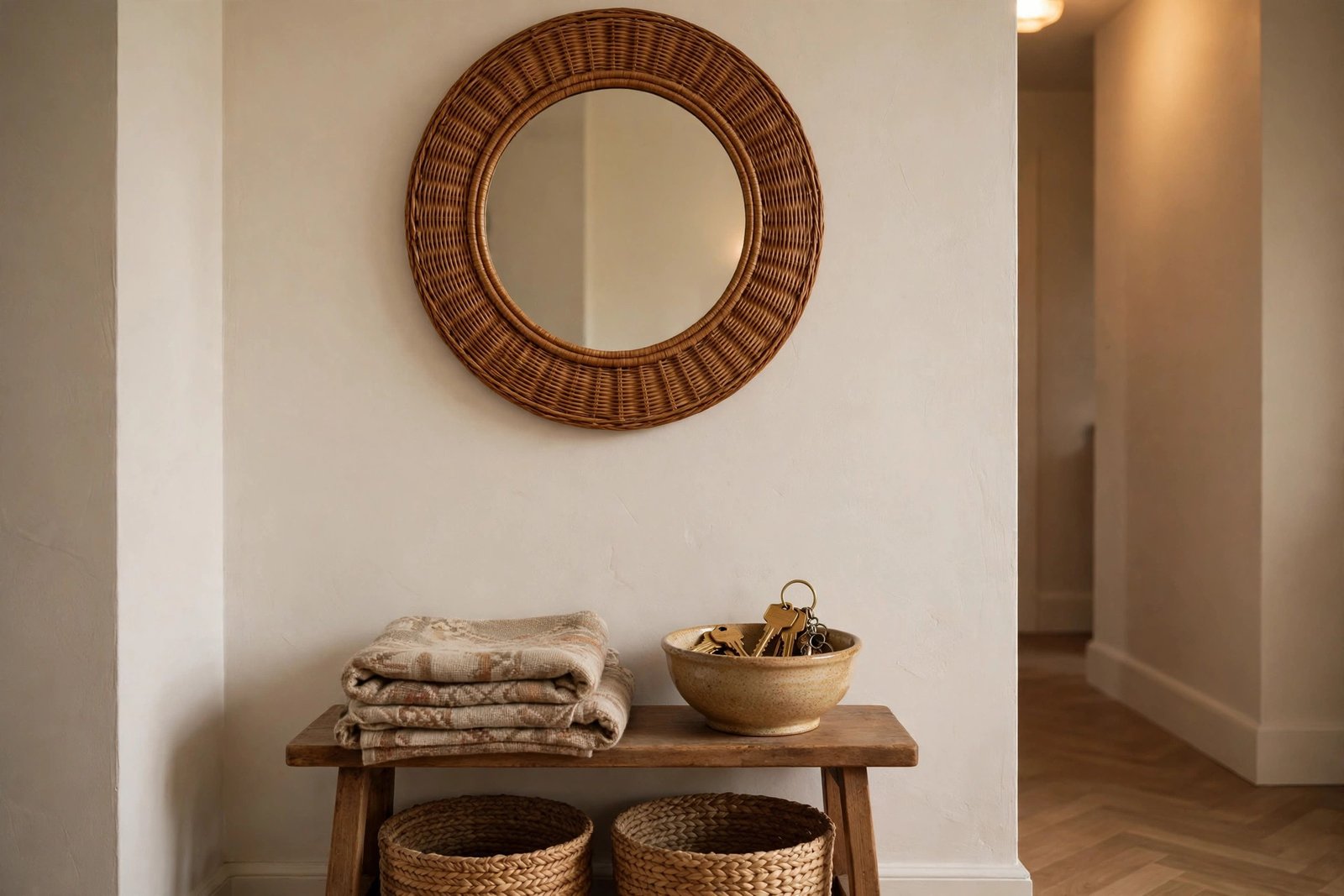
Your entryway is the first place styling pays off, and thrifted smalls are perfect for it: a ceramic bowl for keys ($3), a small lidded basket for sunglasses ($5), a folded vintage throw over the bench. Keep it to one surface — a bench, a small console, a wall shelf — and give every object a job. The rule here is function first: if a guest can’t figure out where their keys go in five seconds, edit. Tip: a round mirror above the drop zone (thrifted, $8–$15) doubles the light and makes a narrow entry feel twice as wide.
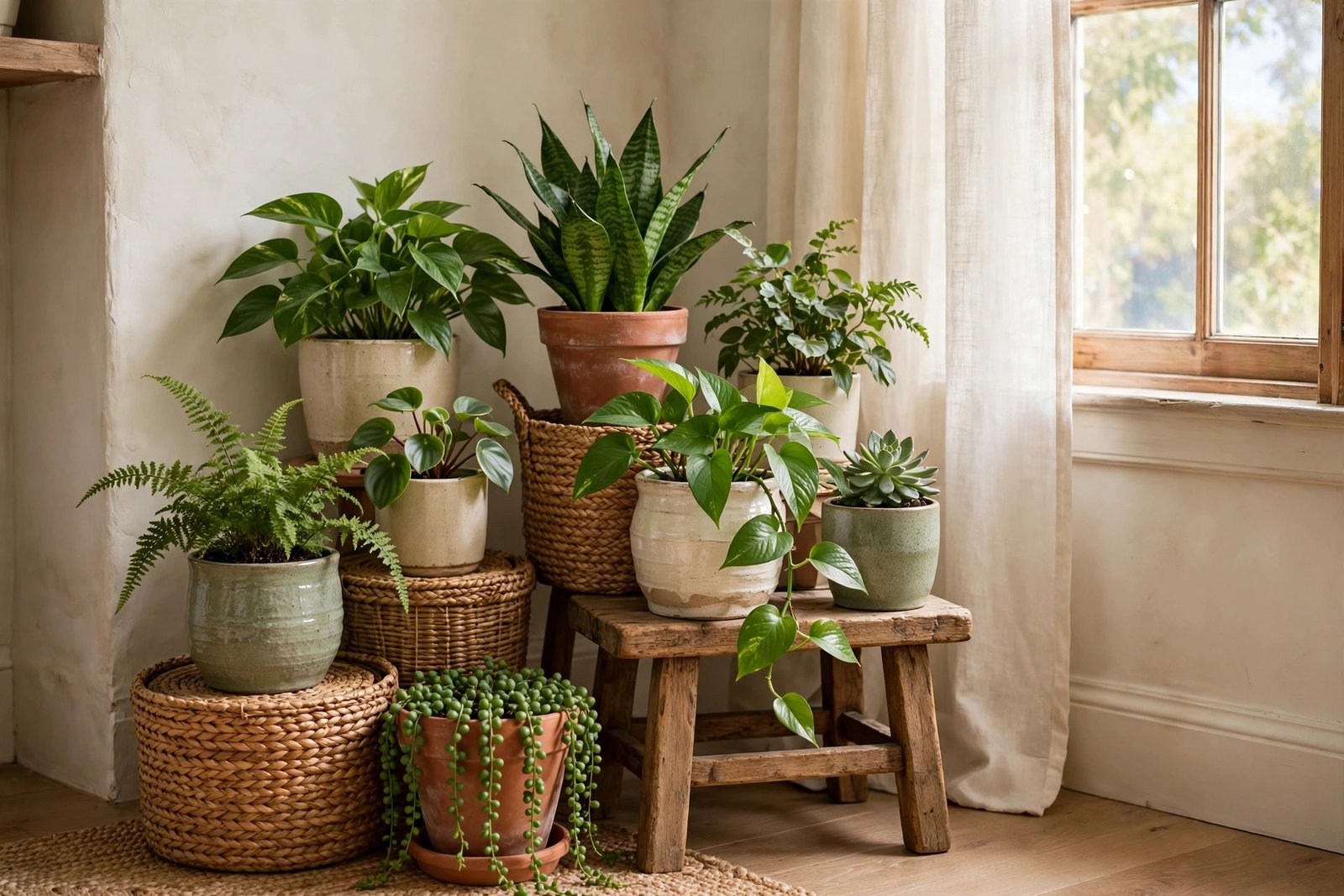
9. Group Thrifted Pots Into a Plant Corner
Plants forgive everything, and thrifted pots cost a tenth of garden-center prices ($1–$4 versus $15+). The styling trick is unifying a mismatched collection: group pots in one corner at three heights — floor, stool, and hanging — and keep the palette tight (all earthy, or all white). When every pot is a different color with no plan, it reads as clutter; when they’re all terracotta and cream, it reads as a collection. Add one trailing plant (pothos, philodendron) to soften the edges of the group.
10. Layer Metals Like a Maximalist (in Small Doses)
Silver trays, brass bowls, copper mugs — thrift stores are metal heaven, and mixed metals are back in a big way. The rule: pick one dominant metal (say, warm brass) and let the others be accents. A silver tray as the base, a brass bowl in the middle, one small copper cup beside it — layered, reflective, and rich. Keep metal groupings to one vignette per room so they stay special. Tarnish is free patina; only polish pieces that sit at dining height where people touch them.

11. Use Vintage Linens for Real Table Settings
Vintage tablecloths and napkins ($3–$8 for a set) are some of the most under-styled thrift finds. Wash them hot, iron them once, and use them for actual dinners — not just display. A thrifted embroidered runner under plain white plates makes a weeknight dinner feel like an occasion, and linen napkins get softer every wash. Skip anything with stains you can’t lift or thin spots at the folds; those are display-only at best. For holidays, stack two runners in different patterns for a layered tablescape that costs under $10.
12. Style a Seasonal Mantel From Thrifted Smalls
Your mantel is a rotating gallery, and thrifted smalls make seasonal swaps nearly free. Keep the anchor pieces year-round (candlesticks, a vase cluster, the book stack) and swap only the accents: dried grasses for fall, pinecones for winter, fresh stems for spring. I keep a single storage bin labeled by season with $20 worth of thrifted accents, and the whole mantel refresh takes fifteen minutes. The trick is restraint — change three items, not thirteen, so the mantel still feels like yours.
13. Build a Thrifted Dining Centerpiece
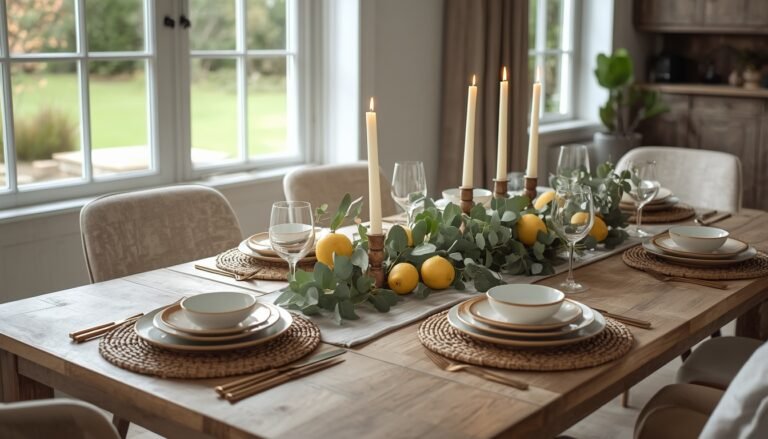
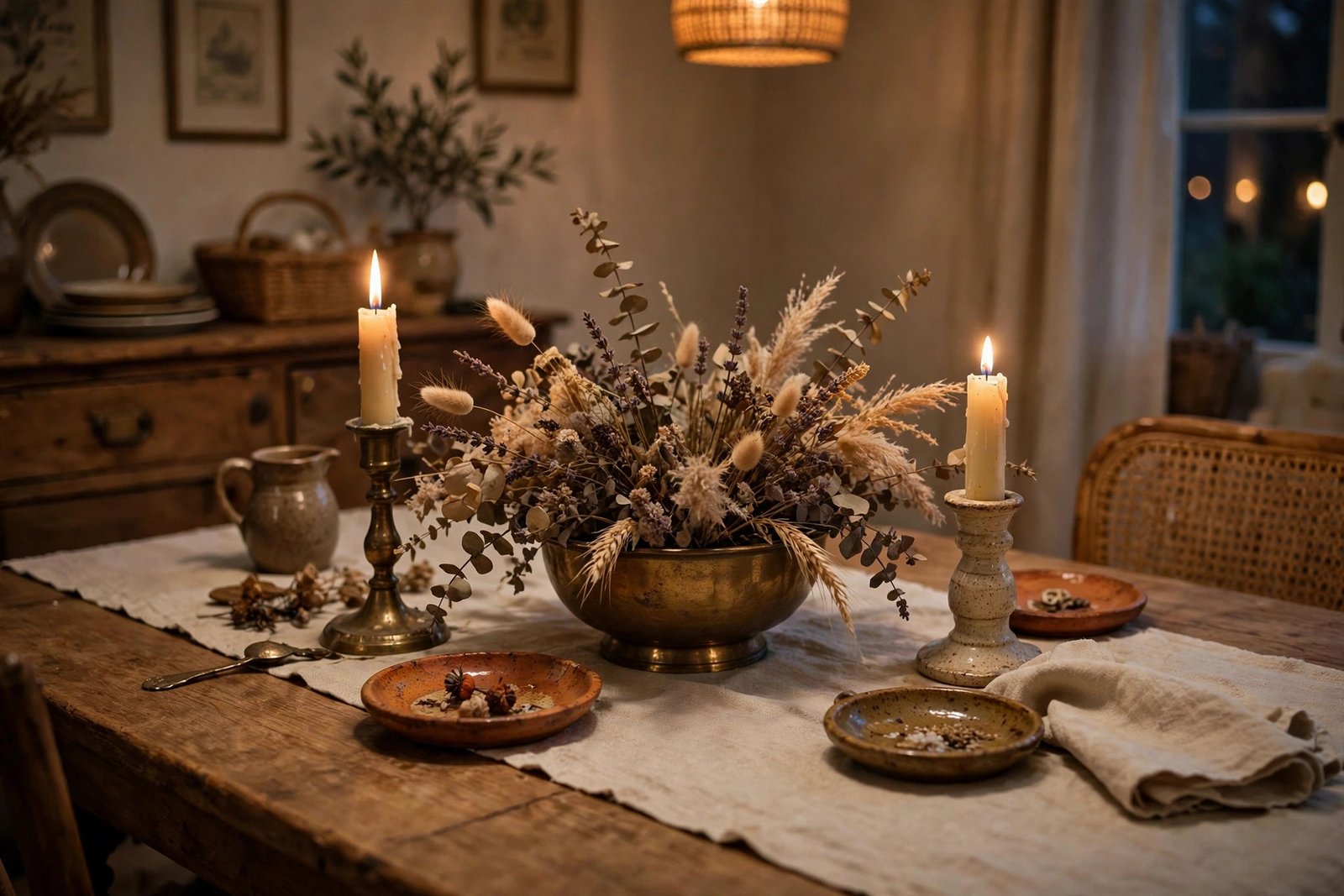
The dining table deserves better than an empty middle. Build a low centerpiece entirely from thrifted smalls: a runner or piece of fabric as the base ($4), a low brass or ceramic bowl with dried flowers ($6 total), two mismatched candlesticks ($4), and a couple of small dishes scattered loose. Keep everything under 12 inches tall so conversation flows across the table. Tip: odd, low, and loose beats symmetrical and tall — a centerpiece should invite people in, not block them.
What Thrifted Smalls Actually Cost: Thrift vs. Retail
| Find | Thrift price | Comparable retail | Your savings |
|---|---|---|---|
| Ceramic vase | $2–$5 | $25–$45 | ~$25 |
| Brass candlesticks (pair) | $2–$6 | $30–$60 | ~$35 |
| Woven basket | $2–$6 | $20–$40 | ~$25 |
| Vintage hardcover books (5) | $3–$8 | $50+ (decor sets) | ~$45 |
| Serving tray | $4–$10 | $35–$70 | ~$40 |
| Throw pillow cover | $2–$4 | $25–$40 | ~$28 |
| Table runner/linens | $3–$8 | $30–$60 | ~$35 |
5 Mistakes That Make Thrifted Decor Look Cheap
- Too many smalls, no breathing room. If every surface is full, nothing stands out. One hero piece per vignette, then stop.
- Mixing every era at once. 70s + 90s + farmhouse in one corner reads as a donation pile. Pick one vintage lane per room.
- Skipping the clean. Dusty ceramics and cloudy glass scream “used.” Ten minutes with soap and water fixes most of it.
- Keeping everything at one height. A flat row of same-size objects is the fastest way to look accidental — stagger heights always.
- Styling without a color plan. Thrifted finds in twelve colors fight each other. Choose 2–3 colors per vignette and let the rest go back on the shelf.
Frequently Asked Questions
How do you make thrifted decor look expensive instead of cluttered?
Edit harder than you shop. Choose one hero piece per vignette, support it with two smaller items, and leave breathing room around the group. Clean everything before styling, stick to 2–3 colors per display, and pair thrifted pieces with one crisp new element — the contrast is what reads as “curated” rather than “collected.”
What thrifted items are easiest to style for beginners?
Start with vases, candlesticks, books, and baskets. They’re forgiving, cheap ($1–$6 each), and they follow simple formulas — odd-number groupings, tray vignettes, book stacks. Avoid anything that needs repair or refinishing until you’ve styled a few rooms; styling first builds the eye that makes flipping worthwhile later.
Should I clean thrifted decor before styling it?
Yes, always. Wash ceramics and glass in warm soapy water, wipe wood with a damp cloth and let it dry fully, and spot-test brass polish on the back before committing. Clean pieces reflect light properly — and light is half of what makes a vignette look expensive. Skip anything with musty smells or damage you can’t fix; some finds aren’t worth the effort.
Can thrifted decor work in a modern minimalist home?
Absolutely — minimalism loves thrifted pieces with strong shapes. Choose one sculptural item (a bold vase, an interesting candlestick), give it plenty of empty space, and let it be the room’s single vintage note. The key is restraint: in a minimal room, one thrifted hero piece looks intentional; five looks like clutter.
The Cozy Finish
Styling thrifted home decor is really just paying attention — grouping with intention, editing with courage, and letting each little find earn its spot. Start with one vignette this weekend (the tray formula is the fastest win), and once you see how good a $15 arrangement can look, you’ll never walk past the housewares aisle again. For the bigger projects, our thrift store furniture makeover ideas cover dressers, chairs, and lamps — if your walls need the same treatment, thrifted wall art ideas show how to hang it all. Renting? Our renter-friendly living room ideas keep every upgrade damage-free.