How to Style Built-In Bookshelves: 15 Designer Ideas (2026)
Learning how to style built-in bookshelves is the difference between a wall of beautiful carpentry and a wall that actually looks designed. Most people fill every shelf with books and wonder why it feels heavy — or scatter random objects and wonder why it feels chaotic.
The truth is that designers follow a formula: ratios, rhythm, and a few rules about what goes where. Below are 15 practical styling ideas — the actual method, shelf by shelf — that turn cluttered built-ins into the best-looking wall in your home.
Key Takeaways
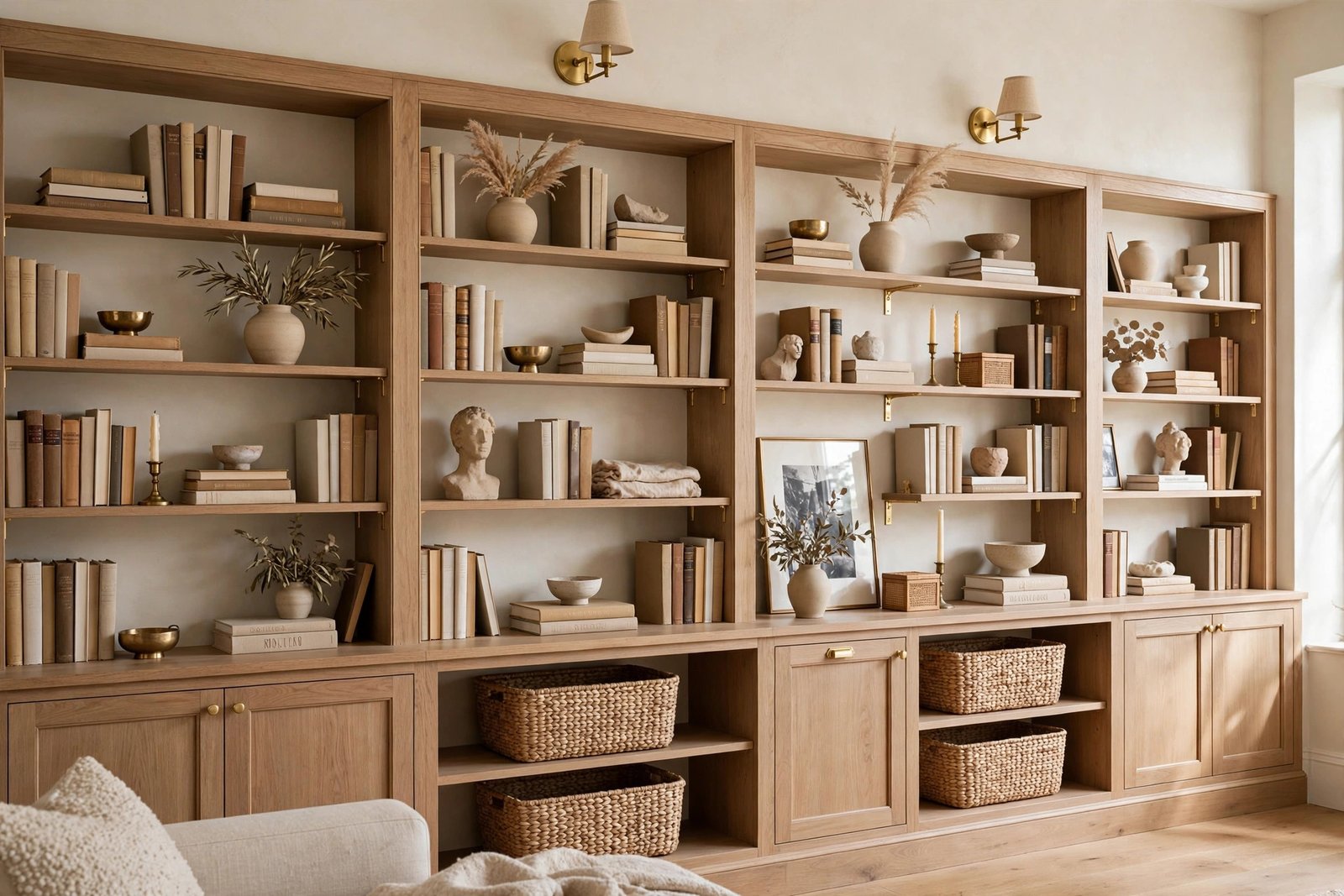
- The 60/40 rule: roughly 60% books, 40% decor and breathing room — this single ratio fixes most built-ins.
- Style eye-level shelves first; they’re what people actually see. Top shelves stay light, bottom shelves stay heavy.
- Group books by color or size — random spines read as visual noise.
- Leave about one-third of each shelf empty; negative space is what makes the rest look expensive.
- In my experience, the “photograph and edit” trick (idea 15) catches more styling mistakes than any rule.
- Styling around a TV inside built-ins just needs the 60/40 rule applied in miniature on each side.
1. Start With the 60/40 Book-to-Decor Rule for Built-In Bookshelves
The foundation of every well-styled built-in: about 60% books, 40% decor objects and empty space. This ratio keeps shelves feeling like a library rather than a storage unit, and it gives your eye places to rest. Pull everything off first, then rebuild with the ratio in mind — most people discover they were at 90/10 and wondering why it felt cramped. Cost: $0, just your time. Tip: count shelf sections, not individual books — one section of vertical books plus one vase counts as a balanced pair.
2. Create Vertical Rhythm Across the Shelves
Designers don’t style each shelf in isolation — they create rhythm that moves your eye up and down the unit. Alternate tall and short moments: a tall vase on one shelf, a low horizontal book stack on the next, medium frames above. This zigzag rhythm ($0–$40 if you need a riser or two) is what separates styled from stuffed. Stand back six feet and squint: you should see a pleasing wave of heights, not a flat skyline of identical book spines.
3. Group Books by Color for a Calm Look
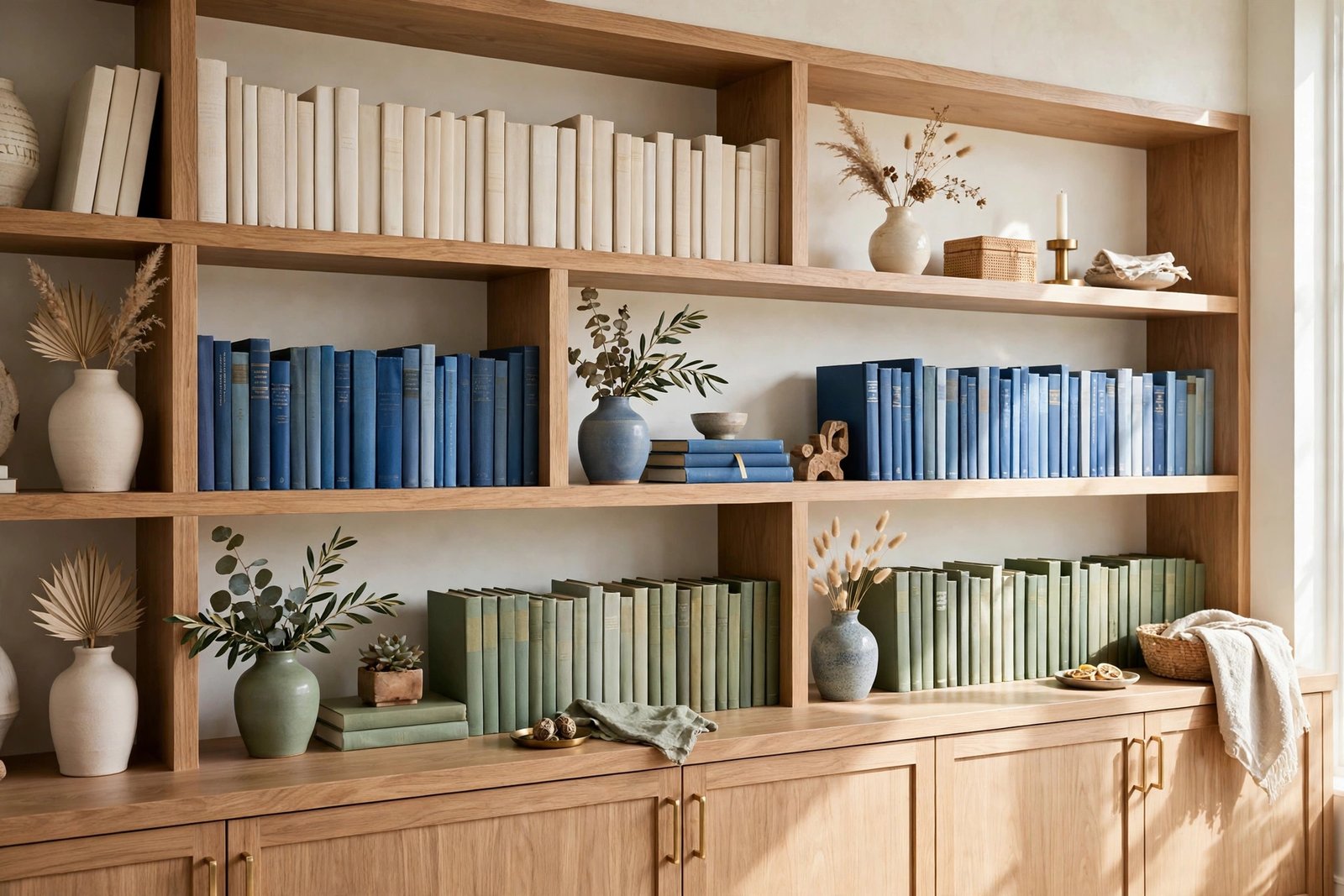
A rainbow of random spines is visual noise; books grouped by color read as intentional design. Sort into loose color families — creams, blacks, blues, reds — and let each shelf section hold one family. You don’t need to buy new books (though $20–$50 of thrifted hardcovers in your palette fills gaps fast — our thrift store furniture makeover ideas post covers the hunt). In my experience, color-grouping is the fastest single change: it takes an hour and the before/after is dramatic.
4. Style the Eye-Level Shelves First
The shelves between 48 and 66 inches high are your prime real estate — they’re what guests actually see. Put your best pieces here: the prettiest books, one piece of art, your favorite objects. Everything above and below is supporting cast. This costs nothing but changes your priorities completely — most people waste their best decor on the top shelf nobody examines. If you only restyle three shelves, make them these. Photograph them at eye level to check the composition.
5. Keep the Top Shelves Light and Airy
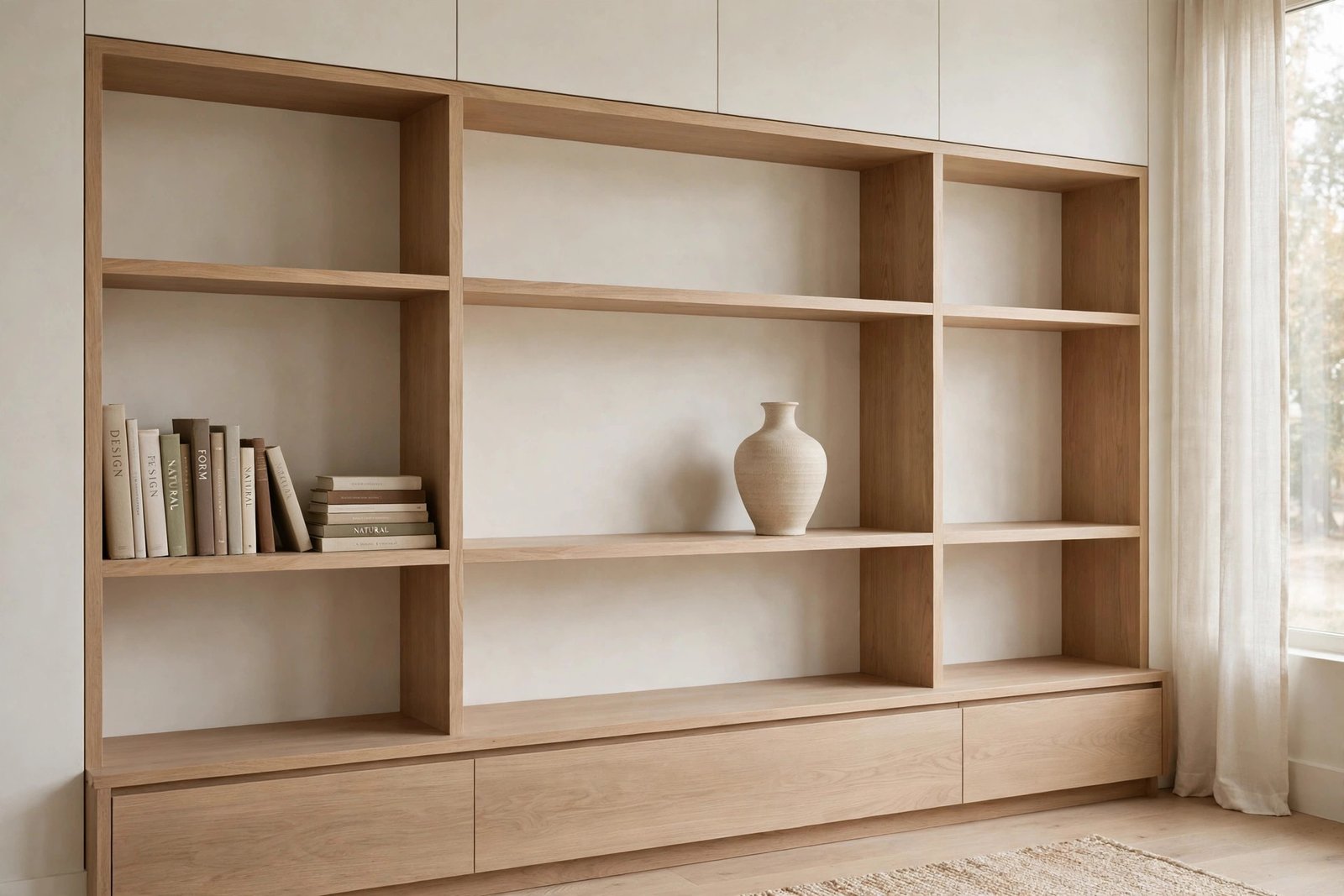
Top shelves sit above most sightlines, so heavy or detailed objects up there just collect dust and visual weight. Style them light: a trailing plant, a few artfully leaned frames, one airy object like a woven sphere. The rule is one or two items per top shelf, max — and nothing you need to reach for often ($10–$30 for a faux trailing plant if your thumb isn’t green). What goes wrong: cramming overflow books up top, which makes the whole unit feel top-heavy and cluttered.
6. Anchor the Bottom Shelves With Weight
The inverse of the top-shelf rule: bottom shelves should hold the visual weight. Big coffee-table books stacked horizontally, storage baskets, heavy ceramic pieces — these ground the unit so it doesn’t feel like it might tip forward visually. Baskets ($15–$40 each) are the workhorse here: they hide the ugly-but-necessary stuff (chargers, remotes, kids’ clutter) while adding texture. Keep the very bottom shelf practical; nobody sees it closely, so let it work hard.
7. Leave Breathing Room: The One-Third Empty Rule
The most counterintuitive designer rule: about one-third of every shelf should be empty. Negative space is what makes the styled objects look expensive — a lone vase in an empty stretch reads as a gallery; the same vase crammed between books reads as clutter. This is free, and it’s the hardest rule to follow because empty feels wasteful. Fight the urge. I’ve found that removing five items improves a shelf more than adding any five items ever could.
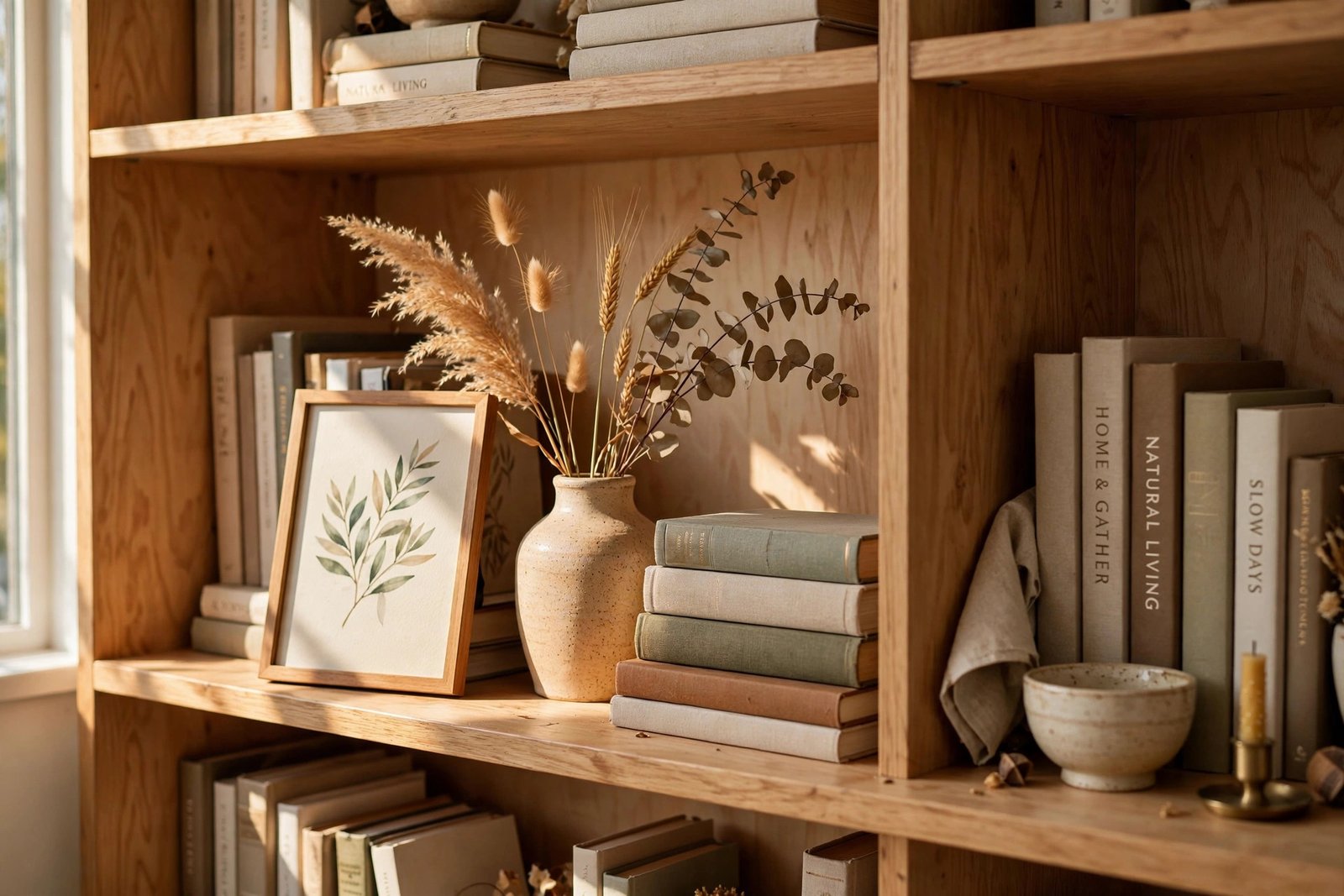
8. Stack Books Both Ways: Vertical and Horizontal
All-vertical book rows look like a library sale; mixing in horizontal stacks instantly looks styled. Use horizontal stacks (3–5 books) as pedestals for small objects — a candle on a stack, a tiny plant on another. This costs nothing and breaks up the monotony of spine after spine. Tip: keep horizontal stacks to odd numbers and vary their heights across the shelf — three stacks of identical height look like a staircase, which is its own kind of monotonous.
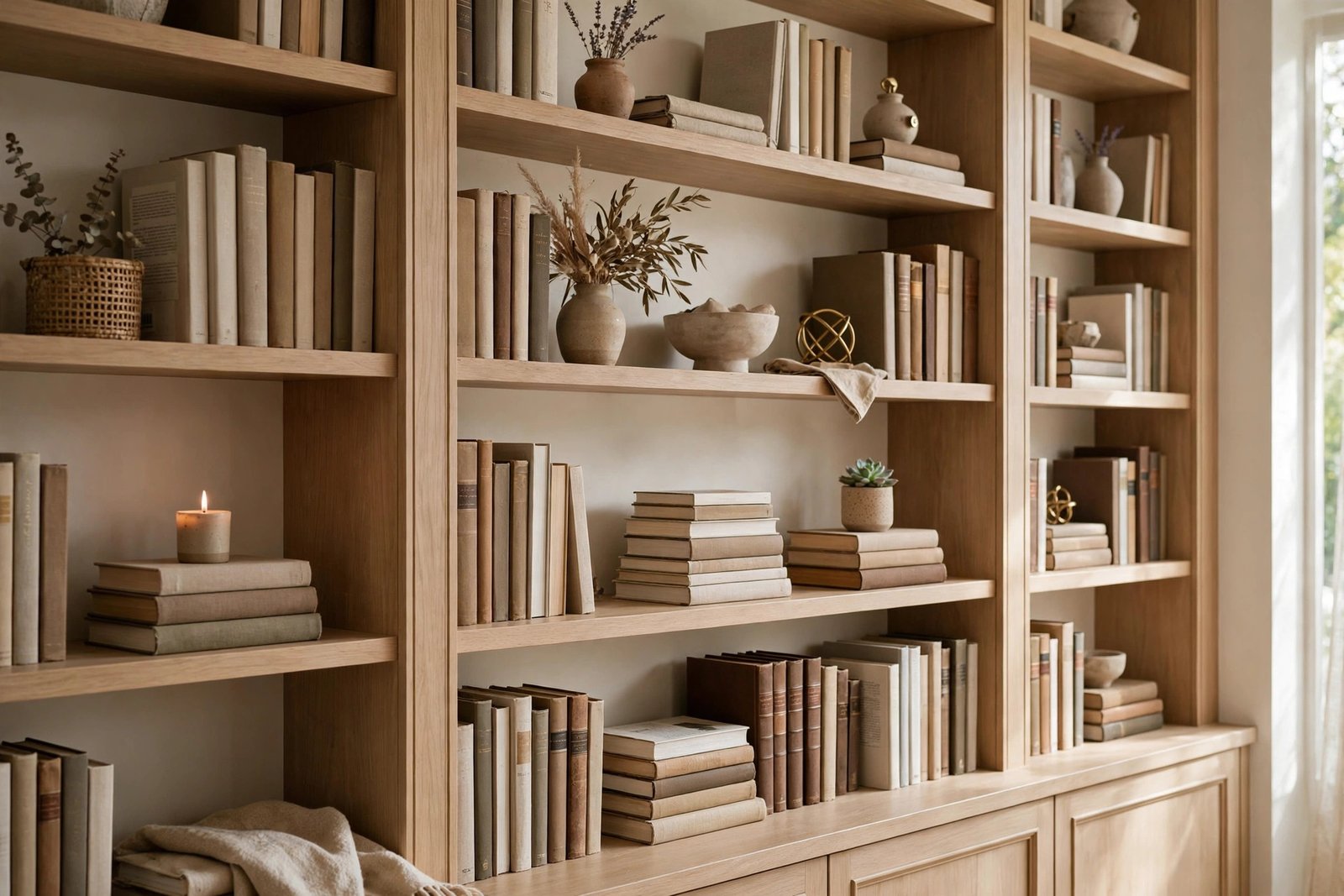
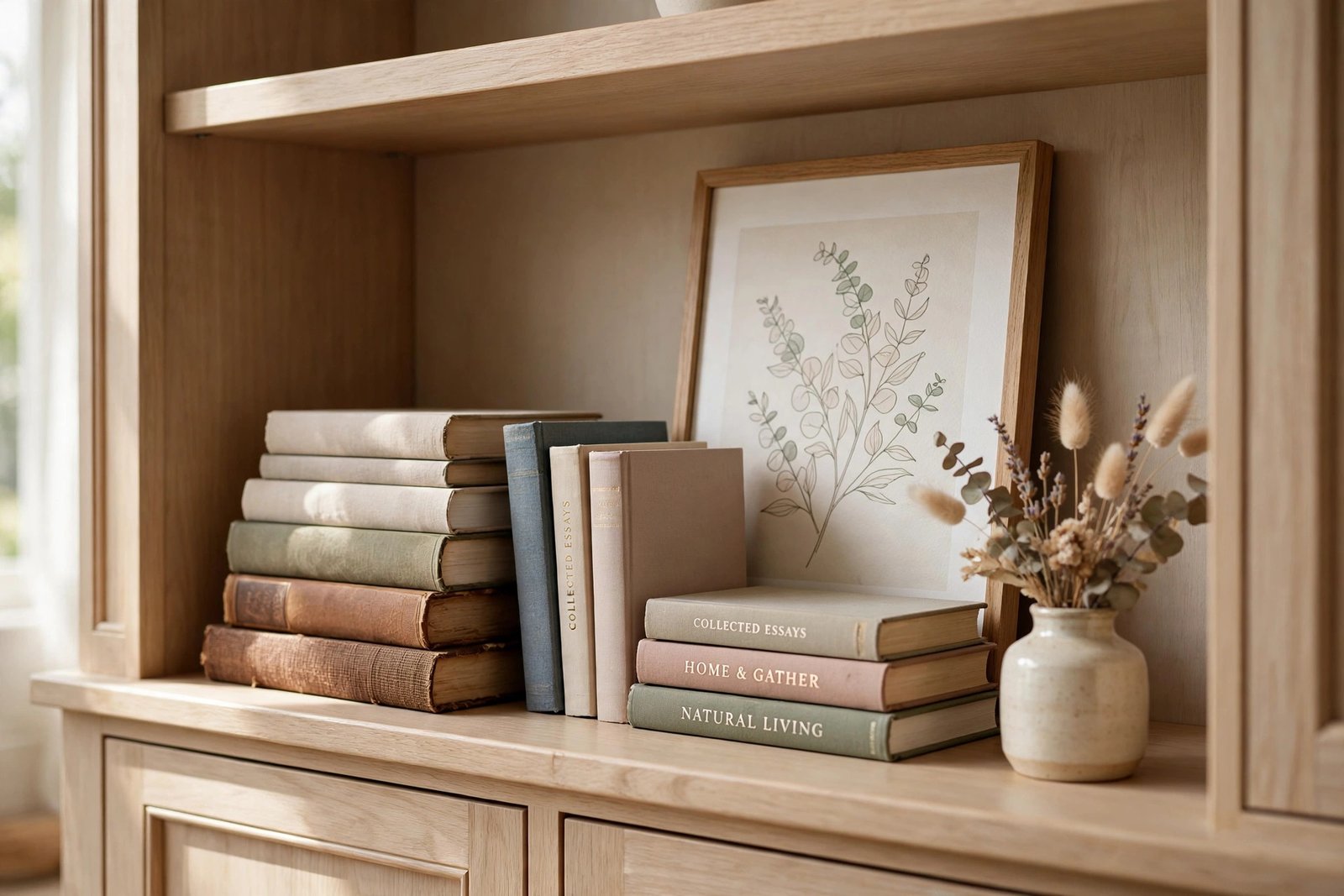
9. Add One Piece of Art Per Section
A small framed print or canvas leaned on a shelf ($10–$35 for thrifted frames with new mats) adds the layered, collected feel that separates styled built-ins from bookcases. Lean — don’t hang — so you can rearrange freely, and overlap art slightly in front of books for depth. One piece per vertical section is plenty; more turns the shelf into a gallery wall. Thrifted art is ideal here since scale matters more than subject — see our thrift store furniture makeover ideas for framing tricks.
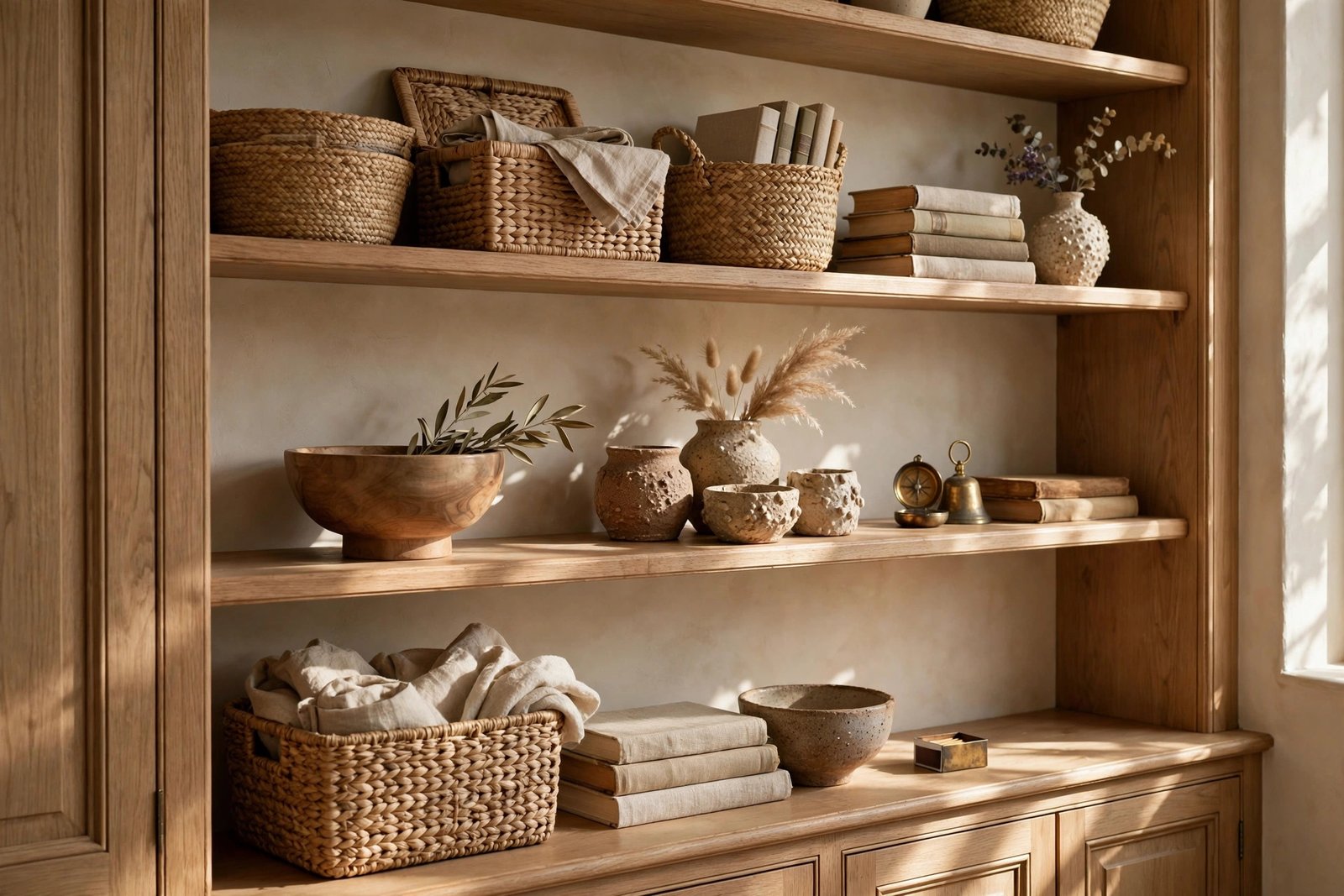
10. Layer in Texture: Baskets, Wood, and Ceramics
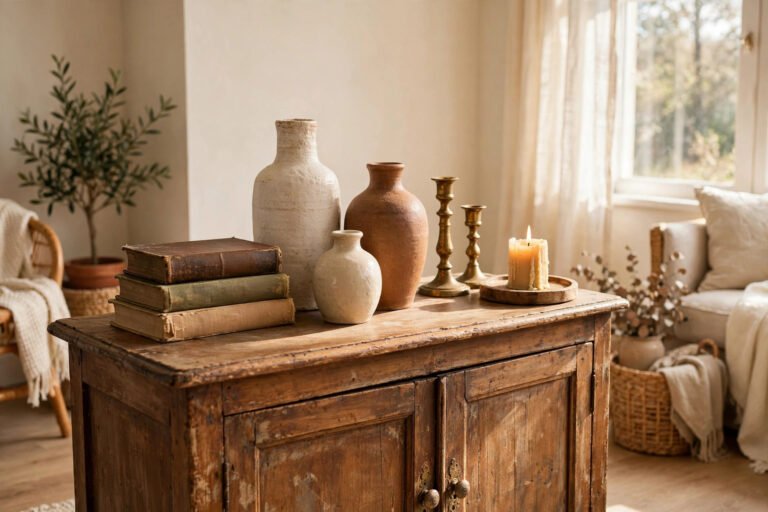
Books are visually flat, so texture is what makes built-ins feel rich: woven baskets, a wooden bowl, nubby ceramics, a brass object catching light. Aim for three different textures per section ($30–$80 total if you’re starting from scratch — thrift stores are goldmines). The mix of matte, woven, and reflective surfaces gives the eye something to travel across. Without texture, even perfectly arranged shelves feel like a spreadsheet; with it, they feel like a home.
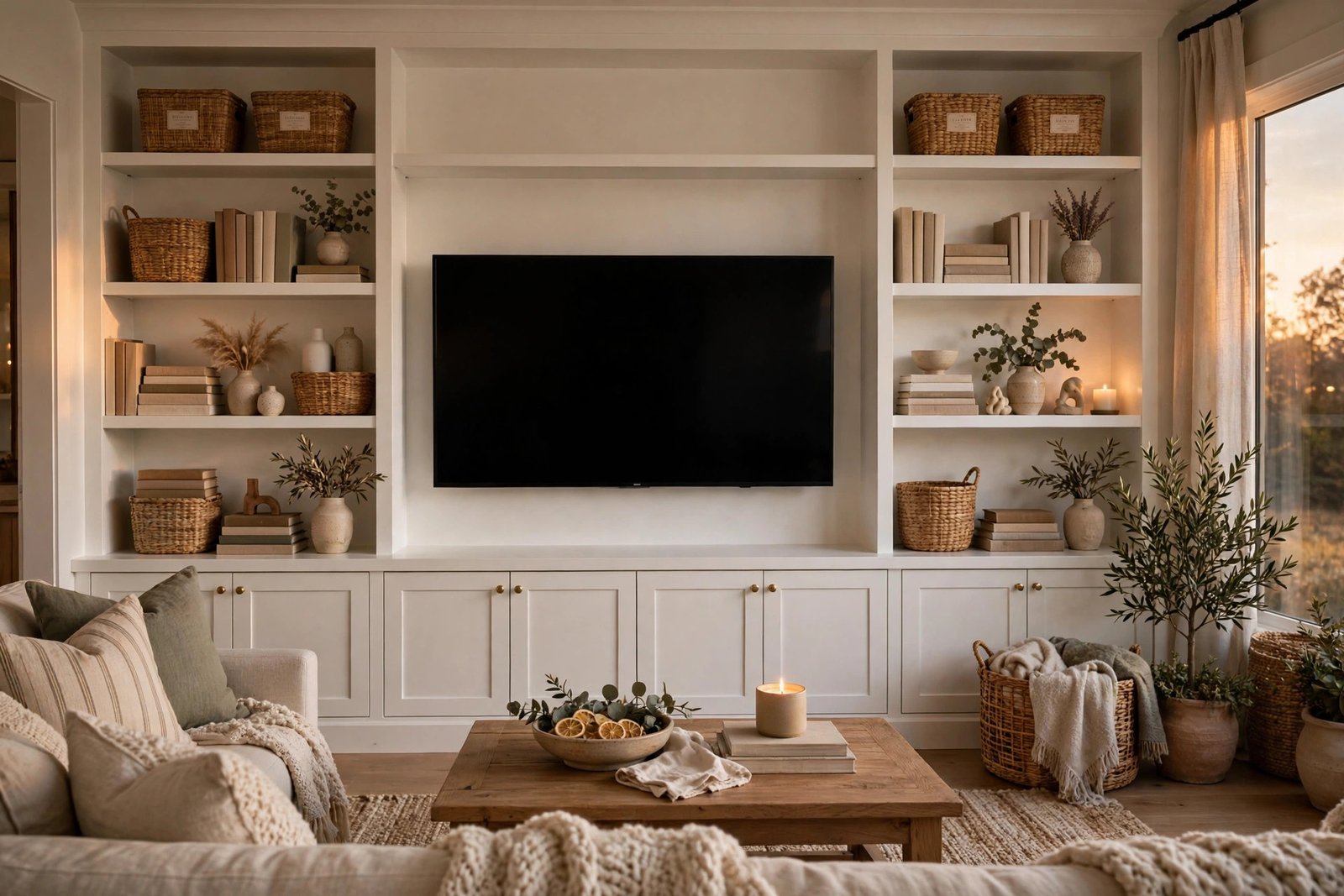
11. Styling Built-In Bookshelves Around a TV
When a TV sits inside the built-ins, treat each flanking section as a mini bookshelf and apply the 60/40 rule in miniature. Keep objects lower and calmer than the screen — nothing taller than the TV’s top edge beside it, so the screen stays the focal point. Symmetry helps: matching baskets or vases on both sides frame the TV like art. For the full layout side of this (mounting heights, cable hiding), our TV wall with fireplace ideas covers the construction half; this is the styling half. A slatted wood backdrop completes the TV wall; see built-in bookshelf styling ideas.
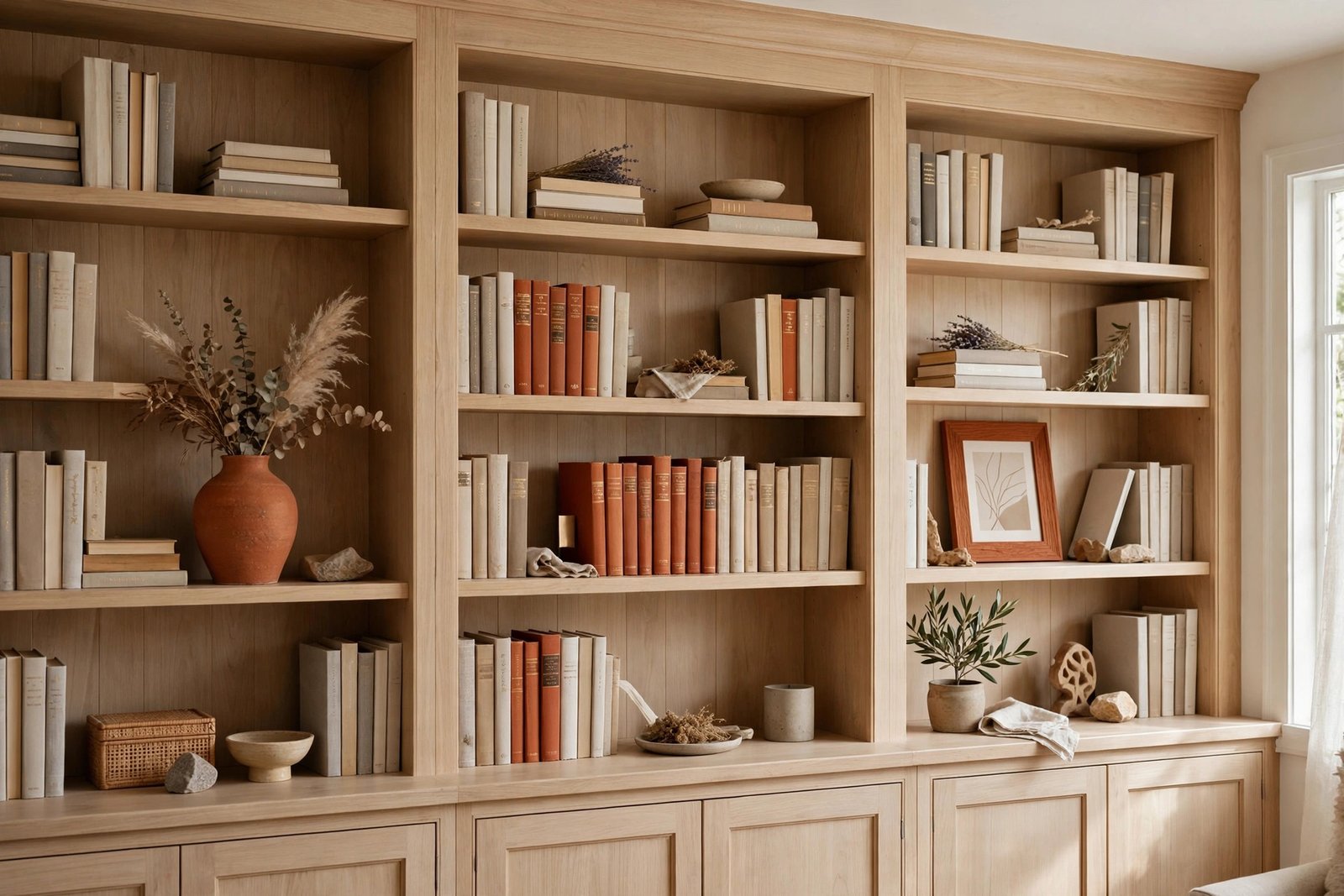
12. Repeat One Color in Three Places
The oldest designer trick in the book: pick one accent color and repeat it exactly three times across the unit — a rust vase here, rust book spines there, a rust frame lower down. Three repetitions read as intentional; two look accidental and four look themed. This costs $0 if you shop your own home first, and it unifies shelves that otherwise feel random. In my experience, warm metallics (brass, aged gold) are the easiest accent to repeat because most homes already own three brass-ish things.
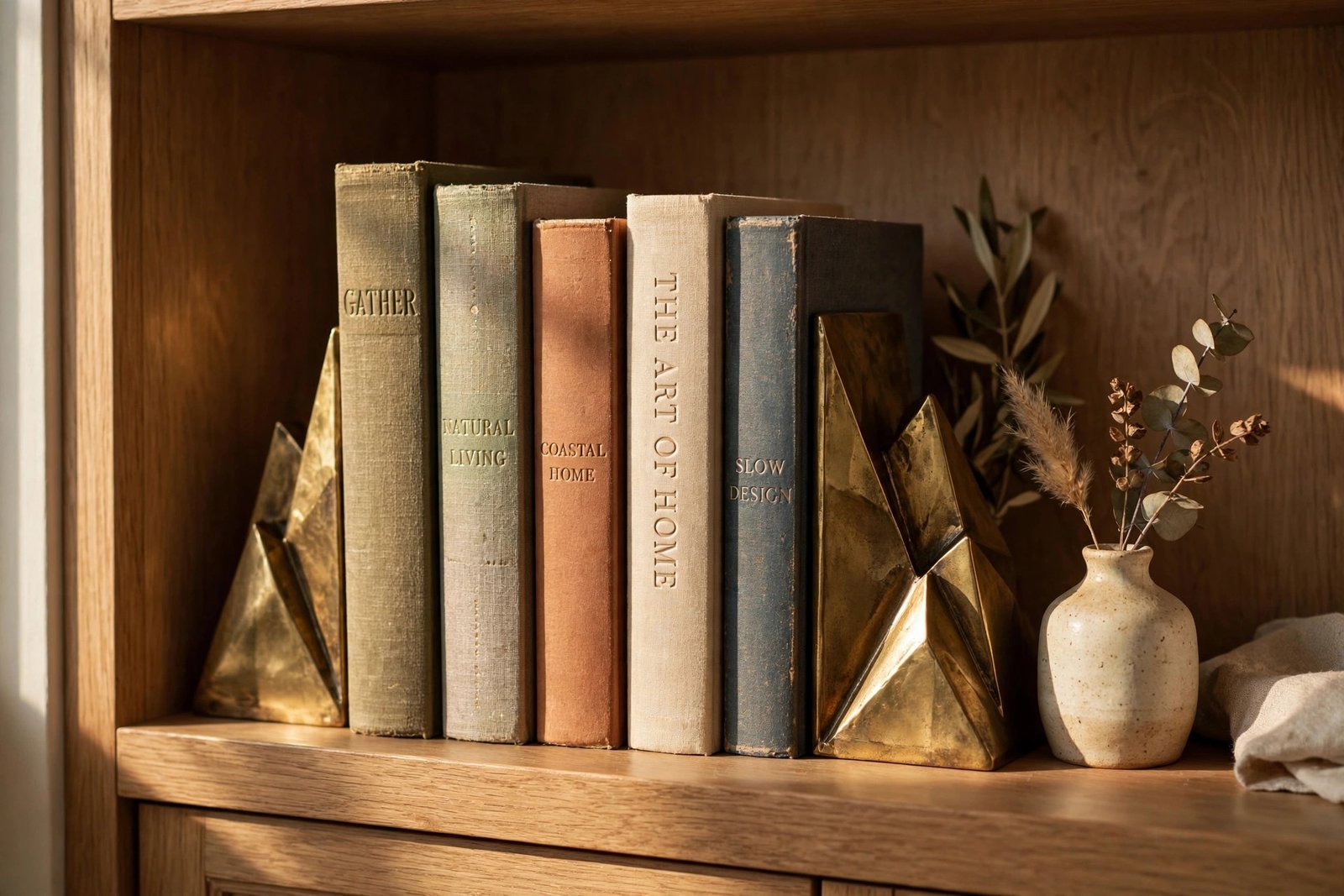
13. Use Bookends as Sculpture
Stop thinking of bookends as office supplies and start thinking of them as small sculptures ($15–$45 per pair for stone, brass, or marble styles). A beautiful pair of bookends does double duty: it holds the books upright and counts as a decor object, which helps your 60/40 ratio. Place them where a vertical book row ends and an empty stretch begins — they become the punctuation mark between sections. Avoid the flimsy metal L-brackets; they read as afterthought, not intention.
14. Refresh Seasonally Without Restyling Everything
You don’t need a full restyle four times a year — just swap the small layer. Keep your books and anchors permanent, and rotate only the top-layer objects: a pumpkin and dried stems in fall, fresh greenery in spring, one coastal object in summer ($20–$40 per seasonal swap if you buy new; free if you forage). Store the off-season smalls in one labeled bin on a bottom shelf. This keeps the built-ins feeling current with about thirty minutes of effort per season.
15. Photograph, Edit, Repeat: The Designer Walk-Through
The final designer step: photograph your shelves and study the photo, not the shelves. Cameras flatten depth and expose every imbalance — the too-tall stack, the crowded corner, the color that doesn’t repeat. Edit ruthlessly (remove three things), photograph again, and compare. Two rounds of this beats an hour of squinting at the real thing. It costs nothing, takes ten minutes, and it’s the closest thing to having a designer friend check your work. Every styled built-in you’ve admired on Pinterest survived this exact process.
3 Built-In Styling Mistakes to Avoid
- Overstuffing every shelf: if you can’t see the back of the shelf anywhere, you’ve got storage, not styling. Remove until one-third of each shelf is visible.
- All spines facing out, all the time: turning a few books cover-out (like a bookstore display) breaks the spine monotony and showcases your prettiest covers.
- Ignoring the sides of the unit: the vertical stiles between sections are styling real estate too — a tall branch or lean-to frame uses that dead space beautifully.
Shelf-by-Shelf: What Goes Where
| Zone | Style this | Avoid this |
|---|---|---|
| Top shelves (above 66″) | Light, airy: trailing plants, leaned frames | Heavy objects, overflow books |
| Eye level (48–66″) | Best pieces: art, favorite objects, pretty books | Clutter, anything ugly-but-necessary |
| Mid shelves | 60/40 book-to-decor mix, horizontal stacks | Flat rows of identical spines |
| Bottom shelves | Weight: baskets, big books, ceramics | Small fiddly objects nobody can see |
Frequently Asked Questions
How many books should be on styled built-in shelves?
Aim for books on roughly 60% of your shelf space, with 40% left for decor and breathing room. That usually means most shelves hold books on about two-thirds of their width. If your collection overflows the ratio, store the excess elsewhere — cramming every shelf with books is the fastest way to make built-ins look cluttered.
Should built-in bookshelf decor match the room?
It should coordinate, not match exactly. Repeat one or two colors from the room (the rule of three from idea 12) and echo one material — wood, brass, linen — found elsewhere in the space. The shelves should feel related to the room, not like a separate exhibit. When in doubt, neutrals with one accent color always work.
How do you style built-in shelves around a TV without clutter?
Apply the 60/40 rule in miniature on each side of the screen, keep objects lower than the TV’s top edge, and use symmetry — matching pairs of baskets or vases frame the screen calmly. Hide remotes and consoles in closed baskets on bottom shelves. The TV is the focal point; the styling job is to support it quietly.
What do you put on the very top of built-in bookshelves?
Almost nothing — the top of the unit is a dust zone above most sightlines. If the ceiling is high, one long low arrangement (a row of identical vessels or a single trailing plant) works. Otherwise leave it empty; styling the top of tall built-ins usually reads as clutter from below. Spend that energy on the eye-level shelves instead.
Your Built-Ins Are Closer Than You Think
Styling built-in bookshelves isn’t talent — it’s a formula: the 60/40 ratio, rhythm across shelves, eye-level priority, and the discipline to leave empty space. Work through the ideas above in order and photograph as you go; you’ll be shocked how fast it comes together. For more hands-on styling method, browse our DIY & Styling Tips collection, and if your built-ins frame a screen, pair this guide with our TV wall with fireplace ideas for the complete picture.



One Comment