
15 DIY Window Seat With Storage Ideas That Make the Most of Every Inch (2026)
If your windows are just holding curtains, you’re missing out on the coziest square footage in your home. A DIY window seat with storage turns dead space under the glass into a reading nook, a spare spot for guests, and a hiding place for blankets, toys, or board games. The good news? You don’t need advanced carpentry skills or a big budget. Most of these 15 ideas use off-the-shelf furniture, basic tools, and a single weekend. Let’s build your new favorite spot.
Key Takeaways
- Seat depth 18–22 inches, height about 18 inches; under 16 inches deep feels like a ledge.
- Lift-top storage suits blankets and seasonal items; drawers win for daily things like toys and books.
- IKEA KALLAX or BESTÅ units make the fastest base — no framing or joinery required.
- A 3–4 inch high-density foam cushion is what makes a seat comfortable enough for daily use.
- Subtract half an inch from foam measurements when cutting fabric so covers fit snugly.
- Never fully enclose a radiator — leave vented gaps or 6 inches of clearance.
Beginner Build Overview: What You Actually Need
Skill level: Confident beginner. If you can drill a straight hole and follow a level line, you can build these. IKEA-hack versions need no cutting; built-ins need straight cuts any lumber yard will make for you.
Tools: drill/driver, tape measure, level, stud finder, pencil, sanding block. A $40 pocket-hole jig makes frames far stronger, but screws plus wood glue hold fine for lighter builds. I’ve found that having the lumber yard make long cuts saves an hour and one very wonky edge.
Time and materials: One weekend — 2–3 hours measuring and shopping, 4–6 hours building, an hour for paint. You’ll need ¾-inch plywood or pine boards, 2×2 cleats, wood screws, paint, and a piano hinge for lift-tops. Anchor heavy builds into studs; a loaded seat can top 100 pounds.
15 DIY Window Seat With Storage Ideas
1. The IKEA KALLAX Cubby Seat
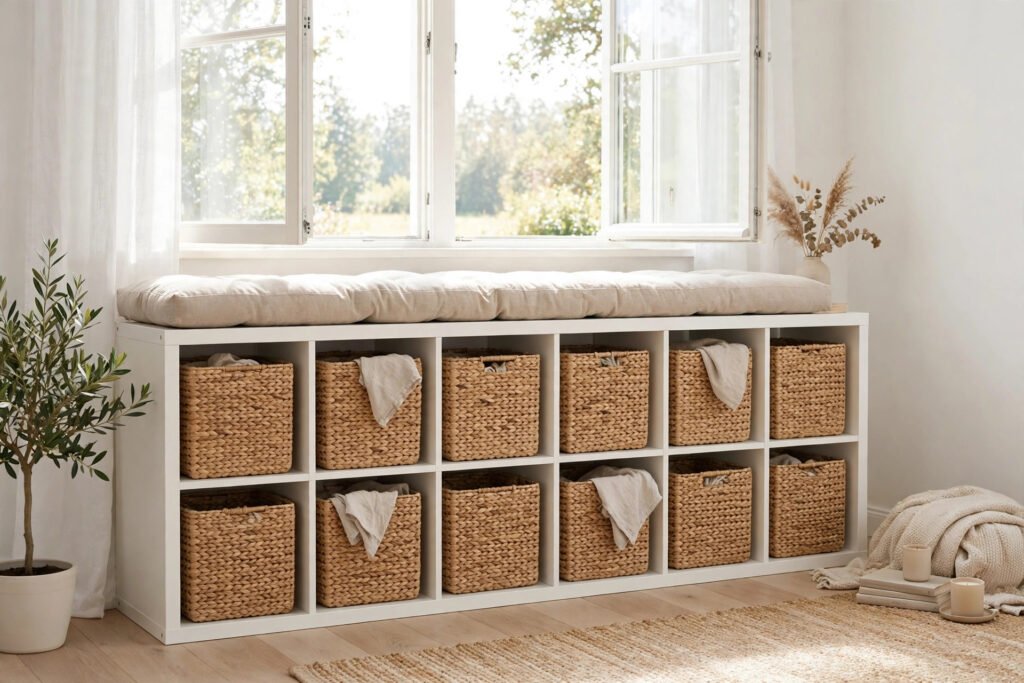
Lay a 2×4 KALLAX on its side, top it with ¾-inch plywood, and add a cushion — eight cubbies of storage and a window seat in under two hours. Fill the cubes with labeled fabric bins for toys or throws. Anchor it to the wall; it’s top-heavy once sat on. Cost runs about $120–$180 all-in. The fastest route from bare window to finished seat, and it looks far more custom than the price suggests.
2. IKEA BESTÅ Drawer Base
For smooth hidden storage, line up two or three 24-inch BESTÅ frames under the window, add a continuous plywood top, and paint everything the same color as your trim. The drawers glide, hide clutter completely, and at roughly $200–$300 all-in the result fools almost everyone. Keep the cushion in a washable cover — low drawer bases get claimed by pets too. Measure your window width first: three 24-inch frames cover a standard 72-inch window perfectly, with no awkward filler strips needed.
3. Classic Hinged Lift-Top Bench
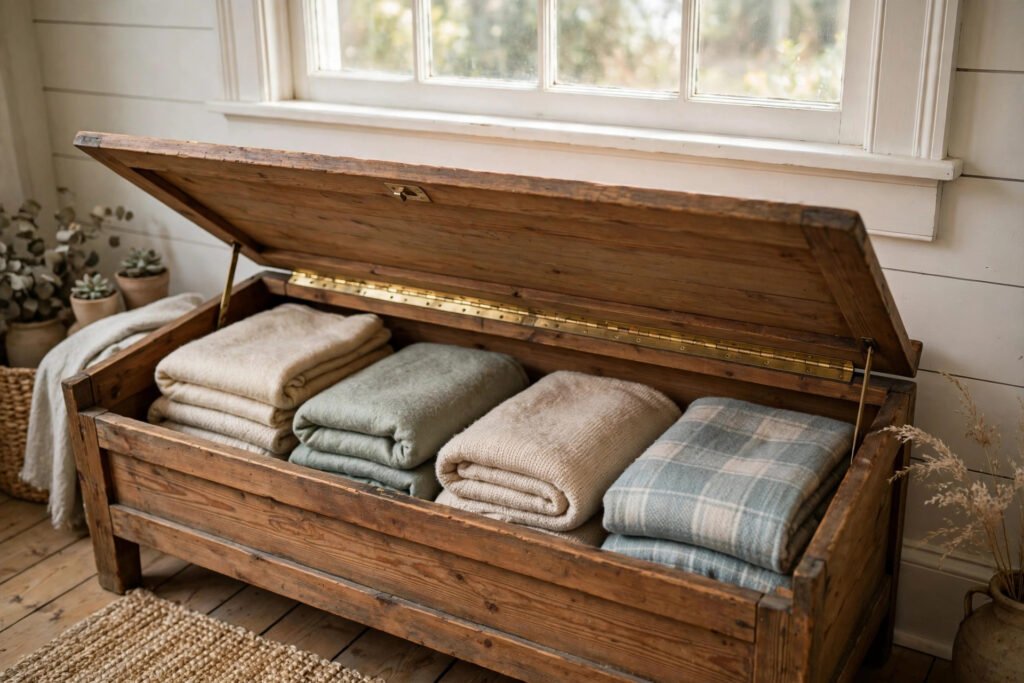
The traditional built-in: a plywood box with a hinged lid opening to one big cavity. It’s unbeatable for bulky things — spare bedding, winter coats, holiday decor — with no slides or dividers eating space. Use a full-length piano hinge and a soft-close lid stay so the top can’t slam. Tip: the soft-close stay keeps little fingers safe and stops midnight lid crashes. In my experience, a lift-top gets opened less than drawers, so reserve it for things you need monthly, not daily.
4. Deep-Drawer Built-In
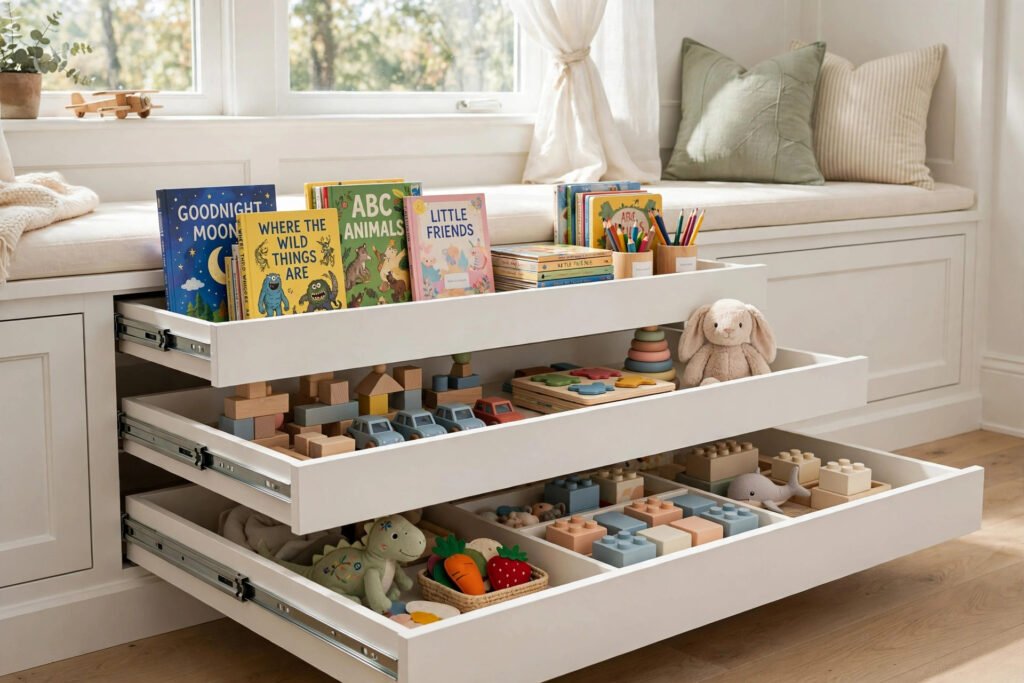
Build the same box as the lift-top but face it with two or three deep drawers. Drawers win for everyday items — kids’ books, chargers, the remote graveyard — because you see and reach everything without lifting the cushion first. Use full-extension slides (about $15 a pair) so the back six inches don’t become a black hole. Slightly more carpentry than the lift-top, but it’s the version you’ll use ten times a day.
5. Bay Window Angled Bench

Bay windows were made for seats — that angled bump-out is wasted space begging for a bench. Build three short box sections, one per window facet, joined with scribed filler panels. A cardboard template of each angle saves hours of guesswork. You get the longest possible seat in the room, often 6–8 feet, looking fully custom. Line the back with pillows and you’ve built the most photographed corner of your house.
6. Basket Cubbies Under the Seat
Skip doors and drawers: build an open base — top, bottom, dividers — and fill it with baskets. Cheapest build here (often under $80), visually light so small rooms don’t feel boxed in, and you can carry one basket where it’s needed. Tip: baskets labeled by person or category turn open storage from clutter into a system the family maintains. Size baskets 1–2 inches narrower than openings so they slide freely.
7. Bookshelf Base Reading Nook
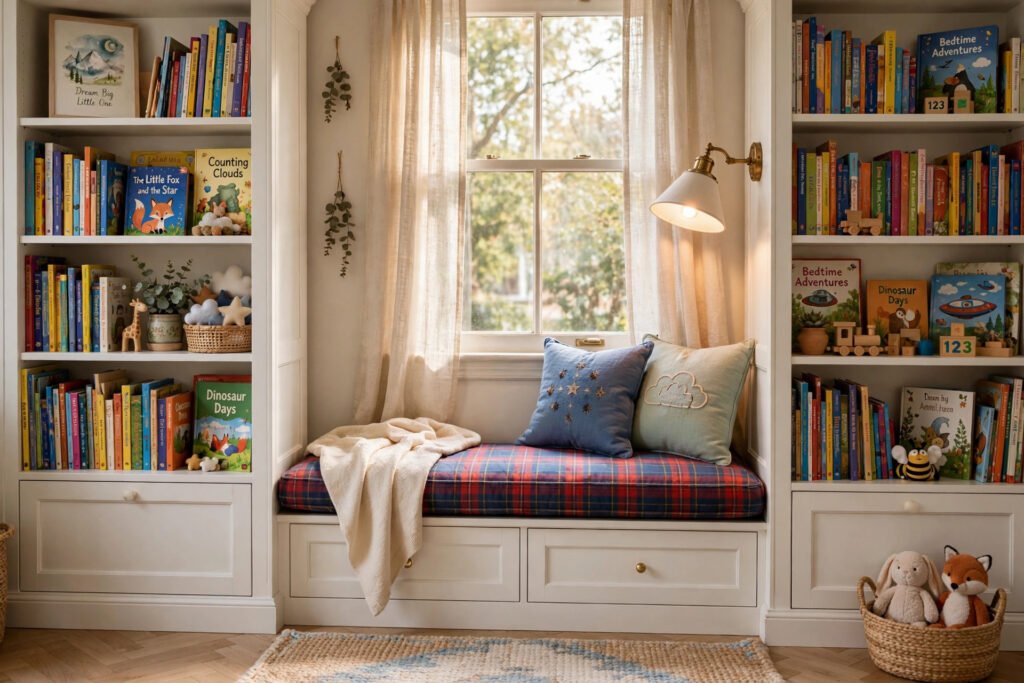
Flank the window with two tall BILLY bookcases, bridge the gap with a seat platform, and you’ve built a library nook in an afternoon. Paint bookcases and platform one color and run crown molding across the top to fuse it into a single built-in wall. Tip: matching the trim color is what makes it read as built-in rather than bookcase. My favorite for kids’ rooms, where the book collection only grows.
8. Radiator-Cover Combo Seat
Don’t fight the radiator under your window — build over it. Use a slatted or lattice front so heat flows freely, and keep 6 inches of clearance above the unit. The seat stays warm in winter, which is honestly a feature. Never use solid panels or insulation around it; check your boiler manual’s clearance rules first. A removable front panel makes future radiator servicing painless. Done right, an eyesore becomes the warmest seat in the house. For the slatted look, see DIY window seat ideas with wood slats.
9. Corner L-Seat for Two Windows
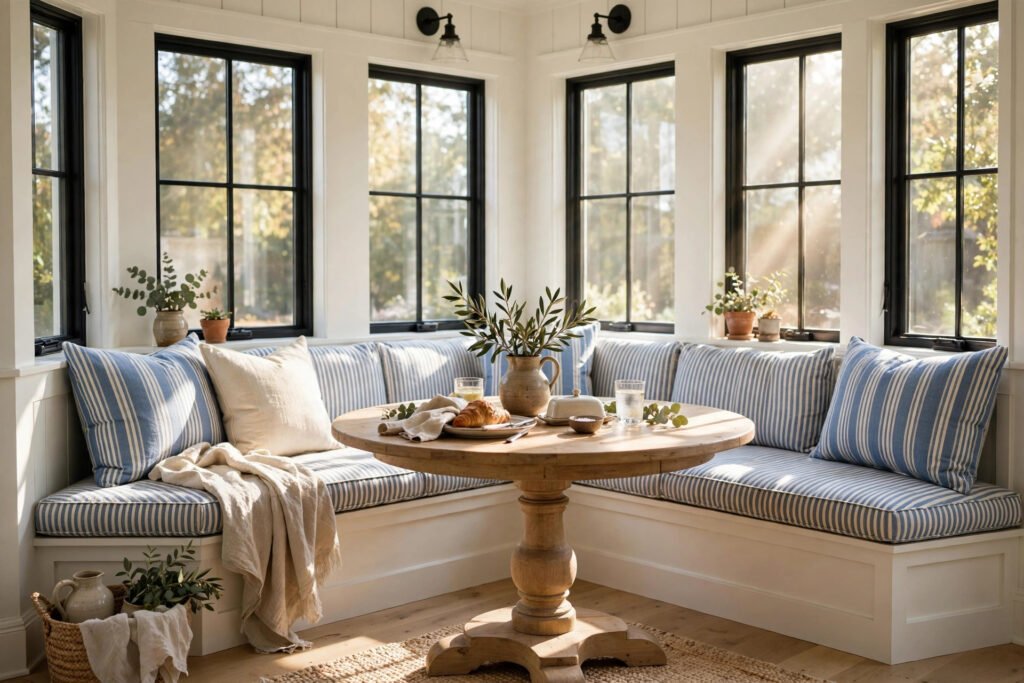
Where two windows meet at a corner, wrap an L-shaped seat around it — double the seating and a natural conversation spot. Frame two benches joined with a corner post; make the corner section lift-top since it’s hardest to reach (store rarely-used things there). It shines in dining nooks: add a round pedestal table and seat six with zero dining chairs. For more nook inspiration, browse Kitchen & Dining ideas.
10. Kids’ Toy Chest Seat
Scale down to 14–16 inches high with rounded, edge-banded corners. Inside, skip dividers — one open cavity swallows Lego bins fastest at cleanup time. The soft-close lid stay from idea #3 is non-negotiable with small fingers around. Let kids pick the paint and fabric; a seat they helped design gets used for reading, not just toy avalanches. A low open shelf at one end keeps tonight’s bedtime books within arm’s reach.
11. Entryway Shoe Bench
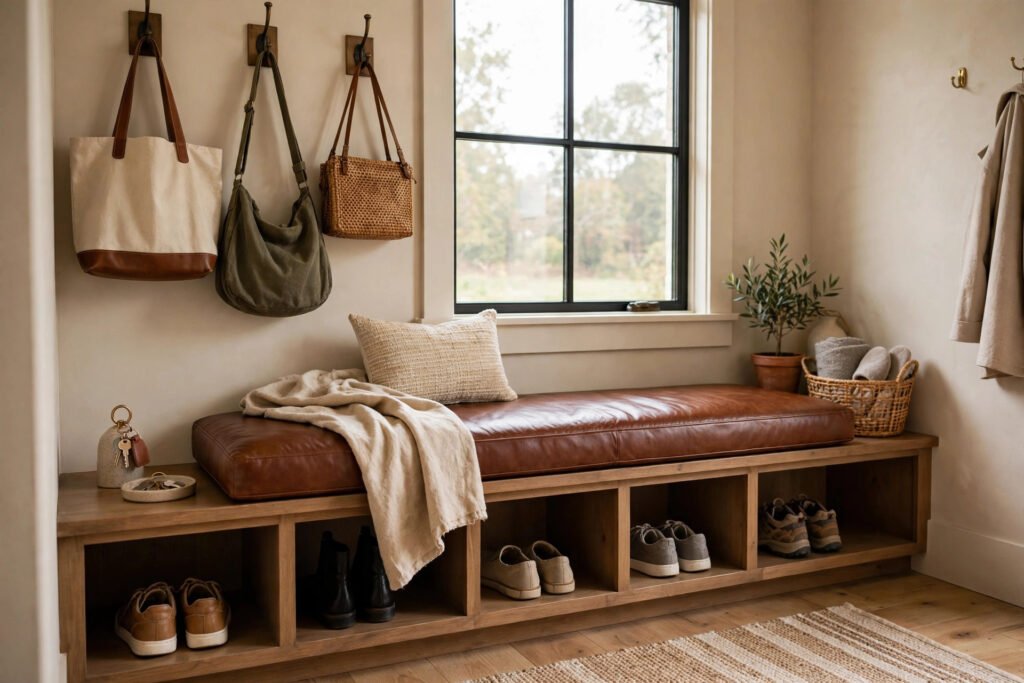
The window by your front door is prime real estate. Build the seat 17–18 inches high, store shoes in cubbies below, and top it with a wipeable cushion (faux leather or outdoor fabric). Add hooks above for bags and a tray for keys — instant landing zone. Tip: a wipeable cover in the entryway is the difference between a bench that looks good for years and one that looks tired by spring. More ideas in Entryways & Styling.
12. Dining Banquette With Storage
A window banquette turns breakfast into an event. Build at 18 inches to the cushion top, 20–22 inches deep so you can sit back. Lift-top storage underneath holds linens and placemats. Round the front edge since you’ll slide in constantly, and choose stain-resistant fabric. It seats more people than chairs in the same footprint — exactly why restaurants do it. Tuck a slim drawer into one end for placemats if your build allows the extra depth.
13. Bedroom Alcove Seat Between Wardrobes
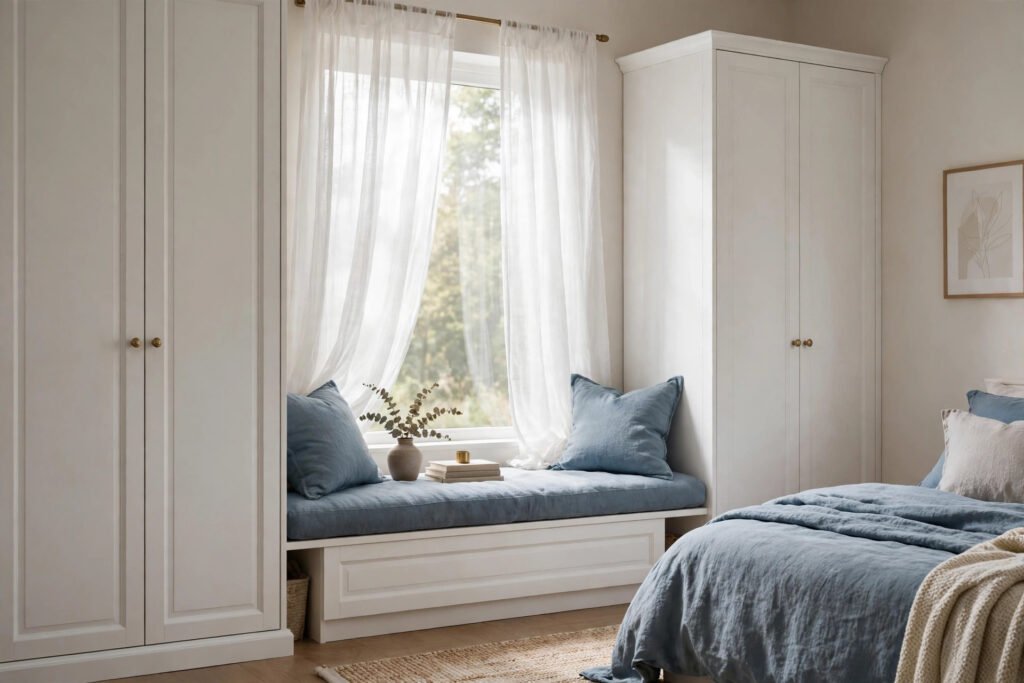
Window trapped between two wardrobes? Bridge the gap with a platform: instant dressing nook, reading spot, and blanket storage. Keep it around 20 inches high to double as a dressing perch. Perfect for primary bedrooms where floor space is spoken for but the window wall sits empty. Explore Living & Bedroom ideas for more. Tip: a cushion in the room’s accent color ties the seat to the bedding so the whole wall looks designed.
14. Roll-Out Drawer Boxes on Casters
The simplest “build” here: a fixed low platform with shallow rolling boxes beneath. No hinges, no slides, no joinery beyond butt joints and screws. Boxes pull out like drawers and glide back on felt-padded casters. Tip: felt pads protect wood floors and keep every toy retrieval silent. Ideal for renters — the whole thing lifts out with zero wall damage. Build the boxes 2 inches shallower than the platform so little fingers never get pinched reaching underneath.
15. The Styling Layer: Cushions, Throws & Pillows

The build gets you a bench; styling makes it a destination. Start with the base cushion (sizing guide below), then layer two large pillows upright at the back, two medium in front, one lumbar across the middle — the 2-2-1 formula that always looks intentional. Drape a throw over one corner, never folded dead-center. Use washable covers everywhere: window seats collect sun, pet hair, and snack crumbs in that order.
Cushion Sizing Guide: Foam, Fabric & Fit
For daily sitting, choose 3–4 inch high-density foam (1.8 lb density or higher); 2-inch foam bottoms out fast and suits only decorative perches. Measure the platform, then subtract half an inch from each dimension so the cushion fits snugly. Wrap foam in polyester batting — I always do this because it rounds edges and makes firm foam feel plush. A 48×20-inch cushion needs about 1½ yards of 54-inch fabric plus a zipper; pick medium-weight upholstery fabric, since quilting cotton wears through in about a year of daily use.
Frequently Asked Questions
How deep should a DIY window seat be?
Aim for 18–22 inches. At 18 inches most adults sit comfortably with pillow back support; 20–22 inches lets you curl up sideways. Under 16 inches feels like a ledge, and over 24 wastes floor space without adding comfort.
What is the best foam thickness for a window seat cushion?
Three to four inches of high-density foam (1.8 lb or higher) for daily use — supportive without bottoming out. Two inches suits decorative perches. Always wrap foam in batting first; it softens edges and adds half an inch of loft.
Can I build a window seat over a radiator?
Yes, with two rules: vent the front with slats or lattice so heat escapes, and keep 6 inches of clearance above the unit. Never box it in solid panels or insulate around it. Check your heating manual’s clearance requirements first.
How much does a DIY window seat cost?
IKEA-hack seats run $120–$300 with cushion. A simple plywood lift-top build lands around $150–$250. A fully trimmed drawer version with hardware and paint can reach $300–$450 — still far below the $1,500+ a carpenter charges.
Which is better for window seat storage: drawers or a lift-top?
Drawers win for everyday items — visible and reachable without moving the cushion. Lift-tops win for bulky, rarely-needed things like spare bedding. Can’t decide? Put drawers on the easy-reach ends and a lift-top in the middle.
The Best Seat in the House Is the One You Build
A window seat adds seating, storage, and charm in a single weekend — and once styled, good luck reclaiming your reading spot from the family. Start with the base that fits your skills, size the cushion like you mean it, and pin your favorite idea to plan the build.
Related posts: Living & Bedroom ideas · Entryways & Styling · DIY & Styling Tips