15 Throw Pillow Combinations for Gray Couch That Pop (2026)
Throw pillow combinations for gray couch owners are the highest-impact, lowest-cost upgrade in home decor: the couch stays, the whole room changes. But gray isn’t one color — warm grays (greige, taupe-leaning) and cool grays (blue-leaning) pair with completely different palettes, and guessing wrong is why so many gray couches look flat. These 15 combinations are organized by gray undertone, built on the 2-2-1 formula (two solids, two patterns, one texture star), and include a seasonal swap system — with honest prices on every combo.
Key Takeaways
- First, identify your gray: warm grays lean beige/taupe; cool grays lean blue. Warm grays love earthy colors; cool grays love jewel and crisp tones.
- The 2-2-1 formula never fails: two solid pillows, two patterned pillows, one textured or lumbar statement — five pillows total for a standard sofa.
- Mix three scales of pattern: one large, one medium, one small. Same color family, different scales = collected, not chaotic.
- Texture counts as color on gray: boucle, velvet, and linen in neutral tones add richness without a single new hue.
- Buy covers, not pillows: $12–$25 covers over the inserts you own make seasonal swaps nearly free.
- Odd numbers win: 3 pillows for a loveseat, 5 for a standard sofa, 7 max for a deep sectional.
1. Start With the 2-2-1 Formula
Every combination below is built on this skeleton: two solid-color pillows in your main accent, two patterned pillows sharing that color family, and one textured lumbar or statement pillow tying it together. Place the solids at the outer corners, patterns angled in front of them, and the lumbar centered — instant designer arrangement. The formula works because it balances calm (solids), interest (patterns), and touch (texture) in fixed proportions. Once you internalize it, you can build combos from any store’s clearance shelf. In my experience, this ratio also photographs best for anyone styling a living room to share. Price range: $60–$125 for five quality covers; inserts $8–$15 each if needed.
2. Warm Gray + Mustard + Cream
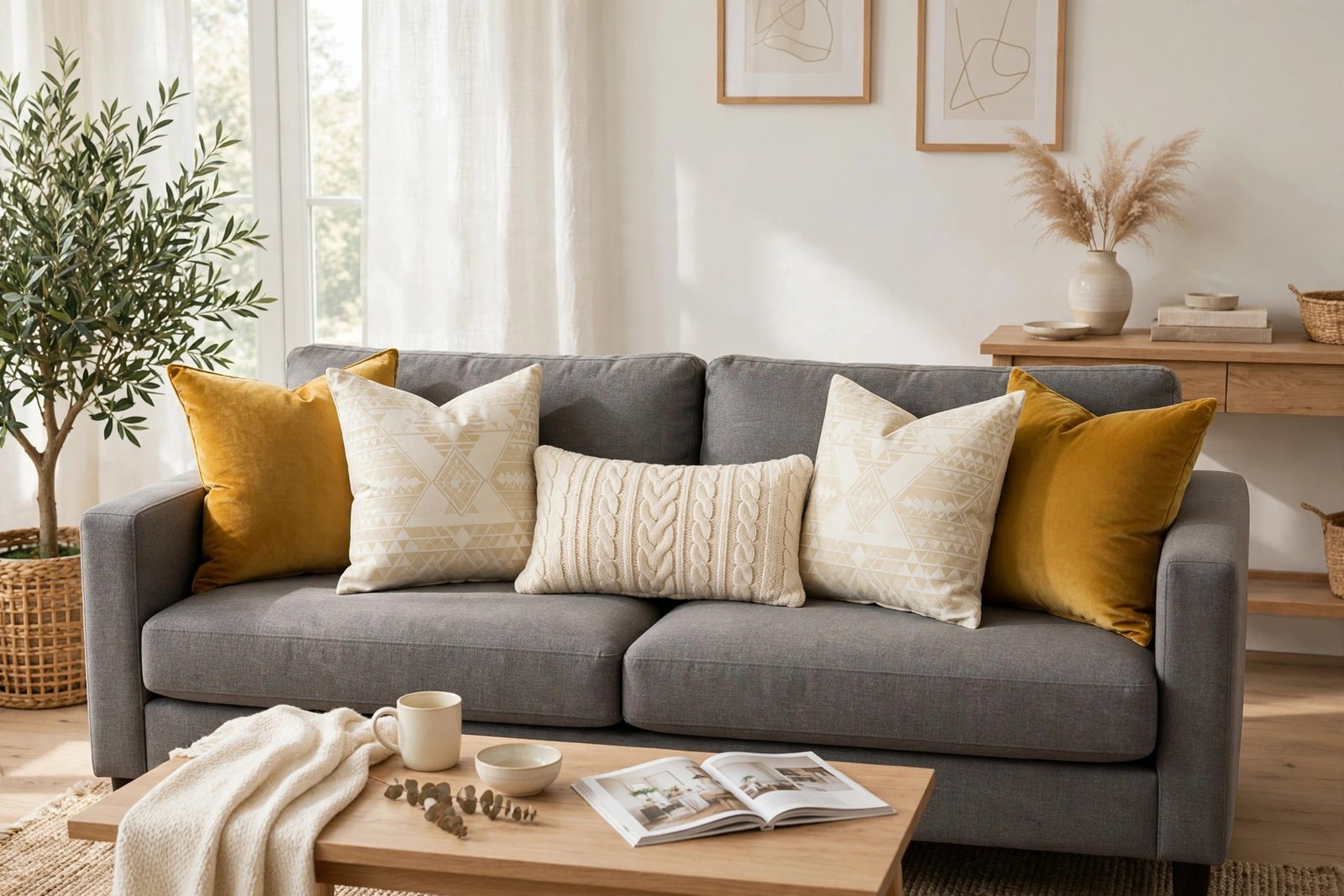
The classic gray-couch pairing for a reason: mustard’s golden warmth wakes up warm gray without fighting it, and cream keeps the whole thing light. Use two mustard solids (one velvet, one linen for texture contrast), two cream patterns (a subtle stripe and a small geometric), and a cream cable-knit lumbar. This combo suits greige and taupe-leaning couches best. It reads cozy in fall and fresh in spring — the rare year-round palette. If mustard feels loud, step down to ochre or goldenrod for the same warmth at lower volume. Price range: $55–$110 for the set of five covers.
3. Cool Gray + Navy + Crisp White
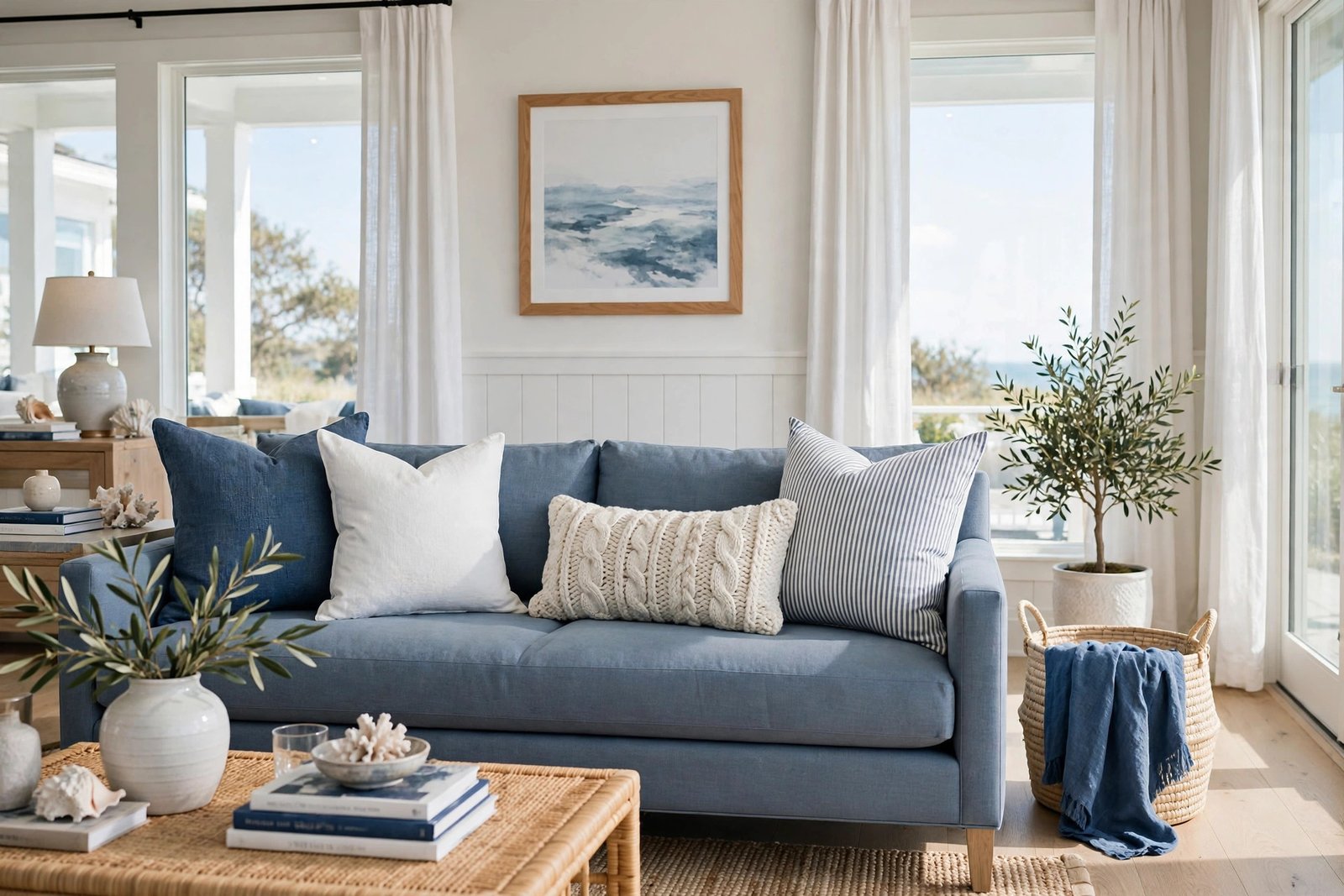
Cool, blue-leaning grays were made for navy: the pairing is tonal, sophisticated, and impossible to get wrong. Two navy solids (linen or cotton), two white-and-navy patterns (a classic stripe plus a Greek-key or trellis), and a white chunky-knit lumbar keep it crisp. This is the combo for modern and coastal-leaning living rooms — it looks tailored rather than cozy. Tip: keep the whites bright, not cream; cream against cool gray and navy looks dingy by comparison. Price range: $50–$100 for five covers; striped navy covers are everywhere at budget retailers.
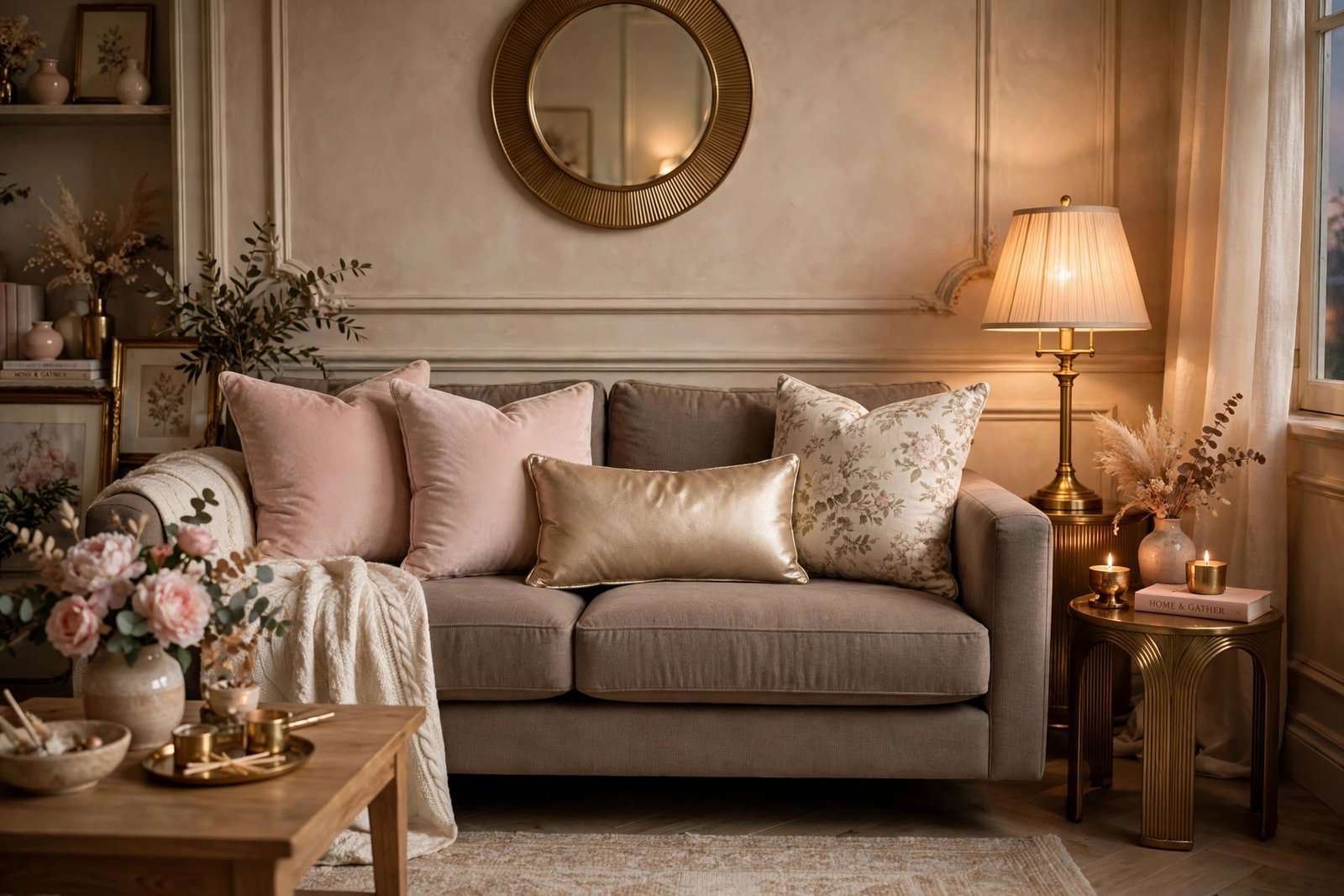
4. Warm Gray + Blush + Brushed Gold
Blush pink softens warm gray into something romantic without going full feminine — the gray keeps it grounded. Two blush solids (one velvet for sheen, one matte cotton), two blush-and-cream patterns (a faded floral and a small dot), and a lumbar in brushed-gold or champagne faux leather add the grown-up edge. This combo glows in rooms with warm lighting and pairs beautifully with brass lamp bases or gold frames. Skip it on blue-gray couches, where blush can read muddy. Price range: $60–$120; velvet blush covers run $15–$28 each.
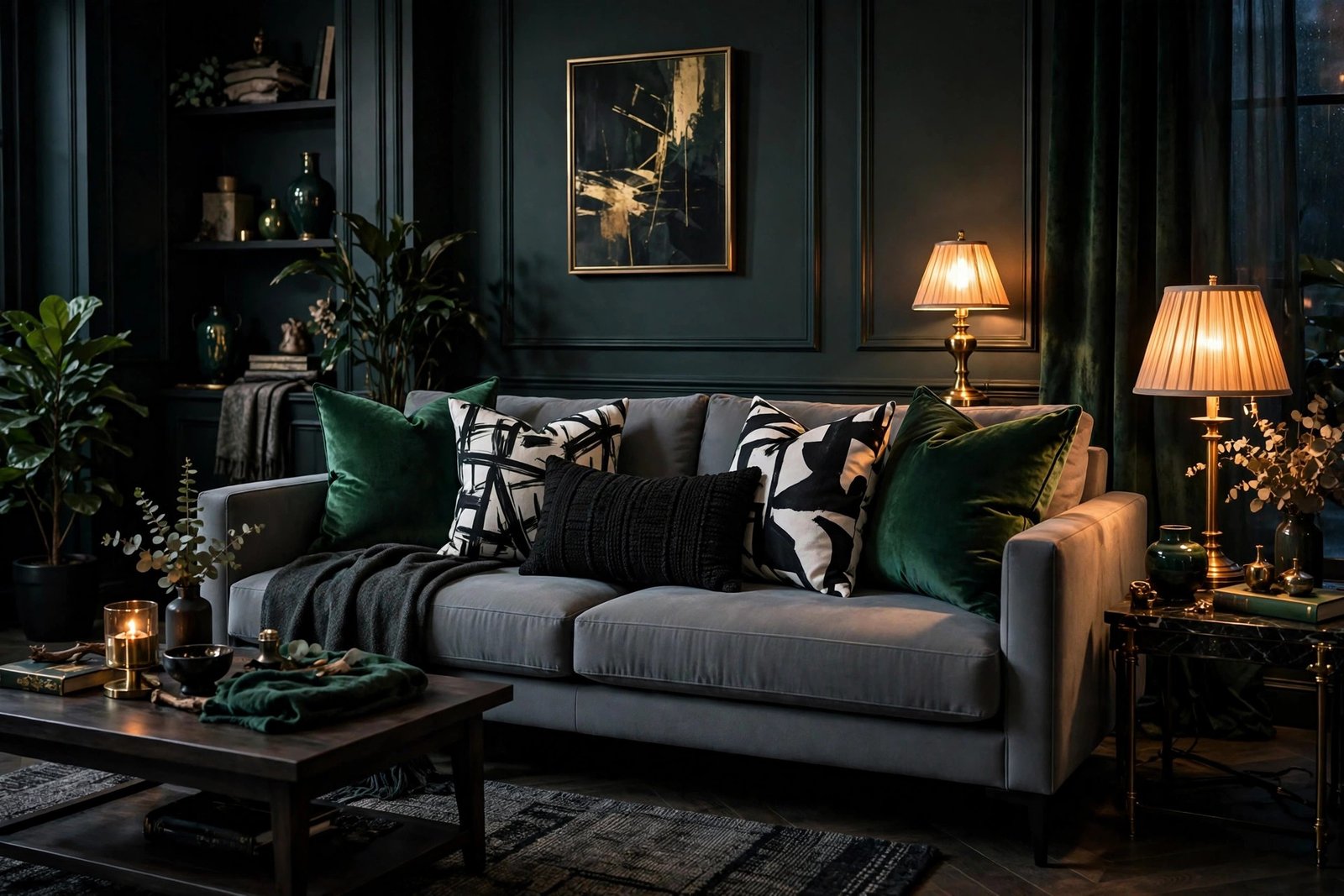
5. Cool Gray + Emerald + Black Accents
For drama: emerald green against cool gray is jewel-box rich, and thin black accents keep it sharp instead of sweet. Two emerald solids (velvet, always velvet for this one), two black-and-white or black-and-gray patterns (an abstract and a stripe), and a black lumbar with subtle texture. This is the moody-evening combo — it looks best in rooms with warm lamplight to play off the velvet. Fair warning: emerald dominates, so keep the rest of the room’s green to small doses. Price range: $65–$130; emerald velvet covers $16–$30 each.
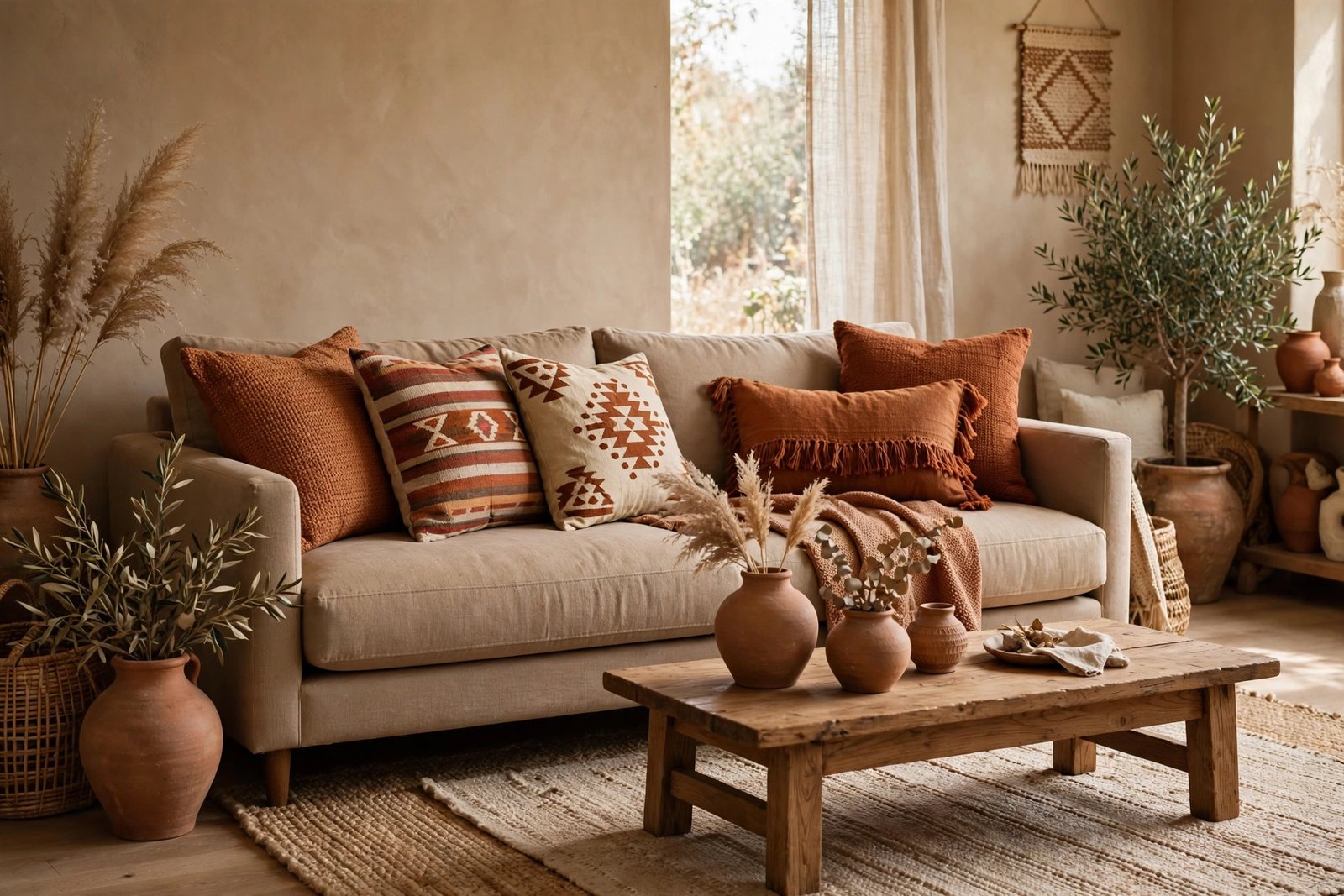
6. Warm Gray + Terracotta + Rust
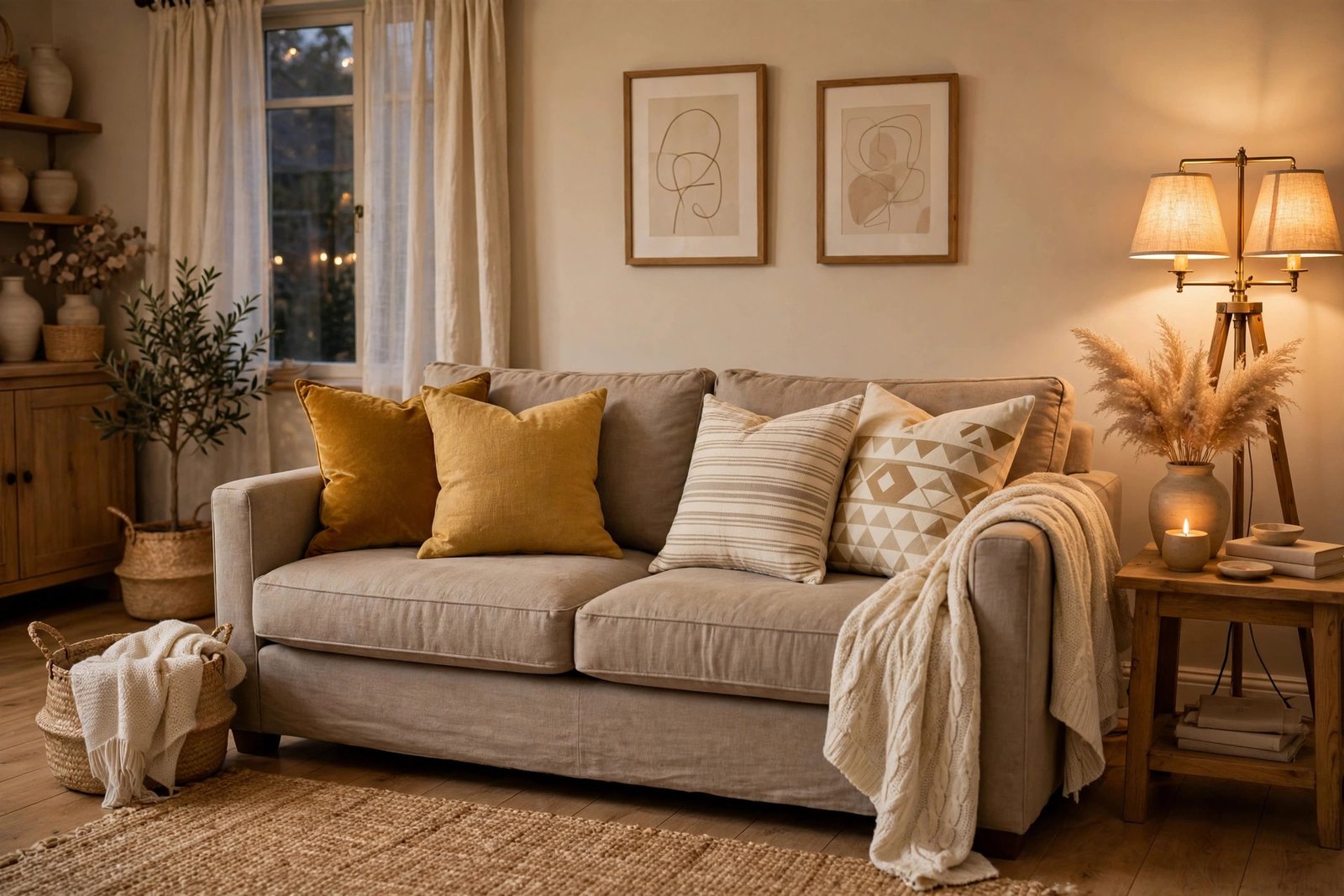
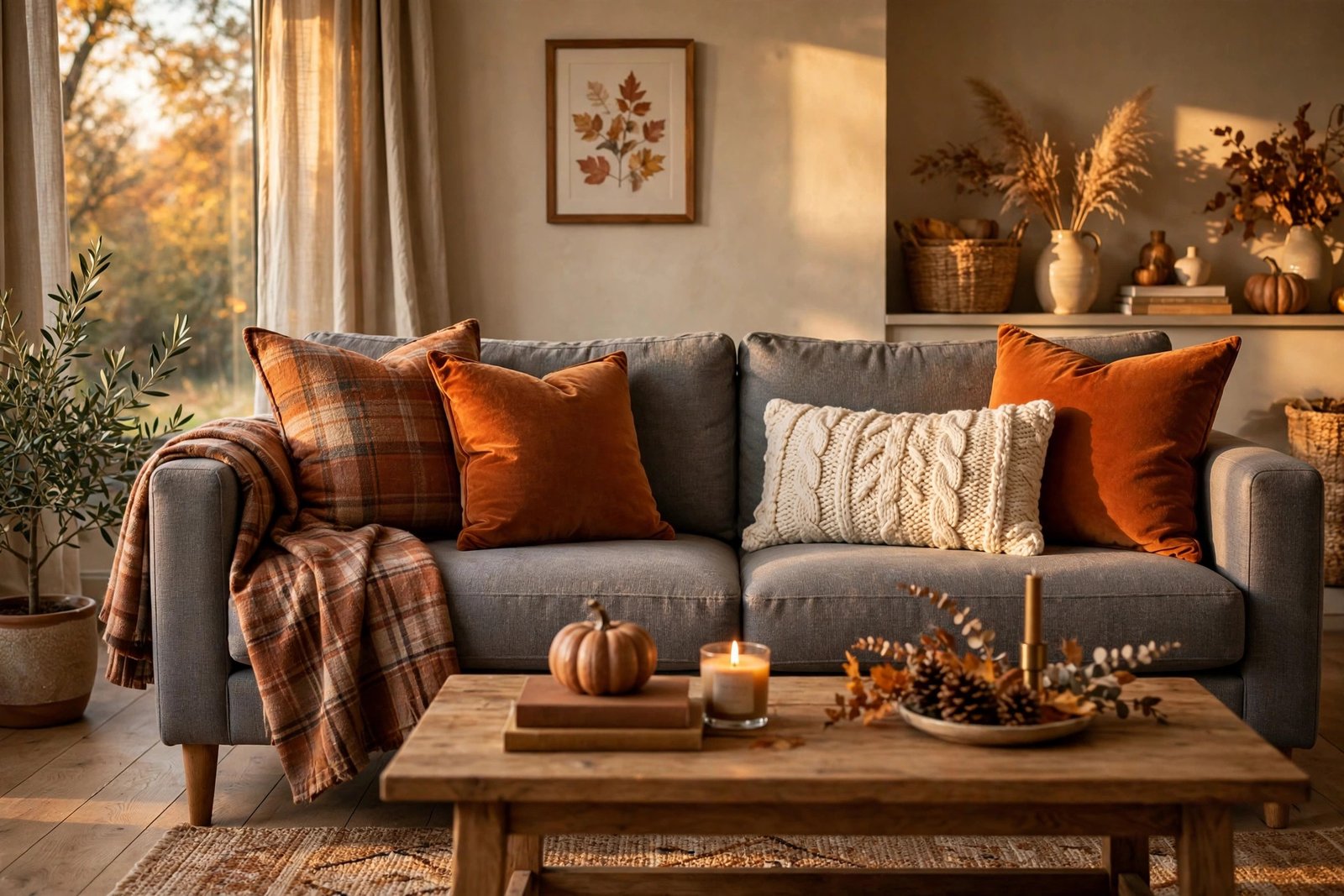
Earthy and current: terracotta and rust pull out the warm undertones hiding in greige couches and make the whole room feel sun-baked in the best way. Two terracotta solids (woven cotton or linen), two rust-and-cream patterns (a kilim stripe and a mudcloth-inspired print), and a rust-colored lumbar with fringe or tassels. This palette loves natural materials nearby — jute rugs, wooden trays, clay vases — and it’s the easiest fall transition on this list. In my experience, terracotta also hides everyday wear better than any pale pillow. Price range: $55–$105 for five covers; kilim-style covers are plentiful under $20.
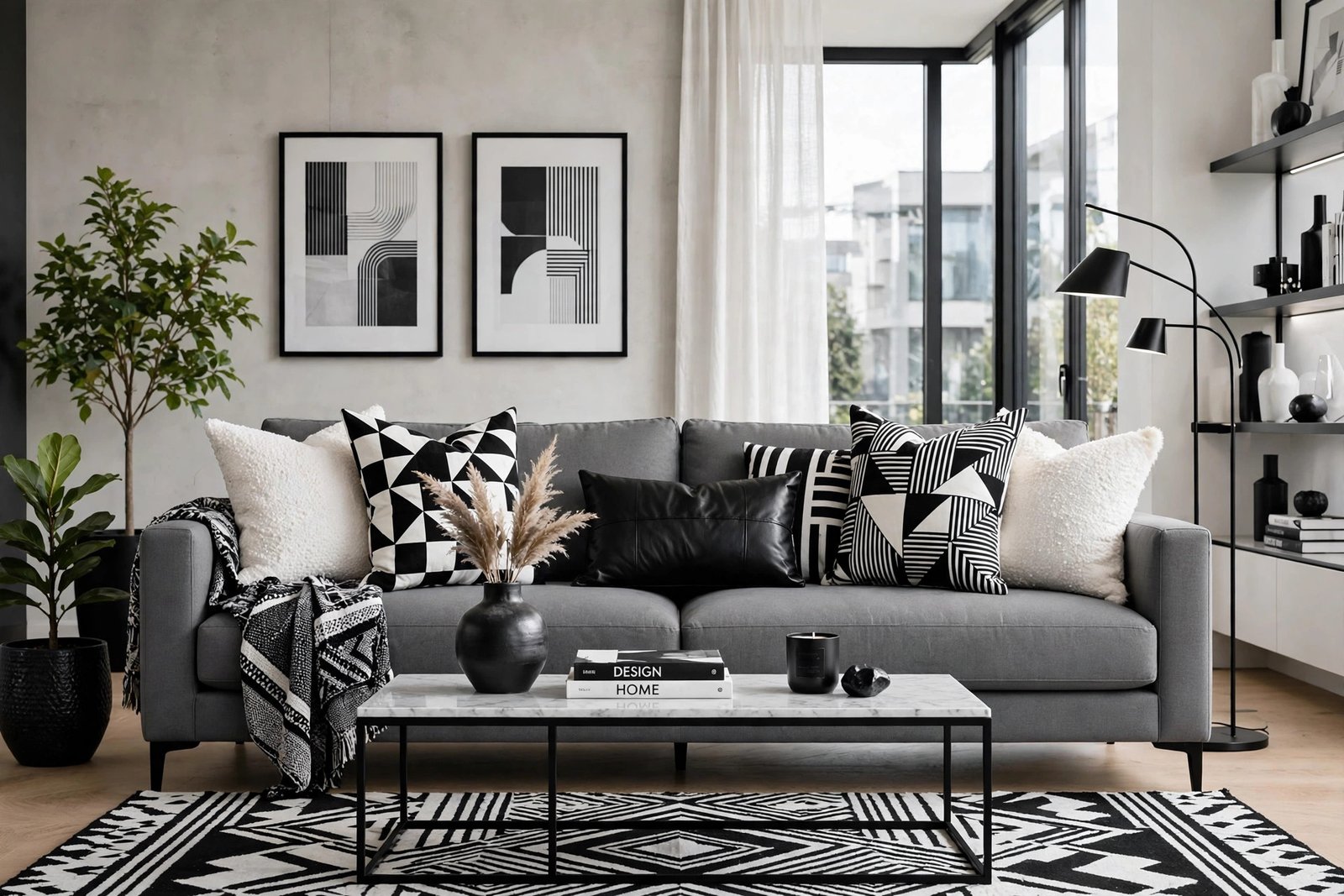
7. Any Gray + Black + White (Modern Monochrome)
The foolproof combo that works on warm and cool grays alike: black and white pillows let the gray couch be the mid-tone between them. Two white solids (textured — boucle or waffle weave so they don’t look flat), two black-and-white patterns (one bold graphic, one fine stripe), and a black lumbar in leather or faux leather. The result is graphic, modern, and endlessly re-styleable — swap the lumbar seasonally and the whole look shifts. Keep the white pillows washable; they’re the ones that show life. Price range: $50–$110; black-and-white patterned covers start around $12.
8. Warm Gray + Sage + Natural Linen
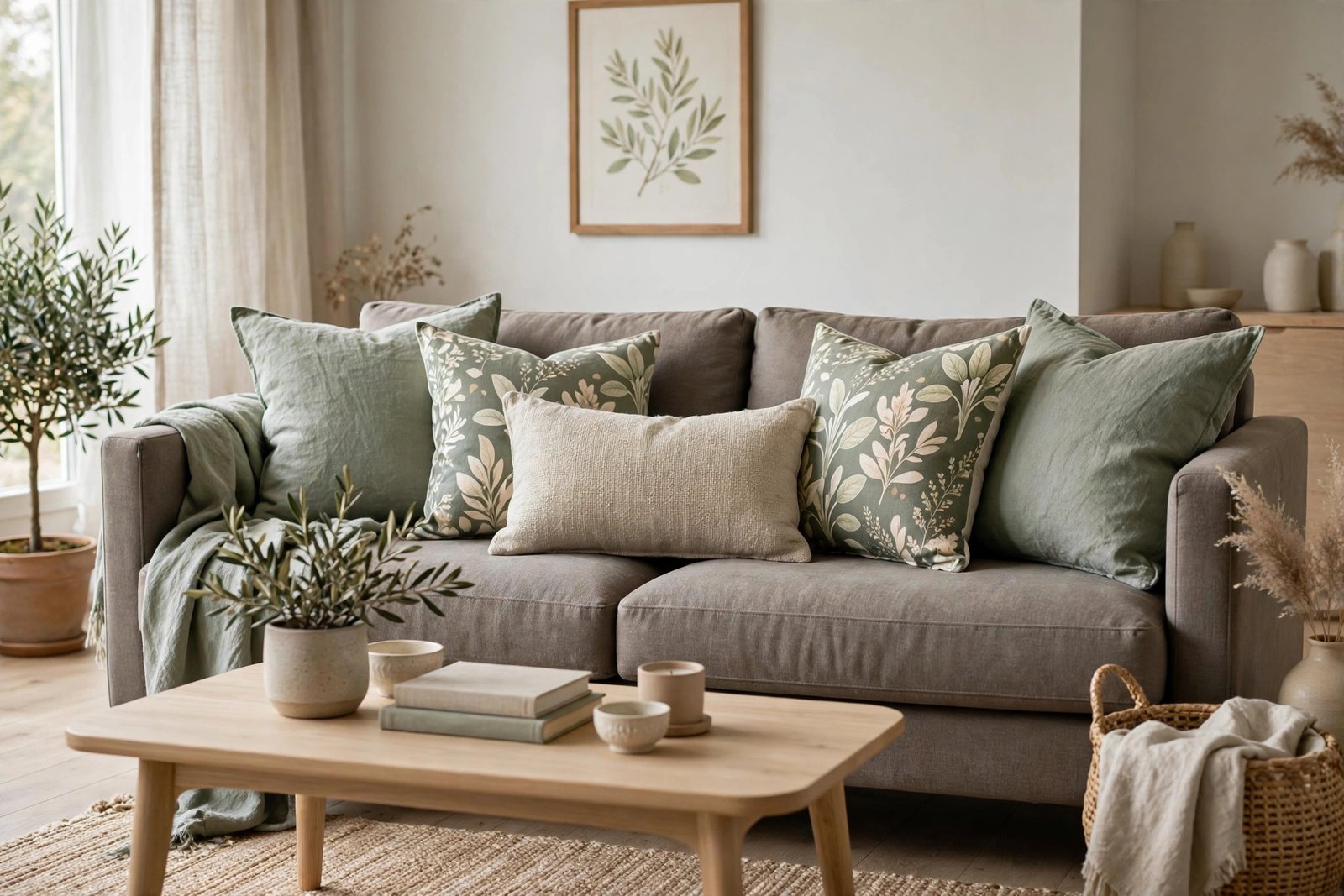
For the calm, organic living room: sage green whispers against warm gray instead of shouting, and natural linen textures do the heavy lifting. Two sage solids (washed linen), two natural-and-sage patterns (a botanical print and a tone-on-tone stripe), and an undyed natural-linen lumbar with visible weave. This combo suits Scandinavian, Japandi, and cottage styles — anywhere the goal is serene. It also photographs beautifully in daylight, which matters if your couch faces the windows. Add a throw in the same sage to complete the story. Price range: $55–$115; washed-linen covers run $18–$30 each.
9. Warm Gray + Camel + Cognac Leather Lumbar
Menswear-inspired and rich: camel and cognac against warm gray reads like a well-cut coat — tailored, warm, quietly expensive. Two camel solids (one wool-look, one smooth cotton), two brown-and-cream patterns (a houndstooth or plaid plus a small geometric), and the star: a cognac faux-leather lumbar. The leather lumbar is the investment piece that elevates the entire couch; everything else can be budget. This combo loves warm wood furniture and brass nearby. Skip on blue-gray couches — camel against cool gray looks disconnected. Price range: $70–$140 including a $25–$45 leather-look lumbar.
10. Cool Gray + Teal + Aqua
Teal wakes up cool gray without the formality of navy — it’s the playful jewel tone. Two teal solids (one velvet, one cotton), two aqua-and-white patterns (a watercolor abstract and a small-scale geometric), and an aqua lumbar with texture. The gradient from teal to aqua to gray feels coastal-modern, and it brings serious color to rooms that lean neutral elsewhere. This combo needs decent daylight to sing; in a dark north-facing room, teal can go murky. If yours does, swap the aqua lumbar for crisp white. Price range: $55–$110 for five covers.
11. Cool Gray + Plum + Charcoal
Winter’s answer to the gray couch: plum and charcoal turn cool gray moody and cocooning. Two plum solids (velvet or chenille for depth), two charcoal-and-gray patterns (a subtle damask and a fine stripe), and a charcoal faux-fur lumbar for maximum cozy. This is a low-light combo — it thrives in rooms with warm lamps and candles, and it makes a gray couch feel intentional through the darkest months. Come spring, swap the plum solids for blush or sage covers and keep the charcoals. Price range: $60–$125; faux-fur lumbars run $20–$35.
12. Master Pattern Mixing on Gray
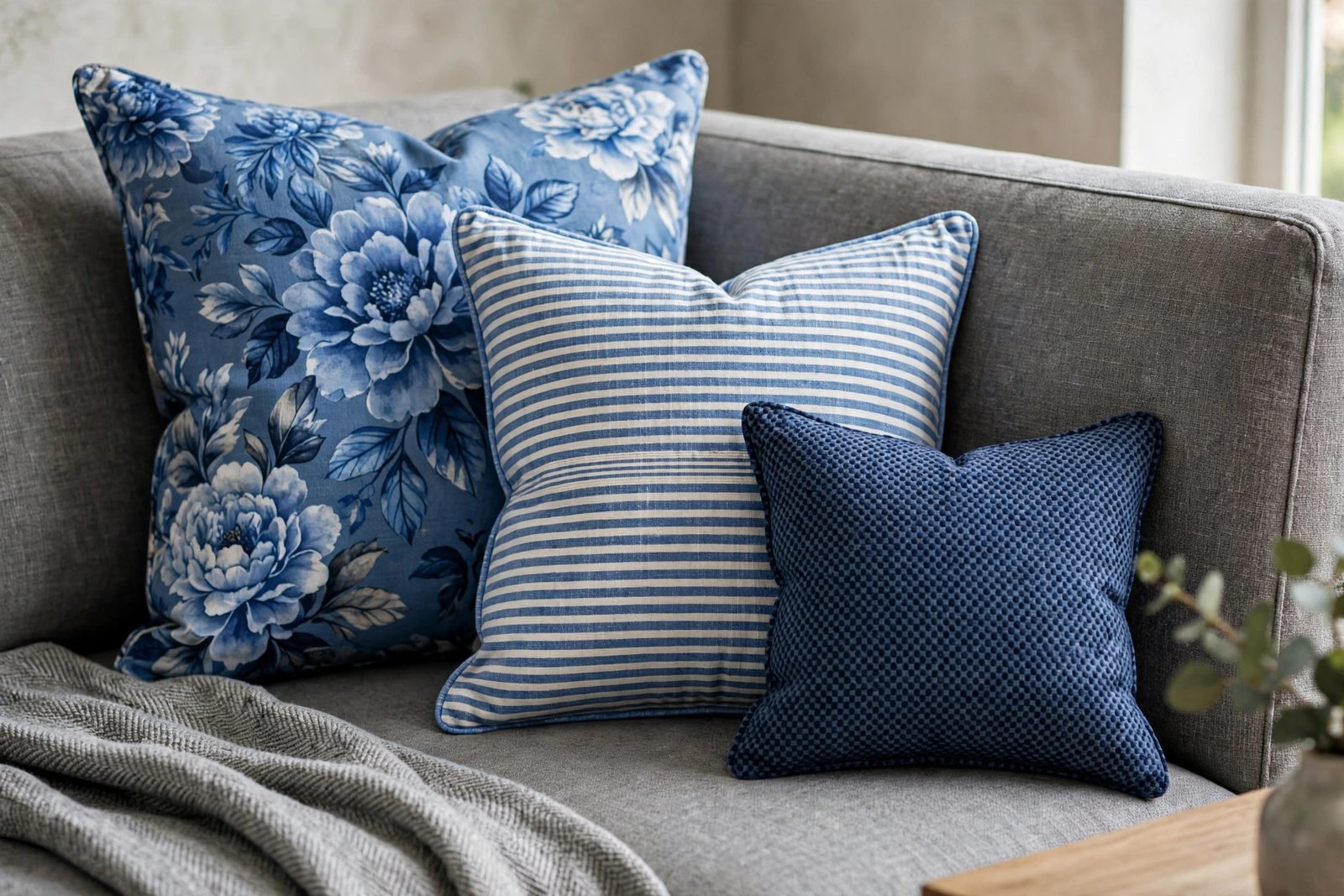
Gray is the most forgiving couch color for pattern mixing — the rules are simple. Pick one color family (say, blue), then choose three patterns at three scales: a large floral or abstract, a medium stripe or geometric, and a small dot or mini-print. Keep two patterns on backgrounds close to your couch’s gray so they knit together. Tip: the 60-30-10 of pattern — 60% of your pillows read solid-ish, 30% medium pattern, 10% bold statement. When in doubt, add one more solid; restraint reads expensive. Price range: pattern-mixing costs nothing extra — it’s a method for shopping what you already own plus $12–$25 per new cover.
13. Go All-Texture, No New Color
The minimalist power move: five pillows in creams, grays, and whites, differentiated purely by texture — boucle, velvet, chunky knit, washed linen, and a nubby wool lumbar. On a gray couch, this reads incredibly high-end because the eye registers richness without any color risk. It works on warm and cool grays equally and suits every style from modern to farmhouse. The catch: textures must genuinely differ — five flat cotton pillows in similar tones just look unfinished. Touch-test in the store; if two feel the same, swap one. Price range: $65–$140; texture-rich covers (boucle, knit) run $18–$32 each.
14. Run the Seasonal Swap System
Stop redecorating and start rotating: keep neutral base pillows year-round (two gray or cream solids, one textured lumbar), and swap just two patterned covers per season. Spring: botanical prints. Summer: crisp stripes or aqua. Fall: rust, terracotta, plaid. Winter: plaid, faux fur, jewel tones. Store off-season covers flat in a labeled bin — they take up less space than a shoebox. Two new covers per season costs $25–$50 and makes the couch feel new four times a year. For general textile layering ideas beyond the couch, see our renter friendly living room ideas. Price range: $25–$50 per seasonal refresh.
15. The 3-Pillow Starter Set on a Budget
If five pillows feels like too much commitment, three well-chosen covers transform a gray couch for under $50: one solid in your accent color, one pattern mixing that color with gray, and one textured neutral lumbar. That’s it — the 2-2-1 formula’s little sibling. Shop pillow covers (not full pillows) and reuse inserts you own; check thrift stores for quality covers in the $3–$8 range, where designer brands hide regularly. Our thrift store furniture makeover ideas cover the same hunt-smarter principles for bigger pieces. Price range: $30–$50 total for three covers.
Frequently Asked Questions
What color pillows go best with a gray couch?
It depends on your gray’s undertone. Warm grays (greige, taupe-leaning) pair best with mustard, terracotta, camel, blush, and sage. Cool grays (blue-leaning) pair best with navy, emerald, teal, plum, and crisp white. Black-and-white works on every gray. When unsure, hold paint swatches against the couch in daylight — the undertone reveals itself fast.
How many throw pillows should I put on a gray couch?
Use odd numbers: 3 pillows for a loveseat, 5 for a standard three-seat sofa, up to 7 for a deep sectional. The 2-2-1 formula (two solids, two patterns, one textured lumbar) builds a perfect five. Fewer than three looks bare; more than seven on a standard sofa starts swallowing the seating.
Can I mix warm and cool colors on a gray couch?
Carefully, and only through the couch itself as the bridge. A warm camel pillow and a cool navy pillow can coexist if both share intensity and the gray sits between them tonally. The safer move is committing to one temperature per season — warm combos for fall/winter, cool combos for spring/summer — and swapping with the seasons.
How do I mix pillow patterns without it looking messy?
Stay in one color family, mix three pattern scales (one large, one medium, one small), and keep at least two patterns on backgrounds close to your couch’s gray. Follow the 60-30-10 balance: mostly calm, some pattern, one statement. When a combo feels chaotic, remove one patterned pillow and replace it with a solid — restraint fixes nearly every mismatch.
Your Gray Couch Is a Canvas
A gray couch isn’t boring — it’s the most cooperative background in home decor, ready to take on whatever palette you hand it. Start with the 2-2-1 formula, match your combos to your gray’s undertone, and let texture do half the work. And remember: covers, not pillows. A $20 cover swap is the cheapest room refresh you’ll ever buy.
Related posts you may like:
- 18 Renter Friendly Living Room Ideas for Small Rentals
- 17 Thrift Store Furniture Makeover Ideas That Look Expensive
- Living & Bedroom Ideas