13 Curtains for Sliding Glass Doors That Work (2026)
Curtains for sliding glass doors fail for predictable reasons: panels that don’t clear the door when open, rods too short to stack the fabric aside, and hardware that fights you every time you walk onto the patio. A sliding door is typically 6–8 feet wide and used dozens of times a day, so it needs a different playbook than a regular window. These 13 ideas solve the actual problems — stack-back space, glide-friendly hardware, blackout for bedroom sliders, and renter-safe options — with honest prices on every idea.
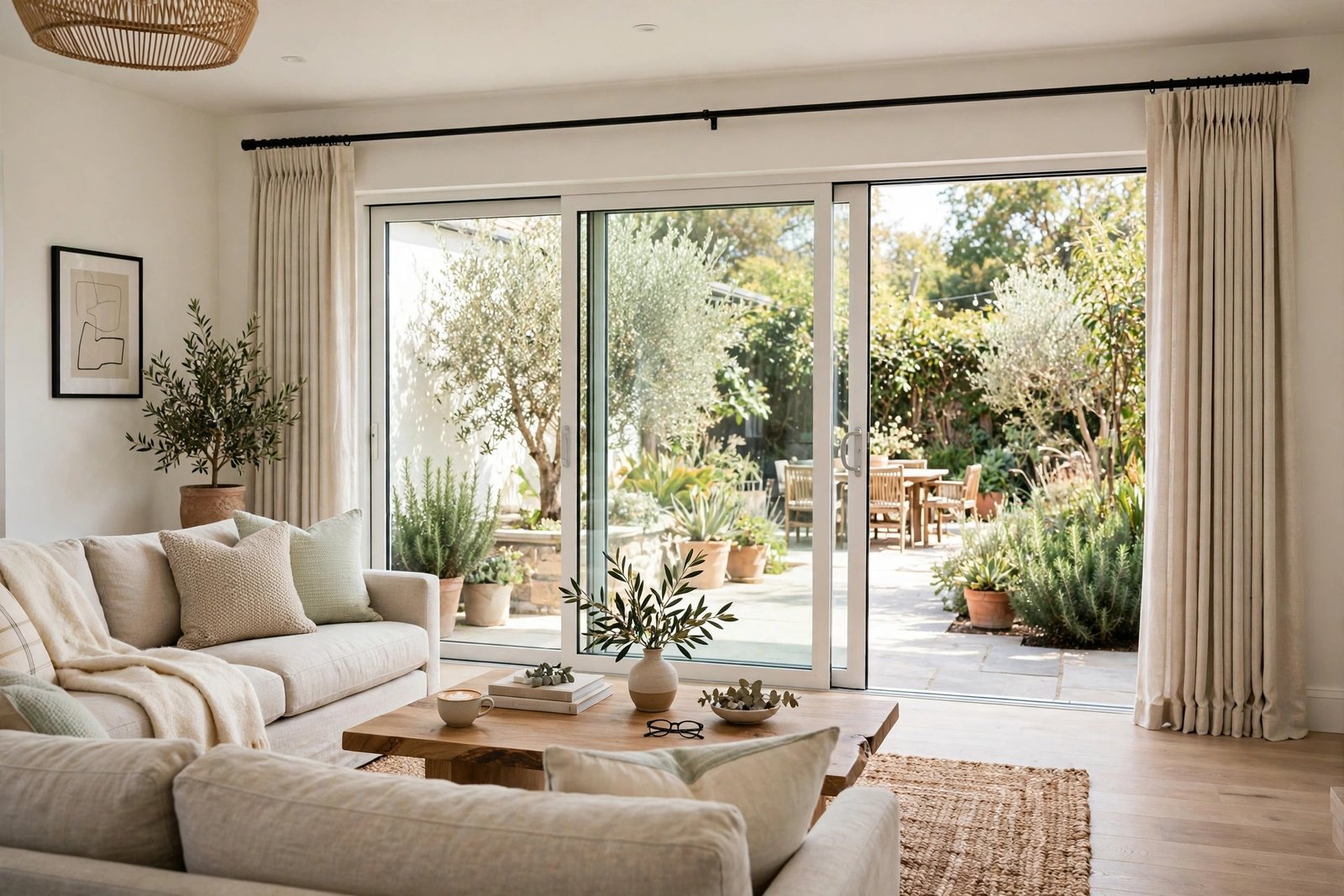
Key Takeaways
- Do the stack-back math first: open panels eat 12–24 inches of wall on each side (or one side), so the rod must extend well beyond the door frame.
- Traverse rods or sturdy grommet panels glide daily without a fight — avoid stiff headers on doors you open constantly.
- For bedrooms with sliders, layer: a blackout panel over a sheer, or curtains over an inside-mount shade, beats any single layer.
- Mount the rod 4–6 inches above the frame and 12–24 inches wider than the door so open curtains never block the glass.
- Light, washable fabrics win on high-traffic doors — heavy velvet on a door opened 20 times a day is a chore.
- Renters aren’t stuck: tension-mounted and adhesive options exist for sliders, and panel tracks need minimal hardware.
1. Do the Stack-Back Math Before You Buy Anything
The number-one sliding-door curtain mistake is a rod that’s exactly door-width: open panels then cover half the glass and block the doorway. Measure your door width, then add 12–24 inches per side for stacking (or 24–36 inches on one side if all panels stack one way). A standard 72-inch sliding door needs a rod spanning roughly 120–144 inches. Buy the rod first, mount it, then measure for panel width — panels should total 2–2.5x the rod width for proper fullness. This single measurement step prevents 90% of sliding-door curtain regret. Price range: $30–$90 for an extra-wide rod; panels $40–$120 for the set.
2. Choose a Traverse Rod for One-Handed Gliding
Traverse rods — with carriers that glide on an internal track and a cord or wand to draw them — are the proper hardware for sliding doors, because they move heavy, wide panels smoothly with one pull. Standard rods with rings work for light panels, but rings snag and drag when panels get wide. A cordless wand-draw traverse rod keeps cords away from kids and pets, which matters on patio doors. Look for a rod rated for your panel weight; an overloaded traverse track is worse than a simple rod. Price range: $60–$150 for a wide traverse rod with wand.
3. Try Panel-Track Blinds for a Clean Modern Look
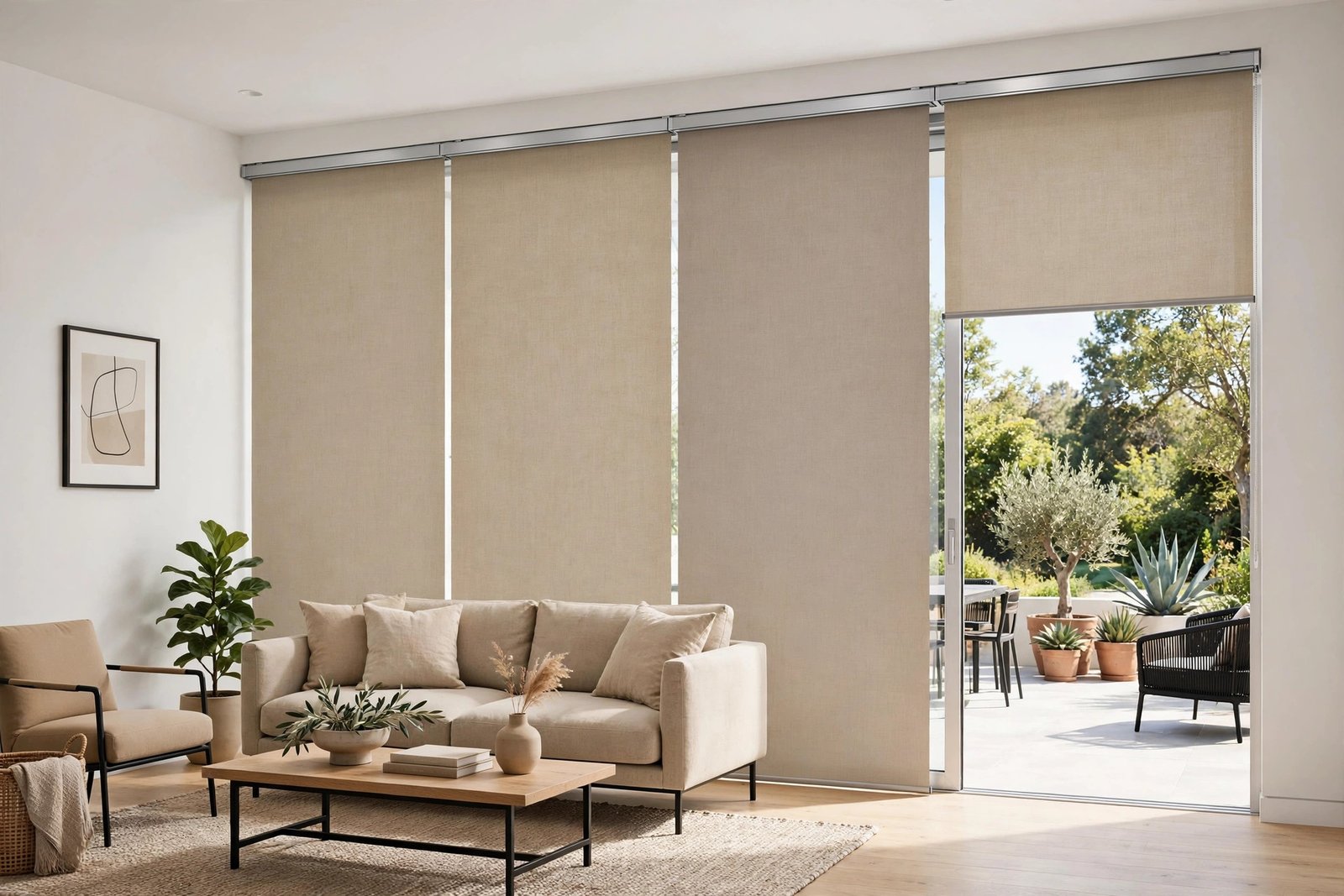
Panel tracks — 3–5 flat fabric panels that slide on a track like oversized vertical blinds — are the minimalist answer to sliding doors. They stack tightly (just a few inches), glide with a wand, and suit contemporary rooms where gathered curtains feel fussy. Choose light-filtering fabric for living areas or blackout panels for bedroom sliders. The flat panels also show off bold patterns beautifully since the fabric never bunches. Downsides: fewer fabric choices than curtains, and the track look is distinctly modern. Price range: $80–$200 for a 72-inch door.
4. Pick the Right Header: Grommet Beats Pinch Pleat Here
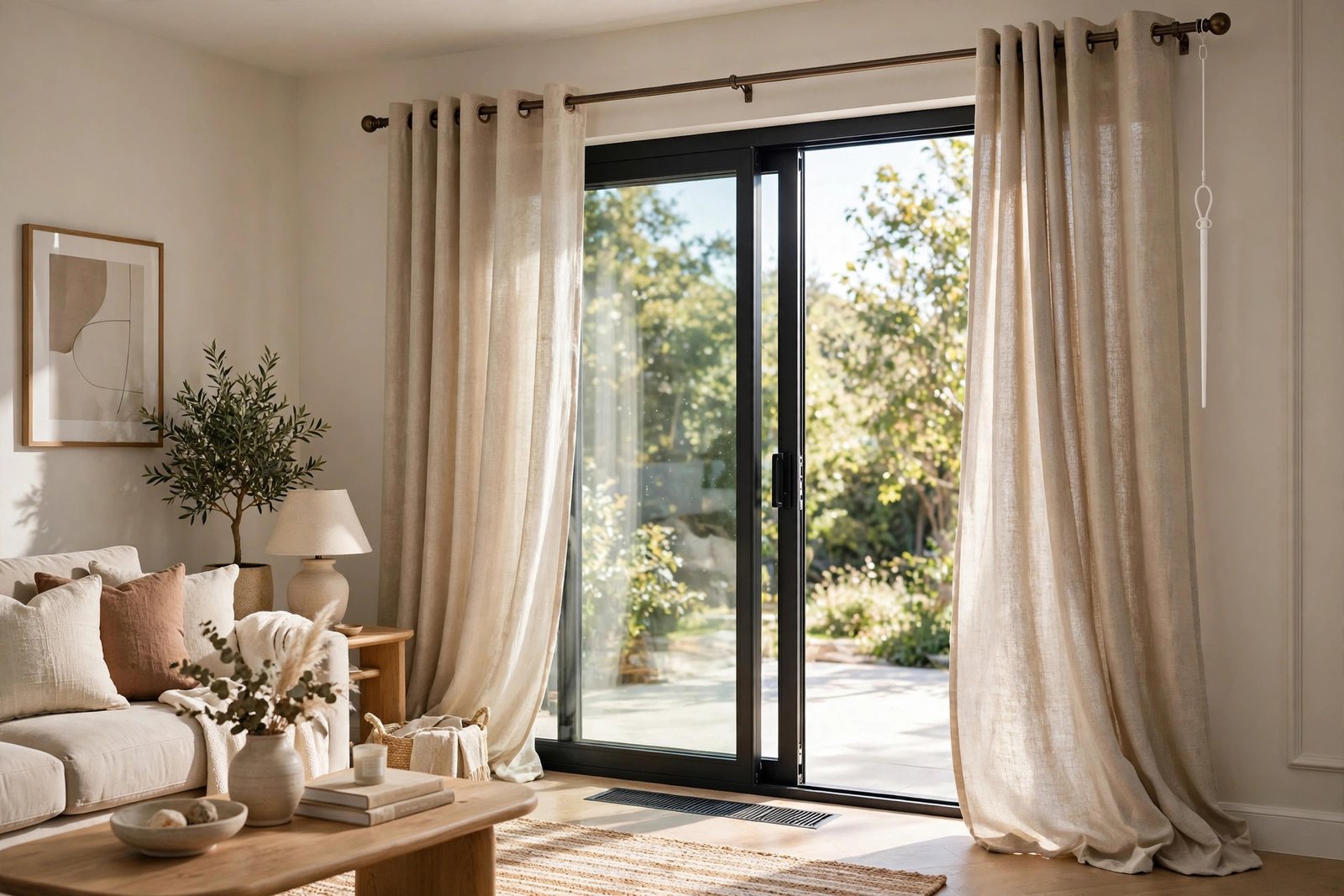
On wide sliding-door spans, grommet-top panels glide easiest — the large rings slide smoothly and the deep folds stack compactly. Back-tab panels are a close second for a tailored look. Pinch pleats look formal and beautiful but need a traverse rod with hooks to move well, and they stack the widest of the three, eating more wall space. Tip: whatever header you choose, test-glide one panel in the store if you can — a header that drags on day one will infuriate you by day thirty. Price range: grommet panels $25–$70 per pair; pinch-pleat $40–$100.
5. Stack All Panels to One Side
If wall space is tight on one side of the door — a common layout where the slider sits near a corner — stack every panel on the roomier side instead of splitting them. Use a single one-way-draw traverse rod or simply push all grommet panels to one end. The asymmetric look is actually fashionable, and it keeps the walking path completely clear. Just make sure the stack side has enough wall: a full one-side stack needs 24–36 inches of clear wall beyond the frame. This trick also works beautifully when furniture crowds one side. Price range: same panels as a split stack; one-way traverse rods run $50–$120.
6. Layer Sheers + Blackout for Day-to-Night Control
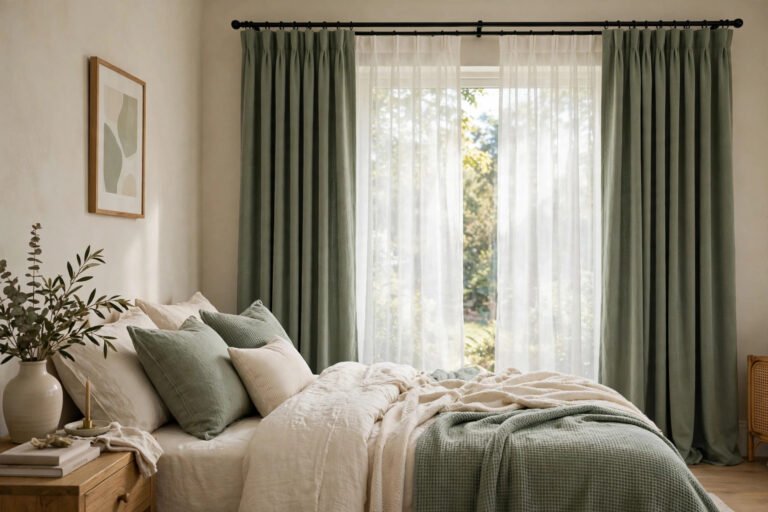
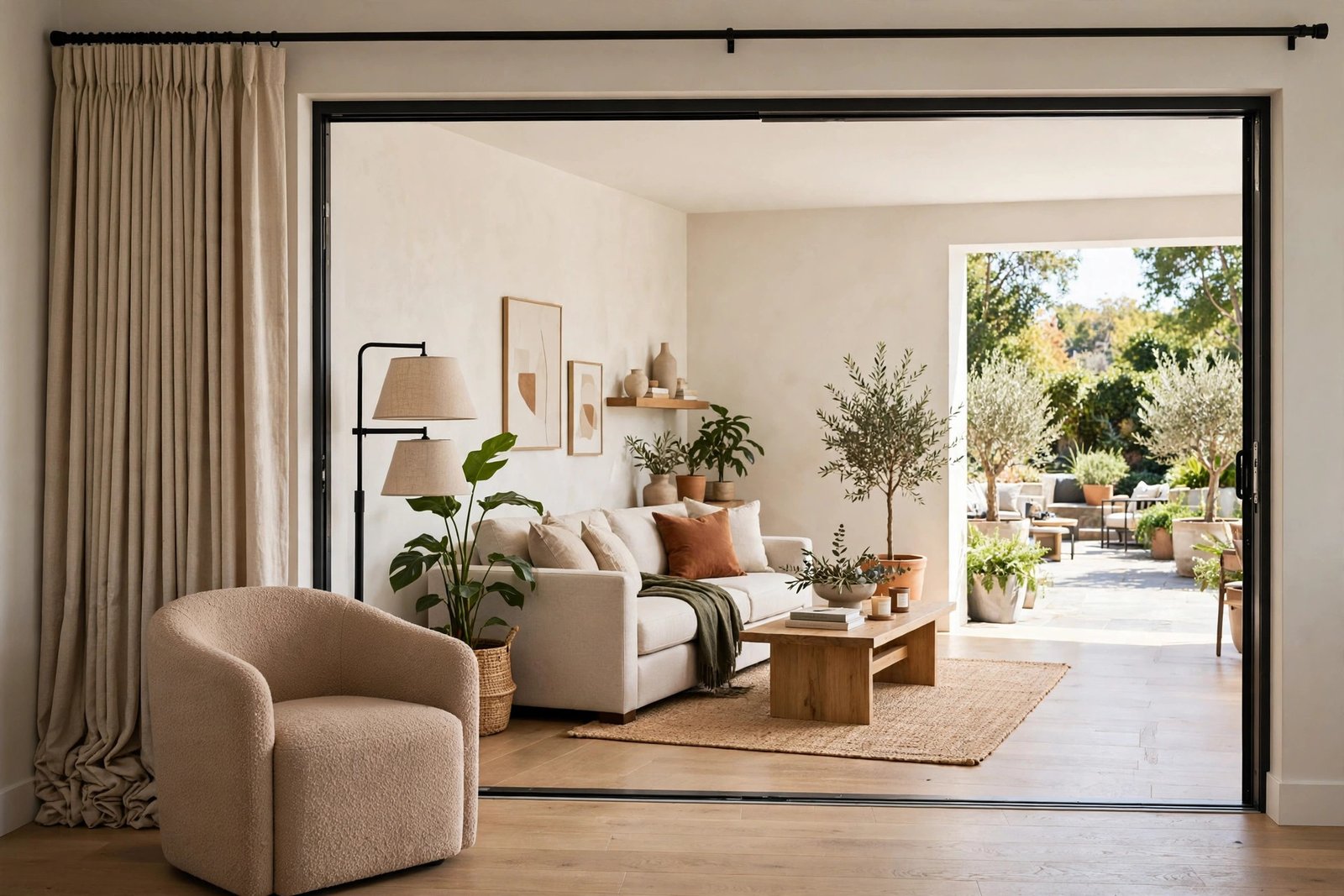
A double rod over a sliding door gives you sheer panels for daytime privacy and blackout panels for night — the most versatile setup for living rooms and bedrooms with sliders. By day, close just the sheers: light floods in but neighbors can’t see in. At night, draw the blackouts for darkness and insulation. Mount the sheer rod 2 inches closer to the wall and keep sheer panels split-draw so they never tangle with the blackout layer. In my experience, this is the setup slider owners keep longest, because it adapts to every season and mood. Price range: $40–$100 for a wide double rod; sheers $20–$50, blackouts $35–$90.
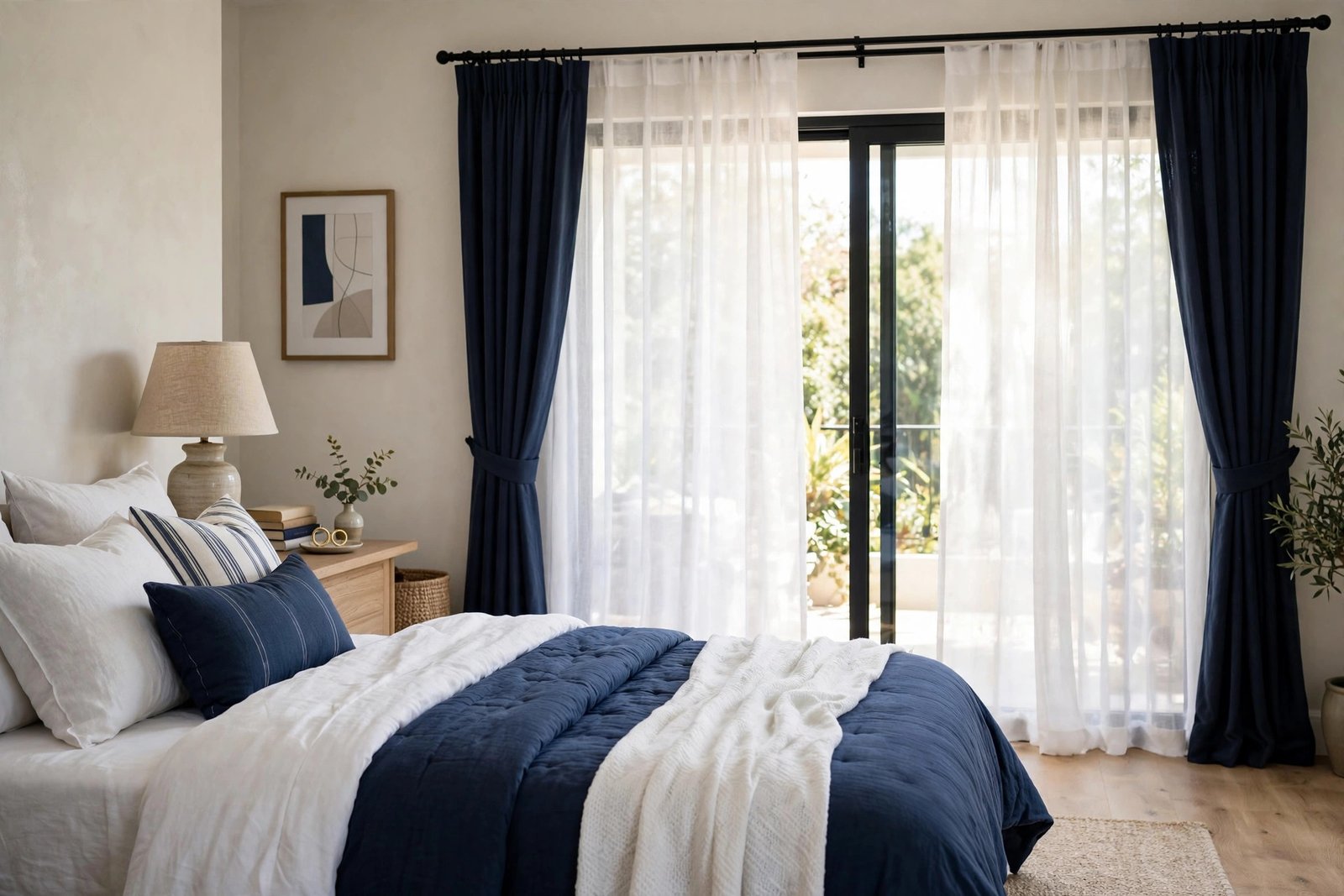
7. Solve Bedroom Sliders With Blackout + Overlap
Bedroom sliding doors leak light at the center meeting point and the sides — the two spots standard curtains miss. Fix it: choose blackout panels wide enough to overlap 6–8 inches at the center when closed, and use a wraparound rod so the panel edges hug the wall. For near-total darkness, add an inside-mount blackout roller shade behind the curtains as a second seal. This matters because dawn light through a slider hits the bed directly in most bedroom layouts. Our bedroom curtain ideas cover fabric picks for sleep in more detail. Price range: $60–$130 for wraparound rod + wide blackout panels; roller shade $30–$70.
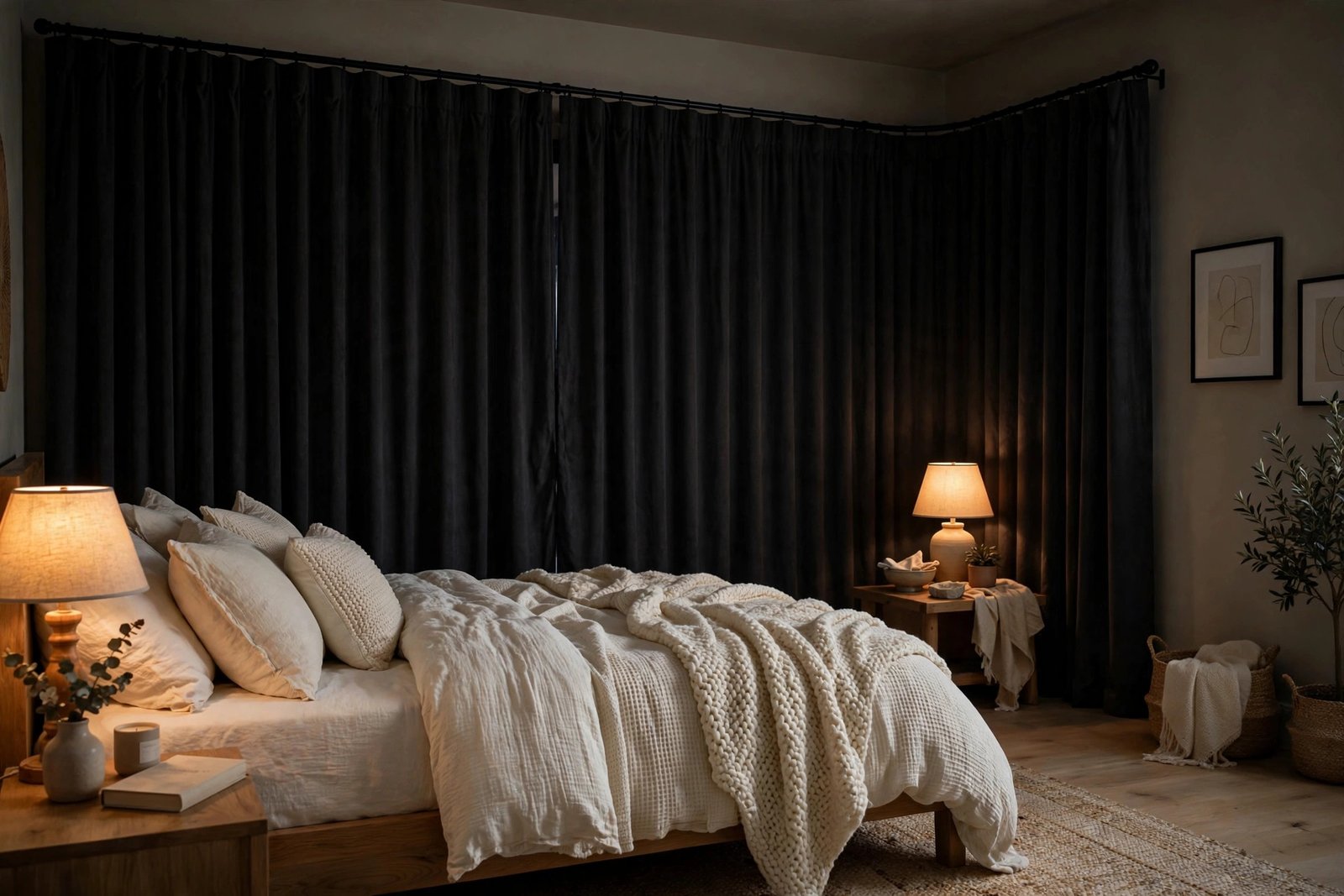
8. Extend the Rod 12–24 Inches Beyond the Frame
The golden rule for sliders: the rod should extend at least a foot beyond the frame on each stacking side — more is better. This does two things: open panels clear the glass completely so you get full light and an unobstructed doorway, and the door looks wider and more dramatic. Use a rod with sturdy center supports (every 48–60 inches) since wide spans sag under panel weight. If your wall runs out, a ceiling-mounted track is the fallback — it needs zero side clearance and looks intentionally architectural. Price range: $35–$90 for a long sturdy rod with supports; ceiling tracks $25–$70.
9. Hang Floor-to-Ceiling for Drama on Tall Doors
Sliding doors are already tall — typically 80 inches — so running curtains from ceiling to floor turns them into a grand architectural feature rather than just a doorway. Ceiling-mounted tracks work best here: they handle the height gracefully, need no side wall space, and give that hotel-lobby drape. Choose panels at least 96–108 inches long and let them just kiss the floor (puddling on a high-traffic door collects dirt fast). This treatment makes standard 8-foot ceilings feel taller throughout the room. Price range: $25–$70 for ceiling track; long panels $40–$110 per pair.

10. Go No-Drill: Renter Options for Sliding Doors
Renters with sliding doors have real options. A heavy-duty tension rod spanning inside the frame recess works for lightweight panels on narrow sliders (check the weight rating — most top out around 10–15 pounds). Adhesive curtain-rod brackets hold surprisingly well on smooth trim for medium-weight curtains, and they remove cleanly. For a no-hardware look, inside-mount cellular shades or a tension-mounted panel track need nothing but the frame itself. Whatever you choose, keep panels light — heavy blackout on adhesive brackets is asking for a midnight crash. Price range: $15–$40 for tension/adhesive hardware; shades $30–$80.
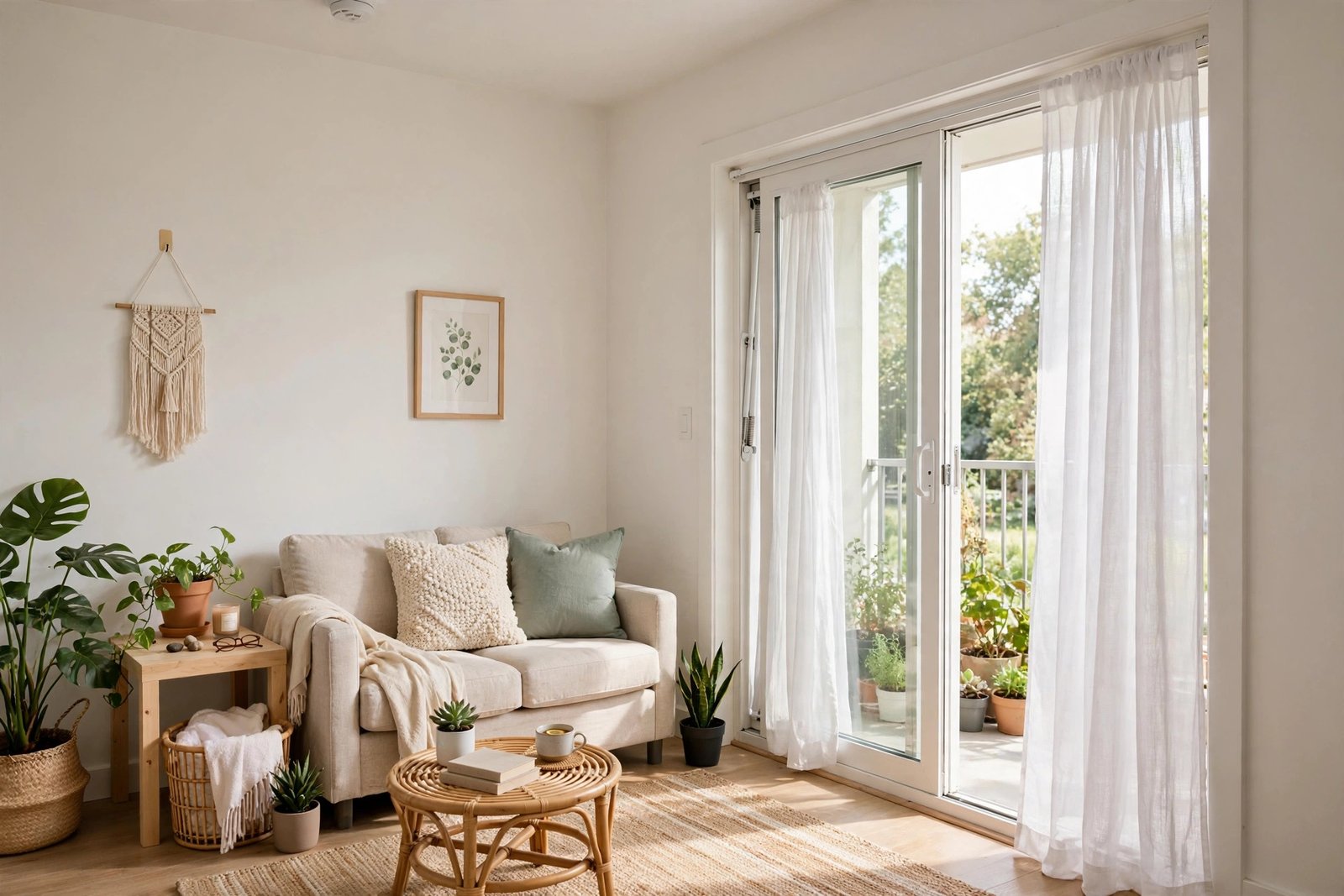
11. Consider Motorized Curtains for Daily-Use Doors
If your sliding door opens twenty times a day — kids, dogs, patio lifestyle — motorized curtain tracks earn their keep fast. A remote or voice command draws heavy blackout panels you’d otherwise wrestle with, and scheduled closing at sunset means the room darkens itself. Battery-powered retrofit motors now fit standard tracks for $80–$150 without wiring, which changed the math for renters too (the track still needs mounting, but the motor doesn’t). It’s a splurge, but on the hardest-working window in the house, automation stops being a gadget and starts being practical. Price range: $80–$150 for a retrofit motor; full motorized tracks $200–$500.
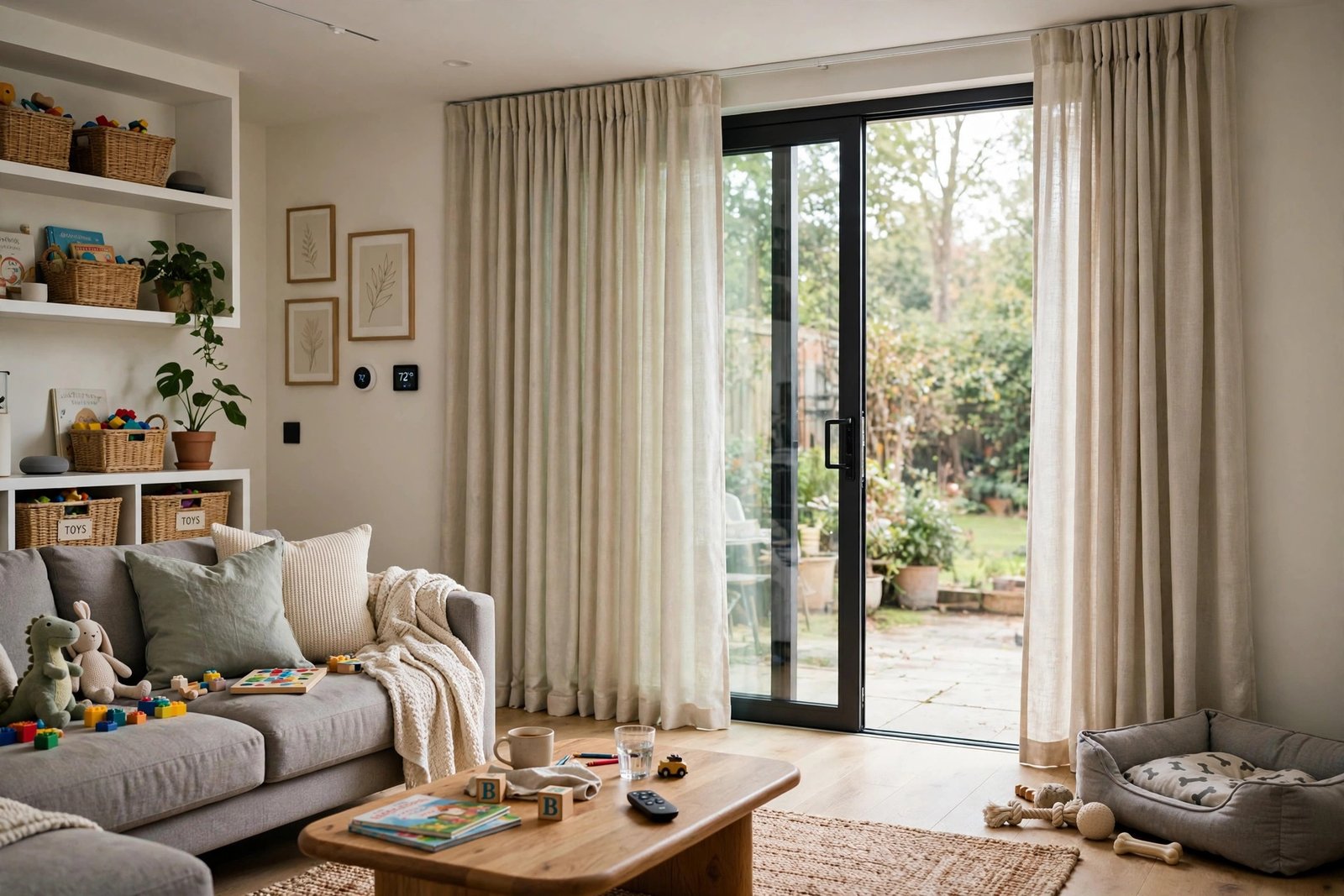
12. Match Fabric Weight to Door Traffic
The most-used door in the house should not wear the fussiest fabric. For sliders opened constantly, choose light, washable fabrics — cotton, linen blends, or performance polyester — that glide easily and survive frequent handling. Save heavy velvet or silk-look panels for sliders that stay mostly closed (a formal living room’s garden door, a bedroom slider behind furniture). Tip: if you love the velvet look on a busy door, use velvet-look polyester instead of cotton velvet — it glides better and wipes clean. In my experience, this one decision determines whether you love your slider curtains in month six. Price range: washable cotton/linen panels $25–$70 per pair.
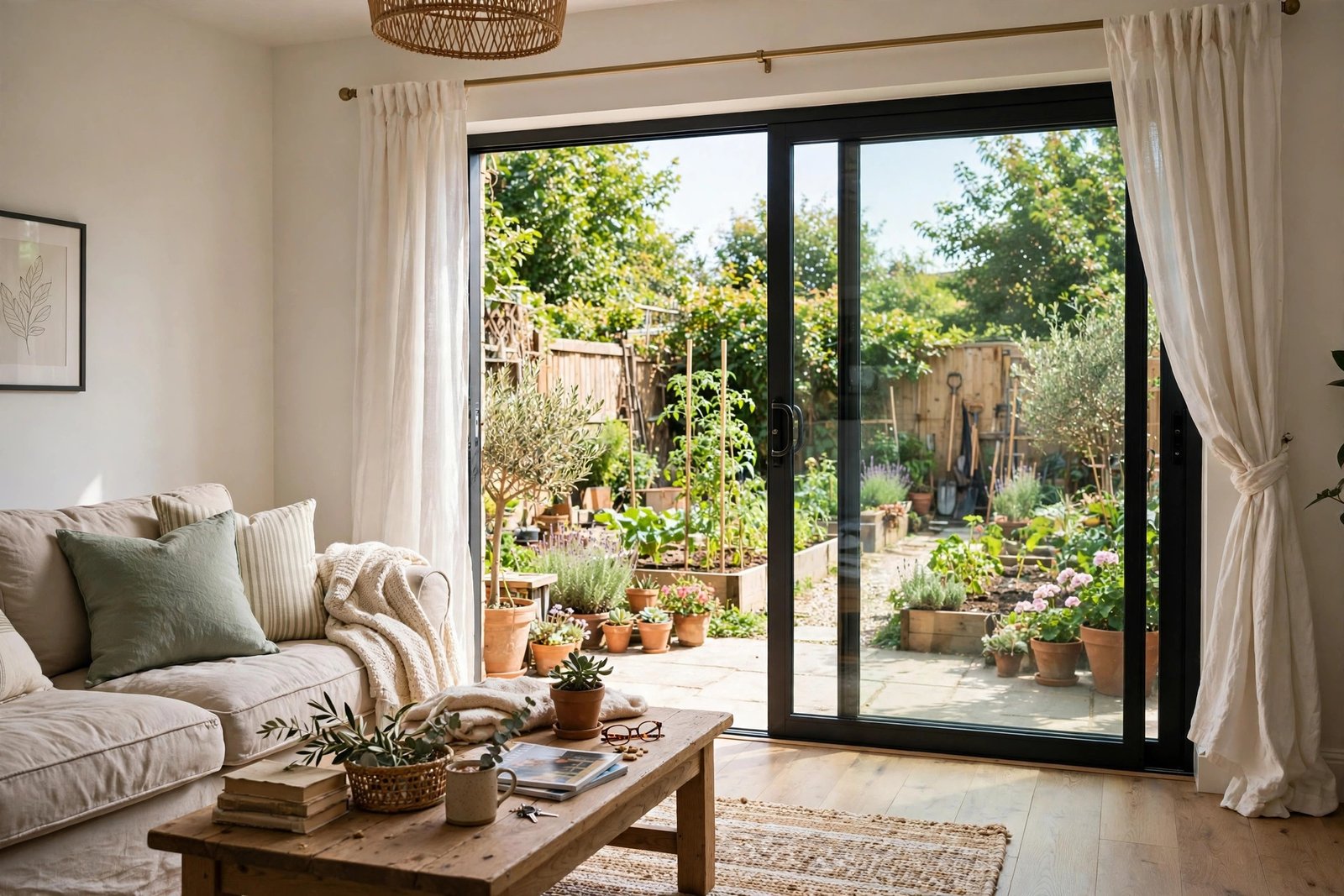
13. Know When to Skip Curtains Entirely
Honest take: some sliding doors are better without curtains. If the door is the room’s only light source and you never need privacy or darkness, curtains just add visual weight and daily fuss. Alternatives that solve specific problems without fabric: top-down cellular shades for privacy-with-light, exterior solar shades that cut heat before it enters the glass, or a simple valance if you only want to hide the door’s header. Skip curtains guilt-free when the door’s job is pure view and light — not every window needs dressing. Price range: $0, plus the satisfaction of one less thing to dust.
Frequently Asked Questions
How wide should curtains be for a sliding glass door?
Panels should total 2–2.5 times the rod width for proper fullness, and the rod itself should extend 12–24 inches beyond the frame on each stacking side. For a standard 72-inch sliding door, that means a rod spanning roughly 120–144 inches and enough panel width to cover it fully when closed. Always buy and mount the rod before measuring for panels.
Can you put regular curtains on a sliding glass door?
Yes, with the right setup: an extra-wide rod (or ceiling track), panels totaling 2–2.5x the rod width, and a glide-friendly header like grommets. The key differences from regular windows are the stack-back space needed when panels are open and sturdier hardware to handle the width. Avoid stiff headers on doors you open daily.
What’s the best blackout option for a sliding door in a bedroom?
Layer: wide blackout panels on a wraparound rod, overlapped 6–8 inches at the center, plus an inside-mount blackout roller shade behind them. The panels handle the glass; the shade seals the center meeting point and edges where light leaks. Panel-track blinds in blackout fabric are the sleek alternative if you prefer a modern look.
How do I keep curtains from blocking my sliding door?
Extend the rod 12–24 inches beyond the frame on each side so open panels stack fully on the wall, not the glass. Use a traverse rod or grommet panels for smooth one-handed drawing, and stack all panels to one side if wall space is tight. Light fabrics that glide easily make the daily open-close far less annoying.
Dress the Door, Keep the View
Sliding glass doors ask more of curtains than any other window — they need to move daily, clear the doorway fully, and still look intentional doing it. Get the stack-back math and the hardware right, and the fabric choice becomes the fun part. Measure twice, mount wide, and choose fabric for how often that door actually opens.
Related posts you may like:
- 15 Bedroom Curtain Ideas That Upgrade Sleep
- 18 Renter Friendly Living Room Ideas for Small Rentals
- Living & Bedroom Ideas