17 Kitchen Island Centerpiece Ideas That Wow Guests (2026)
Kitchen island centerpiece ideas sound simple until you actually live with an island: it becomes a mail drop, a homework desk, and a snack station all at once. The difference between a cluttered island and a styled one is not expensive decor — it is a system. A great island centerpiece anchors the room’s biggest surface, leaves room to actually cook, and switches easily between everyday living and entertaining. These 17 ideas cover tray styling, scale rules for different island lengths, seasonal rotations, and the honest prices behind each look.
Key Takeaways
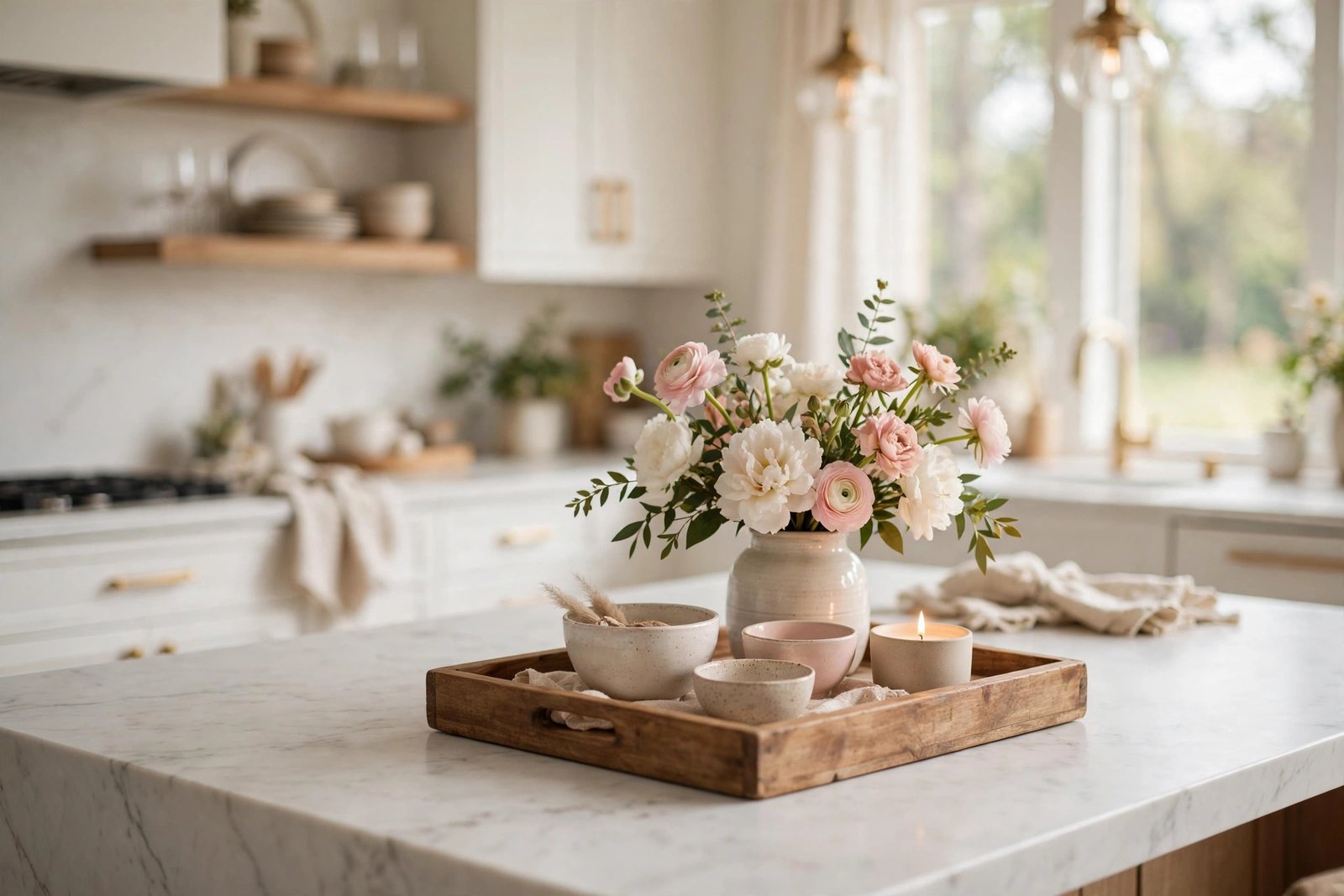
- Start with a tray — it corrals small items into one styled group and lifts off in seconds when you need the surface.
- The scale rule: your centerpiece footprint should cover about one-third of the island’s length; leave the rest clear for cooking.
- Build in three heights (tall, medium, low) so the arrangement reads layered, not flat.
- Keep an “everyday” layout and a 10-minute “party” layout — swapping a few pieces is easier than restyling from scratch.
- Seasonal rotations beat full redecorating: one tray + four seasonal accents a year keeps the island fresh.
- Leave negative space on purpose — a half-clear island looks styled; a crammed one looks cluttered.
1. Start With a Tray: The Island’s Corral
Every well-styled island starts with a tray. It turns five unrelated objects — a candle, a small plant, a bowl of salt — into one intentional group, and when dinner prep starts, the whole centerpiece lifts off in one motion. Choose a tray about one-third of your island’s length: round trays suit square islands, long rectangular trays suit galley-style islands. Wood warms up white kitchens; matte black or stone keeps modern ones sharp. Tip: the tray is your island’s “handle” — if a piece doesn’t fit on it, it doesn’t belong on the island. Price range: $25–$70 for a quality tray.
2. Anchor the Tray With One Statement Bowl
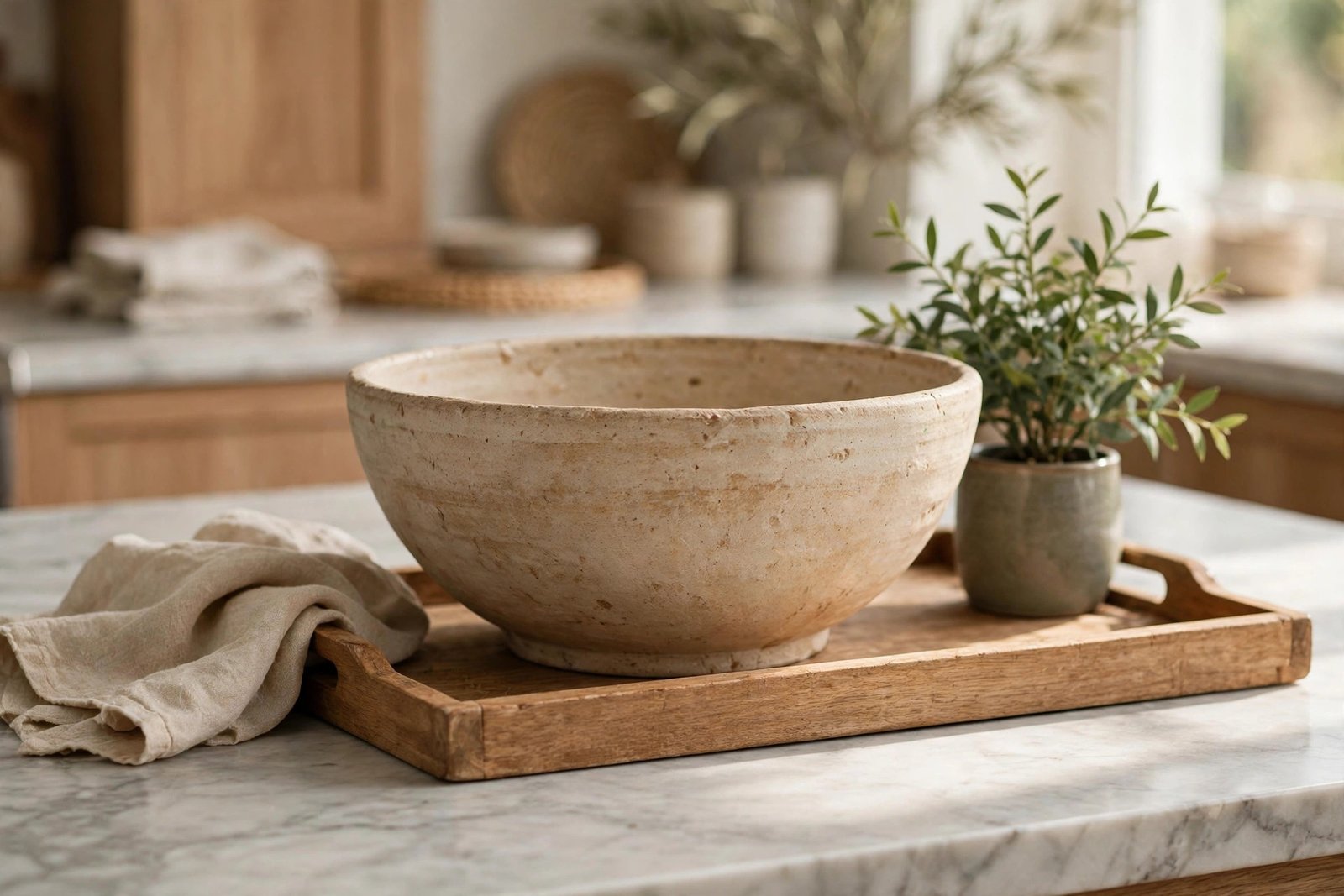
A tray full of small items reads fussy; one hero piece makes it read designed. Anchor your tray with a single oversized bowl — hand-thrown ceramic, hammered metal, or carved wood — and let everything else play supporting roles. The bowl can sit empty (sculptural and fine) or rotate contents seasonally: citrus in winter, stone fruit in summer. Keep its diameter roughly half the tray’s length so it dominates without crowding. In my experience, this one swap — from five small trinkets to one statement bowl — is the fastest upgrade an island gets. Price range: $40–$120.
3. The Two-Thirds Scale Rule for Long Islands
Scale is where island styling usually fails: a tiny candle on a 9-foot island looks lost, while a sprawling arrangement on a 4-foot island eats your prep space. The rule: your centerpiece footprint should span roughly one-third of the island’s length, never more than half. On long islands, use one long low arrangement (a runner of greenery, a line of three vessels) rather than several disconnected clusters. On short islands, go tall and narrow — a single vase with height beats a wide spread. Measure your island before buying anything. Price range: free — this is a placement rule, not a purchase.
4. Fresh Flowers, Styled With the Height Formula
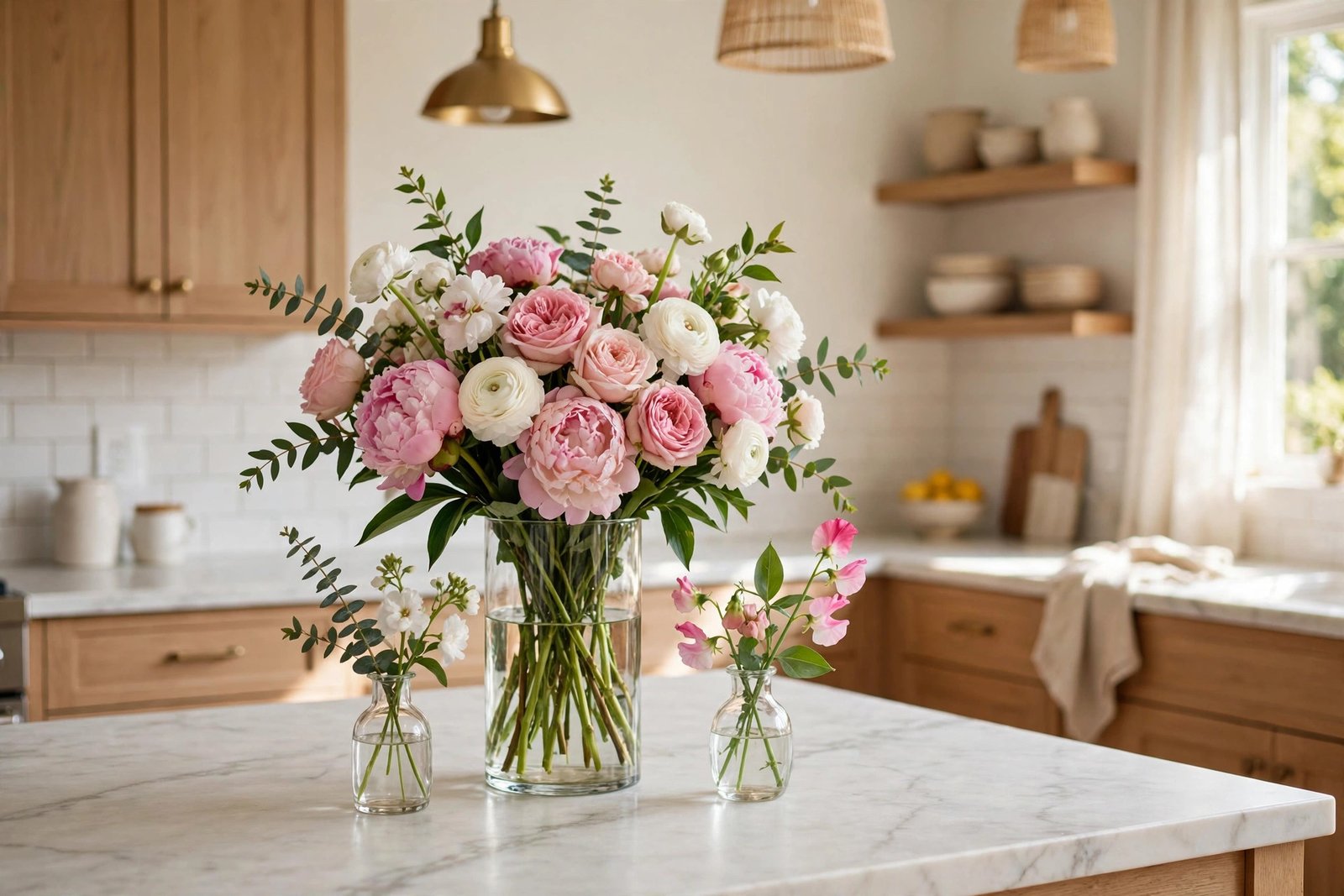
Fresh flowers are the highest-impact island centerpiece there is, and the height formula keeps them from blocking conversation: the arrangement should sit above eye level when you’re seated (tall and airy) or below it (short and lush) — never right at sightline. Grocery-store flowers work beautifully; split two bunches between a tall vase and two bud vases, and one $12 purchase looks like a florist job. Change the water every two days for a full week of life. Skip strongly scented flowers near food prep — lilies and dinner don’t mix. Price range: $10–$25 per week.
5. Stack Cookbooks as a Low Pedestal
Two or three beautiful cookbooks stacked on the island do double duty: a low pedestal that lifts a candle or small plant to a better height, and proof that the kitchen gets used. Choose books with covers you like looking at — spine-out is for storage, cover-up is for display. Keep the stack to three books max and top it with one small object (a bud vase, a brass candle) so it reads styled, not like a library sale. Price range: $0 if you raid your shelf; $30–$60 for two new display-worthy cookbooks.
6. Two Layouts: Everyday vs. Entertaining
The mistake is styling one layout and resenting it: too pretty to use daily, too plain for guests. Keep two. The everyday layout is functional — a tray with a fruit bowl, a candle, maybe herbs you actually cook with. The entertaining layout swaps in height and glow: add two more candlesticks, swap the fruit for flowers, lay a linen runner under the tray. Store the “party pieces” (tall tapers, a special bowl) in one cabinet so the switch takes ten minutes. Photograph both layouts once so you can recreate them without thinking. Price range: $40–$90 for a dedicated set of party pieces.
7. A Greenery Runner Down the Middle
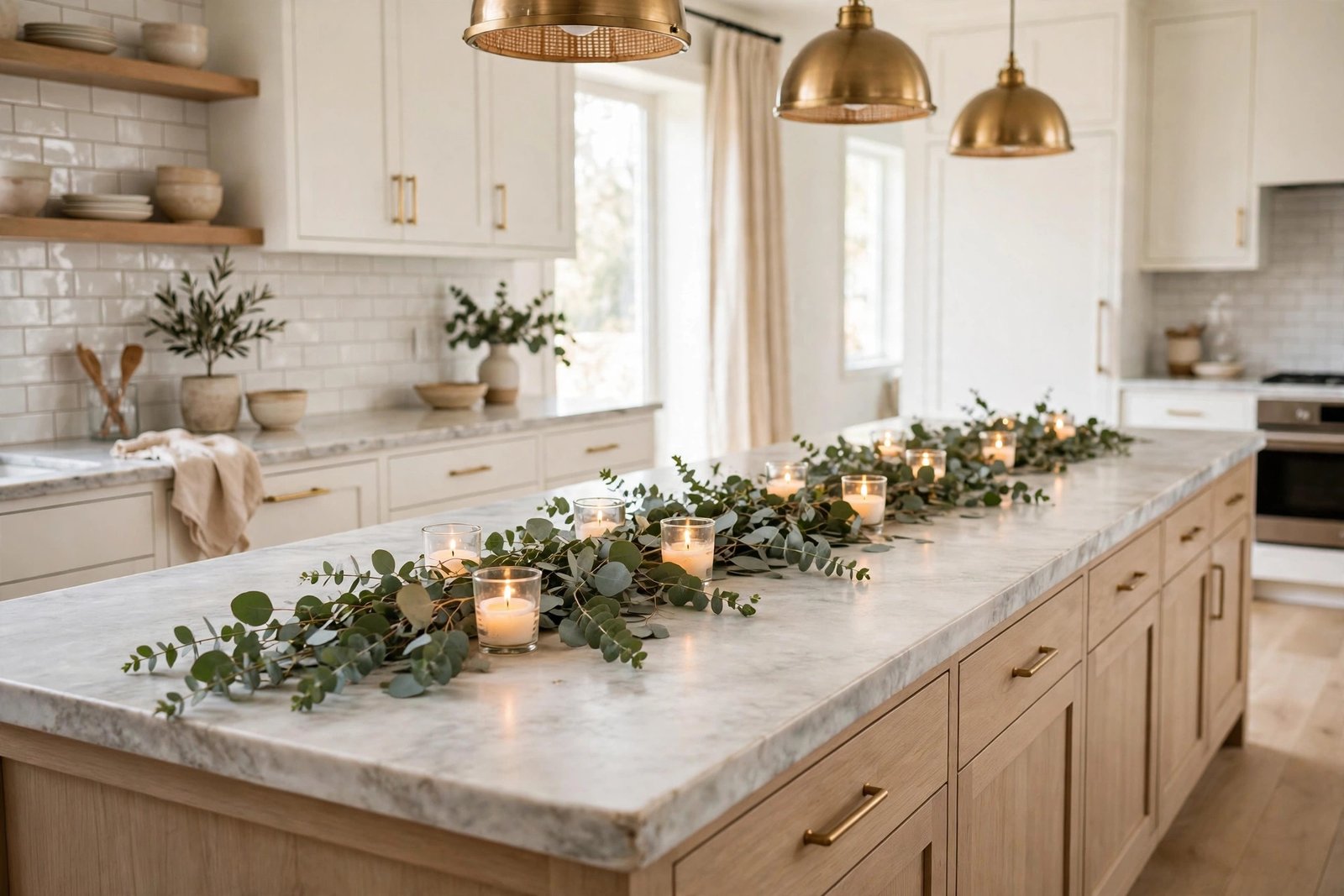
For long islands, a loose runner of greenery down the center is the easiest big-island solution there is: it fills length without filling height, and it costs almost nothing. Eucalyptus is the classic — it dries gracefully and smells like a spa — but olive branches, ruscus, or even long pine branches in winter all work. Lay stems in one loose line, overlapping the ends, and tuck three or four small votives between them. Refresh every one to two weeks; dried eucalyptus lasts a month. This also becomes your holiday base (see idea 16). Price range: $8–$20 for a generous bunch.
8. Cluster Candles at Three Heights
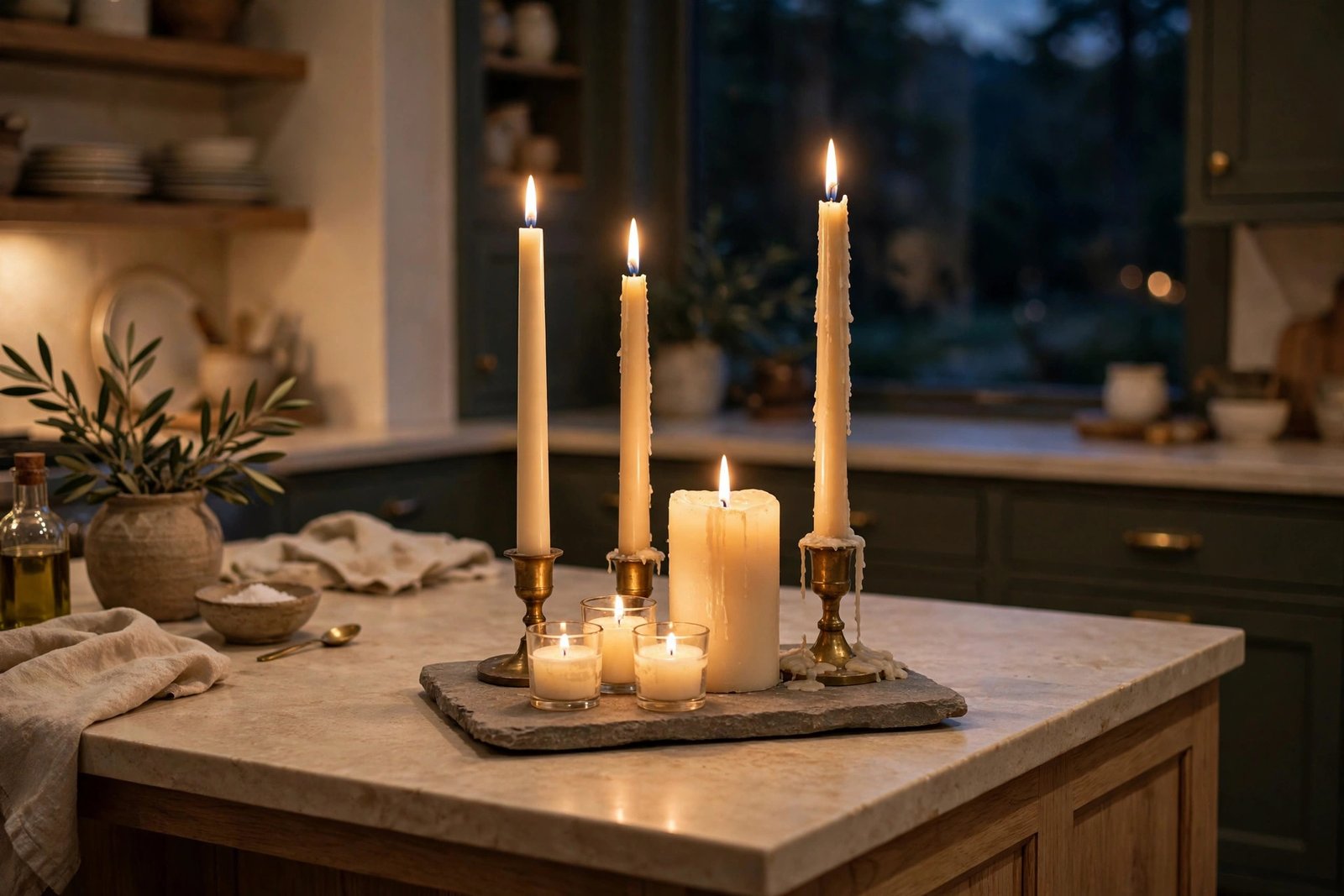
Candlelight is the cheapest way to make a kitchen feel expensive after dark, and the trick is height variety: cluster three to five candles at staggered heights on your tray — a tall taper pair, a medium pillar, two low votives. Odd numbers read more natural than even ones. Stick to unscented candles on the island (food smells and competing fragrance is a bad combination) and use LED flameless versions if you have kids or a cat that treats the island as a runway. Brass, stone, or smoked-glass holders keep the look grown-up. Price range: $25–$60 for a mixed cluster with holders.
9. The Working Fruit Bowl That Doubles as Decor
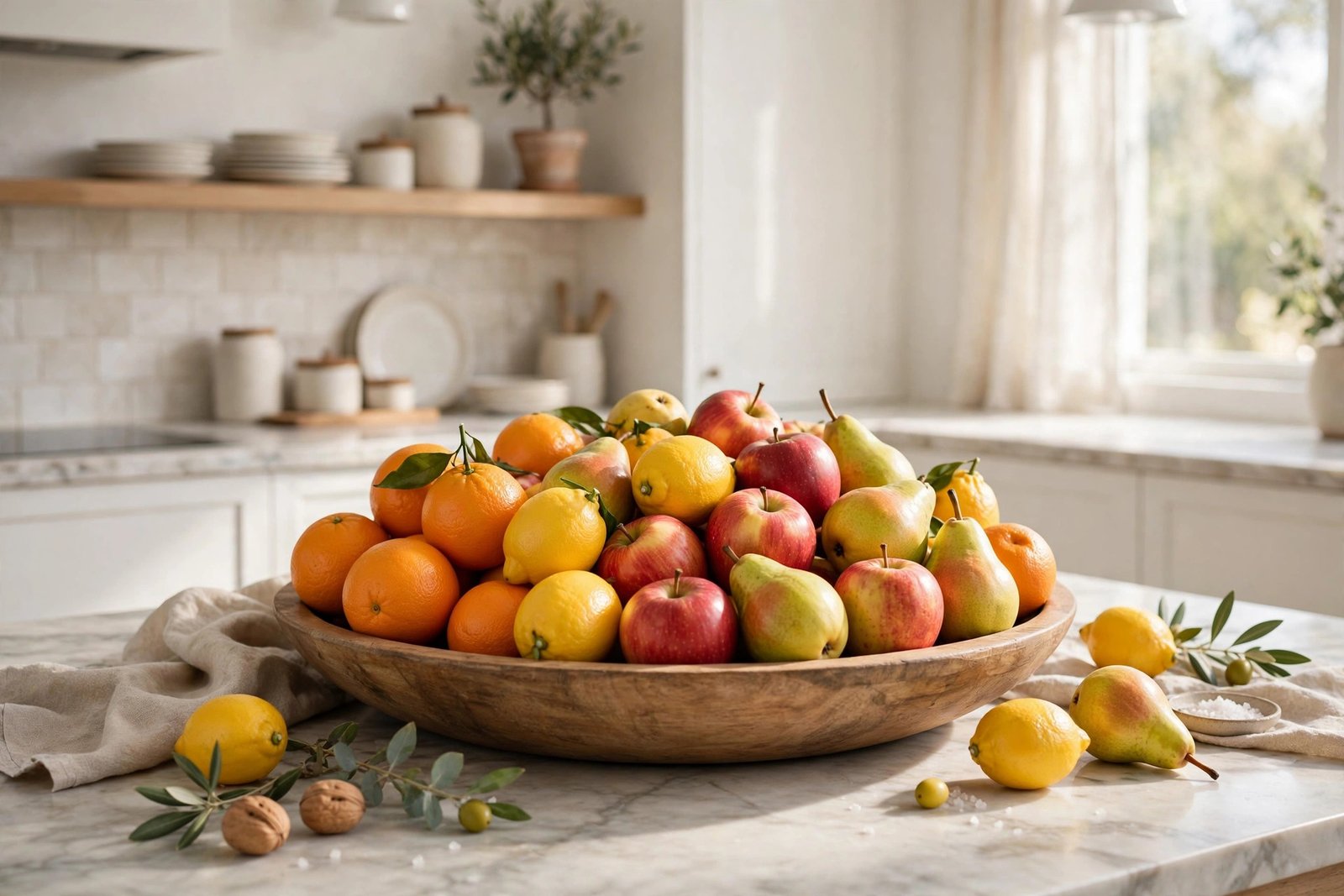
A fruit bowl is the only island centerpiece that pays rent: it feeds the family and looks good doing it. The styling secret is abundance and color contrast — a half-empty bowl of bruised apples reads sad, while a full bowl of mixed citrus, apples, and pears reads intentional. Use a wide, shallow bowl so fruit shows from above, and keep it to fruits you actually eat. Refresh weekly and keep bananas separate — they ripen everything around them. Price range: $30–$80 for a good bowl; the fruit is your grocery budget anyway.
10. Potted Herbs You Can Actually Cook With
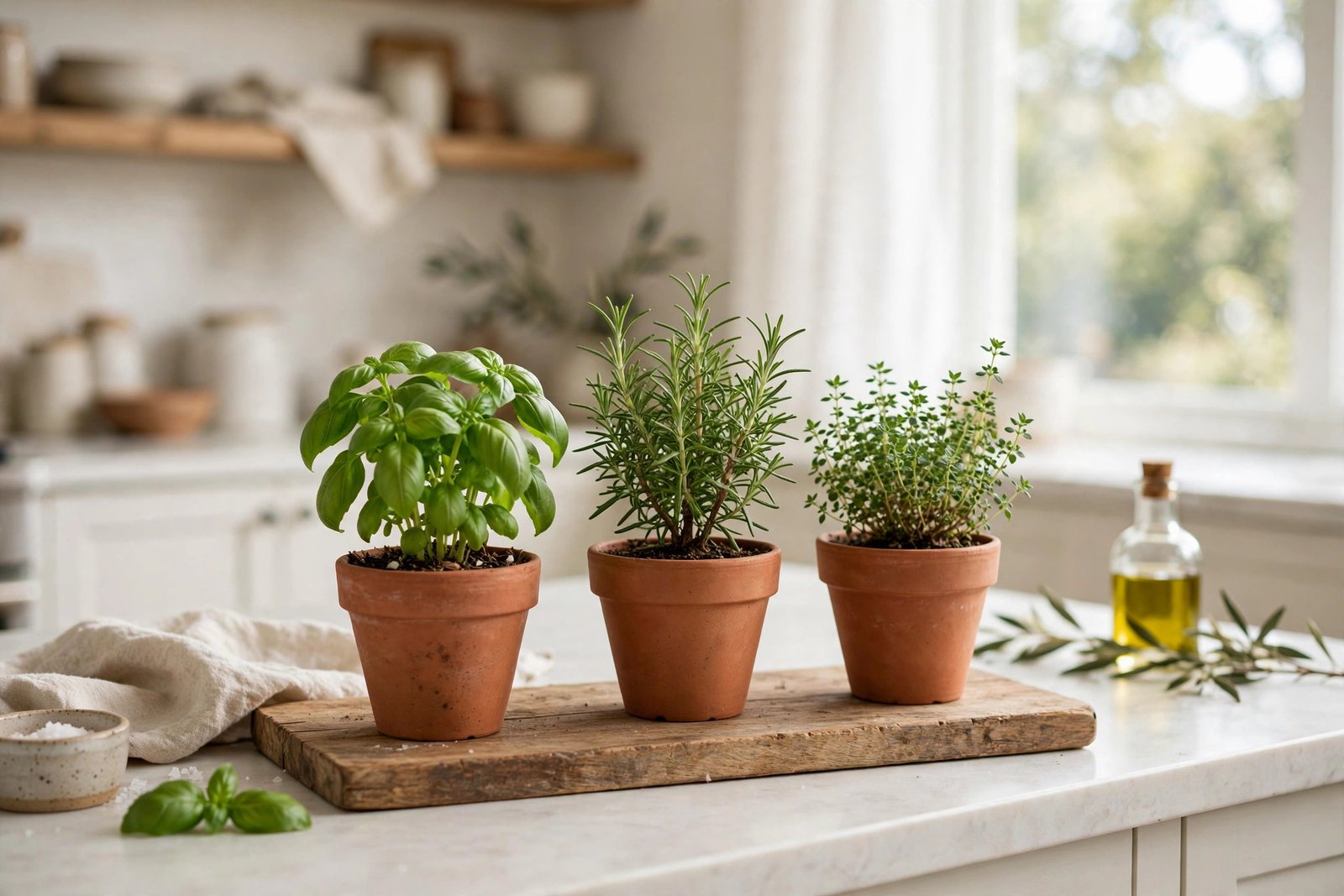
Three small herb pots on the island — basil, rosemary, thyme — are decor that earns its counter space. Group them in matching terracotta or ceramic pots on a small tray or wooden board near the brightest spot, and snip from them daily so they stay bushy instead of leggy. The honest caveat: herbs need real light, so this works only if your island gets decent daylight or you rotate pots to a sunny window weekly. I’ve found basil the most forgiving and rosemary the best-looking; cilantro bolts too fast to bother. Price range: $4–$8 per plant; matching pots $15–$40 for three.
11. Lean Into Negative Space: Keep Half the Island Clear
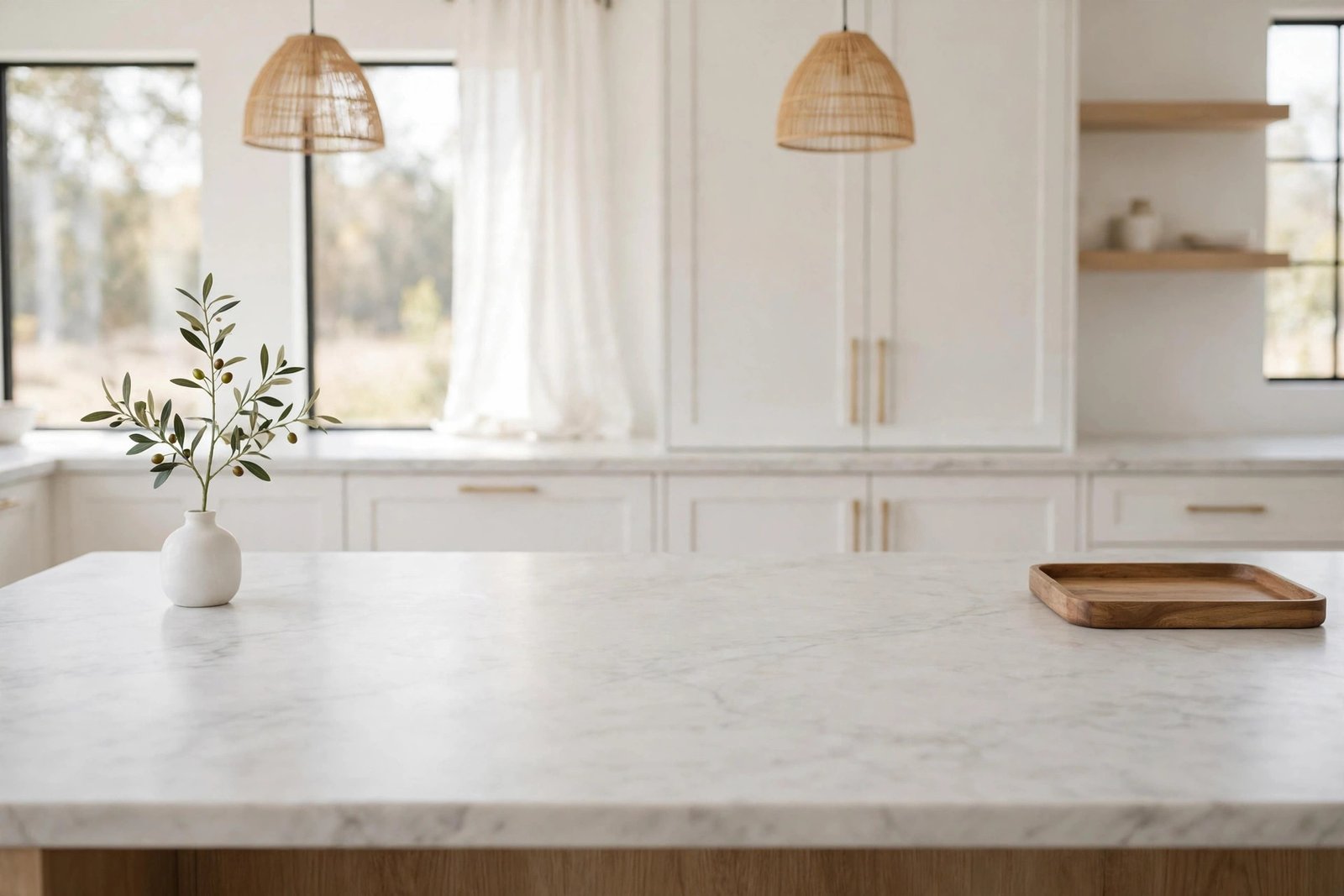
The most common island styling mistake is filling the surface edge to edge. A styled island should look like it has room to breathe — aim to keep at least half the island visually clear, with your centerpiece occupying one zone (usually one end or the center). Negative space is what makes the styled part read as intentional rather than cluttered. If your island collects mail, keys, and backpacks, add a small lidded basket at one end as the official drop zone — corralling chaos beats fighting it. Price range: free; a lidded catch-all basket runs $20–$45.
12. Layer Cutting Boards as a Warm Backdrop
Leaning one or two wooden cutting boards against the backsplash or a wall behind the island’s centerpiece adds instant warmth and height — especially in all-white kitchens that need texture. Choose boards with different shapes and wood tones (one round, one long paddle) and lean the larger behind the smaller. They pull double duty when you actually need them for serving cheese or slicing bread. Keep them oiled with food-safe mineral oil so they look rich, not dried out. This is a renter-friendly move too: zero holes, zero commitment. Price range: $20–$50 for two good-looking boards.
13. Try a Small Lamp on the Island (Yes, Really)
This one divides decorators, but a small cordless table lamp on the island is quietly brilliant: it adds warm, low light exactly where overhead pendants can’t reach, and it makes the kitchen feel like a living space after dark. Cordless rechargeable lamps last 8–20 hours per charge and come in styles from modern mushroom to classic brass. Keep it under 12 inches and place it at the island’s far end so it never blocks prep. Skip this if your island is under 5 feet long. Price range: $30–$80 for a good cordless lamp.
14. The Wine-Vignette Switch for Dinner Parties
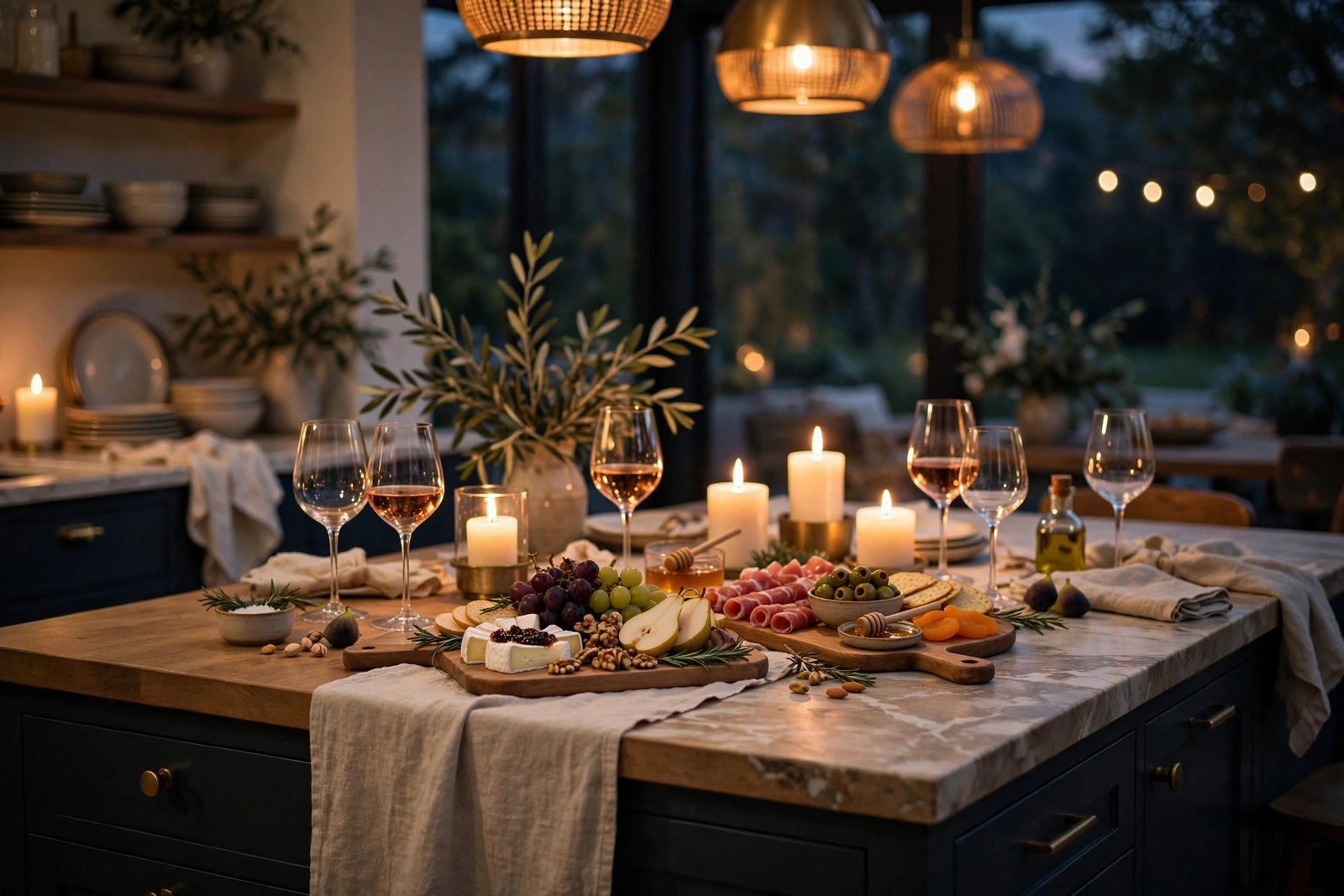
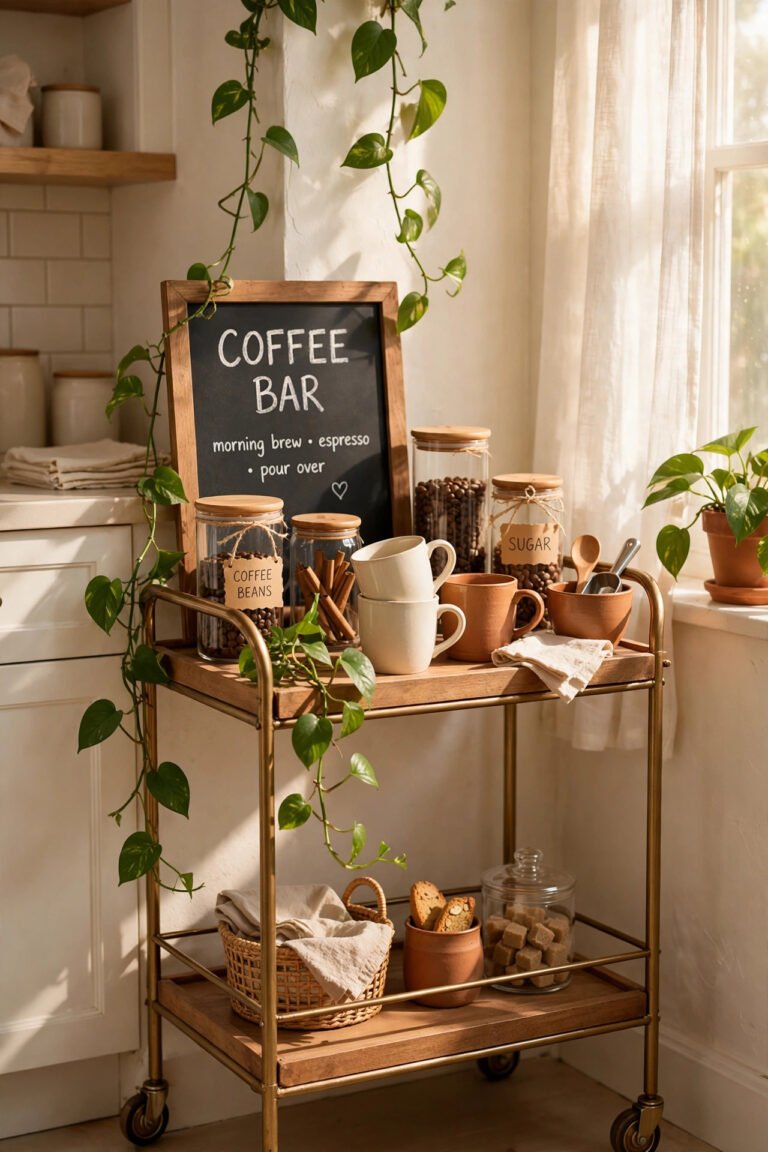
When guests come, the island centerpiece can signal the evening: swap your everyday tray contents for a wine vignette. A decanter, two beautiful glasses, a small bowl of olives or nuts, and a candle — suddenly the island says “stay a while.” Keep a spare linen runner and two cloth napkins with your party pieces so the swap takes minutes. The practical rule: put the wine station at the end of the island farthest from the stove, so guests gathering around it aren’t in the cook’s way. Price range: $0 if you own a decanter; $35–$75 for a nice decanter and glass set. A rolling drinks cart keeps the party moving; see coffee bar cart styling ideas for the kitchen.
15. Seasonal Rotations: One Tray, Four Looks a Year
You don’t need four centerpieces — you need four accents. Keep the same tray and anchor pieces year-round, and swap one seasonal element quarterly: budding branches in spring, a bowl of lemons in summer, mini pumpkins in fall, pine sprigs and a brass candle in winter. Store each season’s accent in a labeled bag with the tray’s other pieces so the swap is a five-minute job, not a redecorating project. This is the system behind every “always looks styled” kitchen you see on Pinterest — it’s a rotation, not a talent. Price range: $10–$30 per seasonal accent.
16. The Holiday Swap: Thanksgiving to Christmas
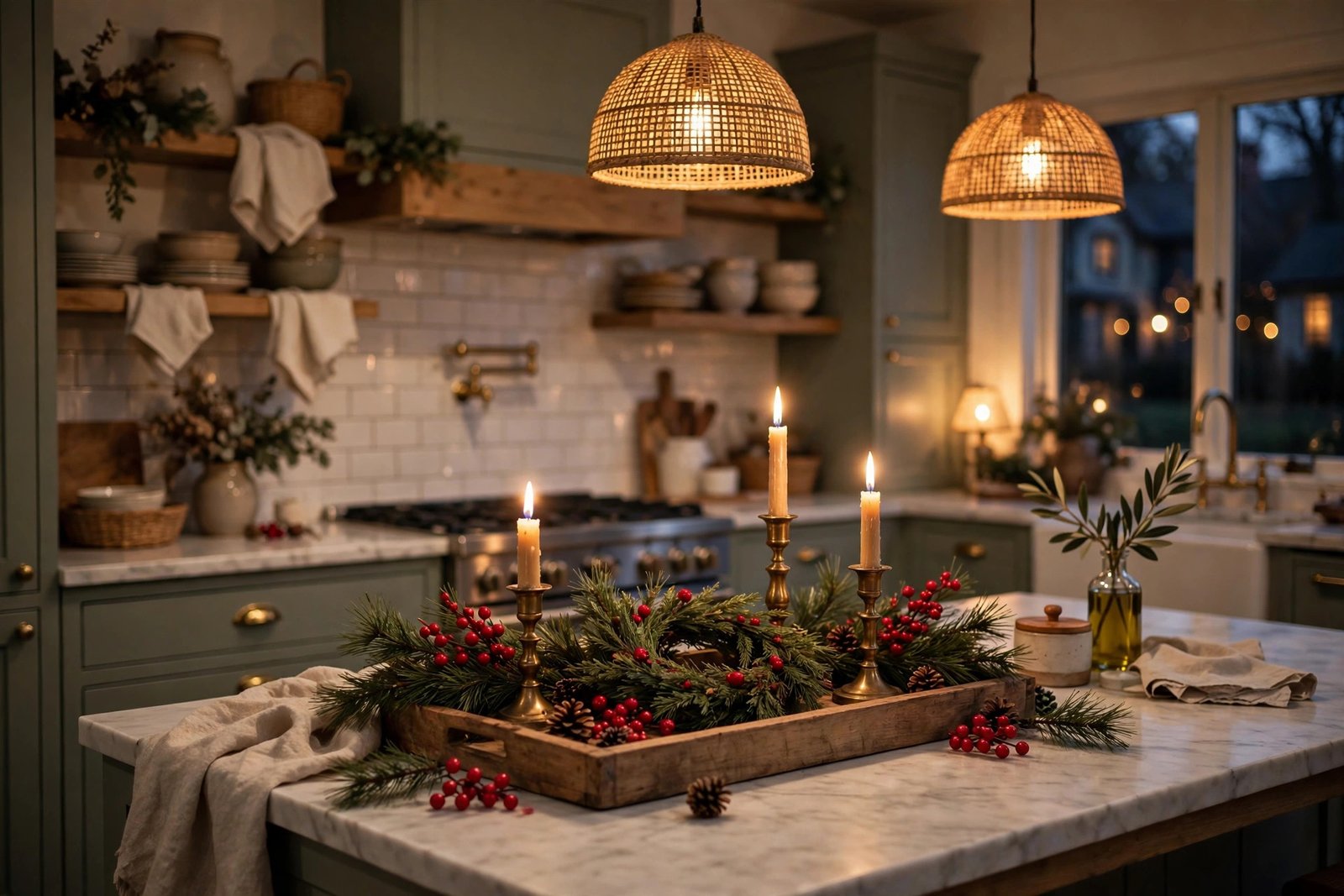
The holiday centerpiece deserves its own plan because it’s the one your guests photograph. For Thanksgiving, layer the greenery runner (idea 7) with small pumpkins, gourds, and amber glass votives — harvest tones, low height so conversation flows. The week after, swap the pumpkins for pine sprigs, red berries, and brass candlesticks: same tray, same runner base, completely different mood. Keep arrangements low in the center (under 14 inches) so they never block sightlines across the island during the meal. Price range: $20–$45 for the Thanksgiving layer; reuse the base for Christmas.
17. The 5-Minute Reset That Keeps It Looking Styled
A centerpiece only stays styled if there’s a reset routine. Every evening: return stray items to their homes, wipe the tray, straighten the runner, relight or replace the candle. Five minutes, that’s it. The deeper trick is a weekly 15-minute reset: refresh flowers or greenery, dust the tray, check candles for drips. In my experience, the kitchens that always look good don’t have better decor — they have owners who reset nightly. Teach the household the “tray rule”: anything on the island that isn’t on the tray gets put away. Price range: free — this one is pure habit.
3 Island Styling Mistakes to Avoid
- Filling the whole surface: if your centerpiece covers more than half the island, you’ve built a display, not a workspace. Scale back to one-third.
- Blocking the sightline: anything taller than 14 inches in the island’s center cuts the room in half visually — keep height at the ends.
- Ignoring the back side: islands are seen from 360 degrees. Walk around and check the arrangement from the living room side — the view you actually live with.
Frequently Asked Questions
How big should a centerpiece be for a kitchen island?
Aim for a centerpiece footprint covering about one-third of your island’s length — roughly 2 feet on a 6-foot island. Height matters too: keep the center under 14 inches so it doesn’t block sightlines, and push taller pieces toward the ends. On islands longer than 8 feet, use one long low arrangement rather than several small clusters.
What should I keep on my kitchen island every day?
The best everyday island setup is functional: a tray holding a fruit bowl, one candle, and something living (herbs or a small plant). Everything should either get used daily or lift off in one motion when you cook. Avoid paperwork, small appliances you rarely use, and anything that can’t survive a splash of water.
How do you style a kitchen island for a party?
Swap in height and glow: add tall candlesticks, trade the fruit bowl for flowers, and lay a linen runner under your usual tray. Keep a dedicated set of “party pieces” in one cabinet so the switch takes about ten minutes. Place drinks at the end farthest from the stove so guests don’t crowd the cook.
Should I decorate the whole island or leave it empty?
Neither extreme works. A completely bare island looks unfinished; a fully decorated one can’t be cooked on. The sweet spot is one styled zone — tray, bowl, candle — occupying about a third of the surface, with the rest clear. That balance is what makes an island look both designed and livable.
Island centerpieces work best as a system, not a single look: one tray, one anchor piece, three heights, and a seasonal swap you can do in five minutes. And remember the island’s lighting matters just as much as what’s on it — see our kitchen island pendant lighting ideas for the 30–36 inch hang-height rule and how many pendants your island length needs.
Related posts you may like:
- 17 Renter Friendly Kitchen Ideas That Don’t Risk Your Deposit
- 15 Small Coffee Bar Ideas for Tiny Kitchens
- Kitchen & Dining Ideas

One Comment