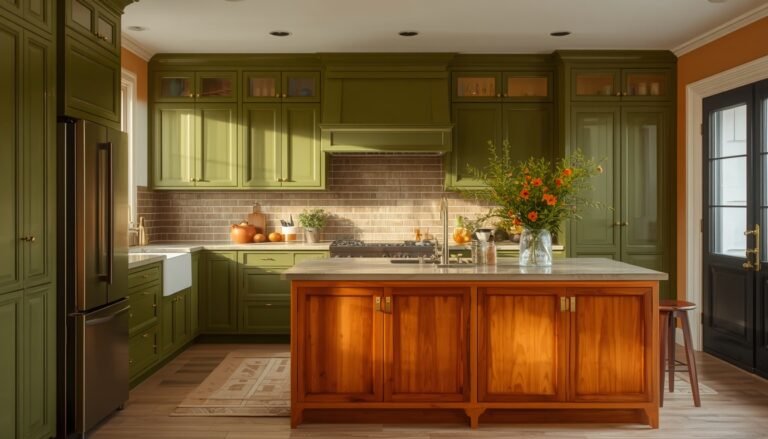
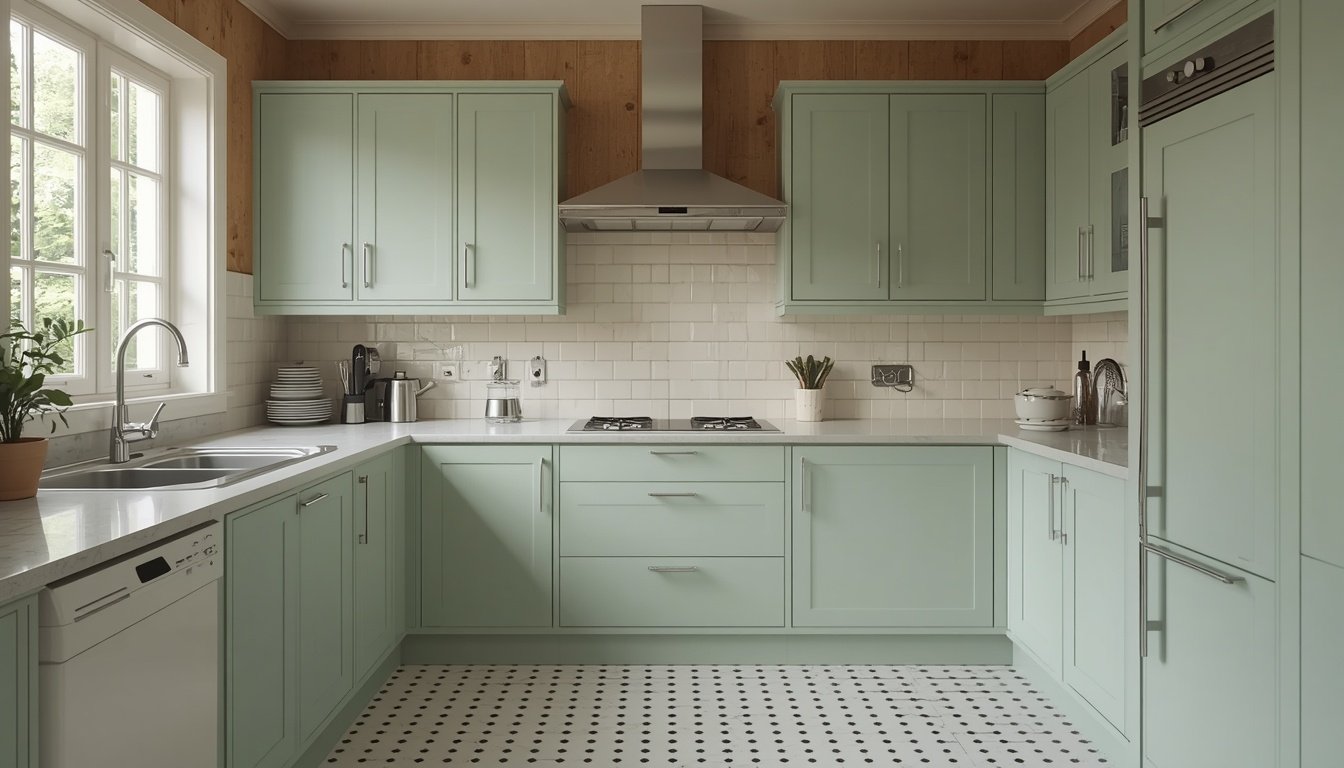
Retro Kitchen Ideas That Bring Back the Charm Without the Dated Feel
Retro kitchens are having a real moment right now, and it’s not just nostalgia driving it. Homeowners across the country are swapping flat, forgettable spaces for a true interior design style built around bold colors, a chrome finish on every edge, and a checkerboard pattern floor that makes a statement the second you walk in.
But here’s the catch: mix up vintage furniture with actual retro kitchen design, or overdo the geometric patterns, and your kitchen ends up looking like a costume instead of a home. This guide breaks down exactly which retro kitchen ideas work in 2026, from 1950s design, 1960s design, and 1970s design details that make the look feel authentic, to budget-friendly swaps that won’t blow your renovation timeline. You’ll also find the common mistakes homeowners make when chasing this nostalgic character, so you can skip the trial-and-error and land on a kitchen that feels timeless, not dated.
What Makes a Kitchen “Retro” (50s, 60s, and 70s Styles Explained)
Ask ten designers what “retro” means, and you might get ten slightly different answers. That’s because the retro label actually stretches across three very different decades, each with its own personality. Understanding these differences matters if you want your retro kitchen to feel intentional rather than like a random mashup of old stuff. A true interior design style rooted in retro history pulls specific cues from a specific era, not a blurry idea of “old-fashioned.”
The good news? You don’t need to pick just one decade. Plenty of homeowners blend elements from all three, and it still works beautifully as long as the color story stays consistent. Below, each decade gets its own spotlight so you can figure out which one speaks to you.
The 1950s Look
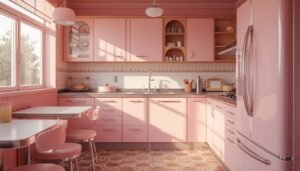
1950s design is where the retro kitchen story really begins, and it’s still the most recognizable version of the style. Picture pastel-colored appliances, chrome trim on every edge, and a layout that feels like it belongs in a classic American diner. Soft mint, baby blue, and buttery yellow ruled the era, paired with black-and-white checkerboard floors that instantly signal the decade. It’s cheerful, optimistic, and a little bit playful, which explains why so many homeowners gravitate toward it first.
The 1960s Look
Things got bolder and stranger in the 1960s, and 1960s design reflects that shift. Geometric patterns took over walls and floors, colors leaned brighter and more saturated, and a “space-age” influence crept into furniture shapes. You’ll notice starburst light fixtures, orange and avocado green color pairings, and curved furniture with a futuristic edge. This decade works well if you want your kitchen to feel more adventurous than sweet.
The 1970s Look
By the 1970s, the mood mellowed into something earthier. 1970s design favored warm browns, burnt orange, mustard yellow, and wood paneling on cabinets and walls. Florals and funky patterns showed up on wallpaper and textiles, giving kitchens a cozy, lived-in feel rather than the crisp brightness of the 50s. If you love a warmer, more grounded palette, this era gives you the most flexibility to work with natural materials.
Retro vs Vintage vs Shabby Chic — Know the Difference
People throw around “retro,” “vintage kitchen,” and “shabby chic” like they’re interchangeable, but they’re not. Mixing them up can send your whole design in the wrong direction, especially if you’re shopping for furniture or planning a full renovation. Retro specifically points to design from the 1950s through the 1970s, built around bold colors and graphic patterns rather than worn textures. It’s a look that celebrates optimism and manufactured perfection, not imperfection.
Vintage furniture, on the other hand, refers to genuinely old pieces with real wear, patina, and history behind them. Shabby chic style takes a completely different direction: it’s romantic, soft, and deliberately distressed, often using whitewashed wood and delicate floral prints. None of these approaches is better than the others, but they create very different moods. Here’s a quick breakdown to keep them straight.
| Style | Time Period | Core Traits |
|---|---|---|
| Retro | 1950s–1970s | Bold colors, graphic patterns, manufactured shine |
| Vintage | Varies (often pre-1980s) | Original pieces, natural wear, authentic history |
| Shabby Chic | No fixed era | Distressed finishes, pastel softness, romantic feel |
Why This Distinction Matters for Your Renovation
Knowing the difference saves you money and frustration once you start shopping. If you ask a furniture dealer for “vintage” pieces but you actually want the shiny, colorful look of retro design, you’ll end up with the wrong inventory entirely. Retro is the most dynamic and energetic of the three, which is exactly why it pairs so well with modern kitchen technology.
Bold Color Palettes and Pattern Combinations
Color sits at the heart of every successful retro kitchen design, and it’s usually the first thing people notice when they walk in. Bright, confident colors like red, turquoise, and sunny yellow anchor the space, often balanced against white, black, or gray so the room doesn’t feel overwhelming. Pastel colors play an equally important role, especially mint green, blush pink, and light blue, since they soften the boldness and keep things feeling fresh rather than loud. The trick is combining just enough boldness with just enough restraint. If you want a deeper dive into how color choices shape a room’s whole mood, this guide on picking a luxury living room color palette covers the same principles beyond just the kitchen.
Pattern matters just as much as color choice. Geometric patterns, stripes, polka dots, and the iconic checkerboard motif all show up constantly in retro spaces, and for good reason: they photograph beautifully and add instant personality to flat surfaces. If you’re nervous about going overboard, stick to one or two patterns max and let smooth, solid surfaces do the rest of the visual work. A little goes a long way here, and restraint often reads as more sophisticated than an all-out pattern clash.
| Color Pairing | Mood It Creates |
|---|---|
| Turquoise + white | Fresh, coastal, cheerful |
| Mustard + cream | Warm, cozy, earthy |
| Red + black | Bold, dramatic, diner-inspired |
| Mint + white | Soft, playful, airy |
| Sky blue + teal | Calm, coastal, refreshing |
Checkerboard and Terrazzo Flooring
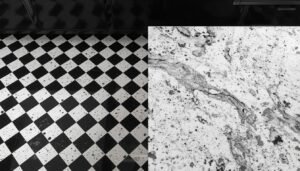
Few design choices define a retro kitchen faster than the floor beneath your feet. Checkerboard flooring in classic black-and-white remains the single most recognizable retro signature, instantly transporting a space back to the 1950s the moment you walk in. But scale matters more than most homeowners realize. Oversized tiles can overwhelm a small kitchen, while a tighter, smaller grid tends to feel more balanced and less busy in compact rooms.
Terrazzo flooring, sometimes sold as terrazzo tile for smaller installations, offers a softer, more contemporary alternative that still nods to the same era without going full checkerboard. This speckled composite material, made from marble or glass chips set into cement, brings texture and subtle color variation without demanding all the visual attention in the room. Many designers now blend terrazzo with a country-style kitchen aesthetic, proving that retro flooring doesn’t have to scream for attention to make a statement. That same relaxed, lived-in warmth shows up in this guide to cottagecore decorating ideas, if you’d rather lean soft and country over bold and graphic.
Choosing the Right Scale and Material for Your Space
If your kitchen runs on the smaller side, a finer checkerboard pattern or a muted terrazzo blend will keep the floor from competing with your cabinetry and countertops. Larger kitchens can handle bigger, punchier tile sizes without feeling chaotic.
Colorful Cabinetry and Flat-Front Cabinet Styles

Cabinetry sets the tone for the entire kitchen, and retro design leans hard into color here. Colorful appliances get all the attention in most articles, but cabinets deserve just as much credit for carrying the look. A glossy lacquer finish in mint, buttery yellow, or coral instantly signals retro influence, especially when paired with chrome finish hardware or porcelain handles that catch the light. Two-tone combinations, where upper and lower cabinets wear different shades, have become one of the most popular ways to modernize the classic retro palette.
Flat-front cabinetry offers a cleaner, more streamlined alternative to ornate paneled doors, and it actually works beautifully within a retro scheme. The simplicity of a flat front lets bold color do all the talking, rather than competing with carved details or fussy trim. Combine flat fronts with matte pastel shades instead of high shine, and you get a more understated, modern take on the same nostalgic idea.
Best Paint Colors for a Retro Cabinet Refresh
If a full cabinet replacement isn’t in the budget, paint alone can transform the space dramatically. Sherwin-Williams’ “Rejuvenate” mint and Behr’s “Mango Sunset” both echo authentic retro tones without feeling like a costume.
Retro Refrigerators and Countertop Appliances

Nothing anchors a retro kitchen faster than a statement refrigerator, and today’s brands make it easy to get that look with none of the reliability headaches of a 60-year-old appliance. Smeg and Big Chill both manufacture retro appliances that replicate the rounded edges and candy-colored finishes of the 1950s, while running on fully modern compressors and energy-efficient technology. A colorful refrigerator in cherry red or robin’s egg blue instantly becomes the visual centerpiece of the room, often doing more heavy lifting than any other single design choice.
Countertop appliances matter too, even if they get less attention than the fridge. Retro-style stand mixers, toasters, and blenders in matching pastel tones tie the whole kitchen together without requiring a full renovation. Smart technology now sits quietly behind many of these retro-styled shells, meaning you get programmable settings and app connectivity without sacrificing the nostalgic look on the outside.
Graphic Tile Backsplash and Tile Countertops
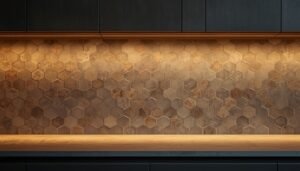
A backsplash gives you one of the highest-impact, lowest-commitment ways to bring retro energy into a kitchen. Tile backsplash designs featuring bold geometric shapes, scalloped edges, or graphic wallpaper-style prints instantly elevate a plain wall into a focal point. Adding colored grout, rather than the standard white, pushes the pattern even further, making each individual tile pop instead of blending into a flat grid.
Tile countertops take more commitment, both in cost and maintenance, but they deliver an unmistakable period-accurate look that laminate simply can’t replicate. Small hexagon or square tiles in cheerful colors work beautifully here, though they do require careful sealing to prevent staining over time. If budget is tight, save the splurge for the backsplash and choose a more practical quartz or laminate for the counters themselves.
Midcentury Lighting Fixtures
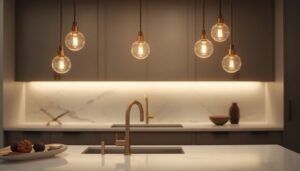
Lighting does more work in a retro kitchen than most homeowners give it credit for. Kitchen lighting from the midcentury era favored globe pendants, starburst fixtures, and sculptural shapes that doubled as art pieces rather than purely functional hardware. Pendant lights with frosted glass shades remain one of the easiest, most affordable ways to add authentic retro character to any kitchen, even one that hasn’t been fully renovated.
Pendant Lights and Globe Fixtures That Set the Mood
A cluster of three matching globe pendants over an island creates instant visual rhythm and warmth, especially when paired with a warm-toned bulb rather than a cold, clinical white light.
Banquette Seating and Eat-In Diner Booths

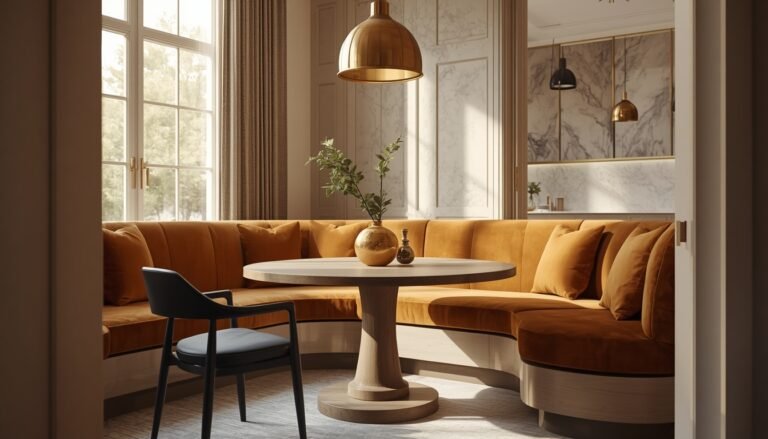
Banquette seating brings genuine diner nostalgia into a home kitchen, and it solves a real practical problem too: it maximizes seating in a compact footprint. A built-in bench along one wall, paired with a round or oval table, echoes the eat-in diner booths that defined countless retro kitchens from the 1950s onward. Upholster the bench in a bold vinyl color, and you’ve got both comfort and authentic period style in one move.
Metal frame chairs on the opposite side of the table complete the classic diner-booth pairing, especially when finished with aluminum trim along the edges and legs. This combination of a soft, upholstered bench against sleek metal seating creates the visual contrast that made these diner booths so iconic in the first place.
Small-Space Banquette Ideas
Even a narrow kitchen nook can fit an L-shaped banquette if you build it into a corner, freeing up floor space that traditional chairs would otherwise take up.
Retro Wallpaper, Flower Power, and Pop Art Motifs
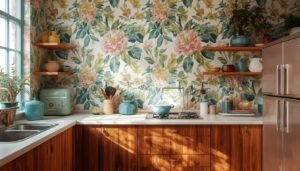
Walls offer some of the biggest opportunities for retro personality, and graphic wallpaper remains one of the fastest ways to transform a plain kitchen. Bold florals, oversized polka dots, and psychedelic swirl patterns all channel different corners of retro history, so choosing the right print depends heavily on which decade you’re chasing. A feature wall, rather than wallpapering the entire room, keeps the look punchy without overwhelming the space.
Flower Power motifs lean into the free-spirited 1960s and 70s, bringing oversized blooms in saturated colors onto walls, curtains, or even tile. Pop Art accents borrow from Andy Warhol-era graphics, favoring high-contrast colors and repeated imagery that reads as playful rather than busy. Both approaches work best in moderation, paired with calmer, solid-colored cabinetry so the walls don’t have to compete with everything else in the room.
Vintage Storage: The 1950s Hoosier Cabinet
Before built-in pantries became standard, the Hoosier cabinet solved storage problems for countless American kitchens, and it remains one of the most charming pieces you can add today. This freestanding cabinet, typically featuring a pull-out worktable, flour bin, and dozens of small compartments, represents genuine functional design history rather than pure decoration. Finding an authentic piece takes patience, but antique shops and estate sales still turn them up regularly across the country.
A freestanding sideboard offers a similar storage solution for kitchens where a full Hoosier cabinet won’t fit, providing extra counter space plus concealed storage for dishes and linens. Look for pieces with tapered legs, since that detail alone signals the right era and pairs beautifully with other curved furniture already in the room. Both pieces work beautifully alongside open shelving, since the contrast between closed storage and visible display creates natural balance in the room.
Finding and Restoring an Authentic Hoosier Cabinet

Look for cabinets with their original hardware intact, since replacement parts for these specific pieces can be difficult and expensive to source. A light refinishing, rather than a full strip-down, usually preserves the most value and character.
Modern Appliances With a Retro Look (Smart Retro Styling)
You don’t have to choose between nostalgic looks and modern kitchen technology. Manufacturers have figured out how to hide genuinely advanced features behind retro-styled shells, giving homeowners the best of both eras at once. A BORA cooktop with an integrated cooktop extractor system, for example, pulls steam and odors down and away rather than up through a bulky overhead hood, all while fitting into a retro-inspired layout without visual clutter. It sits neatly among your kitchen cabinets without stealing attention from the kitchen floor, kitchen wall, or kitchen ceiling finishes you worked so hard to get right. Similarly, a steam oven can sit behind a period-accurate control panel, delivering precise modern cooking results with none of the dated limitations of a real 1950s stove. This same idea of hiding modern function behind a nostalgic shell is exactly what makes these outdoor kitchen layout secrets work so well for anyone planning a retro-inspired space outside too.
Hiding these units behind built-in cabinets keeps the overall look clean, since the newest kitchen appliances disappear visually until you actually need them. This blend represents modern convenience at its best: all the comfort of nostalgia, none of the actual inconvenience of owning 70-year-old machinery. Homeowners get reliable performance, energy efficiency, and often smart connectivity, wrapped in a shell that still photographs like something out of a vintage catalog.
Smart Technology Hidden Behind Retro Finishes
Look for appliances that advertise “retro-inspired” rather than “vintage” or “antique,” since that phrasing usually signals modern internals with a styled exterior rather than an actual old unit.
Retro Style for Small Kitchens
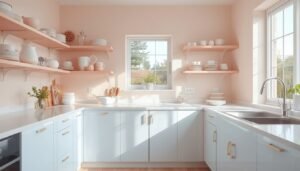
A small kitchen design doesn’t have to skip the retro trend just because square footage runs tight. Light pastel shades, rather than deep saturated colors, help a compact room feel larger and airier right away. Glossy cabinet fronts bounce light around the room more effectively than matte finishes, which matters enormously when natural light is limited. Compact furniture, scaled specifically for smaller footprints, keeps the retro character intact without cramming the room full of oversized pieces. These same space-stretching tricks show up again and again in these mobile home design tricks, since compact kitchens and compact homes solve the same visual problem.
Open shelving works particularly well in small retro kitchens, since it eliminates the visual bulk of tall upper cabinets while still displaying colorful dishware as a decorative feature. A single striking accessory, like a colorful refrigerator or a bold pendant light, can carry the whole retro theme on its own, meaning you don’t need to layer pattern after pattern into a tight space.
Space-Saving Tricks That Keep the Retro Vibe Alive
A mint-colored kitchenette with white tiles and one bold refrigerator often reads as more sophisticated than a small space crammed with five competing patterns and colors.
Budget-Friendly Ways to Get the Retro Look
A full retro renovation can get expensive fast, but plenty of budget-friendly shortcuts deliver most of the visual impact for a fraction of the cost. Paint remains the cheapest, highest-impact change available, and a single coat of bold color on cabinets or a feature wall can transform a room in a single weekend. Swapping cabinet hardware for retro-style handles costs far less than replacing entire cabinet boxes, yet it changes the whole feel of the kitchen almost instantly.
Thrifted enameled tins, storage jars, a working kitchen radio, or an old kitchen scale from estate sales or online marketplaces add authentic character for just a few dollars each. Removable wallpaper offers another low-commitment option, letting renters and budget-conscious homeowners test bold patterns without a permanent installation. Save your bigger budget for one true splurge item, like a statement refrigerator, and let smaller, cheaper touches fill in the rest of the story.
DIY Swaps vs Splurge-Worthy Investments
Cabinet paint, hardware swaps, and thrifted accessories fall firmly into the DIY category, while a genuine retro-style refrigerator or terrazzo flooring installation deserves the splurge-worthy label.
Common Retro Kitchen Mistakes to Avoid
Even enthusiastic homeowners trip up when tackling this style, and the most common mistake is overdoing a single element instead of balancing the whole room. Going all-in on checkerboard floors, patterned wallpaper, and bold cabinetry all at once creates visual chaos rather than a cohesive retro kitchen design. Successful spaces almost always pick one or two standout features and let everything else stay relatively calm and supportive.
Another frequent misstep involves mixing decades without a clear plan, blending 1950s pastel with 1970s earth tones in a way that reads as confused rather than intentional. Sticking to one primary decade, then borrowing just a small accent from another, keeps the whole design story coherent. Finally, skipping smart technology entirely in favor of pure aesthetics often backfires, since homeowners eventually miss the convenience of modern appliances once the initial nostalgia wears off.
Overdoing One Element Instead of Balancing the Room
If you already have bold checkerboard flooring, keep your walls and cabinetry simpler so the floor stays the star instead of competing with three other loud features.
Bringing It All Together
A great retro kitchen doesn’t try to recreate the past exactly. Instead, it borrows the best design elements, the cheerful colors, the playful patterns, and the sculptural lighting, and pairs them with everything kitchen furniture and kitchen accessories do well today: efficient storage, smart tech, and layouts built for how people actually cook. These key features are exactly what separate a themed room from a true dream home kitchen. That same editorial, put-together warmth is the whole idea behind these Nancy Meyers-inspired bedroom ideas, if you want the rest of the house to feel just as intentional as the kitchen.
Whether you go all-in with a full 1950s, 1960s, or 1970s theme, or simply add a modern twist through a few retro accents, the result is a kitchen with real nostalgic character and genuine staying power. Use these kitchen design ideas as a starting point, and don’t be afraid to pull a few extra tricks from a good kitchen lighting guide before you commit to a final plan.
People also ask
How do I make my kitchen look retro? Start with bold color, like a mint or red cabinet accent, add chrome hardware, and bring in a checkerboard floor or graphic tile backsplash. One or two statement pieces, like a colorful fridge, do most of the work.
What is retro-style in interior design? It’s a design approach inspired by the 1950s to 1970s, built around bold colors, geometric patterns, and curved, glossy furniture rather than natural wear or distressing.
Is a retro kitchen a timeless design? Yes, in a balanced form. Classic elements like checkerboard floors and warm wood tones have stayed popular for decades, though loud color trends do cycle in and out.
What are some popular vintage kitchen styles? Farmhouse vintage, French country, and mid-century modern remain the most requested, each leaning on natural materials and aged, original furniture rather than reproduction pieces.
What is the new look for kitchens in 2026? Warm minimalism mixed with retro accents, think earthy neutrals, one bold color pop, curved island edges, and matte finishes replacing high-gloss surfaces.