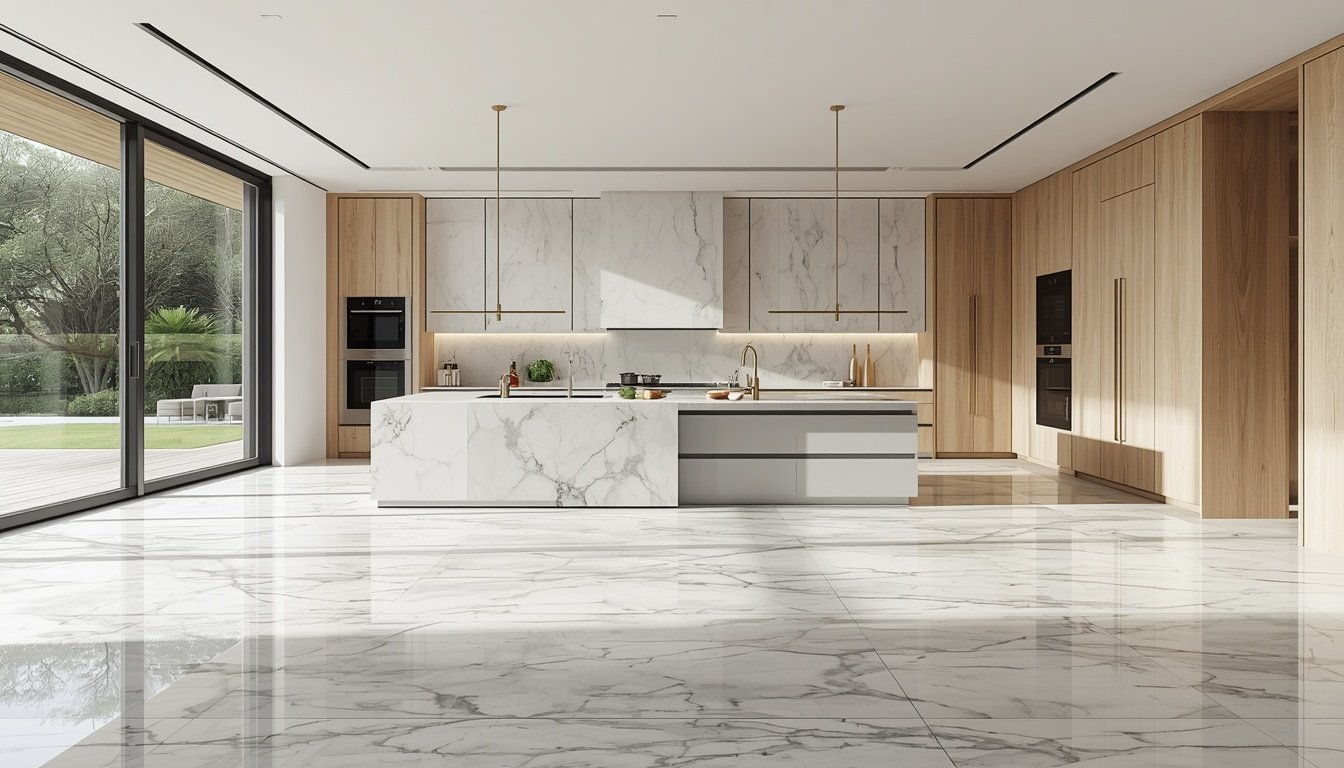
25 Best Kitchen Floor Tile Ideas for Every Style and Budget
Your kitchen floor takes more abuse than almost any other surface in your home. Spills, foot traffic, dropped pans, and daily wear all leave their mark, which is why picking the right kitchen tile matters just as much as picking the right paint color.
Whether you’re after the timeless elegance of marble tile or the practical charm of wood-look porcelain, there’s a style out there that fits your taste and your lifestyle. This guide walks through every major kitchen flooring option available in 2026, from classic subway layouts to bold geometric patterns, so you can find the perfect match for your space.
Popular Kitchen Floor Tile Materials
Before you fall in love with a specific pattern, it helps to understand what you’re actually walking on. Porcelain tile dominates the kitchen flooring world because it’s dense, water-resistant, and holds up beautifully against dropped pots and daily foot traffic. Ceramic tile offers a similarly durable, budget-friendly alternative, though it’s slightly more prone to chipping than porcelain. Natural stone options like marble, travertine, and terrazzo bring an unmatched sense of luxury, but they usually need periodic sealing to stay stain-resistant.
Luxury vinyl flooring has become the go-to pick for homeowners who want the look of stone or wood without the maintenance headache. It’s exceptionally durable, scratch-resistant, and far easier to install than traditional tile. Budget-wise, ceramic tile typically runs $2–$8 per square foot installed, making it one of the most accessible options. Porcelain tile sits a bit higher at $3–$12 per square foot, reflecting its added durability, while luxury vinyl flooring stays competitive at $3–$10 per square foot and often costs less to install since it doesn’t require the same subfloor prep as tile.
Engineered Hardwood
If you’re set on real wood underfoot, engineered hardwood gives you that authentic grain and warmth while standing up better to humidity than solid hardwood does. It pairs beautifully with both light and dark cabinetry, and many collections include matching trim pieces so the flooring can flow seamlessly from your kitchen into an adjoining great room or dining space.
Elegant White & Veined Marble-Look Tile
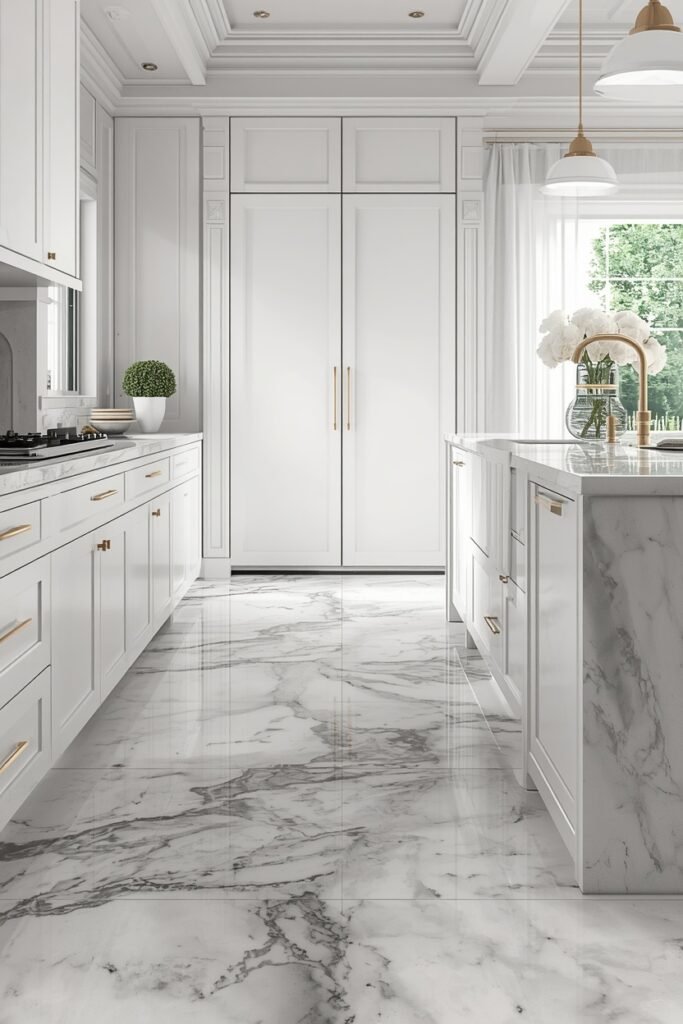
There’s a reason marble tile never goes out of style. White marble instantly elevates a space, pairing effortlessly with light cabinets and gold or brass fixtures for a rich, glamorous finish. If you love the look but not the upkeep, marble-look tile in porcelain or ceramic gives you that same dramatic veining without the need to reseal or worry about staining.
For a bolder take, look for boldly veined marble-look tile featuring deep emerald or charcoal veining against a bright white base. Real marble typically costs $10–$40+ per square foot depending on the grade and veining pattern, while marble-look porcelain delivers a similar aesthetic for roughly $3–$10 per square foot. This dramatic contrast turns your floor into a statement piece rather than just a backdrop, especially in kitchens that keep the rest of the palette fairly neutral.
Sleek Subway Tile with a Modern Twist
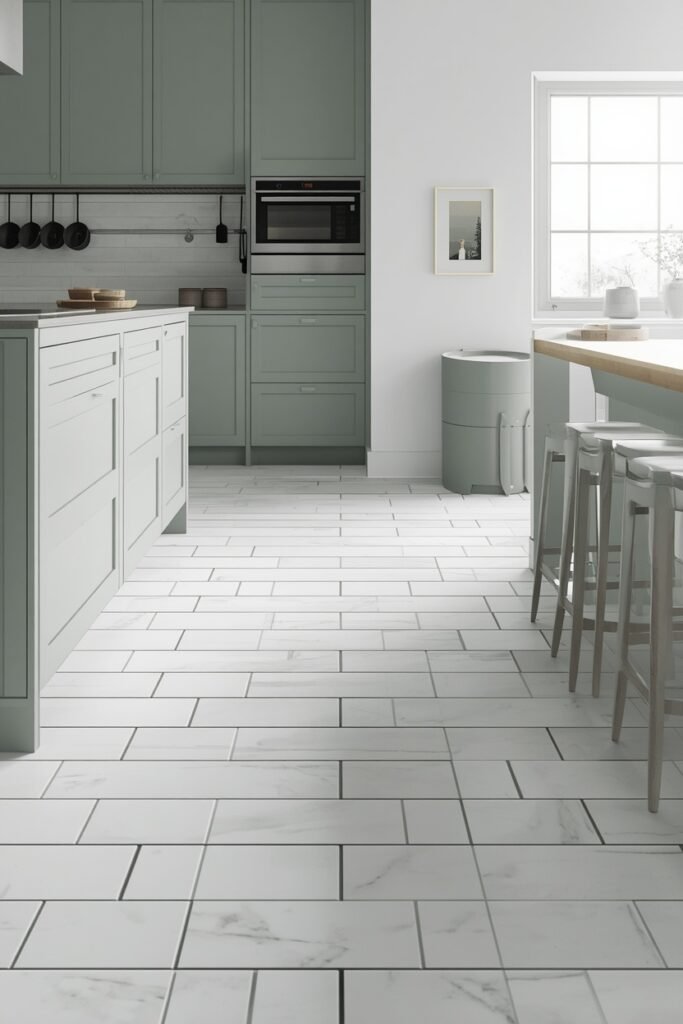
Subway tile isn’t just for your backsplash anymore. Bringing that same elongated tile down onto the floor creates a cohesive, connected look, especially when you continue the tile in a straight stack pattern from wall to floor. This approach works particularly well in modern kitchens with bold cabinet colors, since the simple tile shape lets other design elements take center stage.
Even if you skip using subway tile on your walls, this versatile floor option pairs with nearly any kitchen style, from farmhouse to contemporary. Its clean lines and matte finish options make it a safe, adaptable choice for kitchens undergoing a full renovation or a simple flooring refresh.
Large-Format Tile for a Seamless Look
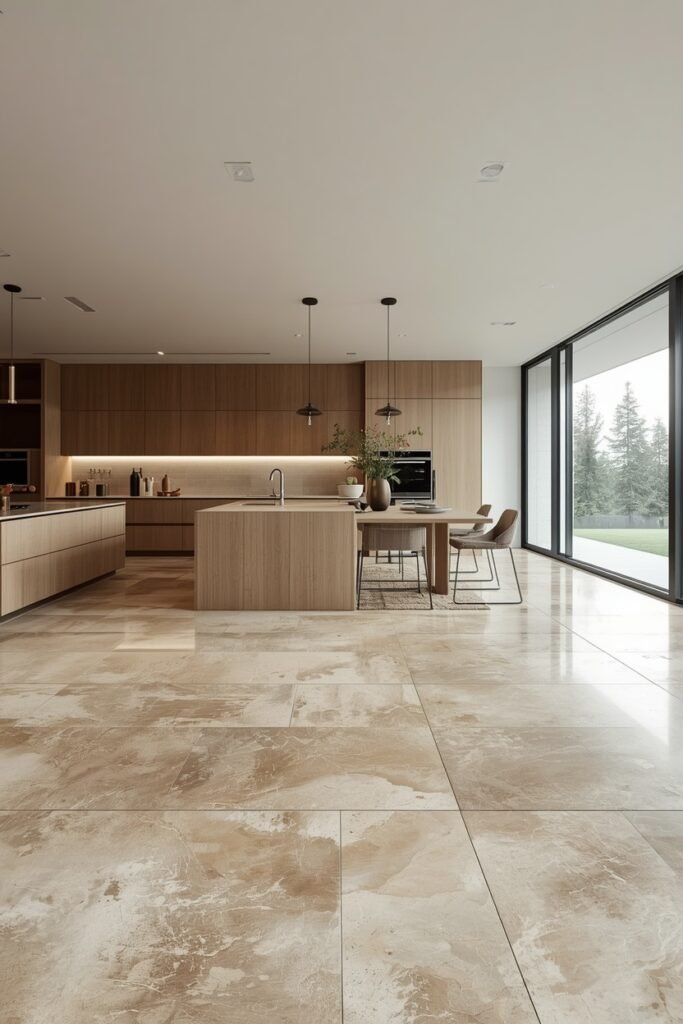
Large-format tile creates a more expansive, cohesive appearance because it uses fewer grout lines per square foot than smaller tile options. This makes it an especially smart pick for a small galley kitchen, where minimizing visual breaks in the floor helps the whole room feel wider and more open.
Look for large-format tile with realistic veining in brown, gray, or beige tones for a natural stone look that’s remarkably easy to maintain. Because it comes in porcelain tile, it resists scratching and staining far better than natural stone, making it ideal for busy households that still want a high-end aesthetic.
Small-Format Mosaic Tile
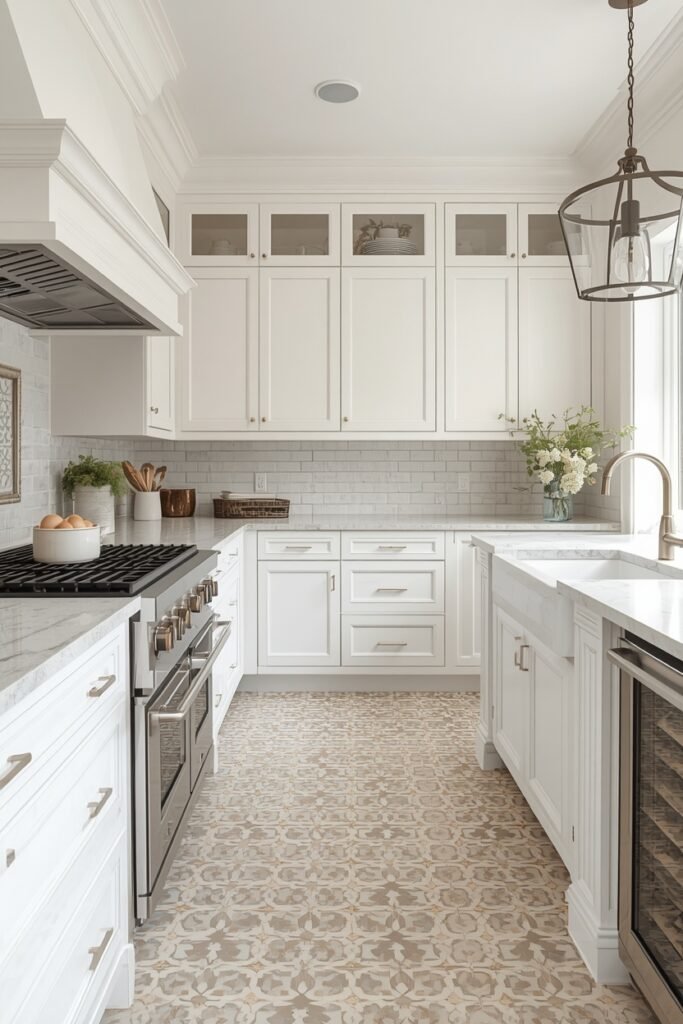
Mosaic tile takes the opposite approach from large-format styles, using small individual pieces to create texture and visual interest underfoot. It’s a fantastic way to add personality to a kitchen floor without committing to a bold color throughout the whole space, since mosaic patterns tend to blend multiple tones together for a more layered look.
This style works especially well as a border or transition piece between larger tile sections, or as a standalone floor in a smaller kitchen where the intricate detailing won’t feel overwhelming. Pair it with simple white cabinetry to let the tile pattern do the visual heavy lifting.
Bold Black Hex Tile
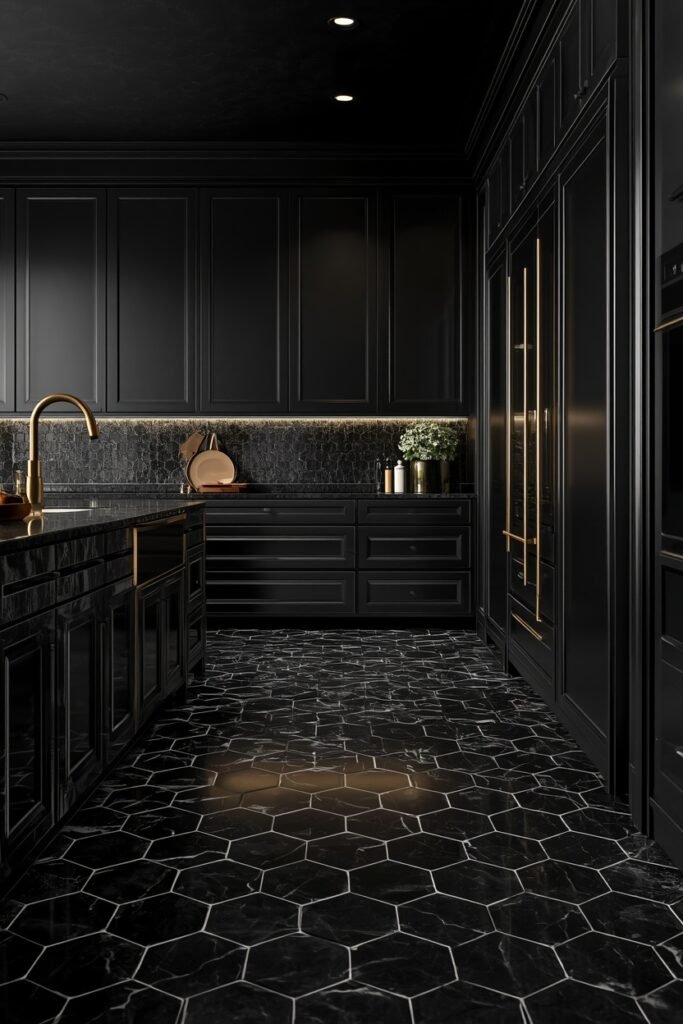
Black hexagon tile brings instant drama to a kitchen floor, especially when paired with white grout for maximum contrast. It’s a striking choice for anyone who wants their flooring to feel like an intentional design statement rather than a neutral backdrop, and it works beautifully in both modern and traditional kitchen styles.
Because hexagon shapes naturally create visual movement, this patterned tile option tends to draw the eye without needing any additional decorative elements. It pairs especially well with brass or gold hardware, which helps soften the boldness of the black-and-white combination.
Hex Checks and Checkerboard Patterns
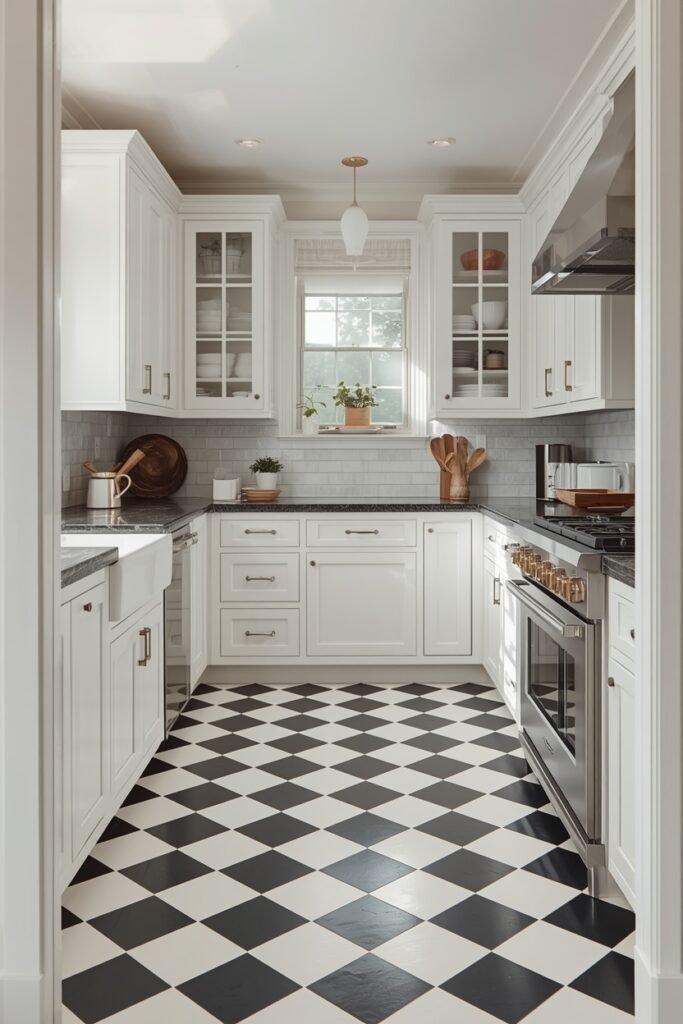
Alternating two colors of hexagon tile puts a playful twist on the traditional black-and-white checkerboard look. This non-slip surface style works particularly well in high-traffic areas, and because you can use any two same-size tiles, the color and pattern combinations are essentially endless.
Classic Checkerboard Squares
The traditional square checkerboard remains a beloved option for anyone wanting a timeless, gallery-style floor. A light gray border framing charcoal squares, for instance, creates an elegant black-and-white stone look that pairs beautifully with a traditional white kitchen and black accent details.
Chic Cement-Look Tile
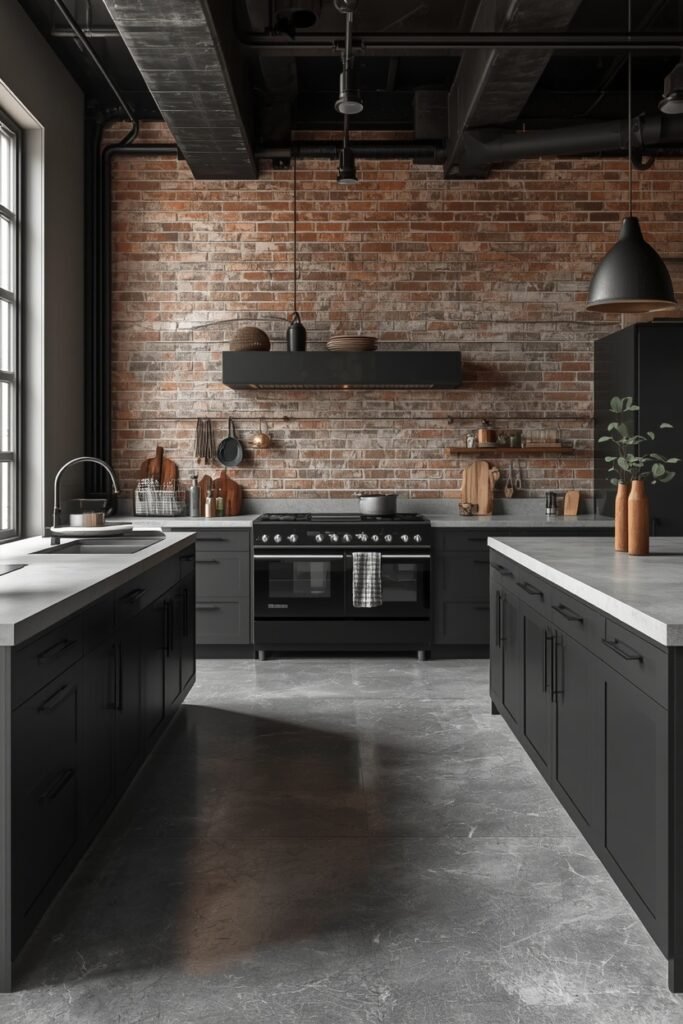
Cement-look tile delivers an industrial-chic aesthetic while offering far more durability than actual poured cement. This porcelain tile option can transform a suburban kitchen into something that feels like an urban loft, especially when paired with open shelving and matte black fixtures.
Available in a range of grays from silver to graphite, cement-look tile works as a neutral base that lets bolder cabinet colors or statement lighting take the spotlight. It’s an increasingly popular pick among homeowners chasing that minimalist, industrial-inspired look without sacrificing the practicality a kitchen flooring surface demands.
Warm Terracotta Tones
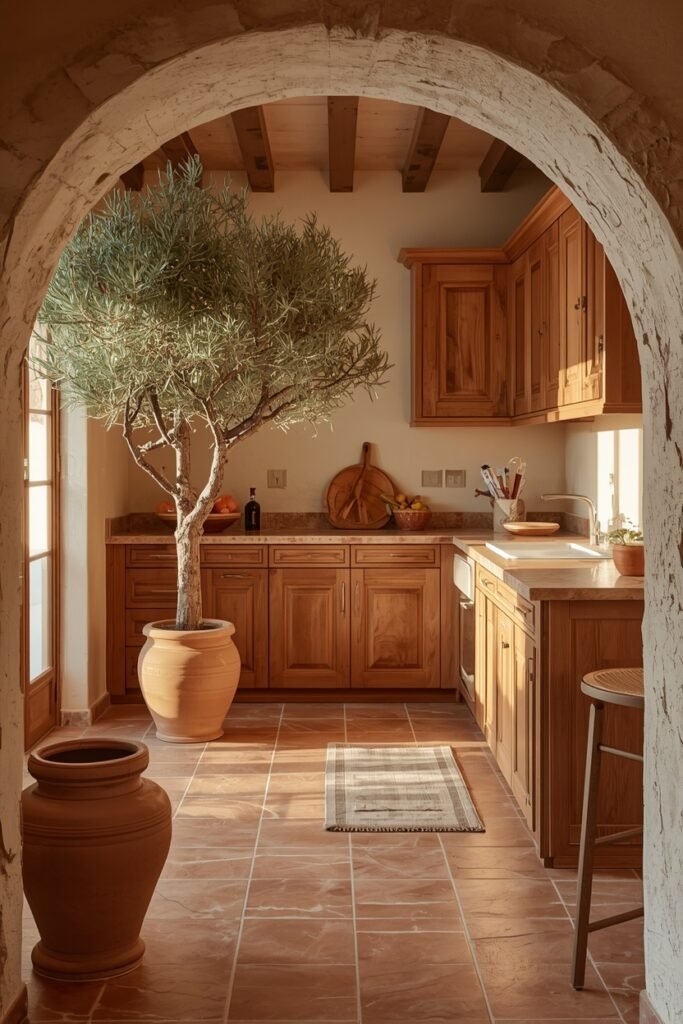
Terracotta tile brings an earthy, sun-baked warmth that instantly makes a kitchen feel more inviting. Its rich orange-brown tones pair beautifully with wood cabinetry, woven textures, and greenery, making it a natural fit for Mediterranean, Spanish colonial, or modern farmhouse-inspired spaces.
Beyond the aesthetic appeal, terracotta-look tile in porcelain offers the same stain-resistant and scratch-resistant benefits as other porcelain tile options, so you get that old-world charm without the maintenance concerns that come with authentic clay tile.
Industrial Metal-Look Tile
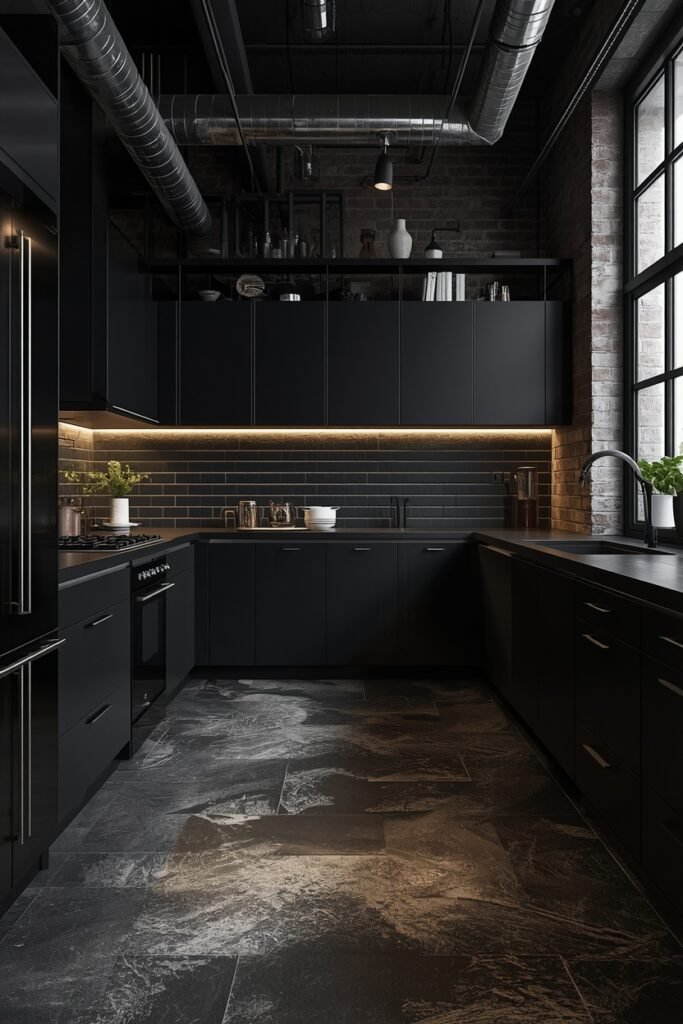
Metal-look tile is gaining serious traction among homeowners chasing an urban, loft-inspired aesthetic. With weathered metallic variation across a dark charcoal base, this porcelain tile style gives your kitchen a distinctly edgy character that pairs beautifully with exposed brick, black steel fixtures, and open shelving.
It’s a bold departure from traditional kitchen flooring, but its neutral dark tone actually makes it surprisingly versatile, working equally well in a converted warehouse space or a suburban home aiming for that industrial-inspired look.
Textured Tile for Added Depth
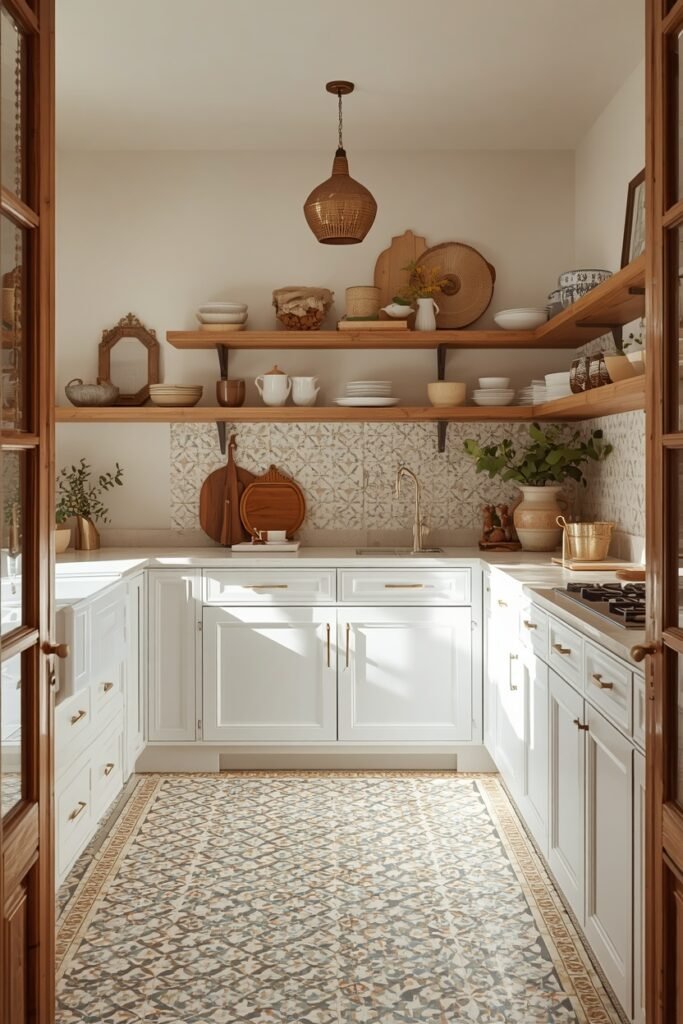
Textured tile adds a tactile, dimensional quality that flat, glossy tile simply can’t replicate. Whether it’s a subtle ridged pattern or a more pronounced 3D relief, texture catches light differently throughout the day, giving your floor a sense of movement and depth.
This style pairs particularly well with a neutral color palette, since the texture itself becomes the main visual interest rather than competing with a bold color or pattern. It’s also a smart, functional choice for kitchens, as textured surfaces tend to offer better slip resistance underfoot.
Star and Cross / Geo Chic Patterns
This traditional Moroccan-inspired design, built from interlocking eight-pointed stars and crosses, brings an eclectic, worldly feel to any kitchen. Handcrafted zellige tile showcases beautifully imperfect variations in tone and texture, giving each installation a one-of-a-kind, artisanal character that mass-produced tile simply can’t match.
Mixing glossy finish and matte finish tiles within the same pattern creates a subtle checkerboard effect that adds even more depth. Whether you stick to a single finish or combine charcoal with white for striking contrast, this geometric style makes a memorable first impression.
Ornate & Moroccan-Inspired Patterns
Ornate patterns bring instant personality to a kitchen floor, especially when rendered in a classic black-and-white color scheme. Because the palette stays simple, this style of patterned tile is remarkably easy to refresh over time, letting the rest of your kitchen design evolve without needing to rip out the flooring.
Artistic and Watercolor-Inspired Designs
For something more painterly, artistic tile collections featuring abstract shapes and watercolor-style brushwork bring an unexpected softness to the floor. These designs work beautifully in dining nooks or breakfast areas adjacent to the main kitchen, where the artistic detail can really shine.
Herringbone and Chevron Layouts
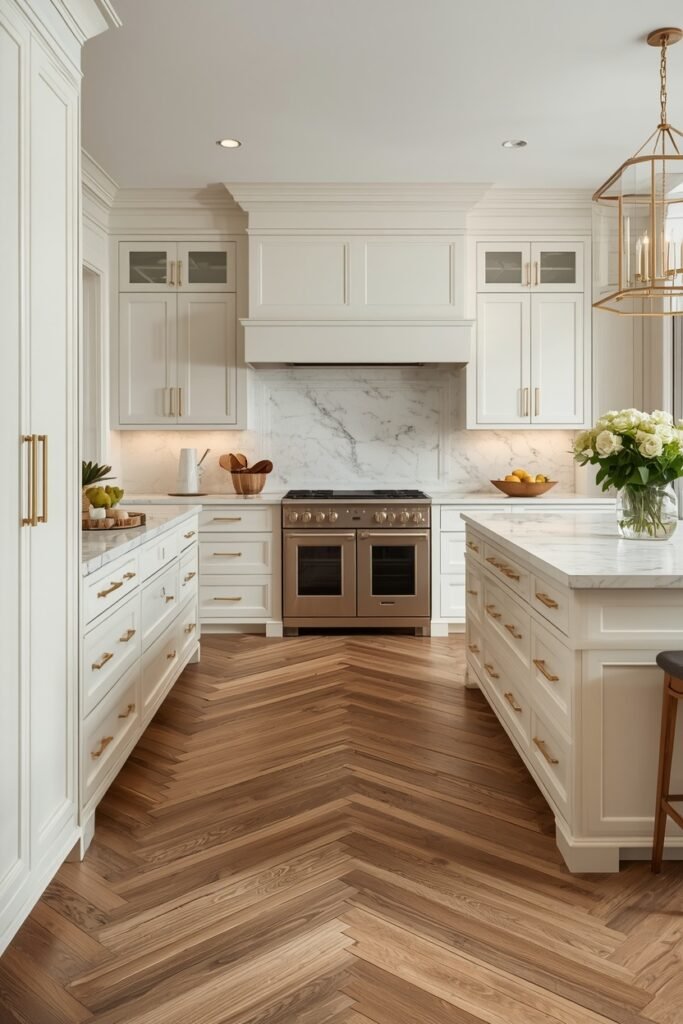
Herringbone remains one of the most requested kitchen flooring patterns, and for good reason. Whether executed in laminate, hardwood, or tile, the zigzag arrangement creates visual movement that makes even a small kitchen feel more dynamic. It’s an especially popular choice for anyone chasing an authentic wood look without the water-damage risk of real hardwood. Laminate herringbone flooring keeps this pattern accessible, typically running $2–$7 per square foot, while the same look in solid hardwood can climb to $10–$25 per square foot once labor is included.
Chevron, herringbone’s more angular cousin, offers a similarly dynamic look but with cleanly mitered edges instead of herringbone’s classic offset joints. Both patterns work exceptionally well as flooring that extends from the kitchen into an adjoining living or dining space, creating a seamless visual flow between rooms.
Versailles Pattern Tile
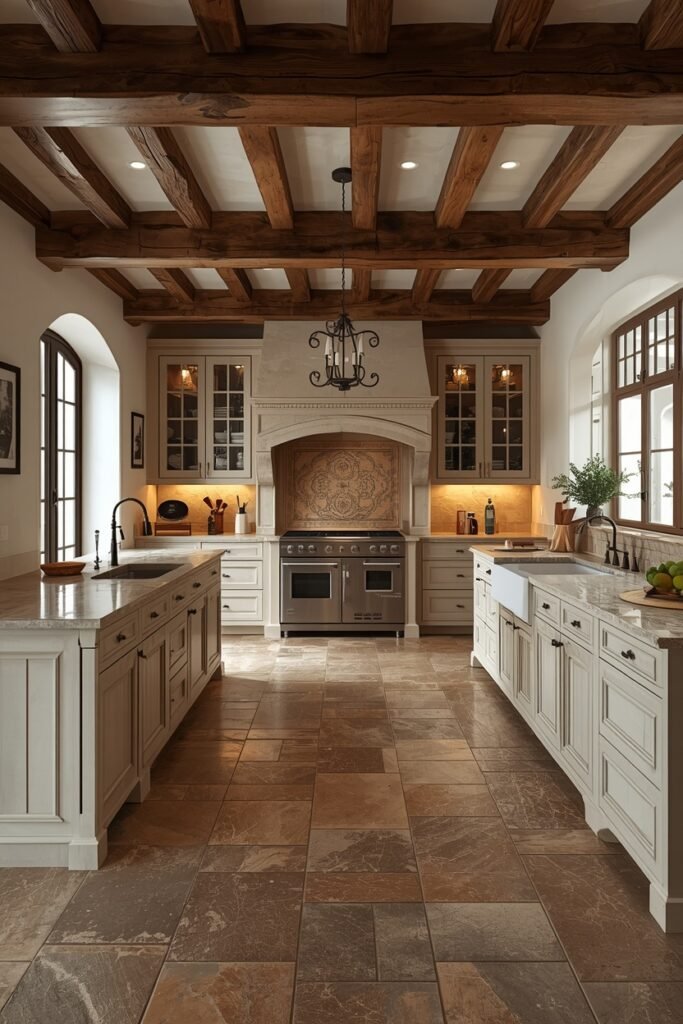
Characterized by a mix of square and rectangular tiles arranged in a distinct repeating layout, Versailles pattern tile adds an old-world elegance that few other patterns can match. It works beautifully as a neutral, fashionable base, especially in tumbled or textured finishes that lean traditional rather than sleek and modern.
This pattern pairs particularly well with dramatic countertops or a bold backsplash, since the tile itself stays understated enough to let other design elements shine. It’s a favorite among homeowners aiming for a European-countryside aesthetic without sacrificing the durability that a busy kitchen demands.
Biophilic and Nature-Inspired Looks
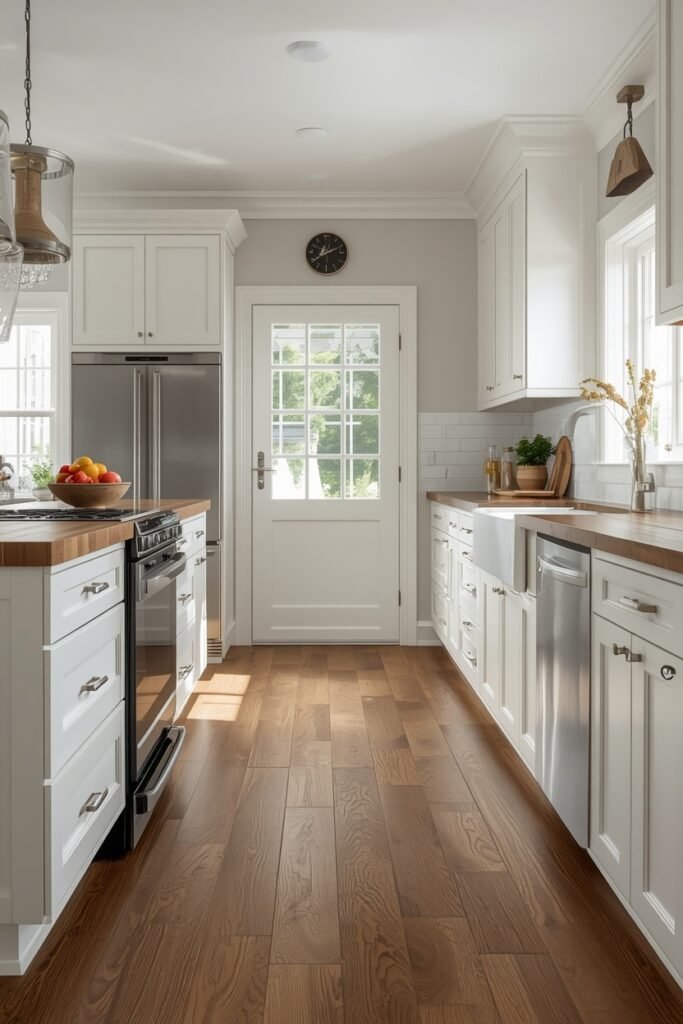
Biophilic design brings natural elements and organic textures into the kitchen, and flooring plays a bigger role in that than most people realize. Stone-look and wood-look tile options that mimic real, unpolished natural materials help ground the space and create a calmer, more grounded aesthetic.
Pairing this flooring style with plenty of greenery, natural wood accents, and organic textures throughout the rest of the kitchen amplifies the effect. It’s an increasingly popular direction for homeowners who want their kitchen to feel more like an extension of the outdoors.
Eco-Friendly Recycled Tile
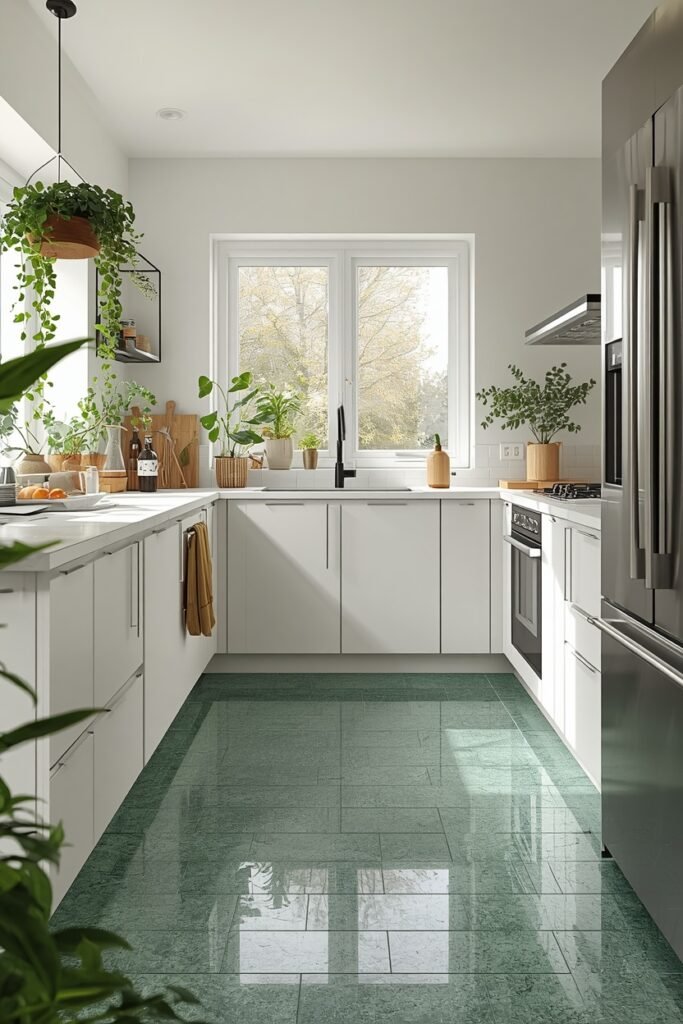
For environmentally conscious homeowners, recycled tile offers a way to get a beautiful floor while reducing waste. Made from reclaimed glass, ceramic, or other repurposed materials, these tiles often carry unique flecks and variations that give them a distinctive, one-of-a-kind character.
Beyond the sustainability angle, recycled tile tends to perform just as well as traditional options in terms of durability and stain-resistant properties, so you’re not sacrificing performance for a smaller environmental footprint.
Monochromatic Flooring
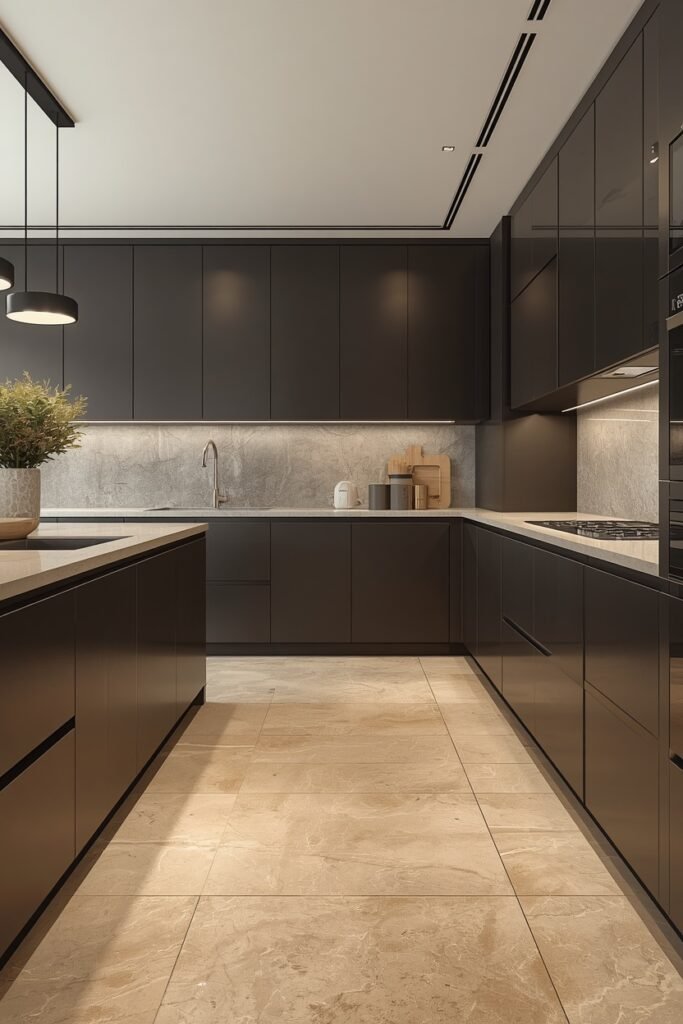
Going monochromatic with your kitchen floor, meaning sticking to a single color family across both the tile and the grout, creates a clean, cohesive look that makes small spaces feel larger. This approach works especially well with large-format tile, since fewer color breaks mean fewer visual interruptions across the floor.
It also gives you more flexibility with the rest of your design, since a neutral, monochromatic floor acts as a blank canvas for bold cabinetry, colorful backsplash tile, or statement lighting fixtures.
Extending Tile Beyond the Backsplash
One of the easiest ways to make a kitchen feel more expensive is by extending your backsplash tile down to meet the floor, or continuing your floor tile up the wall. This unbroken visual line eliminates the choppy look that comes from too many competing materials in one space.
This technique works particularly well in smaller kitchens, where minimizing the number of visual transitions helps the whole room feel larger and more intentional. It’s a favorite trick among designers specifically because it reads as custom and high-end, even when using relatively affordable tile.
Tile Ideas for Small Kitchens
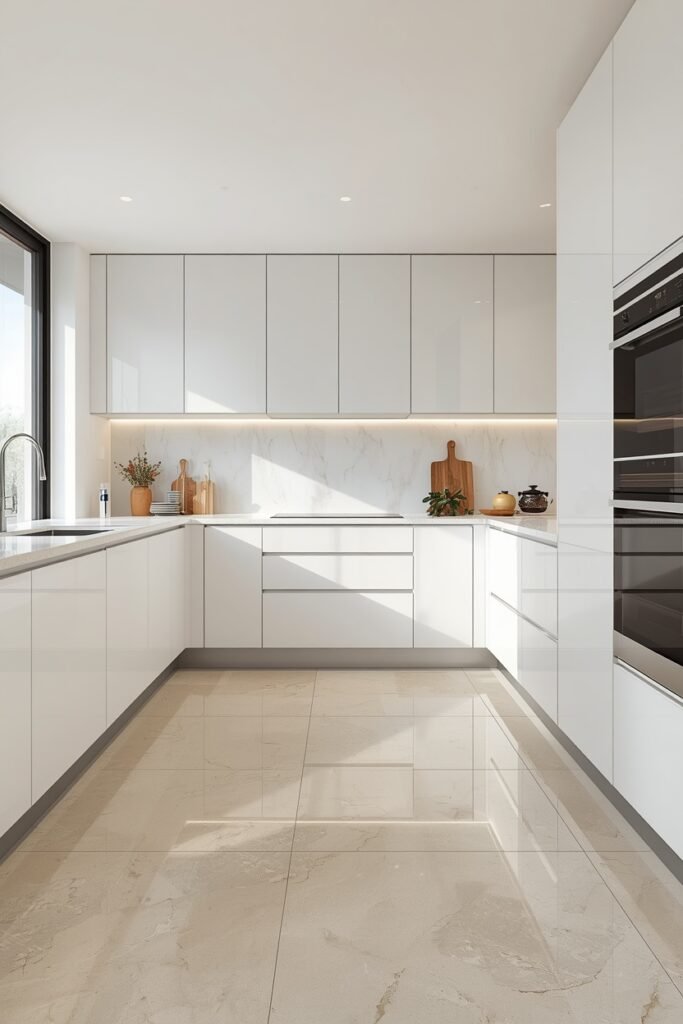
Small kitchens benefit enormously from thoughtful tile choices, and large-format tile in light neutral tones tops the list for good reason. Fewer grout lines mean fewer visual breaks, which helps a compact space feel noticeably more open. Pairing light tile with a glossy finish amplifies this effect even further, since the reflective surface bounces light around the room. For more inspiration on maximizing compact spaces, check out these small dining room ideas that use similar visual tricks.
Floor-to-wall tile continuity, meaning using the same or a coordinating tile on both the floor and lower walls, is another proven trick for making small kitchens feel bigger. When there’s no hard visual line separating floor from wall, the eye naturally reads the space as more expansive than it actually is.
Choosing the Right Grout Color and Style
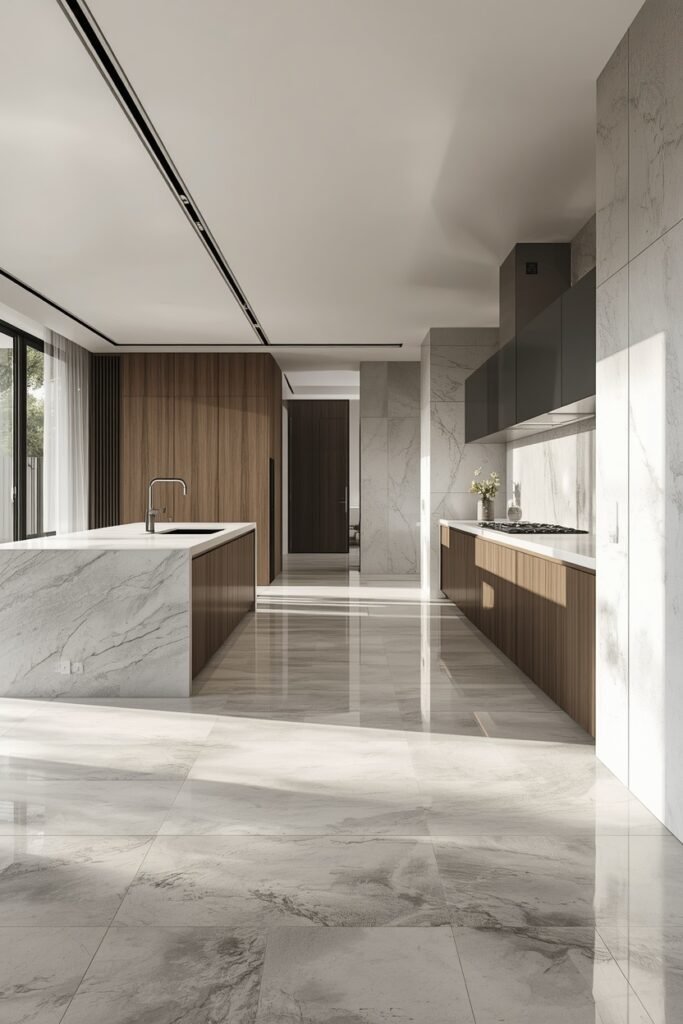
Grout color has a bigger impact on your finished floor than most homeowners expect. Matching grout closely to your tile color creates a seamless, more expansive look, while contrasting grout, like white grout with black tile, emphasizes each individual tile shape for a bolder, more graphic effect.
Beyond color, grout width also matters. Thinner grout lines tend to read as more modern and sleek, while wider grout lines suit rustic or traditional styles, especially with handmade tiles like zellige tile that naturally vary in size and shape.
Tile Size and Shape Guide
| Tile Size/Shape | Best For | Visual Effect |
|---|---|---|
| Large-format (24″+) | Small kitchens, open-concept spaces | Expansive, seamless, fewer grout lines |
| Subway (3×6, 4×8) | Transitional and modern kitchens | Classic, versatile, clean lines |
| Hexagon | High-traffic, non-slip areas | Playful, textural, geometric interest |
| Mosaic | Accent areas, borders | Detailed, layered, artisanal |
| Square (12×12 and up) | Traditional and classic kitchens | Timeless, symmetrical, balanced |
Budget vs. Premium Tile Options
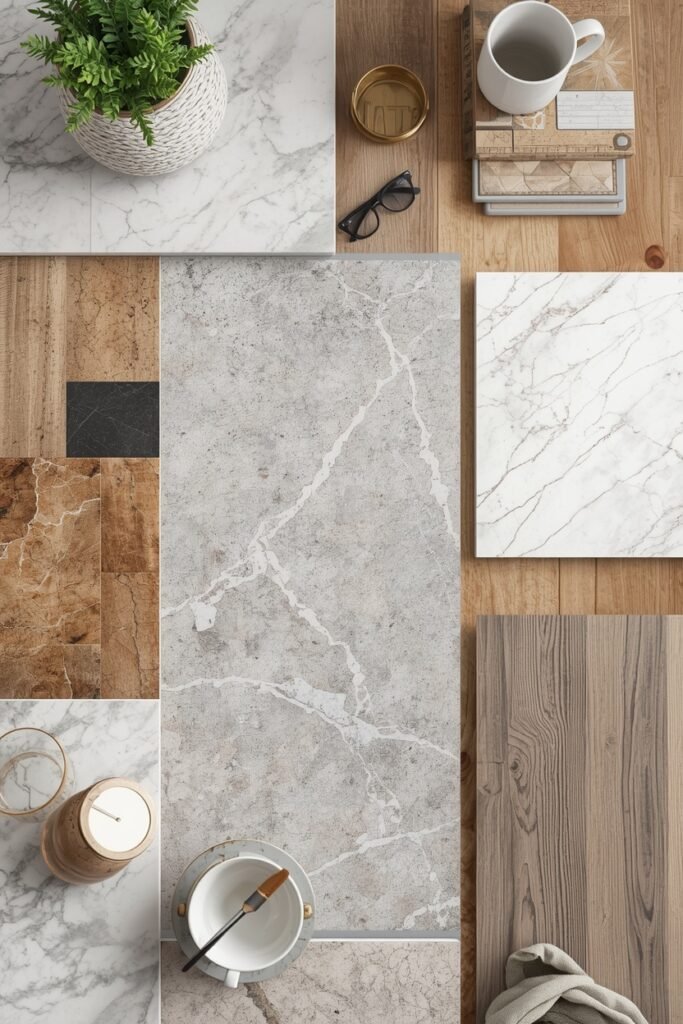
Not every homeowner wants, or needs, to spend top dollar on natural stone. Ceramic tile and luxury vinyl flooring offer budget-friendly ways to achieve a similar look to pricier materials like marble tile or real hardwood, often running $2–$10 per square foot installed compared to $15–$40+ for natural stone. These options are especially appealing for renters or anyone planning a future renovation.
On the premium end, natural stone and handcrafted tile styles deliver a level of texture and character that manufactured tile simply can’t replicate, typically landing in the $15–$50+ per square foot range once installation is factored in. If budget allows, investing in premium tile for a smaller focal area, like a kitchen island surround, lets you enjoy that luxury look without the cost of covering an entire floor.
Matching Tile to Your Kitchen Style
Your tile choice should work in harmony with your kitchen’s overall design direction rather than fighting against it. A farmhouse kitchen calls for warm, distressed, or terracotta-toned tile, while a modern minimalist space leans toward large-format tile in cool neutrals with minimal veining or pattern.
Retro and Colorful Kitchens
For kitchens embracing bold color and playful personality, tile patterns like checkerboard squares or vibrant mosaic work beautifully as a grounding element. If you’re leaning into a bolder aesthetic, these retro kitchen ideas and this guide on how to make a colorful kitchen look expensive both offer great pairing inspiration for tile alongside bold cabinetry.
Durability and Maintenance Tips
Porcelain tile remains the gold standard for kitchen flooring durability because it’s dense, non-porous, and highly resistant to both scratching and staining. Regular sweeping and the occasional damp mop are usually all it takes to keep porcelain and ceramic floors looking their best for years.
Natural stone, on the other hand, needs a bit more attention. Periodic sealing helps maintain its stain-resistant properties, and it’s worth avoiding acidic cleaners that can etch the surface over time. Luxury vinyl flooring sits somewhere in between, offering excellent durability with virtually no sealing required, making it a low-maintenance favorite for busy households.
Tips for Choosing Kitchen Tiles That Look Expensive
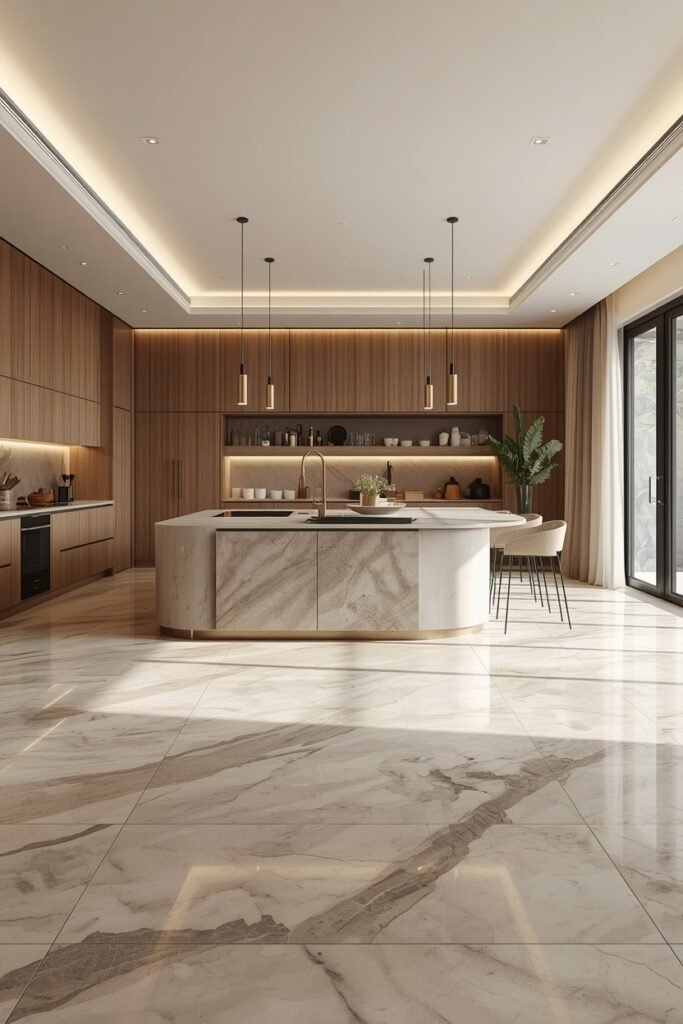
A few small choices make a big difference in how premium your finished floor looks. Sticking to a large-format tile, minimizing color variation, and choosing a matte finish over an overly shiny one all read as more sophisticated and intentional, rather than budget-driven.
Extending your tile beyond just the floor, whether that’s up a wall or across a connected space, also signals a more custom, high-end design. This kind of continuity is one of the simplest ways to make even affordable tile feel like a designer choice.
Frequently Asked Questions
Which Kitchen Tile Design Makes a Kitchen Look Expensive?
Large-format tile with subtle or minimal veining, paired with a matte finish and thin grout lines, tends to create the most expensive-looking result. Extending the tile beyond the backsplash also reinforces that premium, custom feel.
Are Patterned Tiles Suitable for Kitchen Floors?
Yes, patterned tile works beautifully on kitchen floors, especially in smaller doses like an entryway accent or a border. For a full-floor application, sticking to a simpler two-tone pattern helps avoid visual overwhelm.
Can Small Kitchens Benefit from Floor-to-Wall Tile Continuity?
Absolutely. Removing the visual break between floor and wall tile helps a compact kitchen feel noticeably more spacious, since the eye reads the space as one continuous surface rather than several separated zones.
Are Mosaic Tiles Practical for Kitchens?
Mosaic tile holds up well in kitchens, though the increased number of grout lines does mean slightly more maintenance compared to large-format tile. It’s a great option for accents, but full-floor mosaic installations require a bit more upkeep.
What Tile Colors Work Best for a Premium-Looking Kitchen?
Neutral tones like white, cream, warm gray, and soft beige consistently read as more premium than bold or saturated colors. These shades also age better over time, keeping your kitchen looking current for longer.
Should Kitchen Tiles Match the Cabinets?
Tiles don’t need to match cabinets exactly, but they should complement the overall color temperature of the space. Warm-toned cabinets typically pair well with warm-toned tile, while cool-toned cabinets suit cooler tile shades.
How Do I Choose the Right Kitchen Floor Tile?
Start by considering your household’s daily wear and tear, your budget, and the overall style you’re chasing. From there, narrow down material (porcelain, ceramic, stone, or vinyl) before settling on a specific pattern or color.
Final Thoughts on Kitchen Floor Tile Ideas
From elegant marble tile to playful hex checks, your kitchen flooring choice sets the tone for the entire room. Whether you’re drawn to the durability of porcelain tile, the warmth of wood-look porcelain, or the old-world charm of Versailles pattern tile, there’s a style here to match every taste and budget. Take your time exploring materials and patterns, and don’t be afraid to mix finishes or extend your tile beyond the floor for a truly custom, high-end look.