
15 Bedroom Curtain Ideas That Upgrade Sleep (2026)
Bedroom curtain ideas have a harder job than curtains anywhere else in the house: they need to look beautiful in daylight and disappear into darkness at night. The wrong bedroom curtains leak streetlight at 2 a.m. or make a small room feel boxed in; the right ones give you hotel-level sleep and a finished, intentional window. These 15 ideas cover the full bedroom window playbook — blackout versus sheer layering, how high to hang, which fabrics actually help you sleep, and tricks for small bedrooms — with honest prices on every idea.
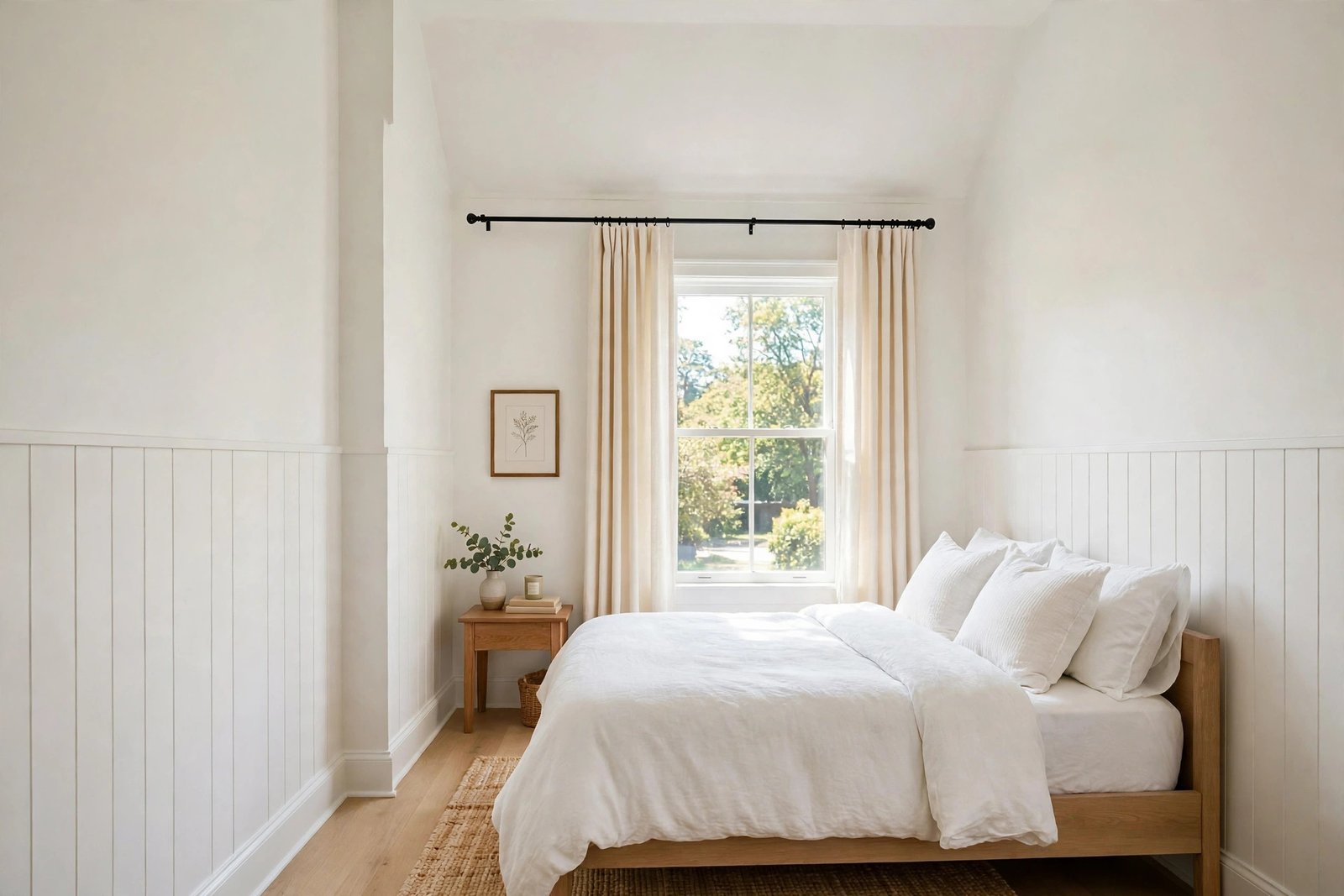
Key Takeaways
- Layer sheers + blackout on a double rod for the best of both worlds: soft daylight privacy and true darkness at night.
- Hang curtains 4–6 inches above the frame (or at the ceiling) and 8–12 inches wider than the window — small windows instantly look bigger.
- For real darkness, the lining matters more than the fabric: look for triple-weave blackout or add-on blackout lining.
- Linen and cotton breathe; velvet and thermal insulate — match fabric to your sleep temperature, not just the look.
- In small bedrooms, match curtain color to the wall so the window wall reads as one calm surface.
- Length rule: panels should kiss the floor or puddle slightly — floating an inch above the floor looks unfinished in a bedroom.
1. Layer Sheers + Blackout on a Double Rod
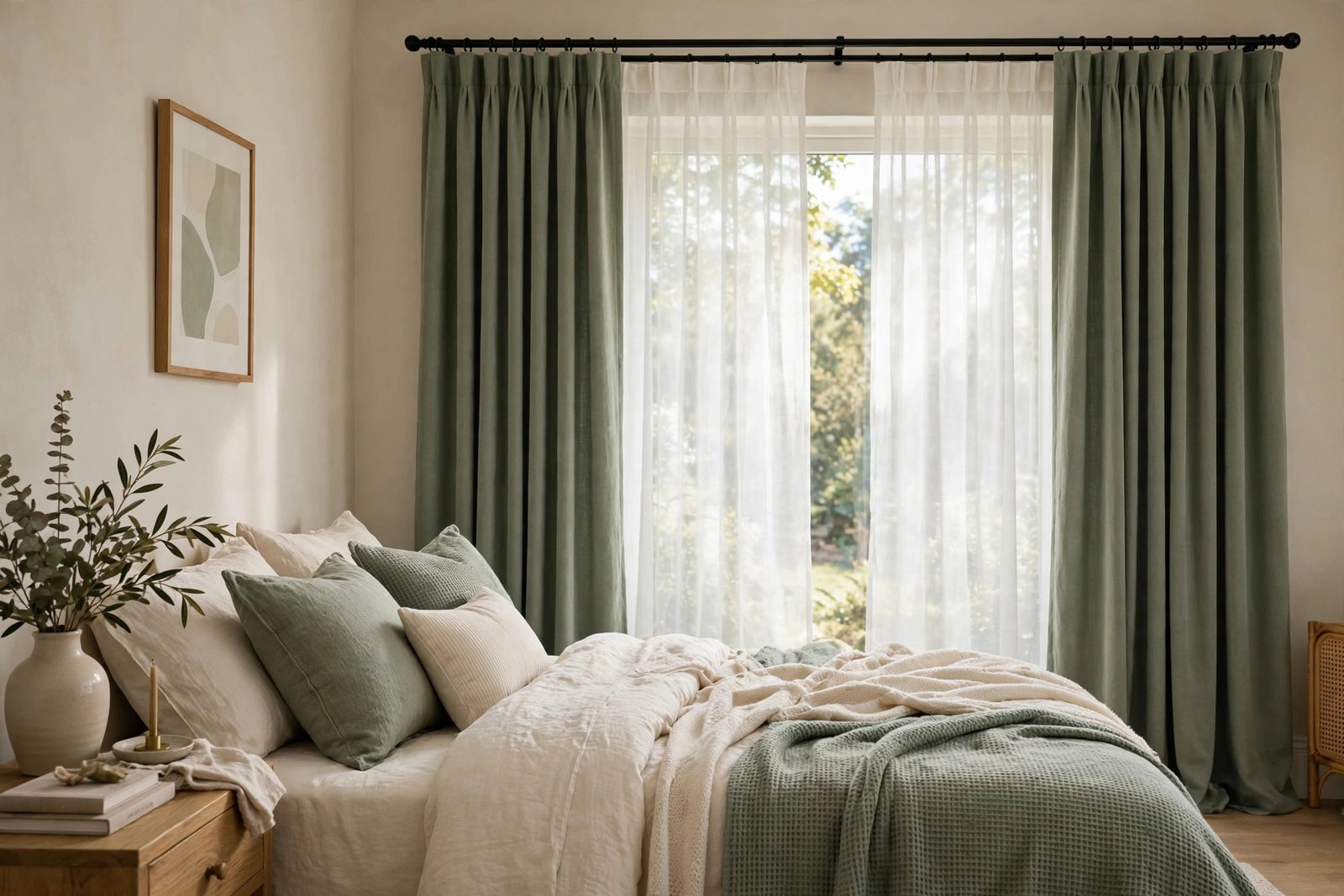
The single best bedroom curtain setup is a double rod: airy sheers closest to the glass for daytime privacy and soft light, plus full blackout panels in front for night. By day you get filtered glow without exposing the room; at night you pull the blackouts shut for genuine darkness. Choose the sheer in white or ivory and the blackout in a color that coordinates with your bedding so the layers read as one designed treatment. Tip: mount the blackout brackets 2 inches farther from the wall than the sheer brackets so the layers never fight. Price range: $40–$120 for a double rod set; panels $25–$80 per pair per layer.
2. Hang Them High: The 4–6 Inch Rule
Mounting the rod 4–6 inches above the window frame — or all the way at the ceiling in rooms with 8-foot ceilings — makes the window look taller and the whole bedroom feel grander. The eye reads the curtain’s top line, not the window’s, so a high rod visually stretches the wall. In my experience, this one change does more for a small bedroom than any new furniture. Pair it with panels long enough to reach the floor from the higher rod (usually 96 inches for standard rooms), and suddenly a basic rental window looks custom. Price range: free if you rehang existing curtains; longer panels run $30–$90 per pair.
3. Choose Linen for Soft, Sleep-Friendly Light
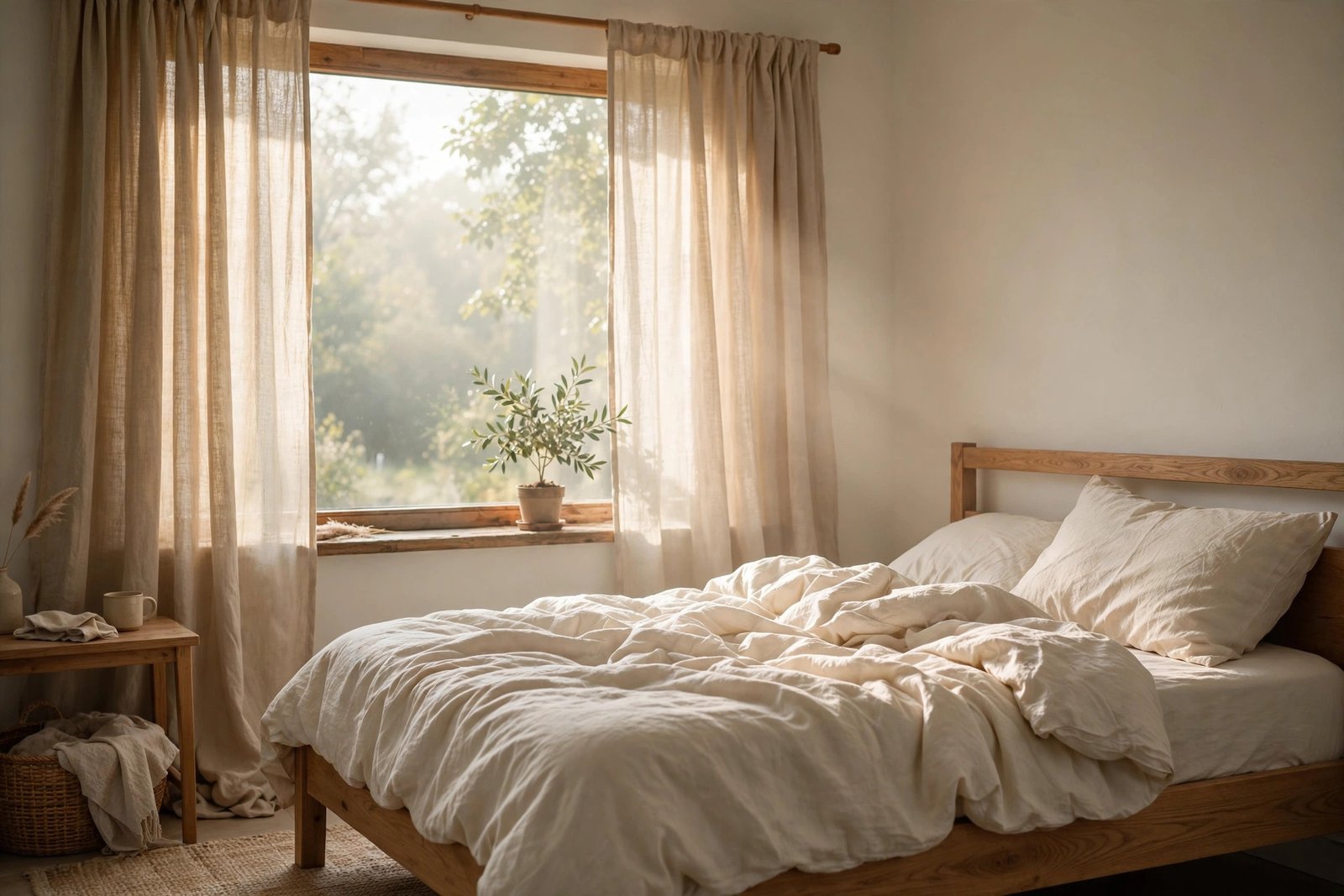
Linen curtains filter daylight into a soft, diffused glow that flatters a bedroom without the cave-darkness of blackout — ideal if you wake naturally with light or your bedroom faces a garden, not a streetlamp. The relaxed wrinkles are the point: linen looks better slightly rumpled, which suits a bedroom’s easy mood. Look for a medium-weight linen or linen blend; tissue-thin linen gapes and lets in more light than you’d expect. Washable and long-lasting, linen also softens with every wash. Price range: $40–$110 per pair; blends cost less than 100% European flax.
4. Pick the Right Blackout: Triple-Weave Beats Coating
Not all blackout curtains actually black out. Triple-weave fabric — three layers woven together — blocks light without the stiff, plasticky feel of foam-backed coatings, and it drapes like a normal curtain. Foam coatings work but can crack and flake after a few washes, and they off-gas a smell some sleepers notice. When shopping, hold the panel up to a store light: if you see pinpricks of light, streetlamps will find them at midnight. For shift workers and light sleepers, triple-weave is worth the premium. Price range: $35–$90 per pair for triple-weave; coated versions run $20–$50.
5. Nail the Length: Kiss, Break, or Puddle
Bedroom curtain length changes the room’s formality: panels that just kiss the floor look tailored and modern; a 1-inch “break” (slight bend at the floor) reads relaxed; a 2–3 inch puddle feels romantic and luxe but collects dust and pet hair. For most bedrooms, kissing the floor is the sweet spot — elegant without the upkeep. The one length to avoid is floating an inch or two above the floor, which reads as “ordered the wrong size” rather than intentional. Measure from your rod to the floor after the rod is mounted, not before. Price range: standard 84/96-inch panels $25–$80 per pair; puddling needs the next length up.
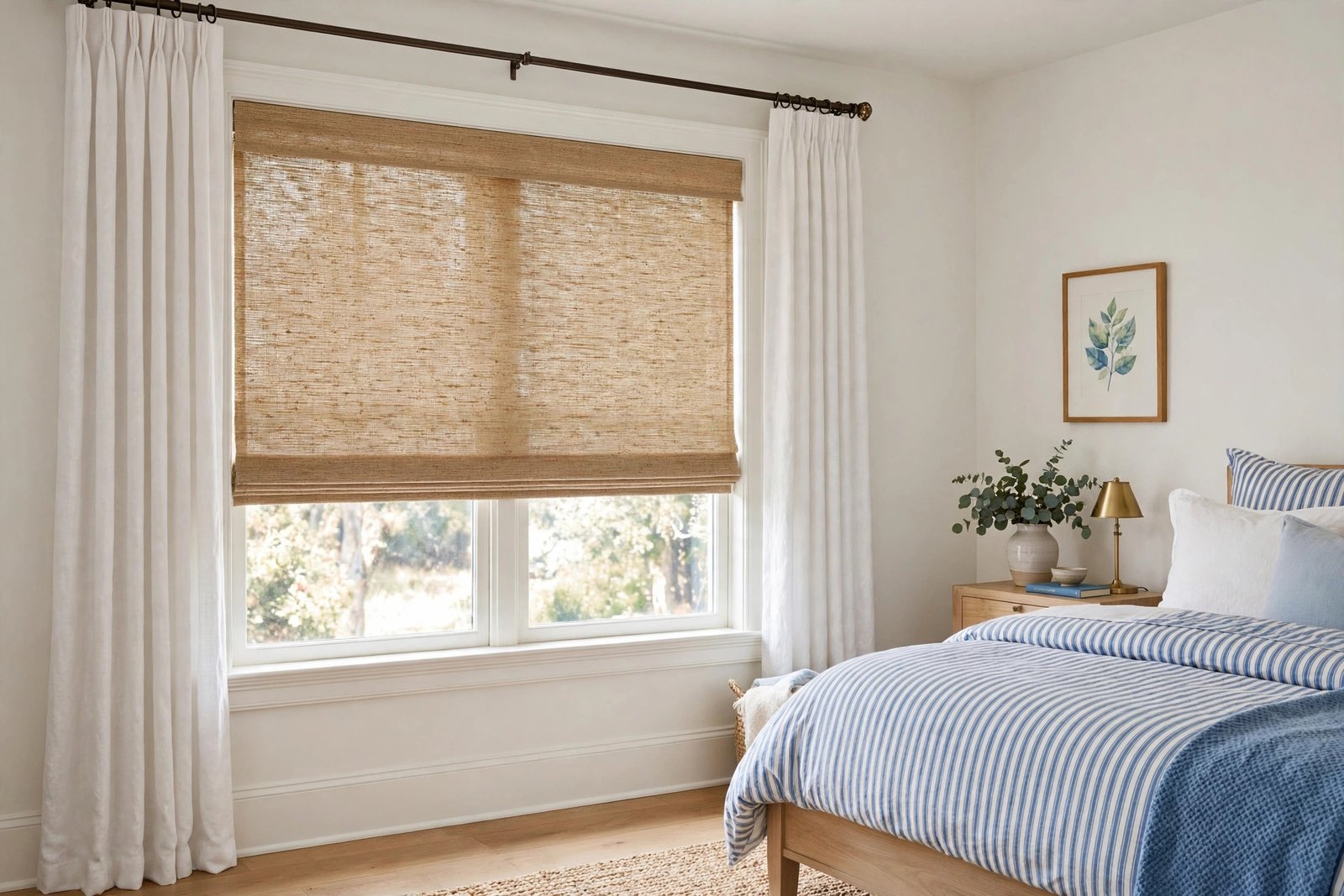
6. Layer Roman Shades Under Curtain Panels
A flat Roman shade mounted inside the window frame plus curtain panels on the sides gives you three light levels: shade down for privacy, panels drawn for darkness, both open for full view. This combo shines in bedrooms where you want a tailored daytime look — the shade’s crisp lines keep linen or cotton panels from feeling sloppy. Choose the shade in a blackout or light-filtering fabric depending on your sleep needs, and keep panels in a coordinating solid so the window doesn’t get busy. Price range: $30–$80 per shade; panels $25–$70 per pair.
7. Try Thermal Curtains for Cold Bedrooms
If your bedroom sits over a garage, faces north, or has drafty old windows, thermal curtains with an insulating interlining cut the chill noticeably — some manufacturers claim up to 25% less heat loss at the window. They hang heavier than standard curtains, so use a sturdy rod with center support brackets and rings or grommets that glide easily. The bonus for sleepers: thermal curtains are inherently light-blocking, so you get warmth and darkness in one panel. Pick a color close to your bedding to keep the heavier fabric from dominating the room. Price range: $40–$100 per pair.
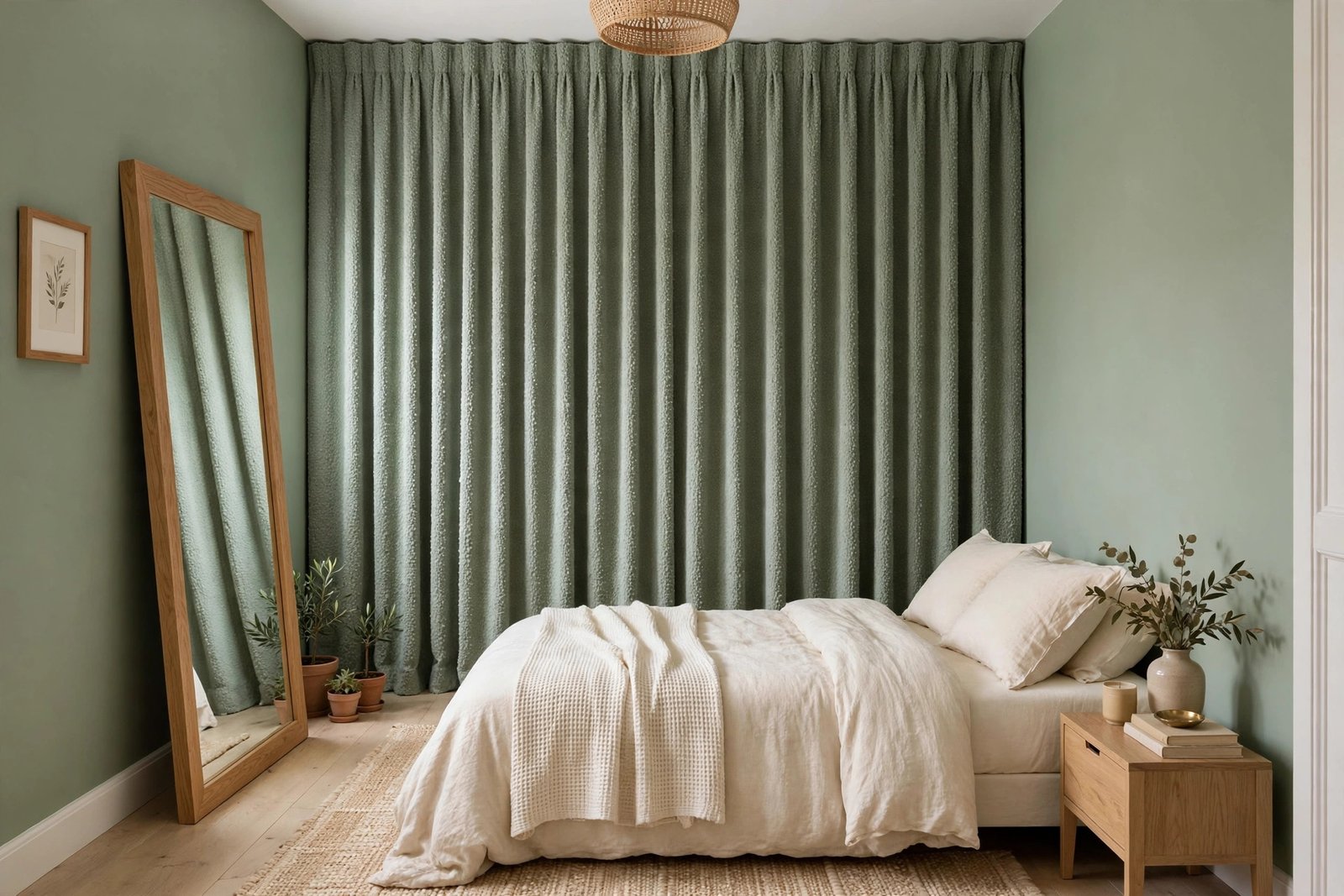
8. Match Curtains to the Wall Color in Small Bedrooms
In a small bedroom, curtains in a contrasting color chop the wall into visual pieces and make the room feel smaller. Matching the curtain color closely to the wall paint lets the window wall read as one continuous, calm surface — the room instantly feels bigger. This doesn’t mean boring: add interest with texture instead of color, like a nubby linen weave or a subtle tone-on-tone stripe. White curtains on white walls is the classic version, but the trick works with sage on sage, greige on greige, and navy on navy. Price range: same as any panels, $25–$90 per pair — this is a color choice, not a budget one.
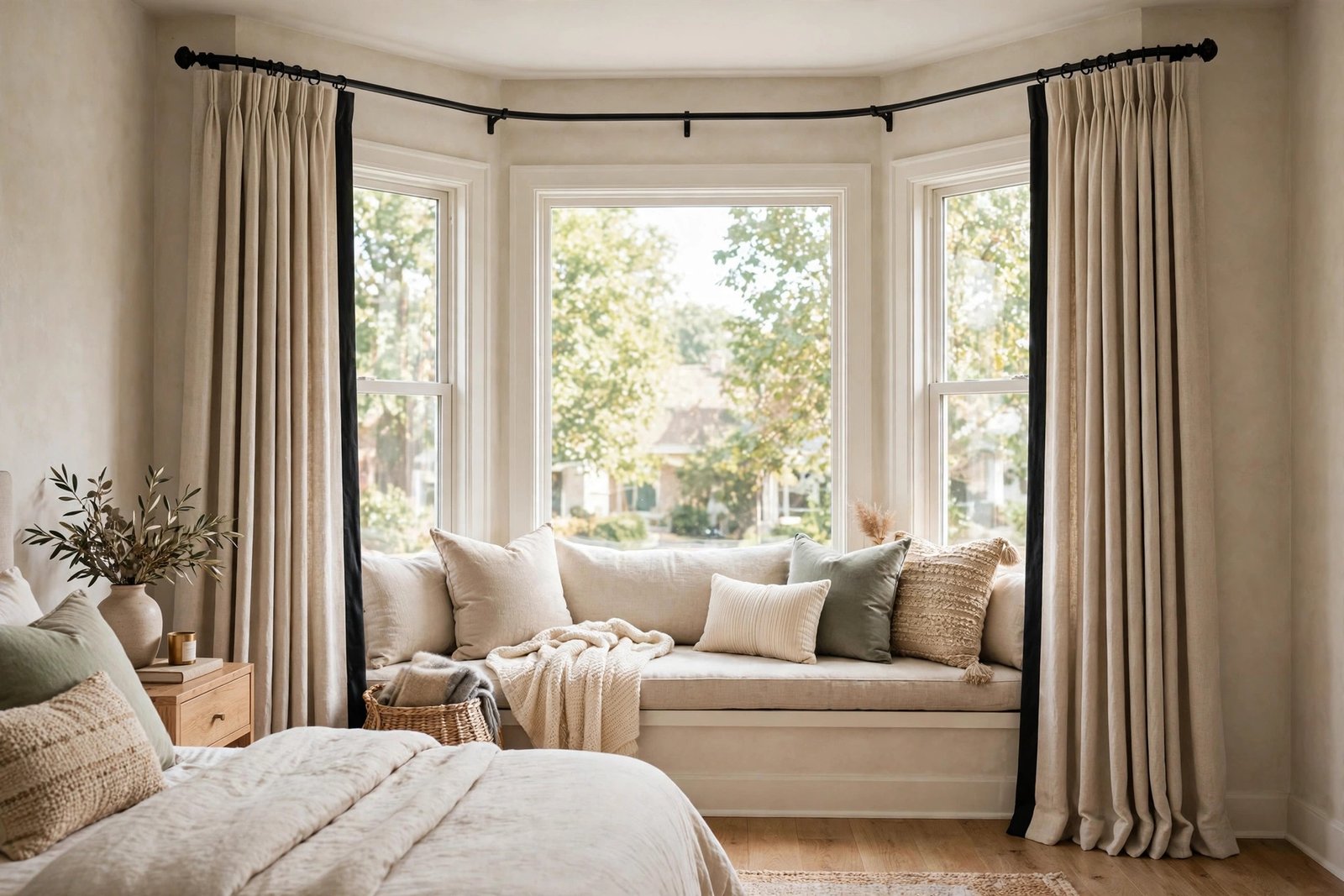
9. Dress a Bay Window With One Long Rod
Bedroom bay windows look best with a single continuous rod following the bay’s angles (use corner connectors) rather than three separate rods with gaps. One unbroken curtain line makes the bay feel like an architectural feature instead of three awkward windows. Hang the rod at ceiling height across the whole bay and use four to six panels so the curtains stack back neatly at each end without covering the glass. If you sleep facing the bay, add blackout lining — bay windows leak surprising amounts of dawn light at the angles. Price range: $50–$130 for a bay rod with connectors; panels $60–$160 for the set.
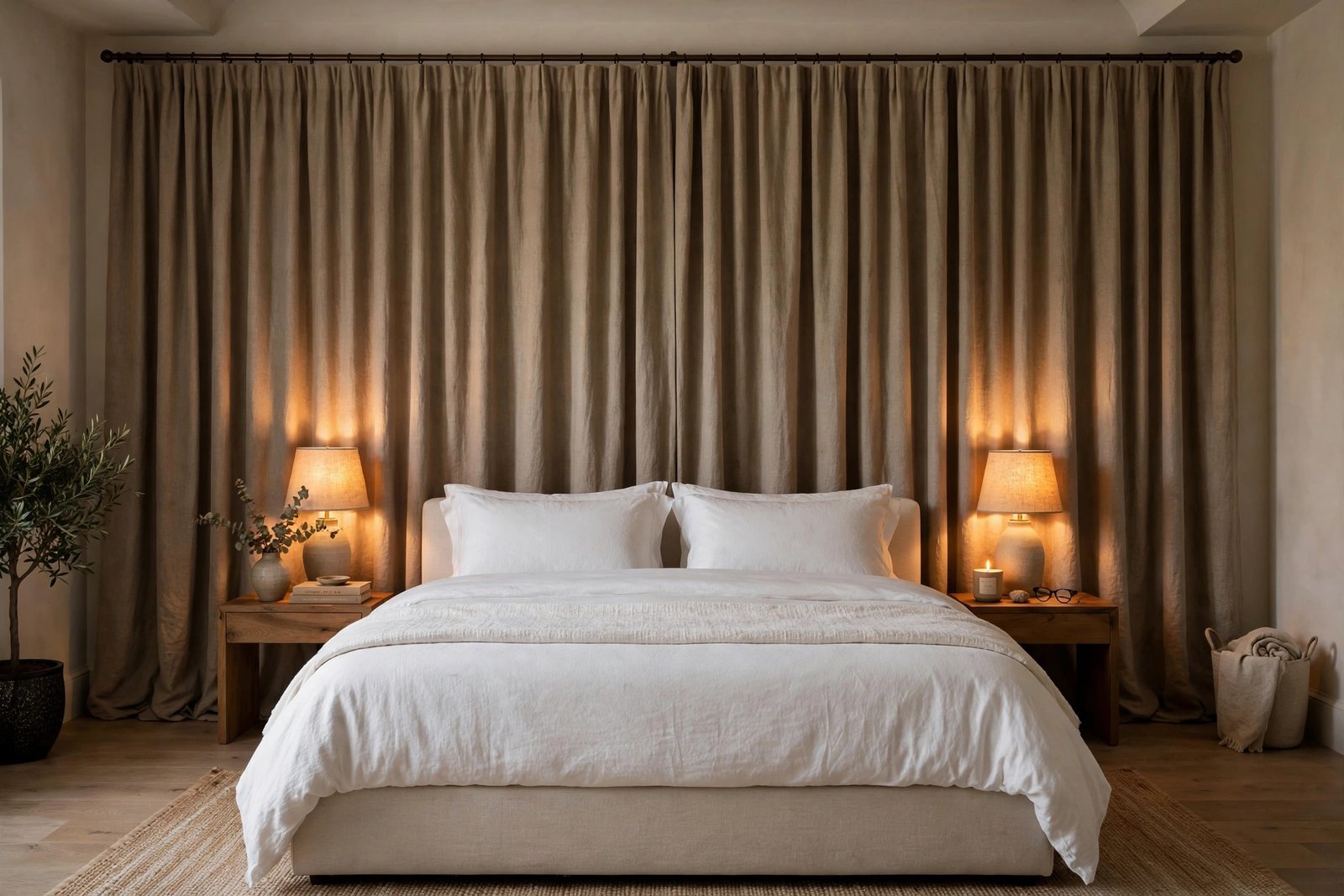
10. Run Curtains Behind the Headboard as an Accent Wall
Floor-to-ceiling curtains hung on the wall behind the bed — even with no window there — create a soft, upholstered accent wall for a fraction of a headboard’s price. Use a ceiling-mounted track or a long rod spanning 8–12 inches beyond the bed on each side, and choose a fabric with presence: velvet, heavy linen, or a subtle pattern. In my experience, this trick rescues bedrooms with awkwardly placed windows too — the curtain wall unifies everything behind the bed. Keep bedding simple so the fabric wall stays the star. Price range: $60–$150 for rod/track plus $50–$120 for panels.
11. Go Full Blackout for Shift Work and Light Sleep
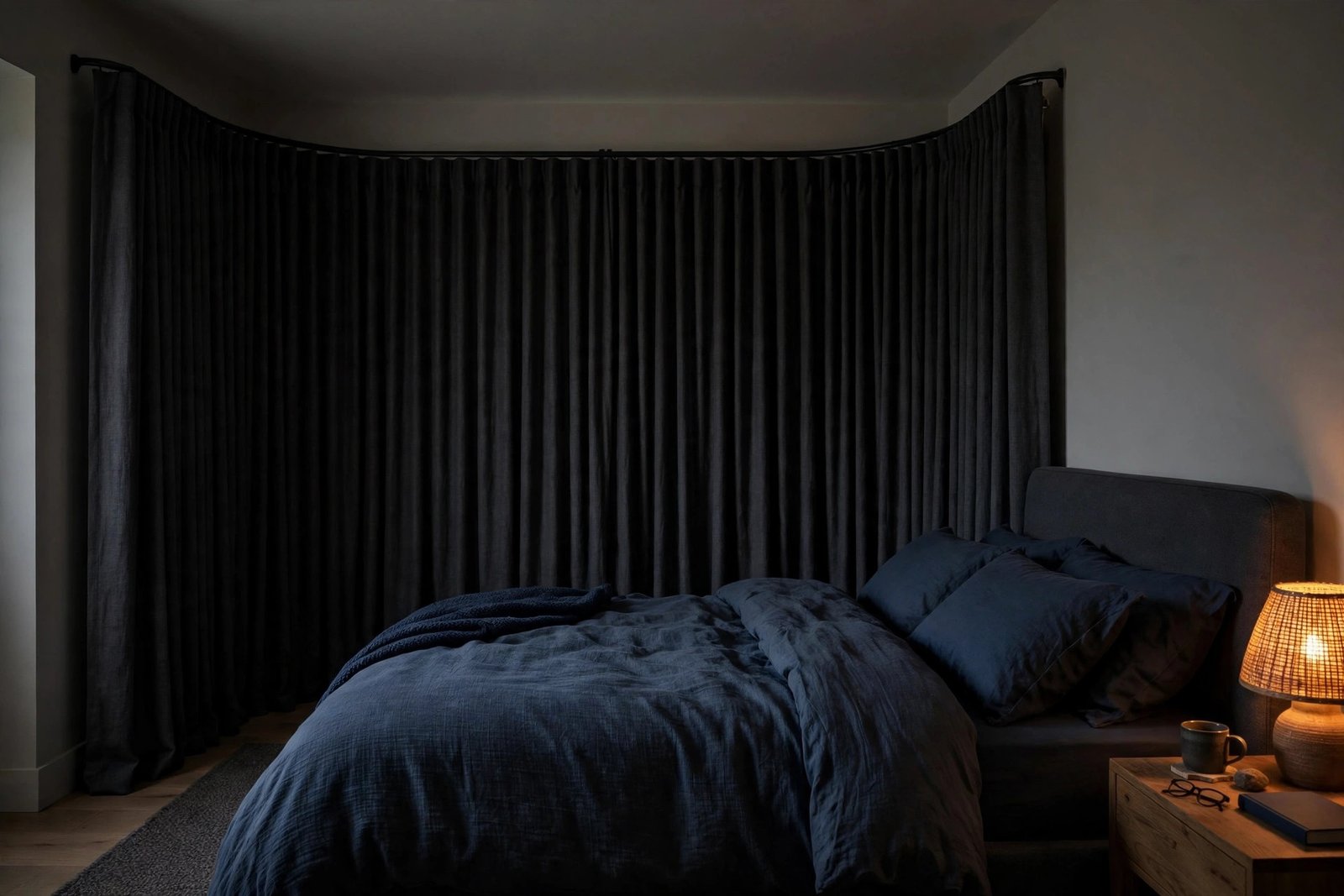
If you sleep during the day or wake at the slightest glow, commit to true blackout: triple-weave panels, a wraparound rod that curves back to the wall at each end, and panels wide enough to overlap in the middle by 4–6 inches. The wraparound rod is the secret weapon — most light leaks in at the sides, not through the fabric. Add a blackout roller shade inside the frame behind the curtains for a near-total seal. It won’t be pretty at noon, but your bedroom will feel like midnight at 2 p.m. — exactly the point. Price range: $50–$110 for wraparound rod + panels; add $25–$60 for the roller shade.
12. Pick Subtle Patterns That Don’t Fight Sleep
Bedroom curtains can carry pattern — they just shouldn’t shout. Small-scale geometrics, tone-on-tone stripes, and soft botanicals add interest without the visual noise that keeps a restless mind awake. The rule: if the pattern reads clearly from the doorway, it’s too bold for a sleep space; if you have to walk closer to see it, it’s perfect. Keep the bedding mostly solid when curtains carry the pattern, or flip it — patterned bedding means solid curtains. One patterned element per bedroom is the calm limit. Price range: $30–$95 per pair; patterned panels cost about the same as solids.
13. Use Inside-Mount Shades for a Renter-Friendly Blackout
Renters who can’t drill for a curtain rod can still get bedroom darkness: inside-mount blackout roller or cellular shades fit within the window frame using tension or adhesive brackets, with zero wall damage. They disappear by day and seal light by night, and they pair beautifully with a tension rod + lightweight curtains if you want the soft look too. Measure the inside of the frame in three places and order to the smallest width — frames are rarely perfectly square. This is the cleanest fix for rental bedrooms with street-facing windows. Price range: $25–$70 per window for blackout cellular or roller shades.
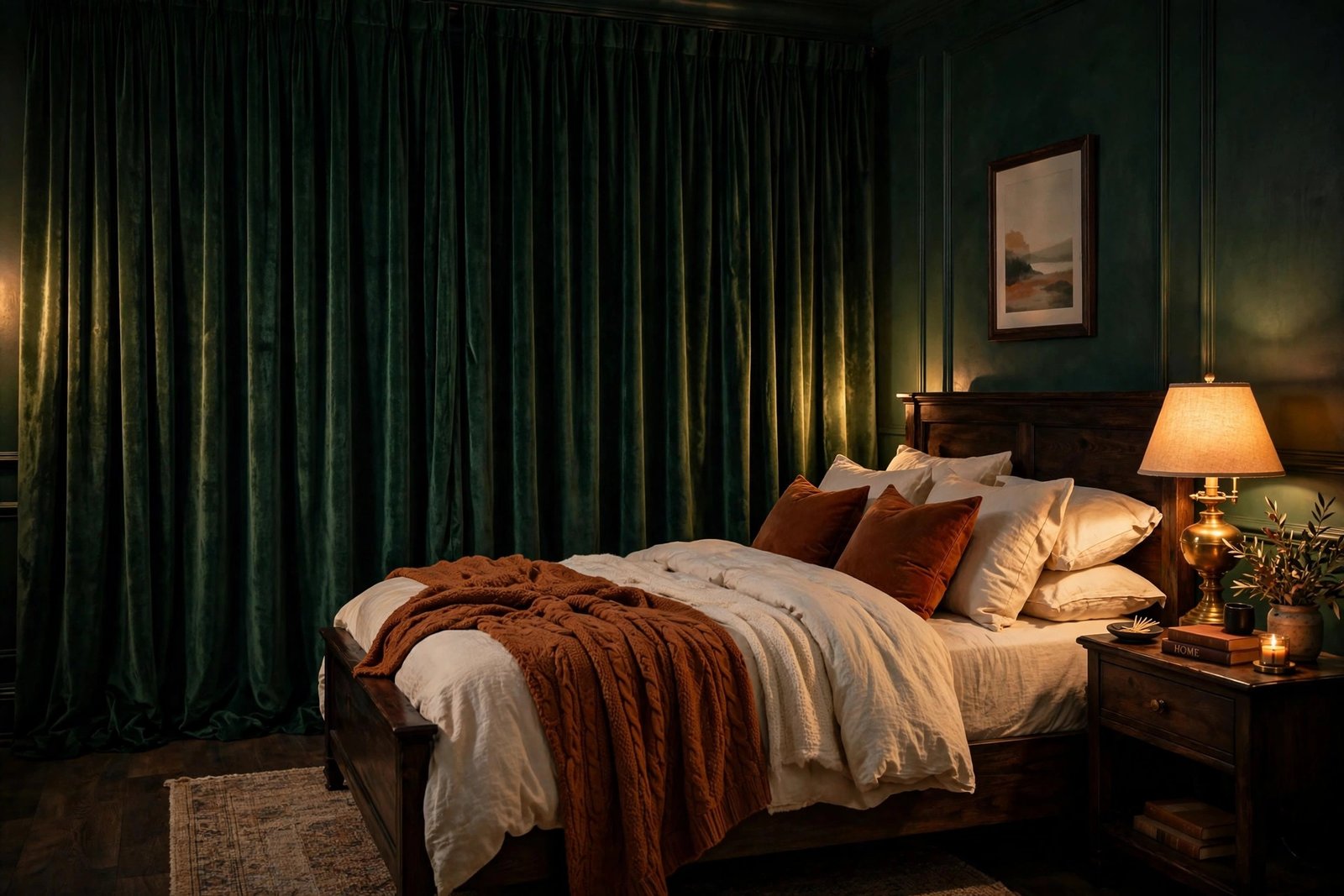
14. Choose Velvet for a Moody, Light-Swallowing Bedroom
Velvet curtains do three bedroom jobs at once: they block light impressively, muffle sound, and add the kind of rich texture that makes a bedroom feel expensive. A deep jewel tone — emerald, sapphire, oxblood — turns an ordinary bedroom dramatic, while warm neutrals like caramel or mushroom keep the mood soft. Velvet is heavy, so invest in a sturdy rod with center supports and let the panels hang for a few days before judging the drape. Tip: crush-velvet hides wrinkles; smooth cotton-velvet shows every fold, so choose based on your ironing tolerance. Price range: $50–$130 per pair.
15. Keep Sheers Only If You’re a Morning Person
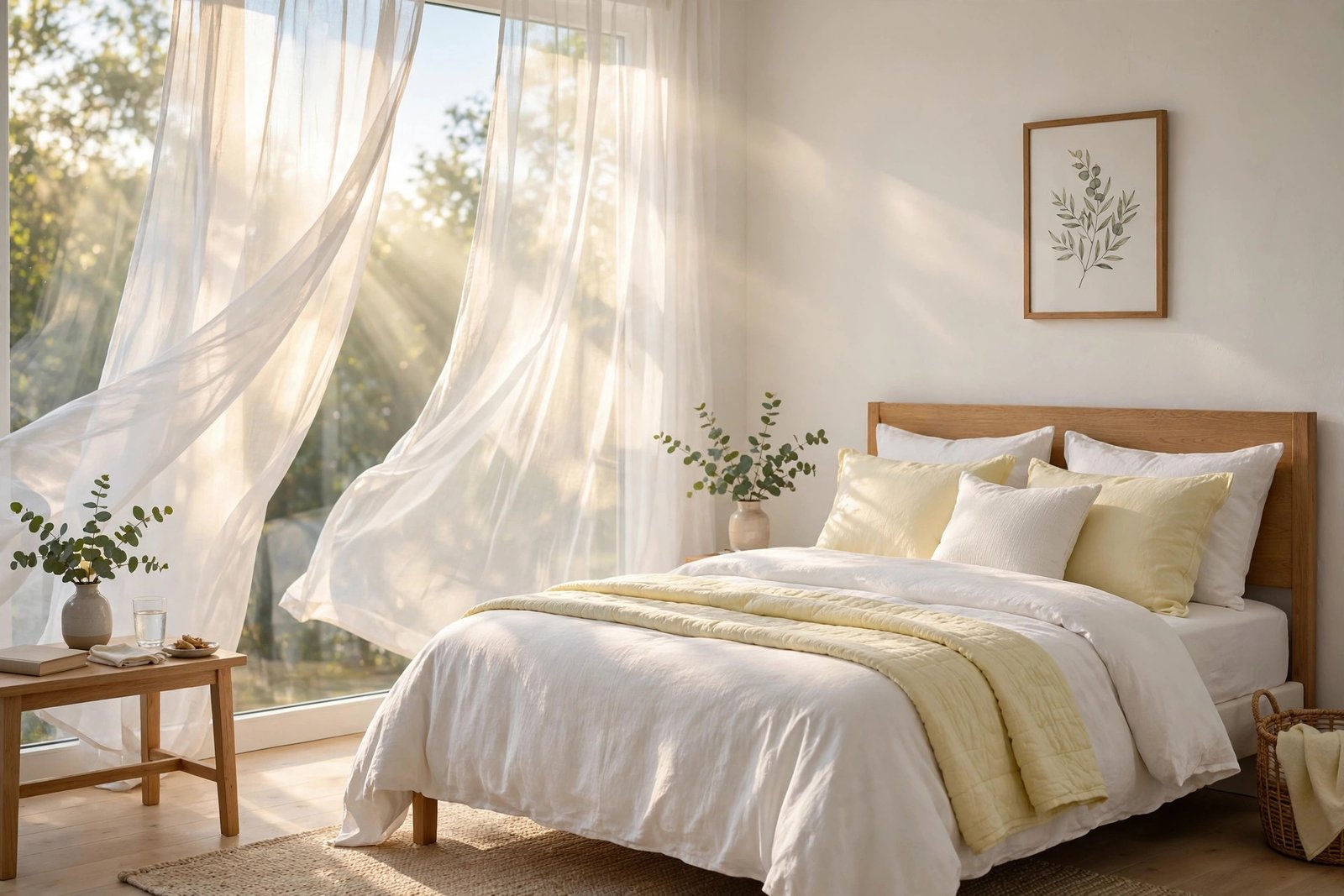
Some bedrooms don’t need darkness at all — east-facing rooms where you genuinely want to wake with the sun. In that case, skip blackout entirely and style the window with sheers alone: double up two sheer panels per side for extra fullness, and let them puddle slightly for softness. The room stays bright, airy, and honest about the morning. Just be realistic about streetlights and neighbors before committing; sheers give you zero privacy after dark, so this works best above the ground floor or with a shade for evenings. Price range: $20–$50 per pair — the budget-friendliest idea on this list.
Frequently Asked Questions
Should bedroom curtains be blackout or sheer?
It depends on how you sleep. Light sleepers, shift workers, and street-facing bedrooms need blackout — ideally triple-weave panels on a wraparound rod. Morning people in quiet, dark neighborhoods can live happily with sheers alone. The best compromise for most sleepers is layering: sheers on a double rod for day, blackout panels for night.
How high should I hang curtains in a bedroom?
Mount the rod 4–6 inches above the window frame, or at ceiling height in rooms with 8-foot ceilings. Higher mounting makes windows look taller and the bedroom feel grander. Extend the rod 8–12 inches beyond each side of the frame so stacked-open panels don’t cover the glass and block daylight.
What length should bedroom curtains be?
Bedroom panels should just kiss the floor for a tailored look, or puddle 2–3 inches for a romantic feel. Avoid panels that hover an inch above the floor — it looks like a measuring mistake. Always measure from the mounted rod to the floor, and buy the next length up (usually 96 inches) when hanging rods high.
How can curtains make a small bedroom look bigger?
Hang the rod at ceiling height and 8–12 inches wider than the window, choose full-length panels, and match the curtain color to the wall paint so the window wall reads as one surface. Sheers keep things airy by day. Avoid heavy contrasting colors that chop a small wall into pieces.
Sleep Starts at the Window
Bedroom curtains are a sleep tool disguised as decor — get light control right first, then let fabric, color, and hang do the styling. The formula: hang high, cover wide, match fabric to how you sleep. Bedroom sliding door? That’s its own problem — see our curtains for sliding glass doors guide.
Related posts you may like:
- 18 Renter Friendly Living Room Ideas for Small Rentals
- 15 DIY Window Seat With Storage Ideas
- Living & Bedroom Ideas




2 Comments