
17 Mid Century Modern Bedroom Ideas With Warm Style (2026)
Some bedrooms feel stuck between bland and cluttered, and no amount of tidying fixes them. These mid century modern bedroom ideas solve that problem with a simple system: warm walnut wood, clean lines, tapered legs, and a few sculptural shapes that earn their floor space.
You do not need a vintage dealer budget to pull it off. In my experience, half the looks in this list can be built from thrifted finds and smart swaps, and every idea below carries an honest price so you can plan the room before you spend anything.
Start with the biggest pieces, then layer in color, texture, and light, one idea at a time.
Key Takeaways
- Walnut and teak tones are the MCM foundation: one or two wood pieces set the whole palette.
- Tapered legs (on beds, dressers, nightstands) are the fastest visual signal of the style.
- Warm accents like mustard, rust, teal, and cognac leather keep MCM from feeling cold or museum-like.
- Thrift stores are the best MCM source: solid-wood dressers and credenzas run $40 to $150.
- One statement light fixture (sputnik or arc) does more than five small accessories.
- Scale matters: in small bedrooms, choose low-profile silhouettes with visible legs so the floor shows through.
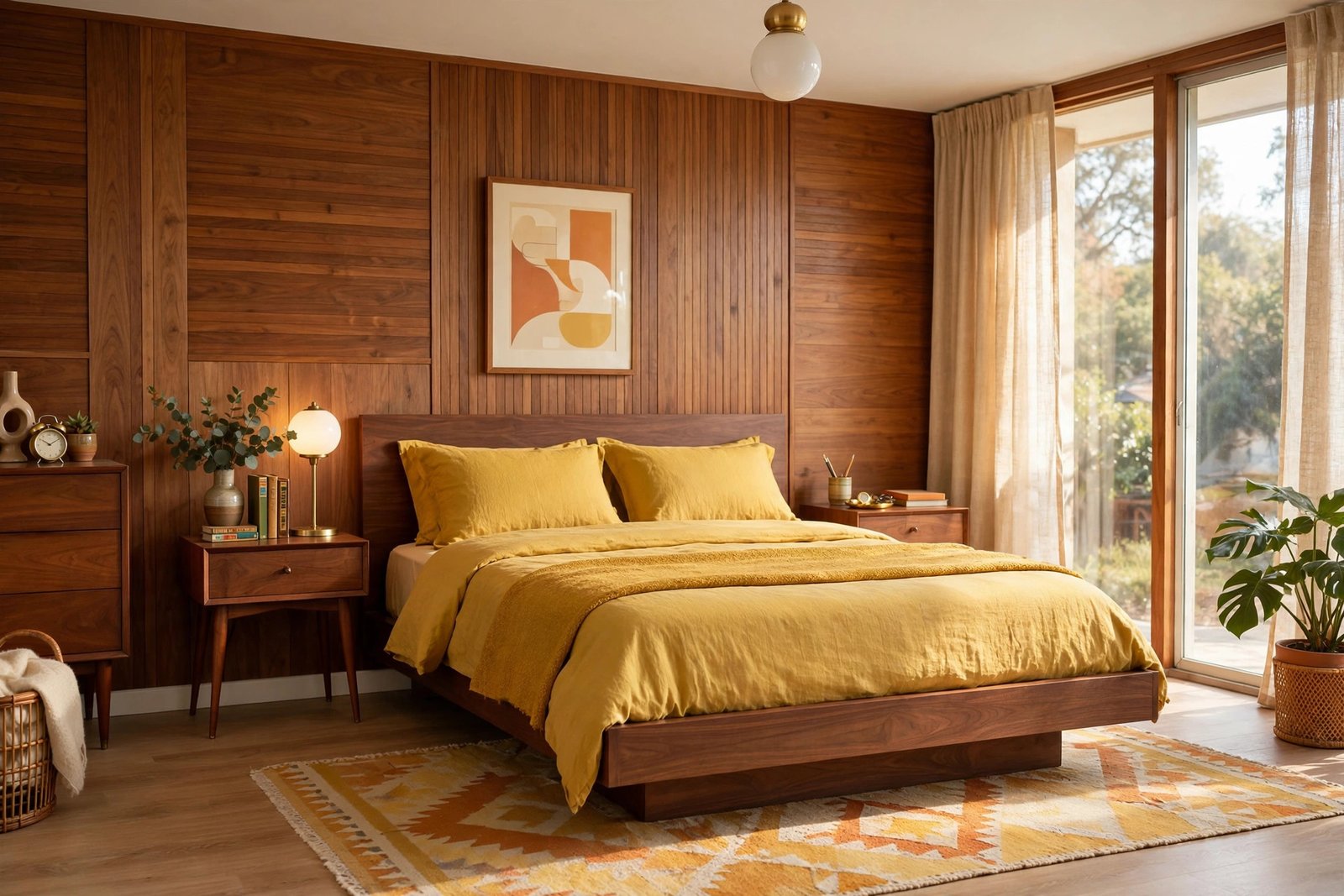
1. Low Walnut Platform Bed
Start with the bed, because everything else in the room takes its cue from it. A low platform frame in walnut or a walnut-look finish sets the relaxed, tailored posture this style is known for, and the low profile makes standard ceilings feel taller. Choose a plain rectangular headboard with legs that taper slightly outward.
Skip the box spring and use a bunkie board so the mattress sits at the right low height. Expect $250 to $600 new from retailers like Article or West Elm, or $80 to $200 for a solid wood vintage frame found secondhand.
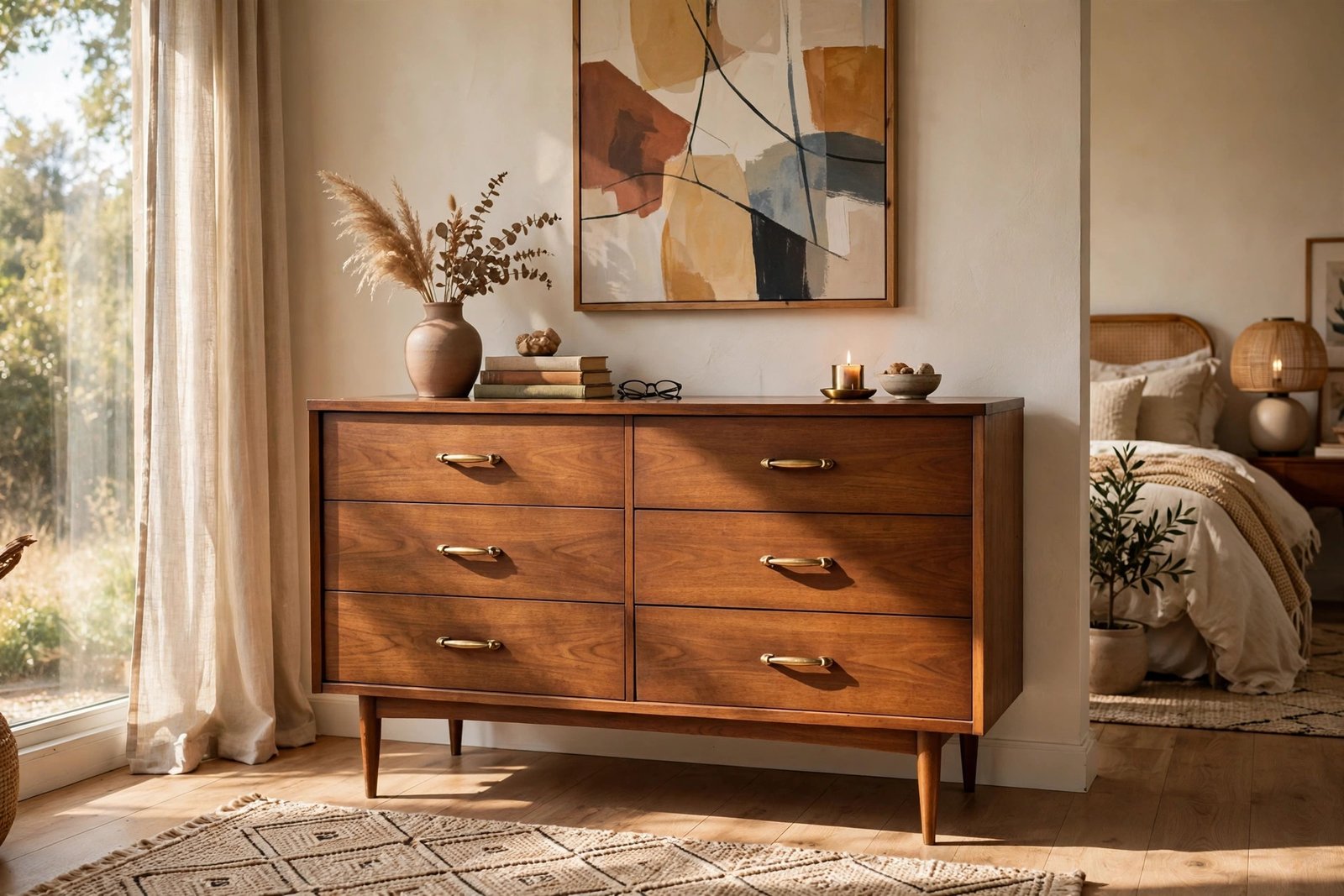
2. Tapered-Leg Dresser
- Six drawers with tapered legs and clean, flat fronts: this is the most recognizable silhouette in the whole style.
- Vintage pieces from the 1960s are solid wood with dovetailed drawers that glide better than most new furniture at the same price.
- Before buying secondhand, pull every drawer and check that the leg joints feel tight.
- Budget $150 to $400 for vintage, or $300 to $700 for a new reproduction.
If you buy only one authentic-feeling piece for the room, make it this dresser. It anchors the wall opposite the bed, gives you real storage, and quietly announces the era before a single accessory goes on top. In my experience, it is also the piece guests ask about most often.
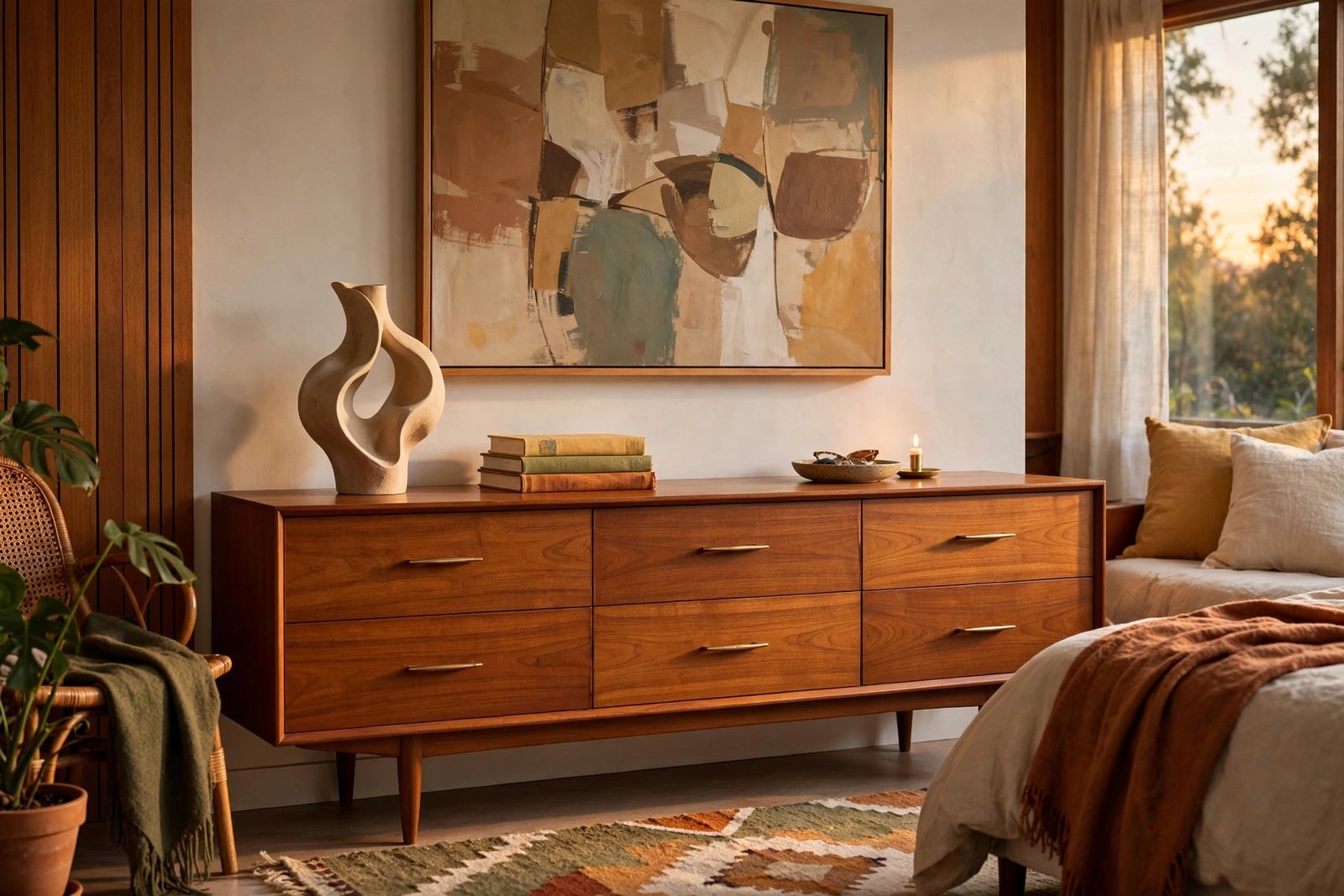
3. Teak Credenza Dresser
Quick Tip: Style the top in threes: one large piece of art above, a lamp on one end, and a sculptural object on the other. Sliding doors hide clutter best, while drawer versions organize small clothing better.
A long, low credenza used as a dresser gives you a styling surface a tall dresser never could, and it stretches the room visually. Budget $200 to $600 for vintage teak or $400 to $900 new. It also moonlights as a TV stand without looking like one, especially with cable channels run behind it.
4. Starburst Mirror or Clock
Common Mistake: Hanging two or three starbursts in the same room. The radiating sunburst shape is the era’s unofficial logo, and repeating it turns a statement into a theme.
The Fix: Choose one starburst per room, either a mirror above the dresser or a clock on an empty wall, and let it stand alone. Brass and walnut finishes read warmest against cream walls.
Few single purchases change a room this cheaply. A starburst adds era authenticity for $30 to $90, needs one nail, and takes five minutes to hang. It is the least expensive idea in this whole list, yet it is the one visitors comment on most when they walk in.

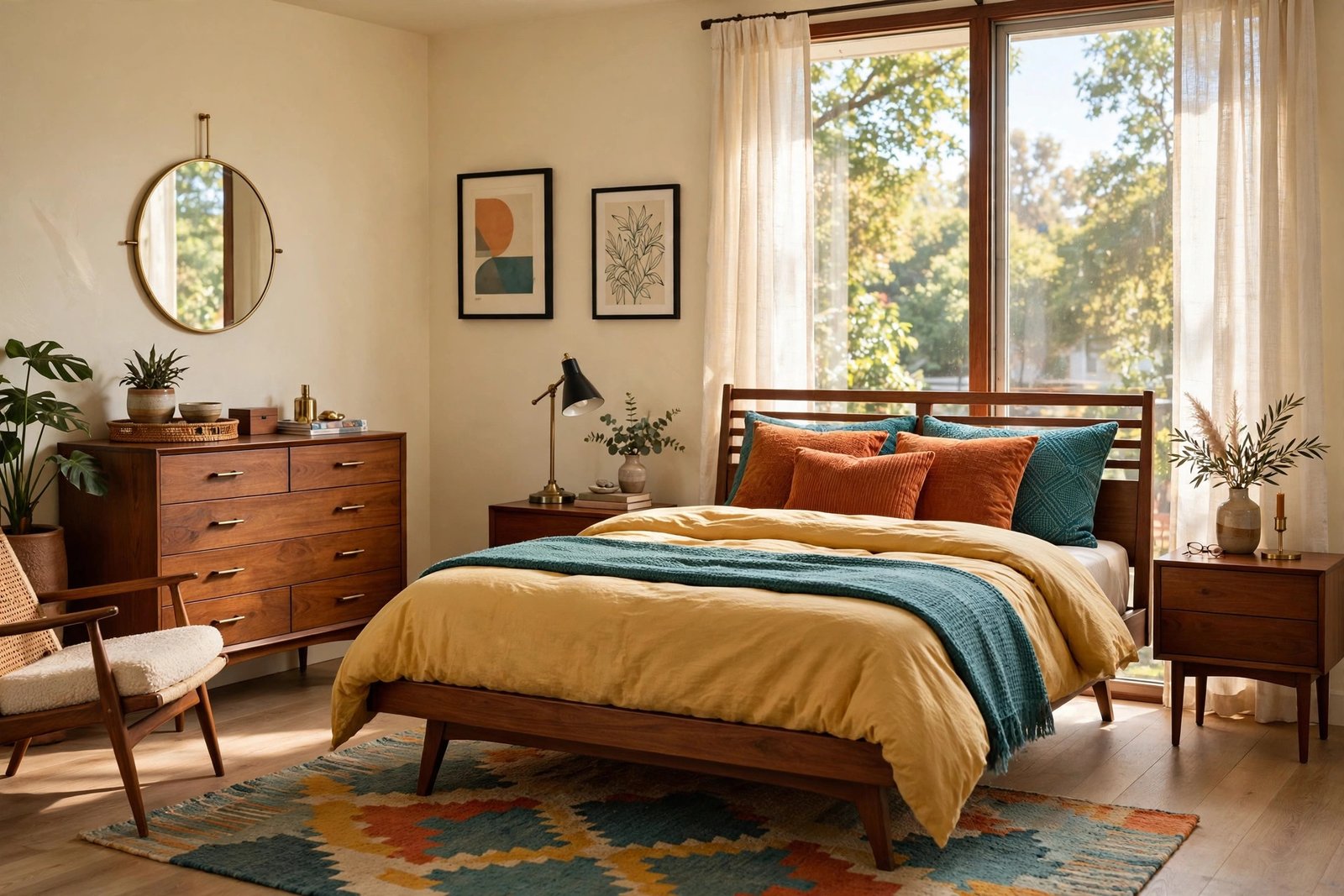
5. Mustard, Teal, Rust Palette
What You Need:
- A neutral base covering about 60 percent of the room: cream or warm white walls plus natural wood tones.
- One main accent at roughly 30 percent, usually mustard or teal, carried by bedding and one piece of art.
- A second punch near 10 percent, such as rust or black, in a throw or cushions.
- Textiles you can swap easily, so color never gets locked in through wall paint.
The palette is warm and earthy, and the 60-30-10 split keeps it balanced instead of loud. A full textile refresh costs $80 to $200. If your walls are already gray, mustard and teal warm them up more reliably than any other pairing I have tried in this style.
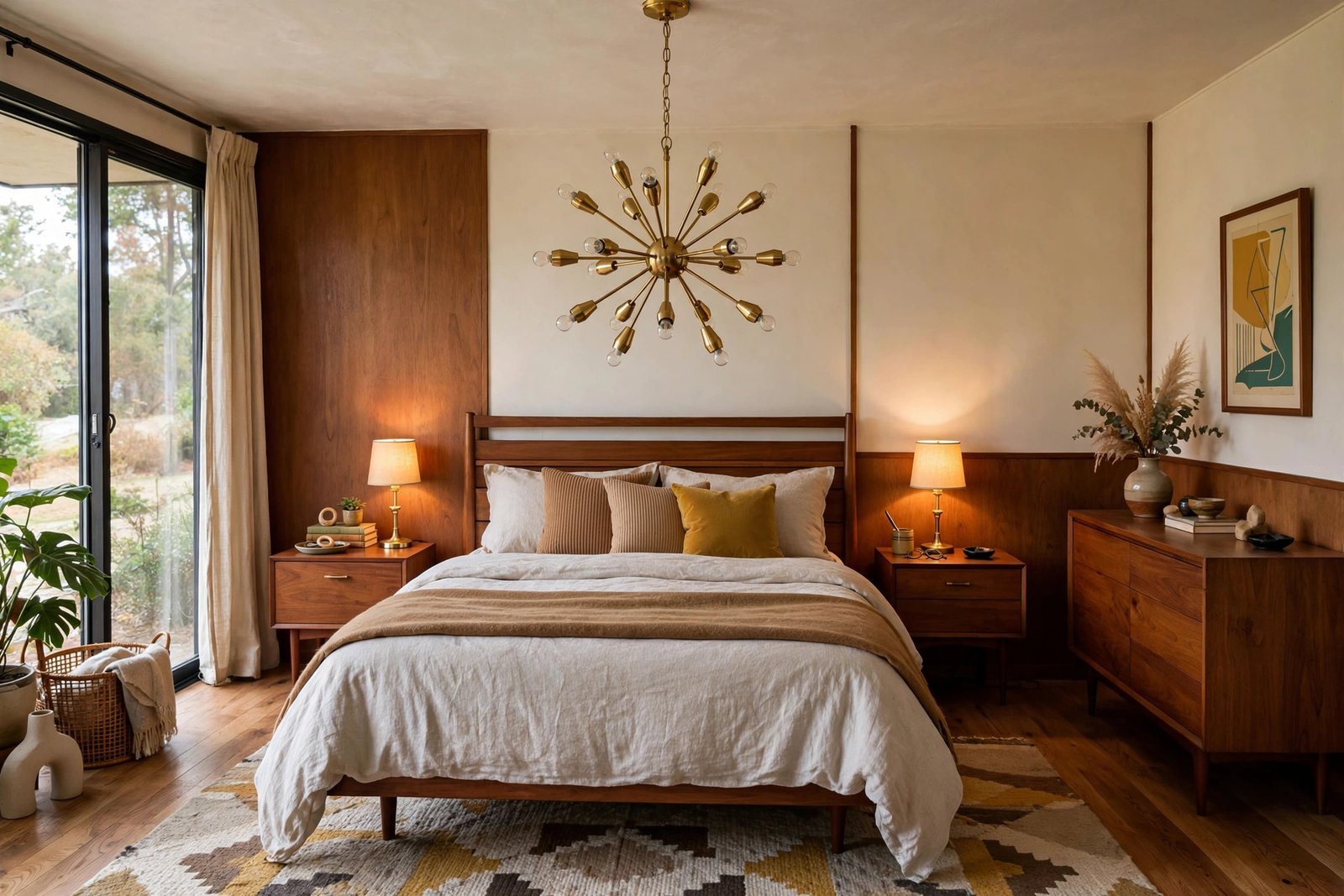
6. Sputnik and Arc Lighting
| Sputnik Chandelier | Arc Floor Lamp | |
|---|---|---|
| Placement | Centered over the bed | Beside a chair or in a dark corner |
| Height rule | Bottom sits 7 to 8 feet off the floor | Arcs over the seat below |
| Budget | $80 to $250 | $120 to $300 |
| Best for | A bold ceiling statement | Renters and reading corners |
Era lighting is sculptural, and one strong fixture replaces a forgettable ceiling light while acting as the room’s jewelry. Pick the shape your room can support, wire it once, and skip the cluster of small accessories you were about to buy. One statement always beats five small pieces here.
7. Cognac Leather Accent Chair
Do This:
- Tuck the chair into a corner with a small side table to create a reading spot that is not the bed.
- Choose cognac for warmth or black for contrast against walnut wood.
- Hold out for top-grain or genuine vintage leather with an honest patina.
Avoid This:
- Bonded leather, which peels within about two years.
- Oversized club chairs that swallow the room’s clean lines.
- Skipping the sit test on secondhand finds; the springs matter.
One leather chair softens all the straight lines in the room and gives the leather’s worn-in patina a starring role. Budget $100 to $350 thrifted or secondhand, or $400 to $900 new. Vintage leather is a common thrift find because the material ages gracefully instead of wearing out.

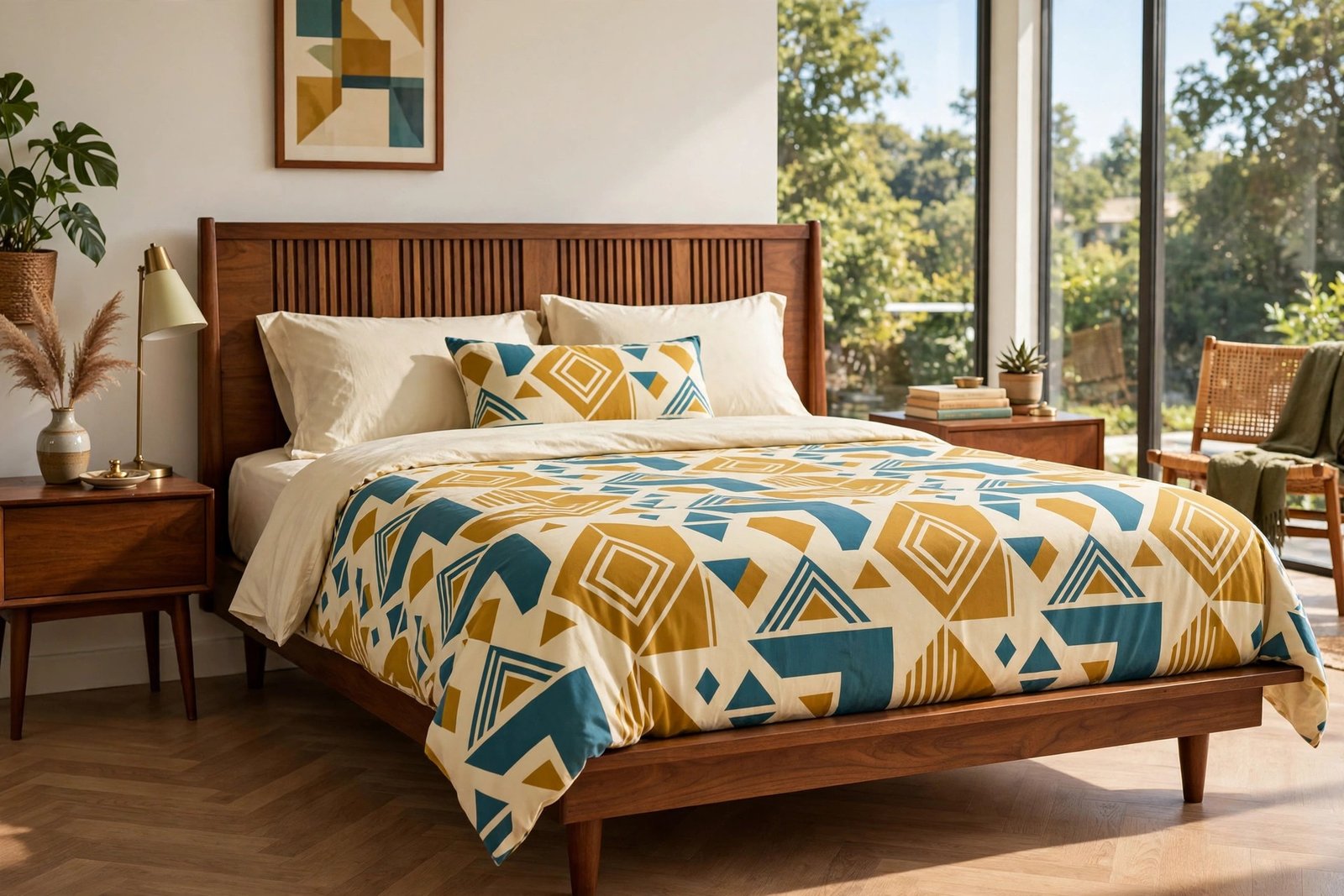
8. Geometric Retro-Print Bedding
Cost: $60 to $150 for a duvet set | Swap Time: 10 minutes | Best For: Plain beds that need pattern | Skill Level: None
Geometric prints, atomic boomerangs, and bold stripes in the mustard, teak, and rust palette change a plain bed in minutes. Keep the pattern on the duvet and shams, then layer solid sheets and a textured throw over it. A duvet cover beats a full comforter set because it washes easier and swaps seasonally.
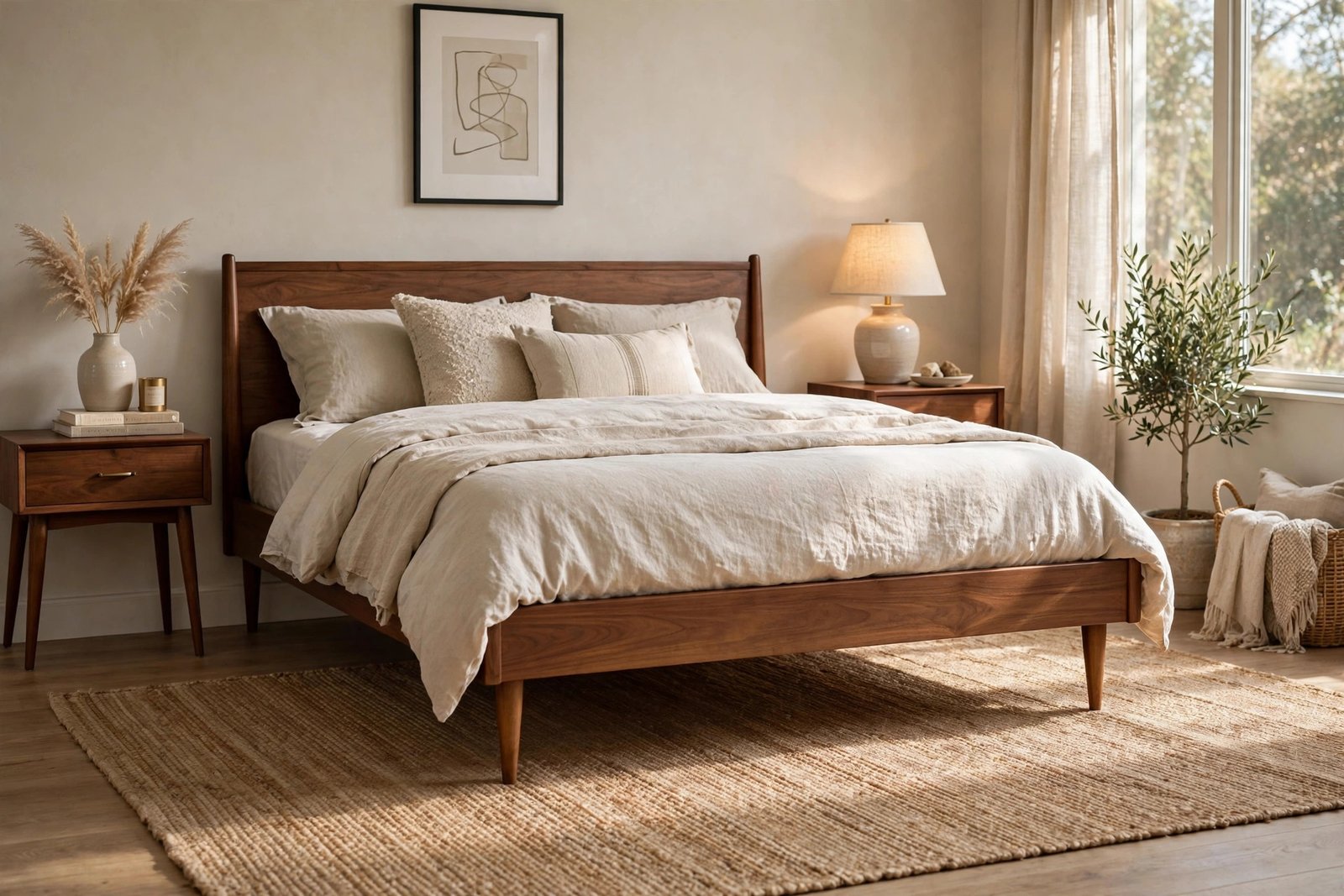
9. Jute or Low-Pile Rug
Natural texture is what the floors in this style ask for. A jute, sisal, or low-pile wool rug in a neutral tone grounds the wood furniture without competing with it, and the flat weave keeps the room’s low, calm profile intact from wall to wall.
Size the rug so at least the front legs of the bed and both nightstands sit on it; a too-small rug is the most common mistake in the whole room. Budget $100 to $300 for an 8×10 jute or $150 to $400 for wool, and never skip the rug pad on hard floors.
10. Brass Hardware Swap
- Brass bar pulls or round brass knobs read instantly mid century on almost any plain dresser or nightstand.
- Measure the existing hole spacing before ordering; 3-3/4 inches is the most common size.
- Keep the original hardware in a labeled bag if you rent, so you can swap it back.
- A full dresser’s worth of pulls costs just $15 to $40.
This is the twenty-dollar transformation hiding in plain sight. A thrifted dresser with tired handles looks ordinary; the same piece with warm brass hardware looks era-correct. Our thrift store furniture makeover ideas round up more budget transformations that pair with this one on any thrifted find.

11. Abstract Art Above Bed
Quick Tip: Hang one large piece, roughly two-thirds the width of the bed, with its center 57 to 60 inches from the floor. That gallery-standard height looks right in almost every room.
Abstract compositions, simple line drawings, and retro travel-poster styles in the era’s palette suit these walls best. One large piece beats a scattered gallery wall here because restraint is the aesthetic. Thrift stores and estate sales hide framed originals for $20 to $80, a tenth of gallery prices; new prints run $50 to $150.
12. Wood-Slat Headboard Wall
Common Mistake: Pairing a slat wall with busy patterned bedding. The slats are the star of the room, and competing patterns dilute the whole effect.
The Fix: Keep bedding simple and solid behind a slat panel. Vertical walnut-toned slats with narrow gaps create rhythm and texture, and mounting them on a backer board keeps the project renter-safe.
The slats catch light beautifully through the day and make a plain headboard look custom built. Budget $150 to $400 in materials for a queen-width wall, or $100 to $250 using pre-made slat panels. It is the most architectural idea on this list and the one that photographs best.
13. Floating or Tapered Nightstands
What You Need:
- A matching pair, since symmetry suits this style’s tailored feel.
- Floating wall-mounted cubes for tight rooms, or small tapered-leg tables with a single drawer.
- A strict three-item surface limit: lamp, book, and one small object.
Nightstands show the style in miniature, and clean lines only stay visible when surfaces stay edited. Budget $60 to $150 each new, or $25 to $75 each thrifted. In very tight rooms, skip bulky tables entirely and mount one floating shelf per side of the bed.
14. Teak Wardrobe Storage
| Vintage Teak | New Wardrobe | |
|---|---|---|
| Budget | $250 to $600 | $500 to $1,000 |
| Doors | Often sliding or bi-fold | Sliding options common |
| Build | Solid wood, deep interiors | Varies by brand |
| Watch out | Measure doorways before buying | Assembly takes time |
If the bedroom has no closet, a tall teak wardrobe with clean lines and simple pulls solves storage while reinforcing the style, which a fabric wardrobe never will. Choose sliding or bi-fold doors where swing clearance is tight, and check for hanging space plus shelves inside.
15. Sculptural Ceramic Accents
Do This:
- Group three to five objects per surface, each with an interesting silhouette.
- Mix ceramic, glass, brass, and teak for material variety.
- Vary heights and use odd numbers so surfaces look collected, not arranged.
Avoid This:
- Dozens of tiny trinkets that read as clutter from the doorway.
- Matching accessory sets bought all at once.
- Plastic pieces that fight the honest materials everywhere else.
A ribbed ceramic vase, a smoked-glass catchall, and a brutalist candle holder do more than a shelf of small souvenirs. Thrift stores overflow with era-appropriate ceramics for a few dollars each, and a whole surface costs $20 to $60 to style well in an afternoon.
16. Thrift Store Hunting Guide
Total Budget: $300 to $800 for a full room | Best Hunting: Estate sales and thrift stores | Top Finds: Dressers, credenzas, teak pieces | Skip: Particleboard and smoke smells
The thrift store is this bedroom’s best friend, but shop with a list. Hunt solid-wood dressers, credenzas, nightstands, and anything teak, plus lamps with original shades, starburst mirrors, and ceramic vases. Our thrift store furniture makeover ideas walk through refinishing the best finds step by step once you get them home.
17. Small Bedroom Scaling
Small rooms and this style get along beautifully. Low profiles and visible legs let the floor show through, which makes any room feel larger, so choose a low platform bed, one nightstand instead of two, and a slim tapered-leg dresser in a light palette.
Mount a sputnik or choose wall sconces to free up surface space, and keep cream walls with one warm accent. There is no extra cost here; this is editing, not buying. The biggest small-room mistake is a tall, bulky dresser, and swapping it for a low credenza changes the whole feel.
Frequently Asked Questions
What colors go with a mid century modern bedroom?
The classic palette is warm and earthy: mustard yellow, burnt orange, olive, teal, and rust layered over walnut wood tones and cream or warm white walls. Follow the 60-30-10 rule, with 60 percent neutrals, 30 percent one main accent, and 10 percent a secondary punch, and bring color in through textiles and art rather than wall paint.
Is mid century modern still in style in 2026?
Yes. The style has stayed popular for over a decade because clean lines and warm materials work as a neutral foundation rather than a passing trend. In 2026 the look leans warmer and more collected, with richer walnut tones, layered textures, and mixed-era pieces instead of strict matching sets, which makes it one of the safest style bets in decorating.
How do I make a mid century modern bedroom feel cozy?
Warmth comes from the layers around the clean-lined furniture: a textured throw and extra pillows, a soft rug underfoot, warm-toned 2700K bulbs, and one upholstered or leather piece to soften the hard lines. Rooms in this style feel cold only when they are all wood and geometry with no textiles, and soft layers fix that quickly.
Where can I find affordable mid century modern furniture?
Thrift stores, estate sales, and Facebook Marketplace are the best sources, where solid-wood vintage dressers and nightstands regularly sell for $40 to $150. For new pieces on a budget, look at Article, the West Elm sale section, and IKEA’s Stockholm line. Always inspect joints, drawers, and smells before buying, and set aside $30 to $80 for refinishing supplies if a piece needs them.
Also view
A Bedroom With a Point of View
This style works because it is a system, not a shopping list: warm wood, clean lines, tapered legs, and one or two sculptural moments per room. Start with the bed or the dresser, add statement lighting, then layer color in through textiles you can swap anytime. Save these mid century modern bedroom ideas for your next free weekend, try one idea at a time, and share the list with anyone whose bedroom feels stuck. Small steps, real prices, and a room that finally has a point of view. That is all it takes to begin.




One Comment