17 Bedroom Bookshelf Styling Ideas That Look Curated (2026)
Bedroom bookshelf styling ideas rarely get the attention they deserve, because most bookshelf advice is written for living rooms. But bedrooms have their own rules: shelves sit closer to your face at eye level, lighting is warmer and dimmer, and everything needs to feel calm enough to sleep next to. A bookcase crammed with paperbacks in a chaotic jumble fights that calm. These 17 ideas treat bedroom bookshelves as their own design project — book storage that doubles as decor, styled for small rooms, rentals, and real book collections, with honest prices on every idea.
Key Takeaways
- Think furniture, not library: in a bedroom, a bookcase is a nightstand, a headboard wall, or a room divider first — storage second.
- The 70/30 rule keeps shelves calm: roughly 70% books, 30% decor and breathing room, and the room still feels restful.
- Anchor bookcases to the bed: flanking the headboard wall or standing in as a nightstand makes a bookcase look intentional, not orphaned.
- Warm light beats bright light: a $15 LED strip on the shelf changes bedtime ambiance more than any restyle.
- Small bedrooms want vertical: tall, narrow bookcases use the dead air beside the bed instead of eating floor space.
- Face-out favorites, hide the rest: displaying 3–5 beautiful covers forward does more styling work than a wall of tight spines.
1. The Slim Bedside Book Tower
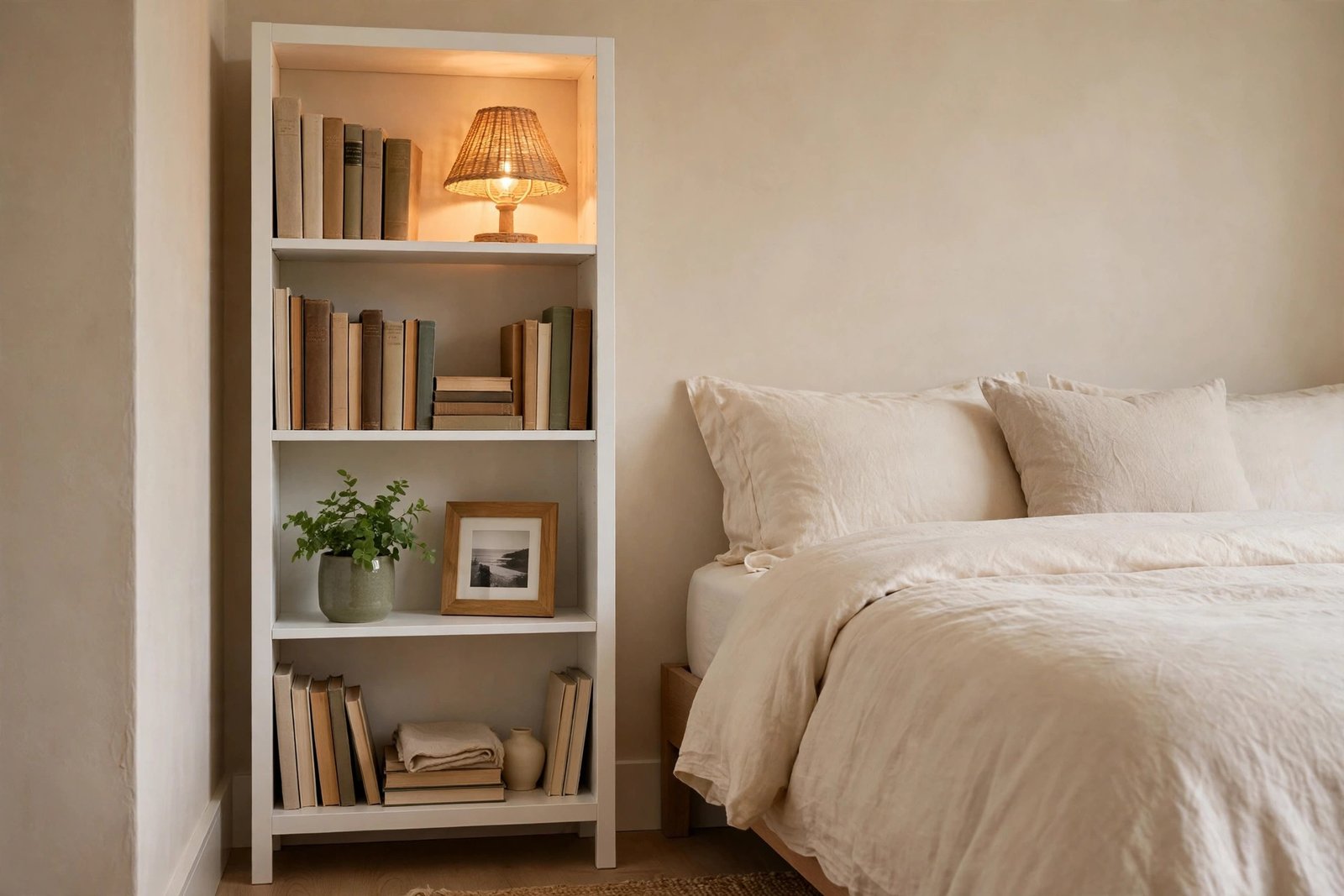
A tall, narrow bookcase — roughly 12 inches wide and 60 inches tall — works beautifully as a nightstand stand-in, holding your current reads, a lamp, and a water glass in a footprint smaller than a standard nightstand. Style the top shelf as the “nightstand surface” with just a lamp and one small tray, then devote the lower shelves to books grouped by height. Because it rises vertically, it stores four times what a nightstand does without stealing floor space. Price range: $60–$180 for the unit; check thrift stores first, where solid-wood towers show up for under $40.
2. Flank the Bed With Two Bookcases for a Headboard Wall
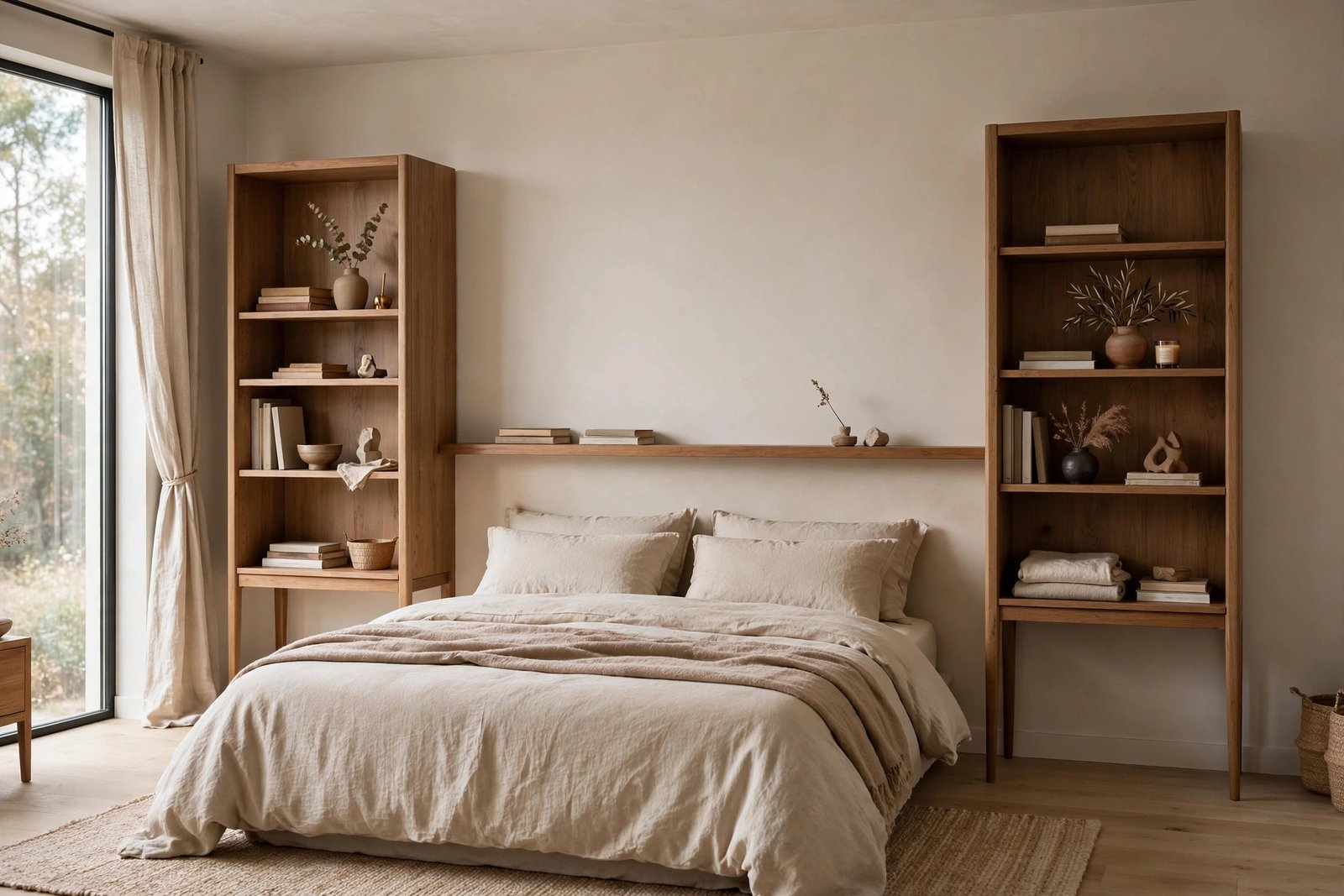
Two matching bookcases flanking the bed, plus a low shelf or art piece bridging them above the headboard, create the look of custom built-ins for a fraction of the price. Keep the shelves nearest the pillows styled sparsely — nothing heavy or wobbly above a sleeping head — and put the bulk of the collection on the lower shelves and outer edges. Anchor both bookcases to the wall with anti-tip straps, which cost about $10 for a pair and are non-negotiable beside a bed. Price range: $120–$400 for the pair, plus $10 for straps.
3. Build a Reading-Corner Bookcase Nook
If you read in bed, you need this corner: an armchair or floor cushion, a warm reading lamp, and a small bookcase holding only the books you’re actually excited about. Keeping your “to-read” pile here instead of on the nightstand stops the nightstand from becoming a book avalanche. Style the top of the bookcase as a landing spot for tea and reading glasses, and leave one shelf deliberately half-empty — the empty shelf is permission to keep acquiring. This pairs beautifully with a window seat with storage if you want the nook by the window. Price range: $50–$150 for a small bookcase; the chair is the real budget item.

4. Run a Low Bookcase Under the Window
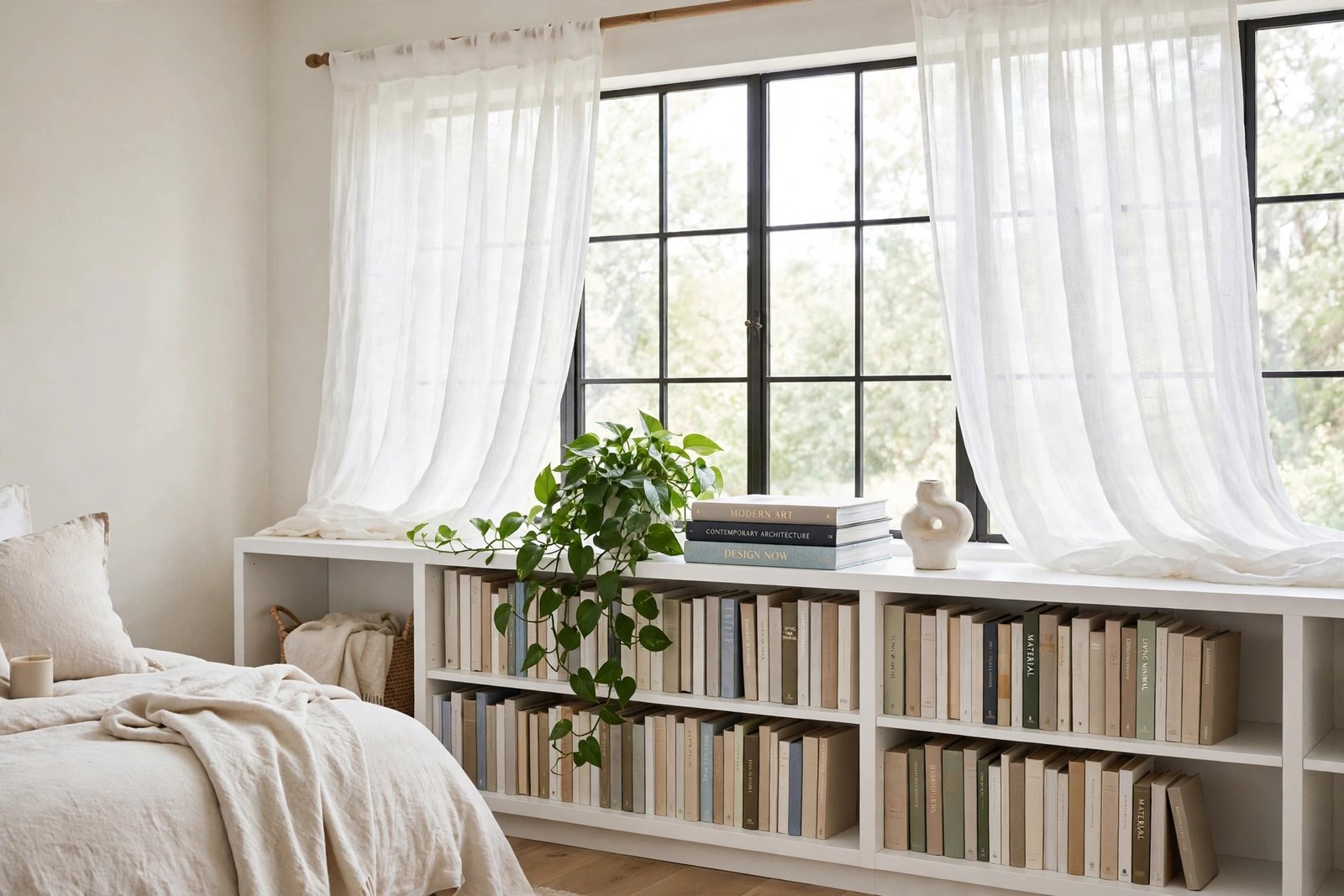
A low, wide bookcase (30–36 inches tall) tucked under the window sill turns dead wall space into a display ledge and serious storage at once. Keep the top surface styled like a console: a trailing plant, a stack of art books, and one sculptural object, with books filed spine-out below. In my experience, this is the single best bookcase placement for small bedrooms because it uses wall space that furniture can’t block. Just leave 2–3 inches of clearance so curtains still fall freely behind it. Price range: $70–$200; cube-style units work best here.
5. Group Spines by Color for Instant Calm
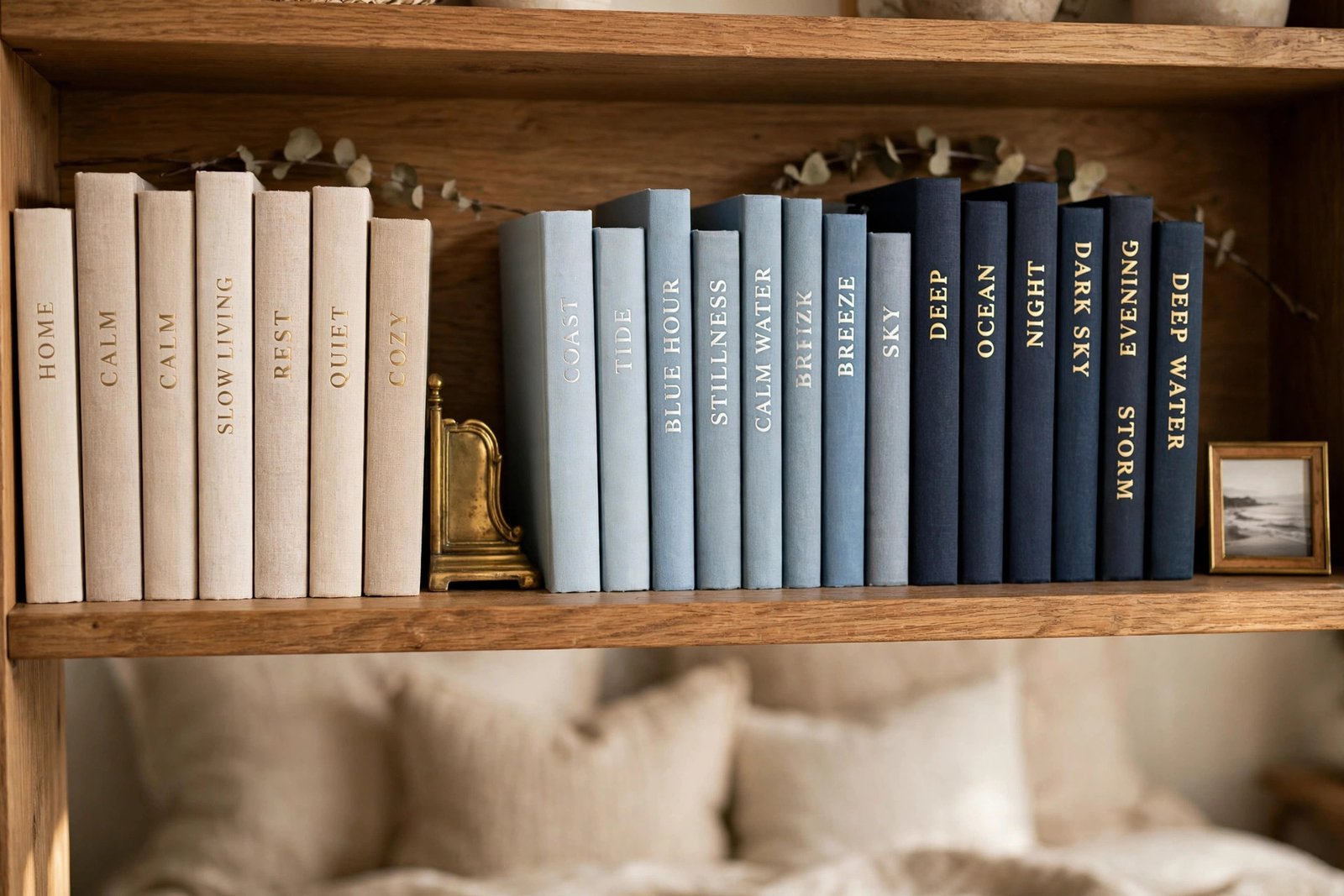
Color-grouping — arranging books so spines flow from light to dark or cluster by color family — is the fastest free restyle a bedroom bookshelf can get. It works because bedrooms are restful when the eye sees rhythm instead of randomness. You don’t need a rainbow: try all creams and beiges together, then all dark blues and blacks, with one shelf of warm reds as an accent. The trick that makes it look designer rather than childish is keeping each color block chunky — at least 6–8 books per block. Price range: free, plus about an hour of your time and strong opinions about where the teal books go.
6. Turn a Cube Bookcase Sideways Into a Nightstand
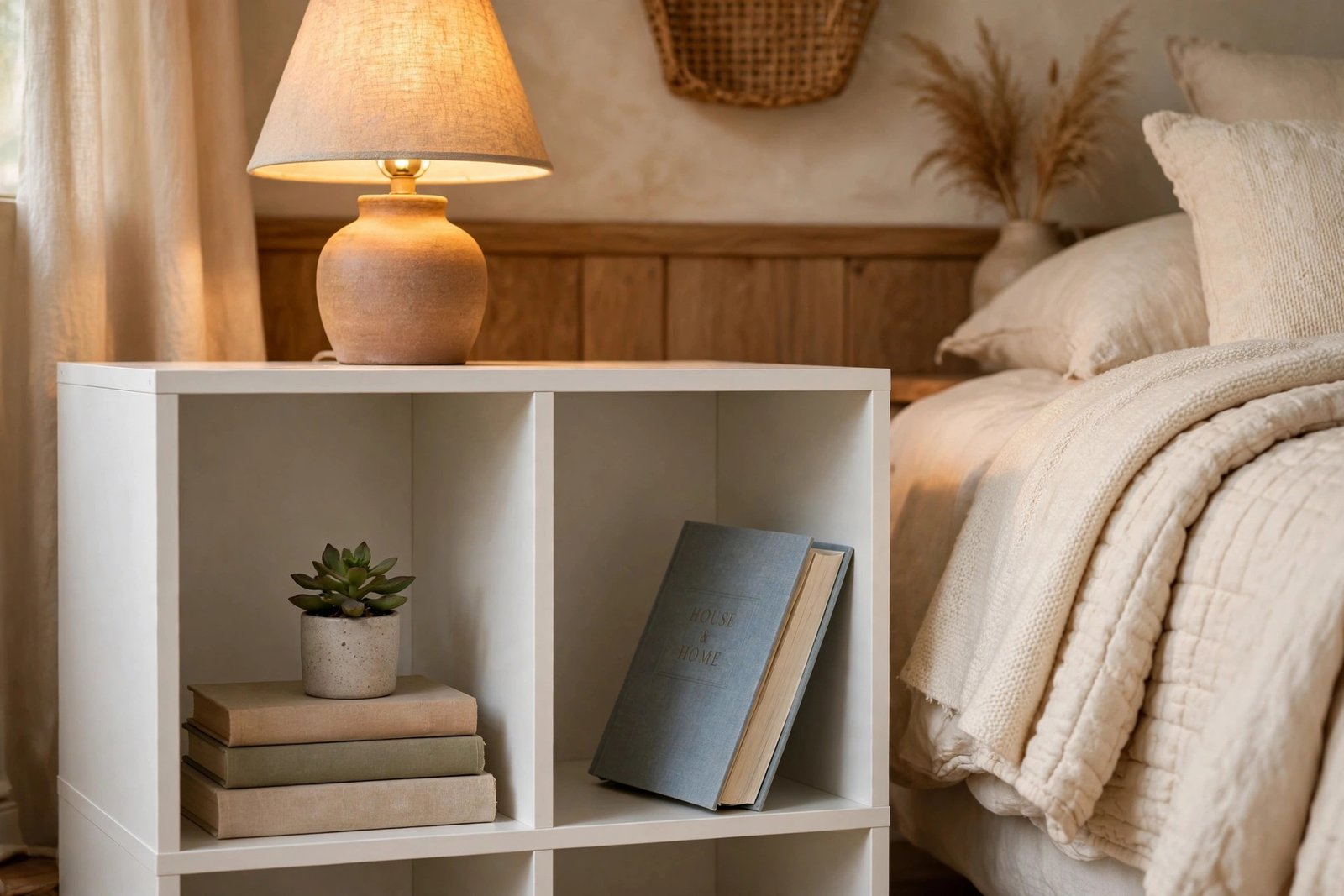
A two-cube storage unit laid on its side is the perfect nightstand height — about 16 inches — and gives you two open cubbies for books plus a top surface for a lamp. Style one cubby with a stack of horizontal books and a small plant, and keep the other purely functional for your current read and charger. Tip: face the cubbies toward the bed so the spines read as decor from your pillow, not as storage you’re hiding. This is a renter-friendly win too: no mounting, no drilling, and it moves with you. Price range: $25–$70 for the cube unit.
7. Follow the 70/30 Styling Rule
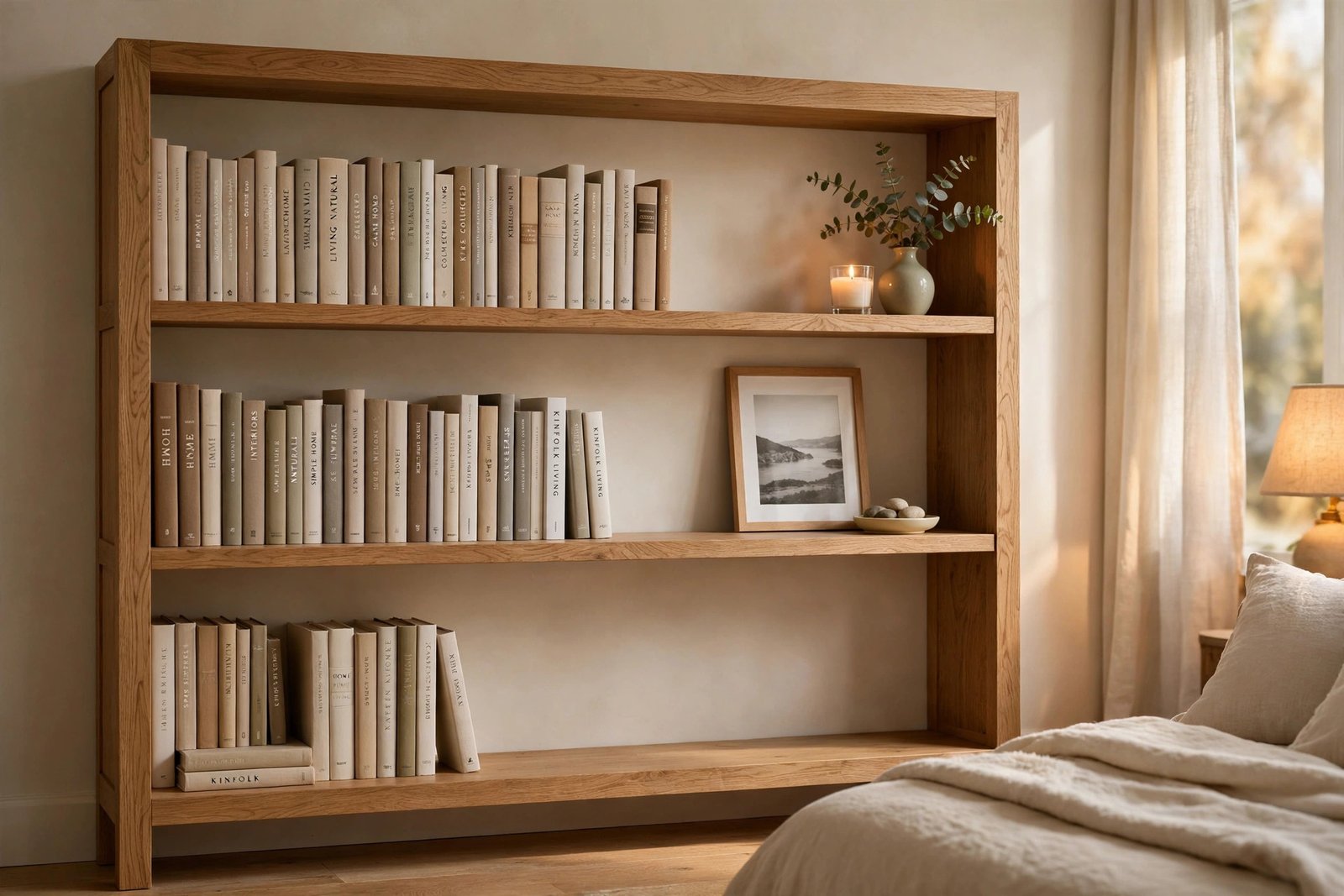
Bedroom shelves stay restful when roughly 70% of the shelf is books and 30% is decor plus intentional empty space. Apply it per shelf, not per bookcase: fill a shelf with books, then replace about a third with a small framed photo, a candle, or simply nothing. The empty space is doing real design work — it lets the eye rest, which is exactly what a bedroom should do. When a shelf creeps past 85% books, pull five books to a “donate or relocate” pile instead of squeezing them in. Price range: free — this is a method, not a purchase.
8. Style a Forward-Facing Display in a Kid’s Bedroom
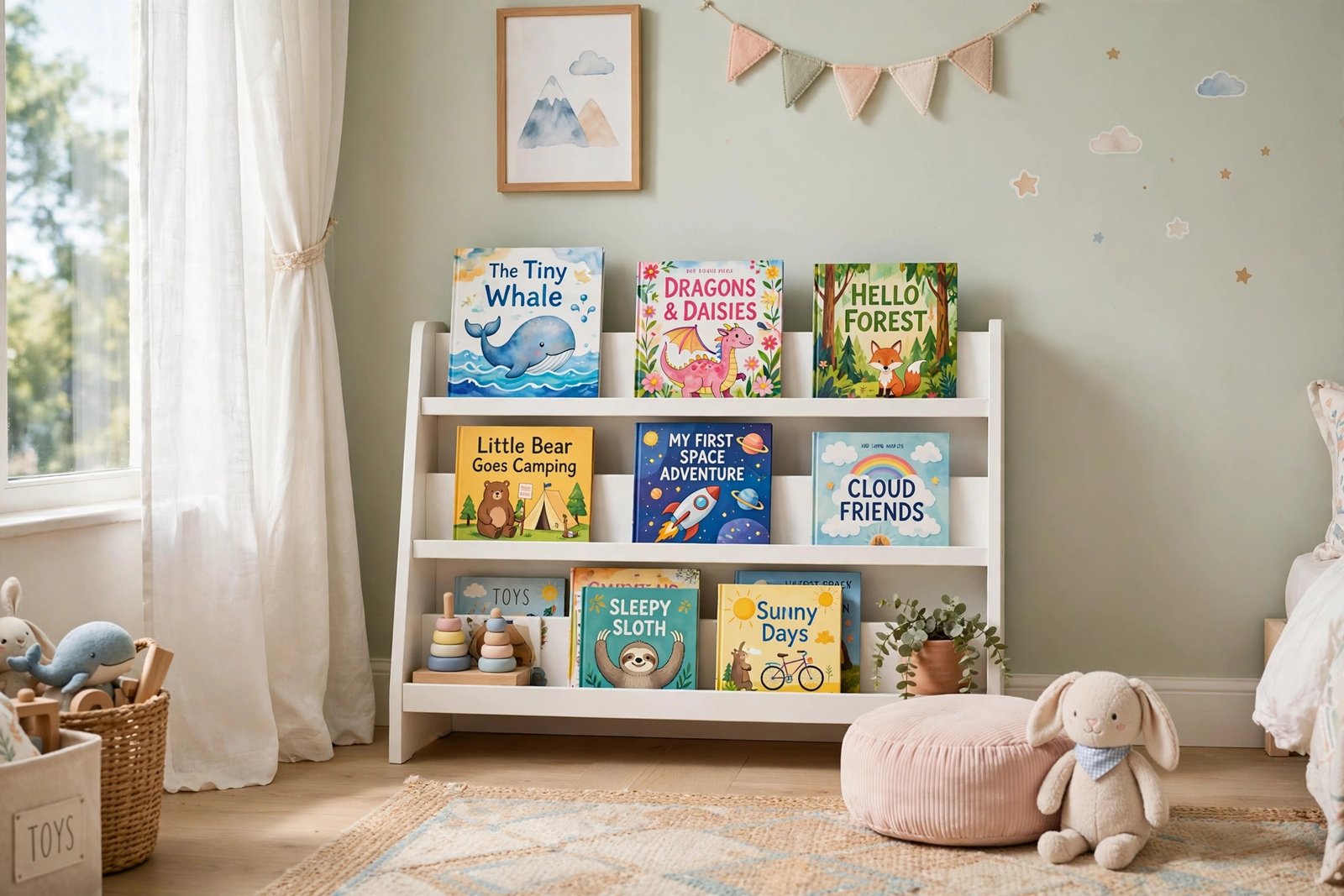
Kids can’t read spines, so style their bedroom bookshelf like a tiny bookstore: forward-facing picture ledges or shallow shelves where covers face out. Mount 2–3 rows at your child’s eye level and rotate the selection monthly — the rotation makes old books feel new again. Below the display rows, keep one open shelf with sturdy bins for the rest of the collection. This setup genuinely increases how often kids pick up books, in my experience, because the covers do the inviting. Price range: $20–$60 for ledge shelving; use chunky 4-inch ledges so books don’t topple.
9. Stack Books on the Dresser Like a Vanity Vignette
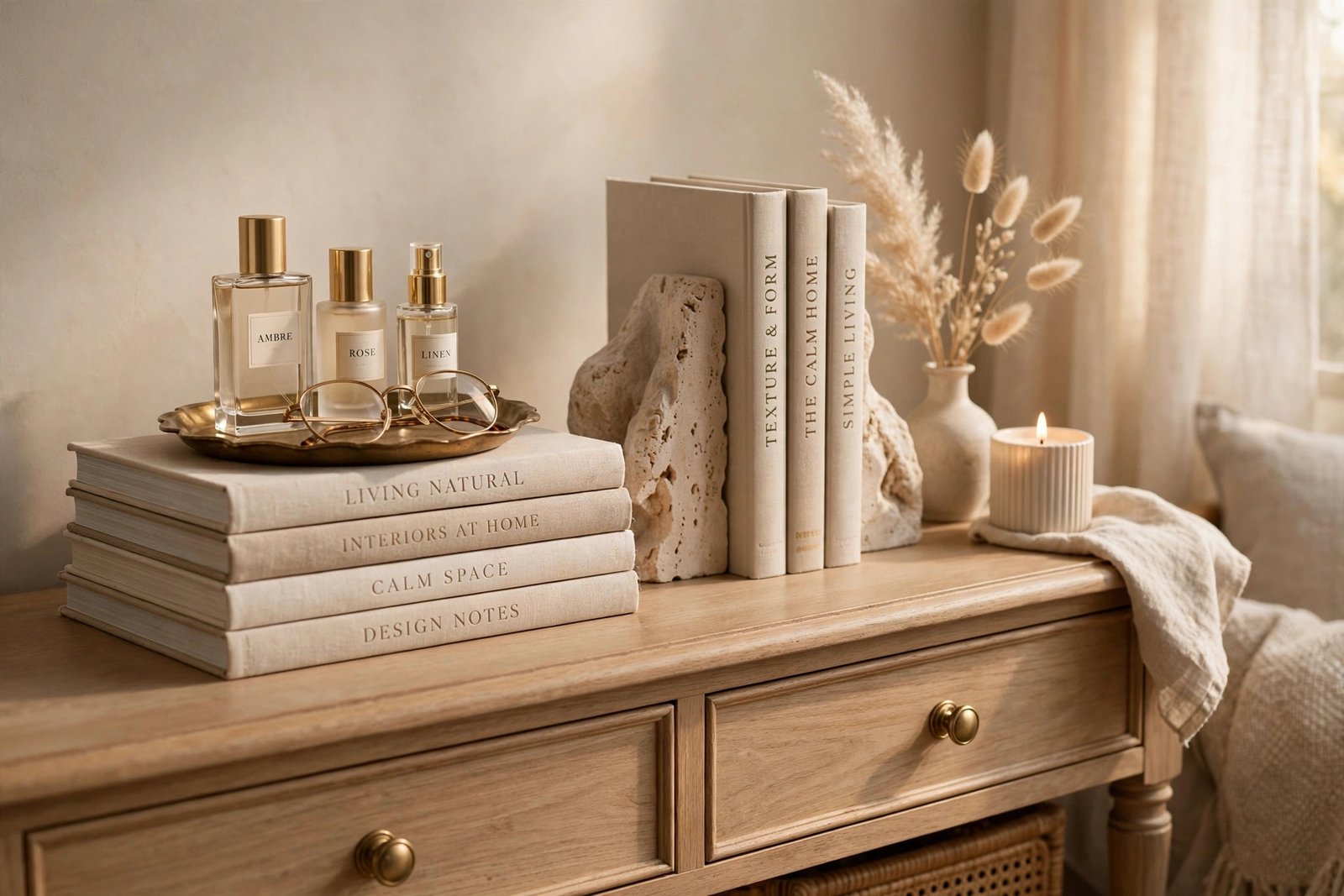
The bedroom dresser top is prime styling real estate: stack 3–5 books horizontally as a riser, then top the stack with a small tray holding perfume, a watch, or reading glasses. The books become furniture — a pedestal that elevates everyday objects into a vignette. Keep the stack to one side of the dresser so the other side stays functional, and put the heaviest, largest book on the bottom so the tower never wobbles. Choose covers in your bedding’s color family and the whole dresser suddenly coordinates with the room. Price range: free with books you own; a small tray runs $10–$25.
10. Divide a Studio Bedroom With an Open-Back Bookcase
In a studio or shared bedroom, an open-back bookcase makes the best room divider: it zones the sleeping area without blocking light or airflow the way a solid partition would. Style both sides intentionally, since both are visible — keep one side book-heavy and the other decor-heavy, or mirror the arrangement for symmetry. Anchor it well, because a freestanding bookcase in the middle of a room gets bumped; anti-tip straps to the floor or wall are essential. The open back also means it works from the bed side and the living side equally. Price range: $80–$250 for a sturdy open-back unit.
11. Make a Thrifted Bookcase Look High-End
Secondhand bookcases are the best value in bedroom furniture, but they need styling to lose the thrift-store look. The formula: one coat of paint in a saturated bedroom-friendly color (deep green, warm charcoal, or navy), new knobs or pulls if it has doors, and styled shelves with breathing room per the 70/30 rule. Painting just the back panel in a contrasting color is a $15 shortcut that makes even an oak relic look custom. For makeover inspiration, our thrift store furniture makeover ideas walk through paint and hardware upgrades step by step. Price range: $20–$60 thrifted, plus $15–$40 in paint and supplies.
12. Anchor Shelves With Sculptural Bookends
A pair of sculptural bookends — stone, brass, or ceramic — turns a row of books into a styled moment instead of just storage. Place them to create intentional gaps: books, bookend, breathing room, books, bookend. The bookends become the jewelry of the shelf, so choose ones with some visual weight; flimsy metal L-brackets disappear and let books slump. Tip: match bookend material to your bedroom hardware — brass bookends with brass lamp bases, black stone with black frames — and the shelf reads as designed. Price range: $15–$50 per pair; vintage shops are goldmines for these.
13. Add Warm Shelf Lighting for Bedtime Ambiance
A $12–$20 adhesive LED strip along the underside of each shelf transforms a bedroom bookcase into a glowing feature after dark. Choose warm white (2700K) — cool white makes a bedroom feel like an office — and run the strip toward the back of the shelf so books catch the glow without glare. Battery-powered puck lights work for rentals or bookcases far from outlets. In my experience, lit shelves do double duty as a nightlight, which means one less lamp competing for nightstand space. Set them on a timer plug so they fade with your bedtime routine. Price range: $12–$30 total for a full bookcase.

14. Do a Seasonal Shelf Refresh, Not a Full Restyle
Bedroom shelves feel fresh with a quarterly swap of just the decor layer — the books stay put. In fall, trade the summer candle for a small pumpkin or amber glass; in spring, swap in a bud vase with fresh stems. Keep a small “shelf decor” box in the closet so the swap takes 15 minutes. This keeps the bedroom feeling current without the cost or chaos of redecorating, and it gives you a reason to dust the shelves four times a year. The books themselves are the constant; the 30% decor layer is the season. Price range: $0–$20 per season if you shop your own home first.
15. Face Out Your Favorite Covers Like a Bookstore
Reserve 3–5 spots across the bookcase to display favorite covers face-out, propped on small easels or leaned against book stacks. This is the highest-impact styling move for beautiful books — art books, poetry collections, vintage finds with gorgeous covers — because a face-out cover reads as art from across the room. Rotate them when your mood changes. Tip: place one face-out book at eye level from the bed so your favorite cover is the last thing you see at night and the first thing you see in the morning. Price range: $5–$15 for mini easels, or lean them free.
16. Let a Black Bookcase Be the Contrast Piece
In a light, airy bedroom, one black bookcase is a design anchor — it grounds the room the way a dark headboard or black window frame does. Style it with breathing room and lighter books on the top shelves so it doesn’t feel heavy, and let dark spines blend into it while light covers pop forward. The contrast actually makes the rest of the bedroom feel brighter by comparison. Keep the surrounding wall light and the bedding soft so the bookcase reads as intentional drama, not a leftover from the office. Price range: $70–$220; black laminate units are widely available secondhand.
17. Dedicate One Shelf to Bedtime Essentials
Give your current read, a small carafe, lip balm, and tomorrow’s glasses a single dedicated shelf at arm’s reach from the bed — a “bedtime station” that keeps the nightstand clear. Style it like the rest of the shelf, not like a junk drawer: a small tray corrals the little things, and the book lies flat or stands with a bookend. This works especially well on the shelf nearest pillow height in a flanking bookcase or bedside tower. When the book changes, the shelf stays — it’s a permanent home for the ritual, not the object. Price range: $8–$20 for a tray; everything else you already own.
Frequently Asked Questions
How do you style a bookshelf in a small bedroom?
Go vertical with a tall, narrow bookcase beside the bed, or run a low bookcase under the window to use dead wall space. Keep the 70/30 ratio — 70% books, 30% decor and breathing room — and anchor the bookcase to the bed or window wall so it looks intentional. Warm shelf lighting makes even a budget unit feel designed.
What should I put on a bedroom bookshelf besides books?
Stick to calm, bedroom-appropriate decor: a small framed photo, one candle, a bud vase, a sculptural bookend, and breathing room. Skip anything visually loud or clutter-prone. The 30% decor layer should support rest — soft textures, warm materials, and personal pieces — not compete with the books for attention.
How do I keep bedroom bookshelves from looking cluttered?
Apply the 70/30 rule per shelf, group books by height or color so the eye sees rhythm, and leave at least one shelf or section deliberately sparse. Corral small items on trays, face out 3–5 favorite covers, and relocate overflow books instead of double-stacking rows. Dust monthly — clutter reads louder on dusty shelves.
Is it bad to have a bookcase in the bedroom?
Not at all, as long as it’s styled for calm and secured safely. Keep shelves near the bed sparse and lightweight, anchor tall bookcases with anti-tip straps, and use warm lighting rather than bright white. Some people find a wall of chaotic spines overstimulating at bedtime — color-grouping or facing books spine-in (a debated but popular trick) both solve that.
A Shelf That Helps You Sleep
A bedroom bookshelf works hardest when it does two jobs at once: storing the books you love and styling the room you sleep in. Start with placement — beside the bed, under the window, or flanking the headboard — then apply the 70/30 rule and warm light, and even a thrifted unit looks curated. Your shelves should feel like the room’s quiet companion, not its loudest voice.
Related posts you may like:
- 15 DIY Window Seat With Storage Ideas
- 17 Thrift Store Furniture Makeover Ideas That Look Expensive
- Living & Bedroom Ideas