Bedroom Design Ideas: The Complete Guide (2026)
Most people buy a bedroom lamp, screw in a bulb, and call it done. Then they wonder why the room still feels flat at night, harsh in the morning, or somehow both at once. Lighting isn’t a checklist item you tick off after the furniture arrives. It’s the thing that decides whether your bedroom feels like a hotel suite or a storage closet with a bed in it.
Good bedroom lighting works in layers, adjusts to your mood, and disappears into the design until you need it. This guide walks through every layer, every fixture type, and the small decisions that separate a bedroom that glows from one that just… has light in it.
Why Bedroom Lighting Deserves More Thought Than You Think
A single overhead light does one job: it makes the room bright. That’s it. It can’t help you read in bed, can’t set a relaxed mood before sleep, and can’t highlight the artwork you spent weeks picking out. Bedrooms have more functions packed into one small space than almost any other room in the house, and each function needs its own kind of light. If you’re planning a bigger overhaul, pairing these bedroom lighting ideas with a full master bedroom makeover plan can take the room from plain to genuinely polished.
Think about everything that happens in a bedroom besides sleeping. You get dressed there. You scroll your phone in bed. You read, fold laundry, do makeup, maybe work from a corner desk. One ceiling fixture can’t serve all of that well, which is exactly why designers talk about lighting layers instead of single sources.
Layered Lighting: The Foundation of Every Well-Lit Bedroom
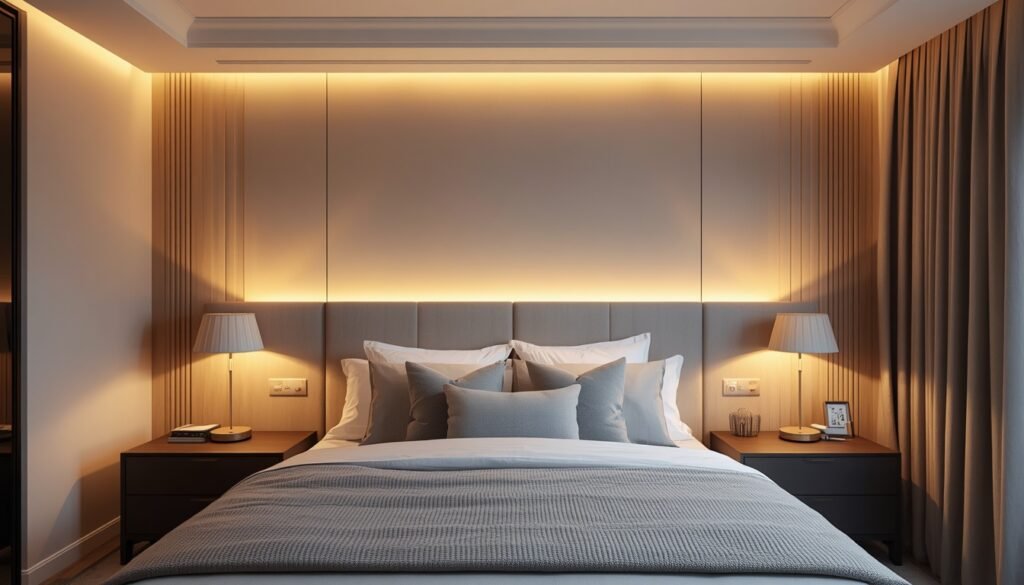
Layered lighting means combining three types of light so the room adapts instead of staying stuck on one setting. Ambient lighting fills the space generally. Task lighting targets a specific activity. Accent lighting adds depth and draws the eye somewhere intentional. Skip a layer, and the room starts to feel unfinished even if you can’t quite say why.
The real trick is control. Each layer should turn on and off independently, ideally on its own switch or dimmer switch, so you’re not stuck choosing between “fully lit” and “pitch dark.” A bedroom with three layered sources and separate switches will feel more custom than one with five expensive fixtures all wired to a single switch.
Ambient Lighting Basics
Ambient light is your baseline glow, usually delivered through ceiling light fixtures, recessed lighting, or a central pendant. It should be soft enough not to compete with a sunset but bright enough to find your shoes in the dark. Dimmable LED options make this layer flexible, letting you push it up for cleaning day and pull it way down for a lazy Sunday morning.
Task Lighting for Reading and Getting Ready
Task lighting solves a specific problem: reading in bed, applying makeup, or checking your closet lighting. Bedside lamps, vanity lighting, and closet fixtures fall into this category, and they should be brighter and more directional than ambient light. A reading lamp with an adjustable arm beats a fixed overhead light every time, since it aims exactly where your eyes need it.
Accent Lighting for Mood and Depth
Accent lighting is the layer most people skip, and it’s the one that makes a room feel designed rather than assembled. LED strip lights behind a headboard, a small uplight aimed at artwork, or a floor lamp tucked in a reading nook all count. These fixtures don’t need to be bright; they need to create shadow and contrast so the room has visual depth instead of one flat wash of light. It’s the same soft, layered glow you’ll notice in Nancy Meyers-inspired bedrooms, where nothing feels harshly lit.
Ceiling Light Ideas for Bedrooms
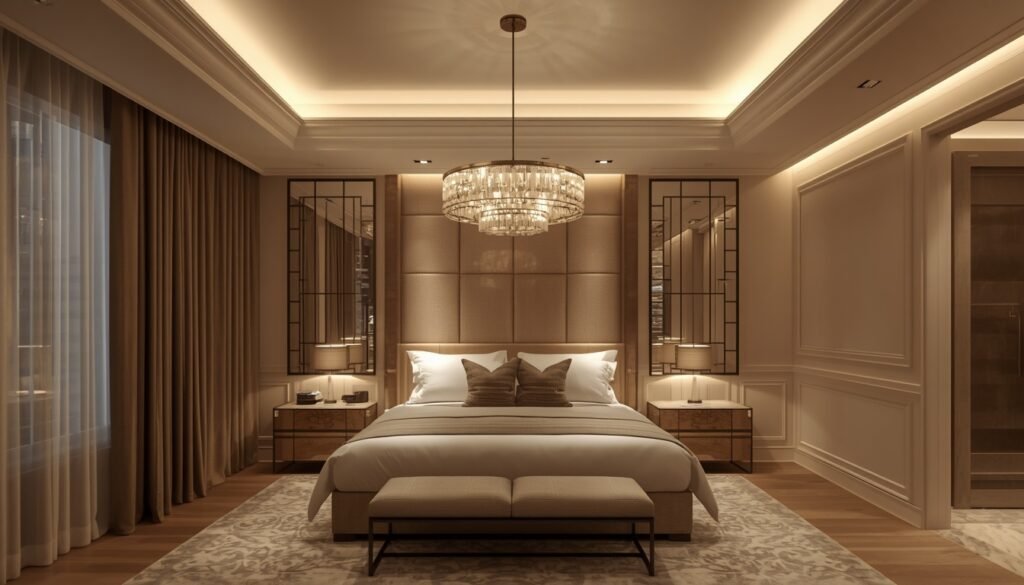
The ceiling fixture sets the tone for the whole room before you’ve even added a single lamp. It’s usually the first thing anyone notices walking in, which makes it worth more attention than a quick trip to the clearance aisle. The right choice depends heavily on ceiling height, room size, and how formal you want the space to feel.
Low ceilings call for flush mount lighting or semi-flush mount fixtures that hug the surface, while taller rooms can handle a hanging pendant or a small chandelier without anyone bumping their head. For more layout inspiration beyond just the fixture itself, these modern ceiling design ideas show how trim and texture can work alongside your lighting choice. Scale matters more than style here. A fixture that’s too small on a large ceiling reads as an afterthought, no matter how nice it looks up close.
Flush Mount and Semi-Flush Fixtures
Flush mounts sit close to the ceiling and work best in rooms with eight-foot ceilings or lower. Semi-flush versions drop down a few inches, adding a bit of visual interest without eating into headroom. Look for options with fabric shades or textured glass, since a plain frosted globe can feel more like an office fixture than a bedroom one.
Statement Chandeliers and Pendants
A small statement chandelier over the bed, offset slightly from center, has become one of the most popular bedroom lighting ideas in recent years, and for good reason. It adds drama without requiring extra floor space, and it draws the eye upward in a way that makes the whole room feel taller. Keep the bottom of the fixture at least seven feet from the floor so it stays out of reach when making the bed.
Bedside and Nightstand Lighting Ideas
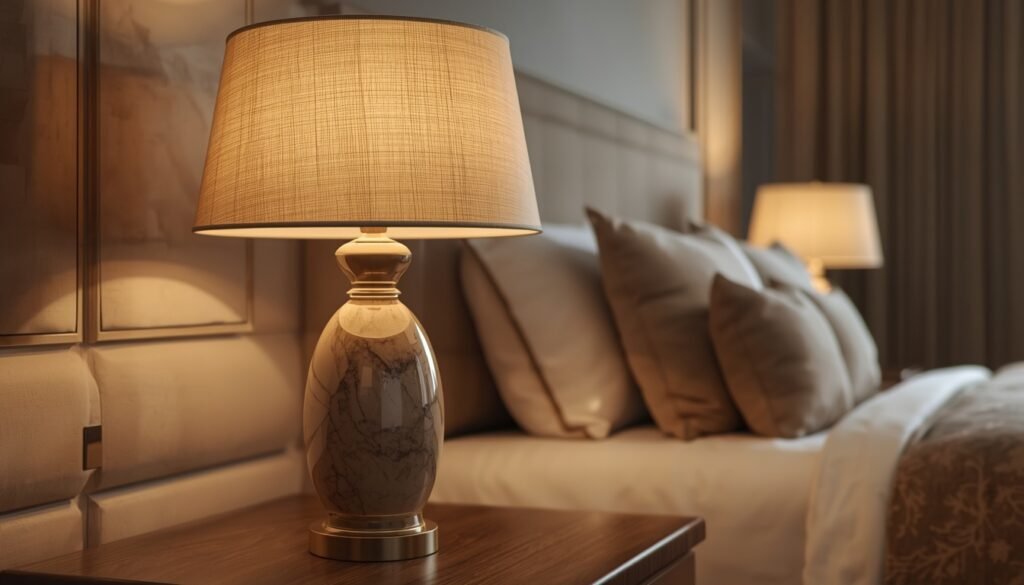
Nightstand lighting gets used more than almost any other fixture in the house, night after night, which means it deserves more thought than grabbing whatever lamp was on sale. Even a guest bedroom benefits from getting this layer right, since it’s often the first thing visitors notice about the room. The right choice depends on nightstand size, reading habits, and how much control you want over brightness.
Symmetry isn’t required, but it does look intentional. Matching lamps on both sides create a calm, balanced feel, while mismatched fixtures can work too if there’s a clear reason, like one side needing a brighter reading light and the other just needing a soft glow.
Table Lamps
Table lamps remain the most popular choice because they’re easy to swap out and don’t require an electrician. Look for a shade height that puts the bulb roughly at eye level when you’re sitting up in bed, so the light doesn’t shine directly into your eyes. A warm white bulb around 2700K keeps the mood relaxed instead of clinical.
Wall-Mounted Sconces
Wall sconces free up nightstand space entirely, which matters a lot in smaller bedrooms where every inch of surface counts. A swing-arm sconce with an adjustable head gives you the flexibility of a table lamp without the footprint, and it tends to look more custom since it’s mounted directly to the wall.
Pendant Lights Over Nightstands
Mini pendant lights hung above each nightstand have become a favorite among designers chasing a boutique-style bedroom look, the kind of boutique hotel look that clears the nightstand completely. They add a sculptural element that a standard lamp can’t match. Just make sure the cord length and hanging height are adjusted so the fixture doesn’t sit too close to your face when you sit up.
Wall Lighting and Sconces Beyond the Bed
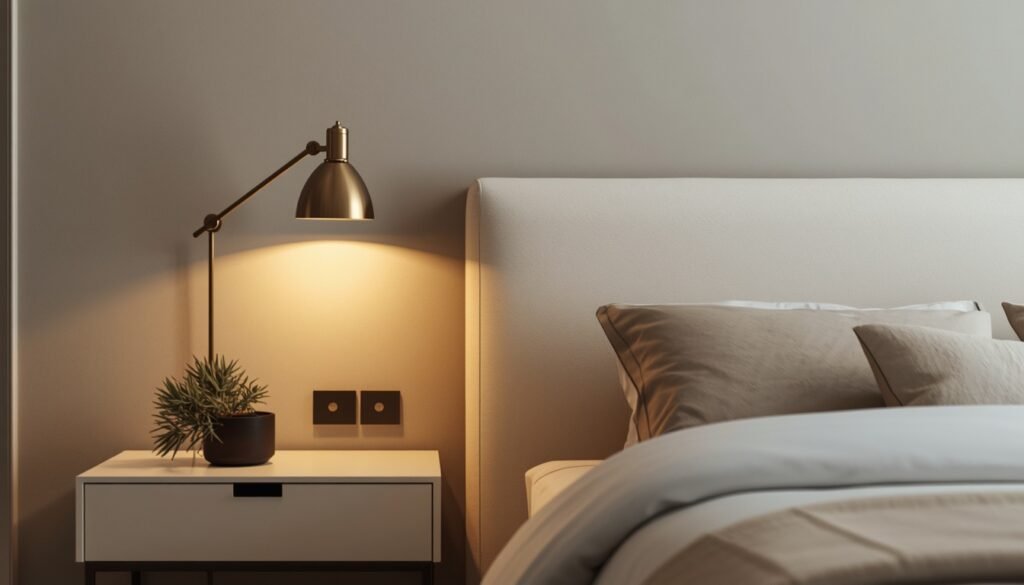
Wall lighting isn’t limited to the space beside your bed. Sconces flanking a dresser mirror, a reading nook, or an accent wall add another point of light without cluttering the floor or ceiling. This kind of fixture works especially well in bedrooms where furniture placement leaves little room for extra lamps.
Placement height matters here more than people expect. Sconces mounted around 60 to 66 inches from the floor tend to hit the sweet spot, illuminating faces and surfaces without glaring directly into anyone’s eyes. Pair them with a dimmer, and they can double as a soft night light for late walks to the bathroom.
Smart and Adjustable Lighting for Modern Bedrooms
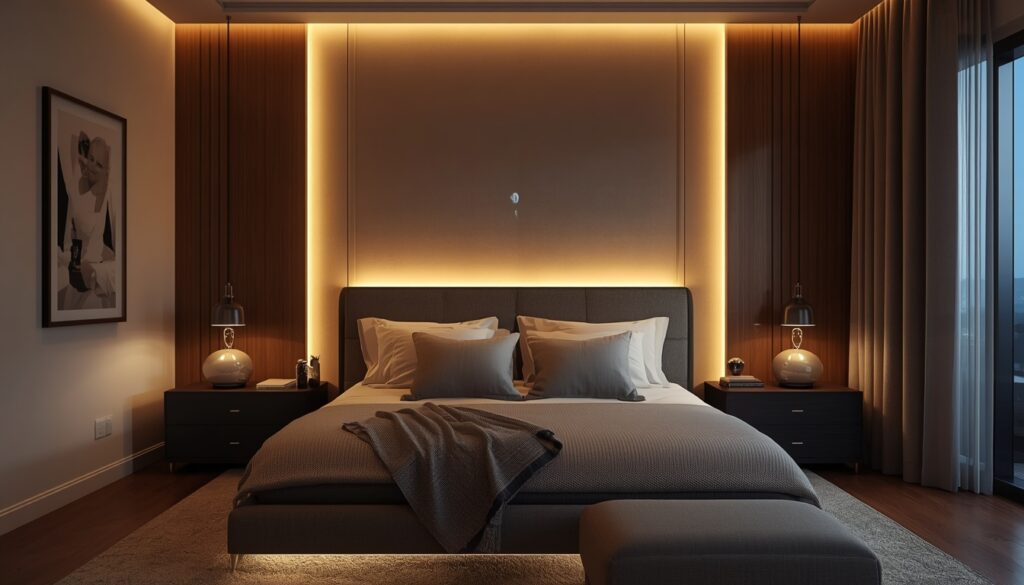
Smart bulbs and switches have made it far easier to run a truly layered smart lighting setup without rewiring anything. A single app or voice command can shift the whole room from bright morning light to a dim amber glow at bedtime, and scheduled routines mean the lighting adjusts itself before you even ask.
Color-changing smart bulbs let you match the room’s brightness control and bedroom ambiance to the time of day, cool and energizing in the morning, warm and dim by evening. For anyone renting or hesitant to install permanent fixtures, a smart plug paired with existing lamps offers nearly the same flexibility for a fraction of the cost and zero commitment to the wall.
Small Bedroom Lighting Solutions
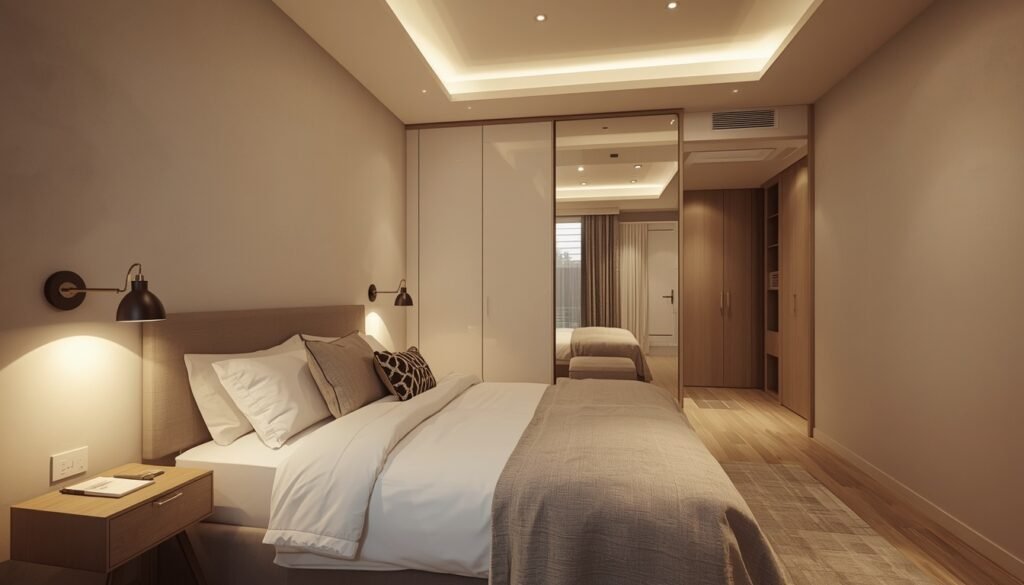
Small bedroom lighting has to work harder in less space. A large table lamp can eat up half a nightstand, and a low-hanging chandelier can make an already tight room feel even smaller. The fix isn’t fewer lights; it’s smarter placement that keeps every surface as clear as possible.
Wall sconces, plug-in wall lights, and slim pendant fixtures all solve the space problem by moving light off the furniture entirely, one of several tricks covered in these small bedroom ideas for making a tight room feel bigger. Mirrors placed near a light source also help, bouncing whatever glow you have around the room instead of letting it die in one corner.
Choosing the Right Color Temperature
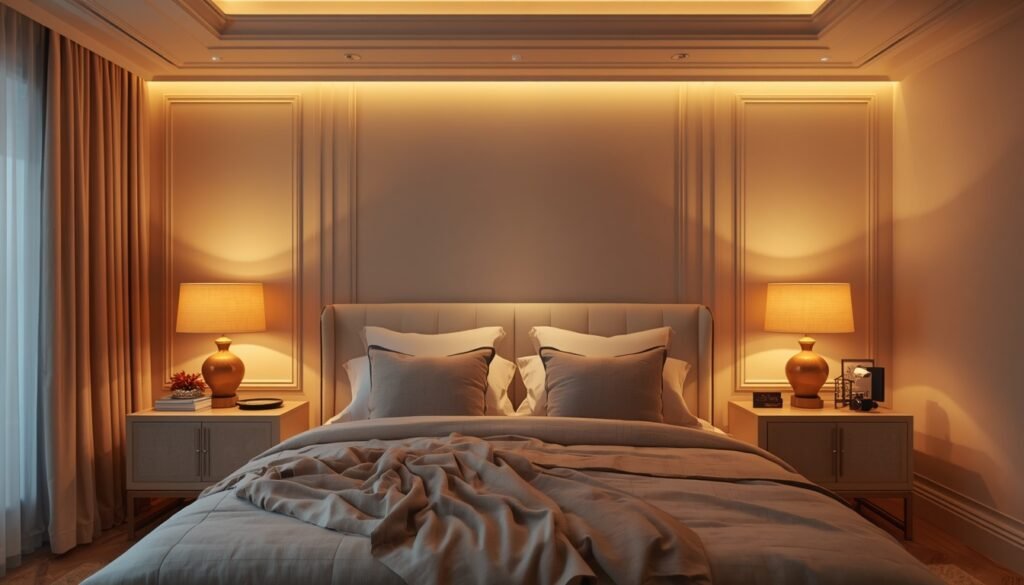
Color temperature, measured on the Kelvin lighting scale, decides whether a bulb reads as cozy or clinical, and it matters just as much as the fixture itself. Bedrooms almost always benefit from warm tones, since cool-toned bulbs tend to feel more suited to offices and bathrooms than a space meant for winding down.
| Kelvin Range | Feel | Best For |
|---|---|---|
| 2200K–2700K | Warm, amber | Bedside lamps, evening ambiance |
| 2700K–3000K | Soft white | General bedroom ambient light |
| 3000K–4000K | Neutral white | Closets, vanity areas |
| 4000K+ | Cool, bright | Avoid in bedrooms; feels clinical |
Sticking within the 2200K to 3000K range across most fixtures keeps the whole room feeling cohesive instead of like a patchwork of mismatched bulbs.
Budget-Friendly Bedroom Lighting Ideas
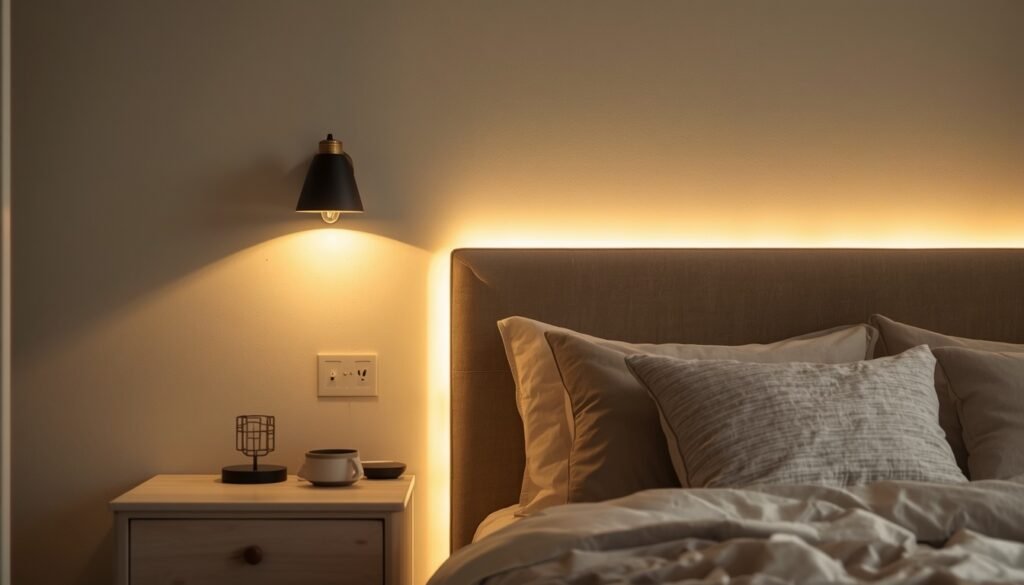
A full lighting overhaul doesn’t require an electrician or a big budget. Plug-in wall sconces skip the wiring step entirely, and they cost a fraction of hardwired versions while looking nearly identical once installed. LED strip lights behind a headboard or along a shelf add instant ambiance for less than the price of a single lamp.
Thrifted and vintage lamps are another underused option, since a fresh shade and a new bulb can transform an outdated fixture into something that looks custom. Smart plugs on existing lamps add dimming and scheduling without buying new fixtures at all, which makes them one of the highest-value upgrades available.
Common Bedroom Lighting Mistakes to Avoid
Relying on a single overhead fixture is the most common lighting mistake, and it’s the one that makes the biggest difference once fixed. A room with only one light source has no flexibility, forcing everyone into the same brightness whether they’re sleeping, reading, or getting dressed.
Cool-toned bulbs are the second big offender, since a 5000K “daylight” bulb in a bedside lamp can make even a beautifully designed room feel like a dentist’s office. Skipping dimmers is the third mistake worth fixing, because even the best fixture loses half its usefulness if it only has an on-and-off switch instead of a range.Bedroom Design Ideas: The Complete Guide (2026)