
Guest Bathroom Ideas That Make a Small Space Feel Bigger
A small guest bathroom doesn’t have to feel like an afterthought. With the right guest bathroom ideas, even the tightest powder room can trick the eye into thinking it has extra square footage.
From a floating vanity that clears the floor to large mirrors that bounce light around the room, small tweaks add up fast. This guide walks through practical, budget-friendly ways to make a small bathroom feel bigger without knocking down a single wall.
Guest Bathroom Ideas That Make a Small Space Feel Bigger
Choose a Floating Vanity to Free Up Floor Space
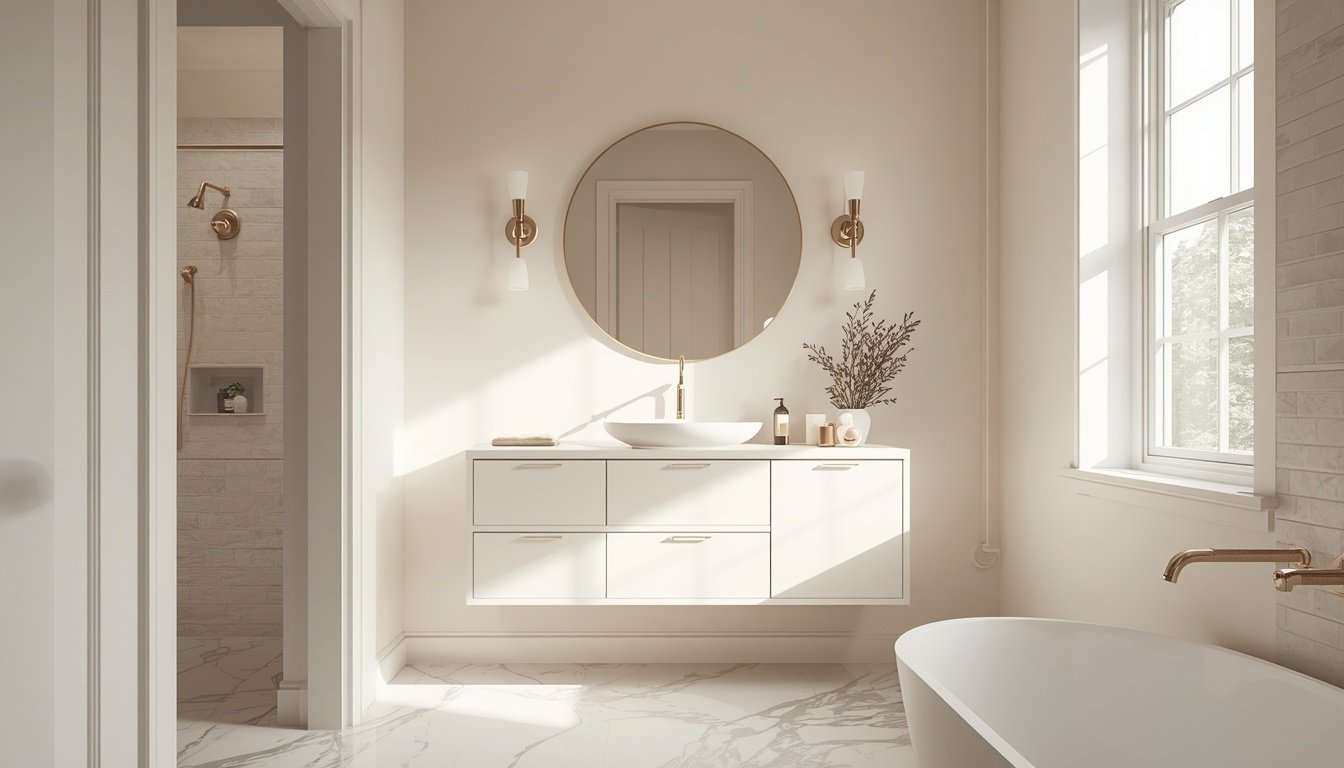
A floating vanity is one of the fastest ways to open up a small guest bathroom. Wall-mounted units, usually 24 to 30 inches wide, leave the floor visible underneath, and that visible floor tricks the brain into reading the room as larger than it actually is. Most floating vanities also come with hidden storage, so you’re not sacrificing function for the sake of style.
Installation does require a bit of plumbing adjustment, since the pipes need to run through the wall instead of the floor. That extra step can bump up the budget slightly, but the payoff is worth it. A compact fixtures approach like this works especially well in bathrooms under 35 square feet, where every inch of visible floor matters.
Go Big on Mirrors to Bounce Light Around
Nothing stretches a cramped bathroom quite like large mirrors. A mirror that spans wall-to-wall or sits above the sink reflects both natural and artificial light, doubling the room’s perceived size almost instantly. Guests notice the difference the moment they walk in, even if they can’t quite explain why the space feels roomier.
The trick isn’t just size, though. Placement matters just as much as scale, and a mirror positioned across from a window or light source will always outperform one tucked into a dim corner. Framed mirrors that match the room’s finishes add a decorative touch too, turning a functional piece into part of the design story.
Best Mirror Placement for Small Bathrooms
Position the mirror directly opposite the strongest light source in the room, whether that’s a window, skylight, or a well-placed sconce. This maximizes how much light bounces back into the space, which matters more in a small bathroom layout than the mirror’s shape or frame style.
Stick to Light, Neutral Color Palettes
Light neutral colors do more heavy lifting in a small bathroom than almost any other design choice. Soft whites, pale grays, and warm pastels reflect light instead of absorbing it, which keeps the room feeling open and airy rather than boxed in. This is especially true for marble tiles or large-format tile choices, where a pale palette reads clean and expansive.
That said, an all-neutral room can start to feel flat if there’s nothing to anchor it. One bold accent, like a teal backsplash or a patterned floor tile, keeps the space from feeling bland without overwhelming it. The key is restraint: pick one focal point and let the neutrals do the rest of the work.
Where to Add a Bold Accent Without Overwhelming the Space
The safest spot for a bold accent is somewhere the eye naturally lands first, like the accent wall behind the vanity or a statement tile floor. Keep it to a single element so the room still reads as calm and cohesive rather than busy.
Think Vertical: Tall Shelving and Recessed Storage
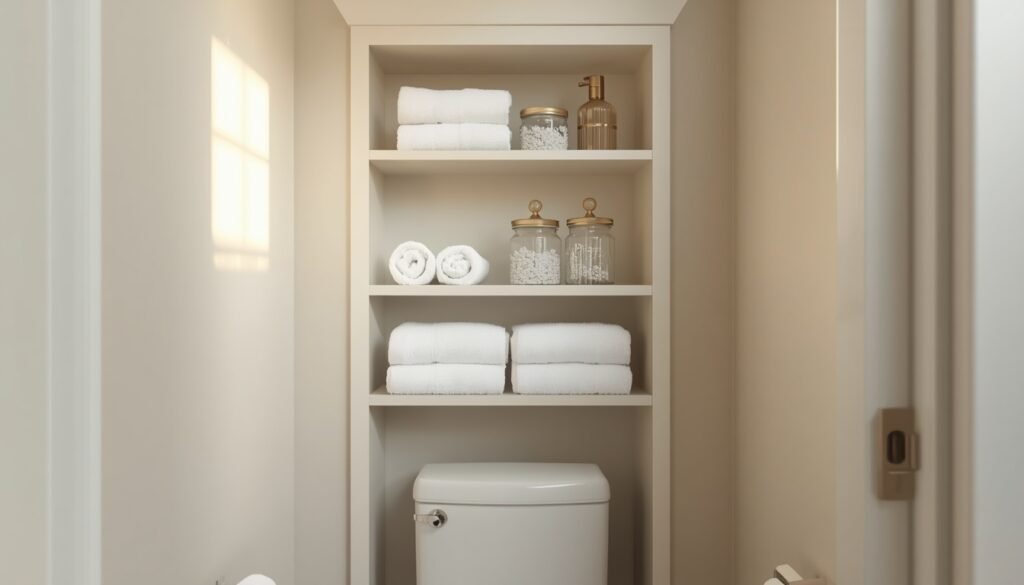
When floor space is tight, the smartest move is to think up instead of out. Vertical storage solutions like tall, recessed shelving or a shallow medicine cabinet use wall height that would otherwise sit empty, without eating into the footprint of the room. This kind of open shelving also gives guests an easy, visible spot to find towels or toiletries.
Just be careful not to overload the shelves, since a wall packed floor-to-ceiling with items can make the room feel heavier and more cluttered. A few neatly rolled towels and a couple of decorative jars strike the right balance between function and breathing room. Floor-to-ceiling shelving in particular increases storage capacity without expanding the room’s actual size.
Swap Heavy Curtains for Glass Shower Doors
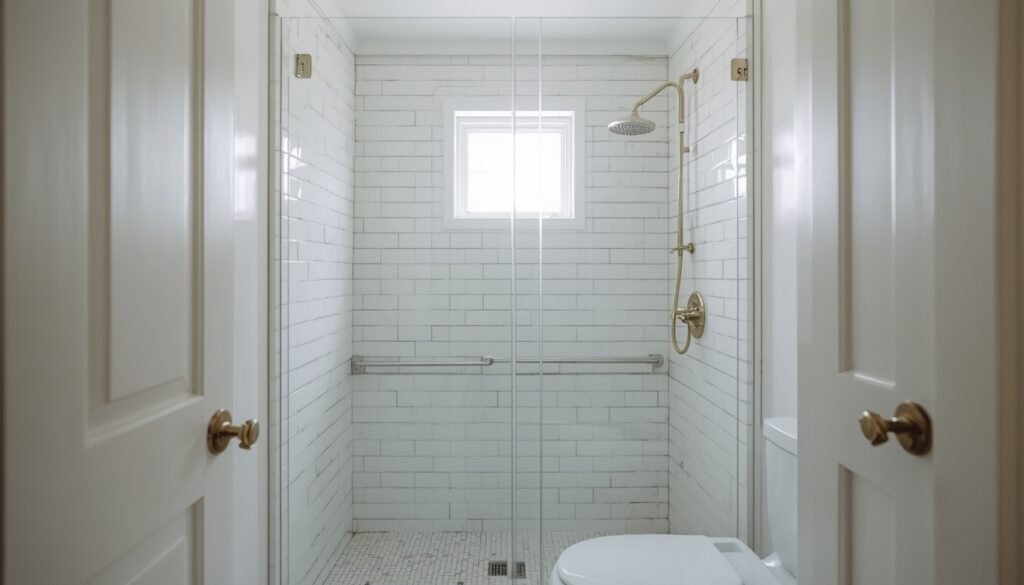
Opaque shower curtains chop a small bathroom into visual segments, making the whole room feel choppier than it is. Switching to glass shower doors or a clear curtain opens up the sightline and lets the floor read as one continuous surface. That single change often makes more visual difference than people expect.
Cleaning glass does take more frequent attention than a curtain, since water spots show up fast. Most homeowners find the trade-off worthwhile, though, since the airy, open feel it creates is hard to replicate any other way. Pair it with wall-mounted storage just outside the shower to keep the glass panel free of clutter.
Bring in Natural Light with Windows or Skylights
Natural light changes the entire mood of a small guest bathroom, and even a small window can make a noticeable difference. Adding a window, even inside the shower itself, floods the room with daylight and instantly makes it feel larger. Frosted or textured glass handles privacy concerns without blocking the light.
For bathrooms on an upper floor or in an attic, a skylight delivers the same effect without worrying about sightlines from neighboring windows. A standard 2×2-foot skylight takes roughly 6 to 8 hours to install with professional help. The daylight it brings in reduces shadows throughout the day, which keeps the whole space feeling brighter for longer.
Layer Your Lighting for a Brighter Feel
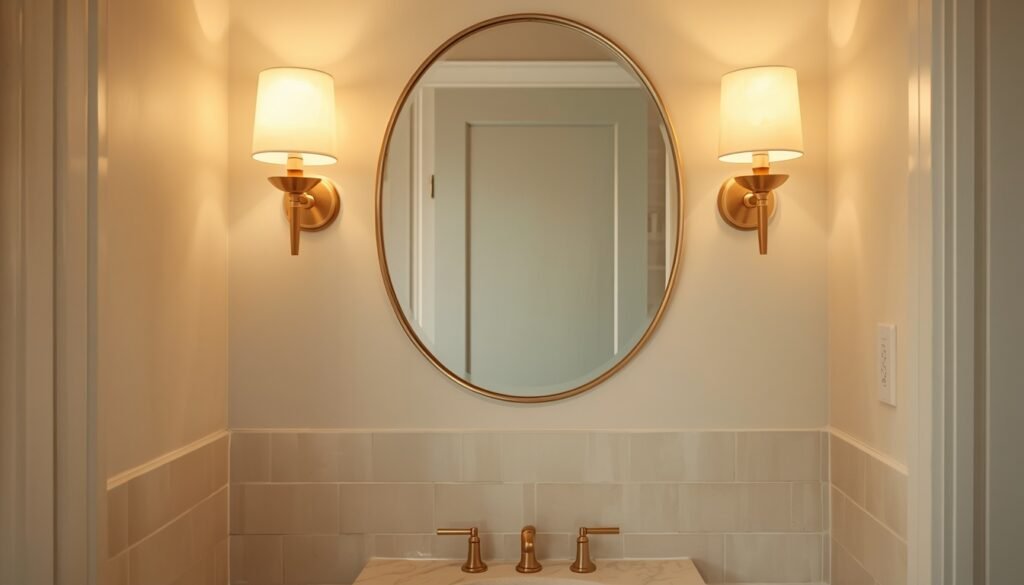
Layered lighting does more than a single overhead fixture ever could. Combining an overhead light with sconces flanking the mirror spreads illumination evenly across the room, eliminating the harsh shadows that a single bulb tends to create. That even spread makes surfaces, especially light tile, look brighter and cleaner.
Dimmer switches add flexibility for a guest bathroom that needs to feel bright during the day and softer at night. It’s a small upgrade, but it changes how the whole room feels depending on the time it’s used. Combined with natural light during the day, layered fixtures keep the bathroom well-lit around the clock.
Use Large-Format Tiles to Minimize Grout Lines
Large-format tiles reduce the number of grout lines on the floor and walls, and fewer lines mean fewer visual breaks for the eye to catch on. That seamless look reads as more spacious than the same square footage covered in smaller tiles. Glossy finishes push the effect even further by reflecting light across the surface.
The trade-off is upkeep, since large tiles show water spots and grout stains more visibly than a busier pattern would. Regular cleaning keeps that hotel-like polish intact, and most homeowners find it’s a small price for the payoff in perceived square footage. Pale, glossy versions of marble tiles work particularly well for this purpose.
Try a Corner Sink for Extra-Tight Layouts
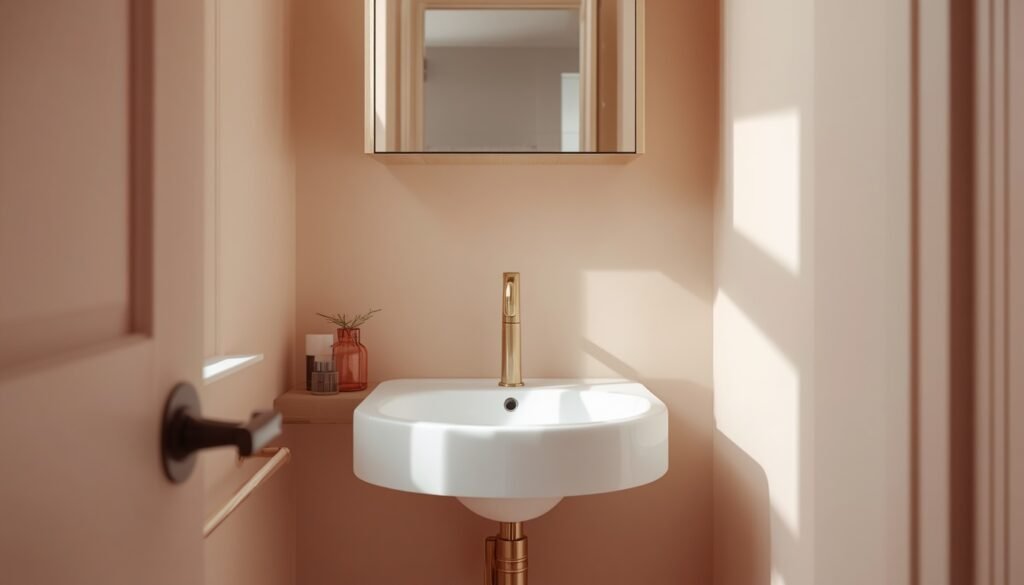
A corner sink solves a very specific problem: bathrooms so tight that a standard vanity simply won’t fit comfortably. Tucking the sink into an unused corner frees up the rest of the floor plan for movement, which matters in bathrooms where every square foot counts. It’s an especially useful fix for powder room layouts near an entryway.
Pairing the corner sink with a mirrored cabinet or small floating shelf above it keeps storage close at hand without adding bulk. The combination feels sleek and intentional rather than like a compromise, and guests rarely notice the room was a tight squeeze to begin with.
Add Function Without Clutter: Smart Under-Sink Storage
The space under the sink often goes to waste in a small guest bathroom, even though it can hold a surprising amount when organized well. Stackable bins or slide-out drawers make use of that awkward, hard-to-reach area without requiring any renovation. This is one of the easiest bathroom storage ideas to implement in a weekend.
Keeping this storage tidy matters just as much as having it in the first place, since a jumbled cabinet defeats the purpose of freeing up visible space elsewhere. A simple system, like labeled bins for guest toiletries, keeps everything accessible and out of sight at the same time.
Small Guest Bathroom Mistakes to Avoid
Even well-intentioned updates can backfire in a compact bathroom ideas project if they’re not planned carefully. Dark, saturated wall colors tend to close in a small room rather than add character, and bulky furniture pieces eat up floor space that the room can’t spare. Overcrowded shelves, oversized rugs, and heavy patterned wallpaper all create the same problem: they shrink the room visually instead of opening it up.
Skipping proper lighting is another common misstep, since a single dim overhead bulb casts shadows that make the whole space feel smaller and less inviting. Before starting any bathroom remodel budget, it helps to walk through these common pitfalls so the final result actually delivers the open, airy feel it’s meant to.
| Mistake | Why It Hurts a Small Space | Better Alternative |
|---|---|---|
| Dark, saturated paint colors | Absorbs light instead of reflecting it | Light neutral colors like soft white or pale gray |
| Bulky floor-standing vanity | Blocks visible floor space | Floating vanity |
| Small, scattered mirrors | Minimal light-bouncing effect | One large mirror opposite the light source |
| Heavy patterned wallpaper | Visually shrinks the room | One bold accent wall instead |
| Single overhead light | Creates harsh shadows | Layered lighting with sconces |
| Opaque shower curtain | Breaks up the sightline | Glass shower doors |
FAQs About Small Guest Bathroom Design
| Question | Answer |
|---|---|
| What’s the fastest way to make a small guest bathroom feel bigger? | Installing a large mirror across from a light source delivers the most noticeable change for the least effort and cost. |
| Do floating vanities really make a difference? | Yes. Visible floor space under the vanity tricks the eye into reading the room as larger, even though the actual square footage stays the same. |
| Is a skylight worth it in a small bathroom? | For upper-floor or attic bathrooms without street-facing windows, a skylight brings in daylight without privacy concerns, and most installs take under a day. |
| What color works best for a tiny guest bathroom? | Light, neutral tones like white, pale gray, or soft pastel reflect the most light and keep the space feeling open. |
| Should I avoid bold colors entirely? | Not necessarily. One bold accent, like a tile floor or accent wall, adds character without overwhelming the room, as long as the rest of the palette stays neutral. |

One Comment