
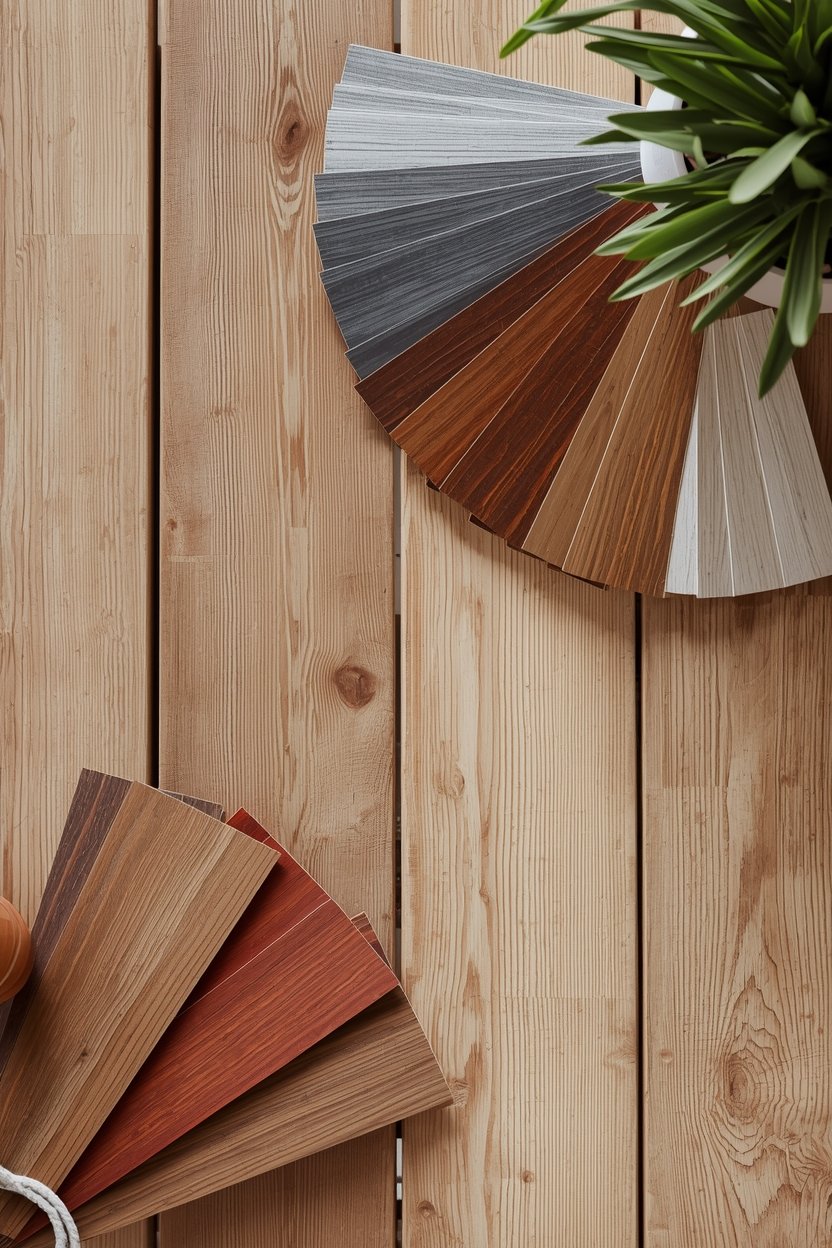
Deck Stain Color Guide: How to Pick the Perfect Shade for Every Wood Type
Picking a deck stain color sounds simple — until you bring home that gorgeous walnut shade and realize it looks nothing like it did on the color chip. The wood type beneath your stain changes everything. Cedar soaks up color differently than pine. Redwood fights back against cool tones. Ipe barely absorbs anything at all.
This step-by-step deck stain color guide cuts through the confusion. You will know exactly which shades work for your specific wood, which stain type to reach for, and how to avoid the expensive mistakes most homeowners make on their first try.
📌 PIN-WORTHY TIP: Save this post before you head to the hardware store — you will want to reference the color palette section while you browse!
Step 1: Identify Your Wood Type First
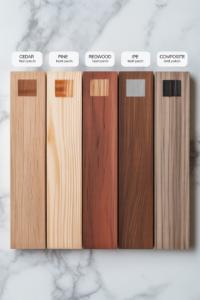
Before anything else — color swatches, stain brands, or finish levels — you need to know what species of wood your deck is made from. This single step determines everything that follows.
Here is a quick identification guide:
- Cedar — Reddish-brown with a tight, straight grain. Lightweight and naturally fragrant.
- Pressure-Treated Pine — Yellowish-green when new, fades to gray over time. Often has visible knots.
- Redwood — Deep crimson or rust color, smooth grain with a silky surface texture.
- Ipe / Exotic Hardwood — Very dense, dark brown to olive-brown, extremely heavy boards.
- Composite Decking — Manufactured appearance, uniform color, no visible grain variation.
📌 PIN-WORTHY TIP: Not sure what wood you have? Take a photo to your local lumber yard or deck specialist — they can identify it in seconds.
Step 2: Understand the 4 Opacity Levels
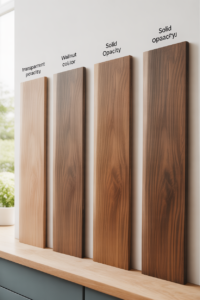
The opacity of a deck stain controls how much of the original wood grain shows through — and it directly affects how your chosen color actually looks on the finished deck. There are four levels to know:
- Transparent — No pigment, pure protection. The wood’s natural color shines through completely. Best for new, beautiful wood you want to preserve as-is.
- Semi-Transparent — Light pigment, grain still visible. The most popular choice for homeowners who want a color hint without hiding the wood’s character.
- Semi-Solid — More pigment, grain slightly visible. Great for older decks with minor imperfections you want to soften.
- Solid — Full pigment, no grain visible. Works like paint. Best for heavily weathered or damaged wood that needs full coverage.
📌 PIN-WORTHY TIP: When in doubt, go one step more transparent than you think you need. You can always add color — but you cannot take it away without stripping.
Step 3: Match Your Color to Your Wood Type
This is the heart of the deck stain color guide. Below you will find the best color families for each common wood type, along with specific named shades to look for when shopping.
Cedar Decks — Best Stain Color Palette
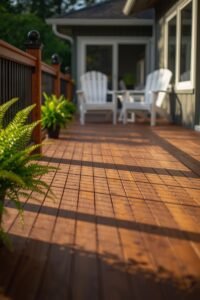
Cedar already has natural warmth and a beautiful reddish tone. The goal is to enhance what is already there, not overpower it. Cool grays and blues clash badly with cedar’s undertones.
- Honey Gold — Warm, light amber that brings out cedar’s natural golden undertones.
- Butterscotch — A richer amber with brown depth. Perfect for sun-facing decks.
- Natural Cedar — A stain that simply deepens the wood’s existing color.
- Light Chestnut — Adds warmth without going too dark. Ages beautifully over time.
What to avoid: Solid white, cool gray, or blue-tinted stains. These fight cedar’s natural warmth and look unnatural.
📌 PIN-WORTHY TIP: For cedar, semi-transparent stains in amber or honey tones are the sweet spot. They protect and enhance without hiding the grain you paid for.
Pressure-Treated Pine — Best Stain Color Palette
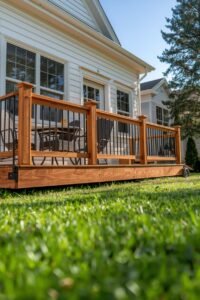
Fresh pressure-treated pine has a greenish tint from the treatment chemicals. Let it dry fully — wood often needs several weeks to a few months to dry, depending on the wood and weather; use the water-sprinkle test before staining. Once dry, the wood takes color well but needs a shade that works with or neutralizes its underlying tone.
- Medium Walnut — Neutralizes the green tint completely. A crowd favorite for pine decks.
- Mahogany — Adds rich reddish-brown depth. Elevates the look of a budget-friendly wood.
- Slate Gray — Modern and clean. Works beautifully with contemporary home exteriors.
- Sandstone — Light tan finish. Great for large open decks where a uniform, airy feel is the goal.
- Driftwood — Muted gray-brown. Popular for coastal and farmhouse style homes.
What to avoid: Light transparent stains on new pine. The uneven grain and greenish tone shows through unflattering.
📌 PIN-WORTHY TIP: Pine absorbs stain unevenly. Always apply a wood conditioner first to get a more uniform color result — especially with lighter shades.
Redwood Decks — Best Stain Color Palette

Redwood is a premium wood with high tannin content. These tannins can bleed through water-based stains and cause discoloration. Always use an oil-based tannin-blocking primer before staining — or choose a product specifically formulated for high-tannin woods.
- Deep Redwood — Intensifies the wood’s existing color. The safest, most natural-looking choice.
- Barn Red — Bold and saturated. Makes a statement while staying true to the wood’s warmth.
- Burnt Sienna — Warm terracotta tone that harmonizes with redwood without copying it.
- Teak Oil Finish — Not technically a color stain, but the gold-brown tone it produces on redwood is stunning.
What to avoid: Cool grays, charcoal, or any blue-toned stains. These create a jarring clash with redwood’s inherent warmth.
📌 PIN-WORTHY TIP: Redwood + semi-transparent stain in a deep red or sienna tone = one of the most Pinterest-worthy deck looks you can achieve.
Ipe & Exotic Hardwoods — Best Finish Palette
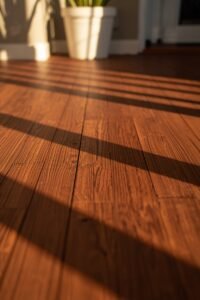
Ipe, teak, and other tropical hardwoods are so dense that standard deck stains cannot penetrate the surface. Skip film-forming stains entirely and go straight for penetrating oil finishes instead.
- Natural Teak Oil — Restores and deepens the wood’s natural golden-brown color.
- Lightly Tinted Hardwood Oil — Adds subtle color while feeding the wood’s natural oils.
- Clear UV-Protective Finish — Slows the silver weathering process. Best for those who love the raw look.
📌 PIN-WORTHY TIP: Never use a solid stain on ipe. It sits on top of the surface, peels within a season, and leaves you with a stripping nightmare on one of the hardest woods in existence.
Composite Decking — Stain Considerations
Most composite decks should not be stained at all — doing so may void the manufacturer warranty. If your composite has significantly faded, use only a specialty composite deck stain formulated to bond to non-porous surfaces.
- Espresso — Rich dark brown that revives faded composite and gives it a like-new appearance.
- Charcoal — A sleek, modern neutral that works with almost any exterior color scheme.
- Tan / Sandstone — Keeps things light and clean for pergola-style or open outdoor rooms.
📌 PIN-WORTHY TIP: Always check your composite brand’s website before staining. Some manufacturers offer their own refinishing products that match original colors exactly.
Step 4: Use the Quick-Reference Color Palette Table
Here is a save-worthy summary of the best deck stain colors organized by wood type. Screenshot this before your next shopping trip.
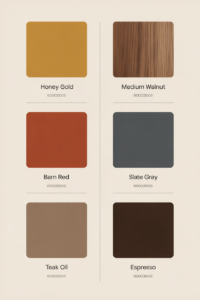
| Wood Type | Recommended Stain Colors |
|---|---|
| Cedar | Honey Gold, Butterscotch, Natural Cedar, Light Chestnut |
| Pressure-Treated Pine | Medium Walnut, Mahogany, Slate Gray, Sandstone, Driftwood |
| Redwood | Deep Redwood, Barn Red, Burnt Sienna, Teak Oil Finish |
| Ipe / Hardwood | Natural Teak Oil, Lightly Tinted Hardwood Oil, Clear UV Finish |
| Composite | Espresso, Charcoal, Tan / Sandstone |
Step 5: Test Before You Commit
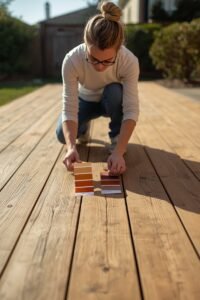
This is the step most people skip — and then regret. Color chips at the hardware store are printed on paper under artificial lighting. Your actual deck is outside, in natural sunlight, surrounded by your specific house colors, fencing, and landscaping.
- Buy a quart of your top two color choices.
- Apply each to a discreet section of your deck or a matching scrap board.
- Observe the test patches at three different times: morning light, midday sun, and evening shade.
- Compare both patches against your home’s siding, trim, and any visible roofline or fence color.
- Choose the one that looks best in all three lighting conditions — not just your favorite on the chip.
📌 PIN-WORTHY TIP: The color that wins in evening light almost always wins overall. Decks are most used in the late afternoon and evening, so that is your most important viewing condition.
Step 6: Choose the Right Stain Formula for Your Climate
Color is only half the decision. The right stain formula protects your deck from the specific weather conditions in your area. Here is how to match formula to climate:
- Hot, sunny climate — Choose a stain with maximum UV inhibitors. Look for products labeled “fade resistant” or “UV-blocking formula.”
- Rainy or humid climate — Prioritize a stain with strong mildewcide and water-repellent properties. Oil-based formulas tend to outperform in consistently wet conditions.
- Freezing winters — Look for stains that remain flexible in cold temperatures to resist cracking as wood expands and contracts.
- Dry, desert climate — Penetrating oil-based stains that nourish the wood prevent cracking and checking in low-humidity environments.
📌 PIN-WORTHY TIP: Oil-based stains penetrate deeper and last longer in harsh climates. Water-based stains dry faster, clean up easier, and have lower VOCs — ideal for mild climates and quick projects.
Step 7: Prep the Surface — Then Apply
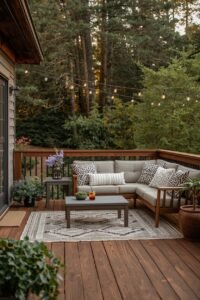
No stain color looks good over a dirty, peeling, or wet surface. Proper prep is what separates a deck that looks great for five years from one that starts flaking after the first winter.
- Clean the deck thoroughly with a deck cleaner and stiff brush to remove dirt, mildew, and graying.
- Pressure wash on a low setting if needed — but allow the wood to dry fully for 48 to 72 hours afterward.
- Sand any rough spots or raised grain with 80-grit sandpaper.
- If switching stain types or colors dramatically, strip the old stain completely before applying new product.
- Apply stain with a brush, roller, or pad applicator. Work in the direction of the grain.
- Apply a second coat within the window recommended on the product label — usually within 2 hours.
📌 PIN-WORTHY TIP: Stain in the shade whenever possible. Direct sun dries the stain too fast, causing lap marks and uneven absorption.
Choosing Deck Stain Colors: A Simple Decision Guide
Picking a deck stain color gets much easier when you work through it in order: wood type first, opacity second, color third, and a test patch last. Start by identifying your wood, because the species underneath changes how every color looks. Cedar is reddish-brown with a tight, straight grain; pressure-treated pine starts yellowish-green and fades to gray; redwood is deep crimson or rust; ipe is very dense and dark brown to olive-brown; composite decking has a manufactured, uniform look with no visible grain. Pressure-treated pine deserves special attention because it is the most common deck wood in the US, and the trickiest to stain well. Fresh pressure-treated pine carries a greenish tint from the treatment chemicals, so let it dry fully — wood often needs several weeks to a few months to dry, depending on the wood and weather; use the water-sprinkle test before staining. Once it is dry, it takes color well, but you need a shade that works with or neutralizes that underlying tone. Medium Walnut is the crowd favorite because it neutralizes the green tint completely; Mahogany adds rich reddish-brown depth; Slate Gray suits modern exteriors; Sandstone and Driftwood round out the palette. Next, choose your opacity, which controls how much grain shows through: transparent has no pigment and suits new, beautiful wood; semi-transparent is the most popular choice, adding a hint of color while the grain stays visible; semi-solid softens minor imperfections on older decks; solid works like paint for heavily weathered wood. When in doubt, go one step more transparent than you think, because you can always add color, but you cannot take it away without stripping. Then use the quick-reference color chart in this guide as your shopping list: cedar takes Honey Gold, Butterscotch, Natural Cedar, and Light Chestnut; redwood takes Deep Redwood, Barn Red, Burnt Sienna, and a Teak Oil finish; ipe takes Natural Teak Oil, a lightly tinted hardwood oil, or a clear UV finish; composite takes Espresso, Charcoal, or Tan and Sandstone. Finally, test before you commit: buy a quart of your top two choices, brush each onto a discreet section of your deck or a matching scrap board, and look at both patches in morning light, midday sun, and evening shade. The color that wins in evening light almost always wins overall, since decks get the most use in the late afternoon and evening.
Frequently Asked Questions About Deck Stain Colors
What is the best deck stain color for pressure-treated pine?
Medium Walnut is the crowd favorite because it neutralizes the green tint completely. Mahogany adds rich reddish-brown depth, and Slate Gray works beautifully with contemporary exteriors. Whichever you choose, let the wood dry fully — wood often needs several weeks to a few months to dry, depending on the wood and weather; use the water-sprinkle test before staining.
Should I use transparent or solid deck stain?
It depends on the wood. Transparent stain has no pigment and suits new, beautiful wood you want to preserve as-is. Semi-transparent is the most popular choice, adding a hint of color while the grain stays visible. Semi-solid softens minor imperfections on older decks, and solid stain works like paint for heavily weathered wood that needs full coverage.
How do I test a deck stain color before committing?
Buy a quart of your top two choices and brush each onto a discreet section of your deck or a matching scrap board. Check both patches in morning light, midday sun, and evening shade. The color that wins in evening light almost always wins overall, since decks get the most use in the late afternoon and evening.
Why does my deck stain look different from the color chip?
Color chips are printed on paper under artificial lighting, while your deck sits outside in natural sunlight, surrounded by your house colors, fencing, and landscaping. The wood species underneath also changes the result, which is why a test patch on your actual deck matters more than the chip.
Once the colour is right, explore deck decorating ideas for every style to finish the space. Pair the stain with budget-friendly deck skirting ideas to give the deck a polished edge. If your fence is part of the view, choosing the right wood for your fence matters just as much as the stain. The same approach works beyond the deck, so try these small patio ideas for a matching outdoor area. And for the front of the house, front porch decorating ideas can tie the whole exterior together. Pair the finish with white exterior house colors with a stained wood deck.
Quick Color Palette Recap by Style Aesthetic
Not sure which wood-based color applies to your home’s overall style? Use this aesthetic shortcut:
- Farmhouse or Cottage Style — Driftwood, Sandstone, Light Chestnut
- Modern or Contemporary — Slate Gray, Charcoal, Espresso
- Traditional or Colonial — Medium Walnut, Mahogany, Natural Cedar
- Coastal or Beach — Driftwood, Weathered Gray, Soft Tan
- Rustic or Cabin — Barn Red, Burnt Sienna, Deep Redwood
- Tropical or Resort — Teak Oil, Natural Hardwood, Warm Honey Gold
📌 PIN-WORTHY TIP: Pull the secondary accent color from your home’s trim or shutters and use it as a guide when narrowing down deck stain shades. Matching one element creates a cohesive, intentional look. For the trim itself, see exterior stain colors for wood trim.
You Have Got This — Now Go Make It Pin-Worthy
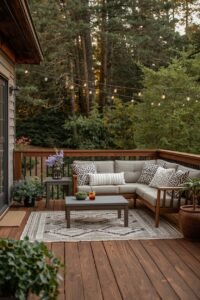
Choosing the right deck stain color does not have to be overwhelming. When you start with the wood, match the opacity to your goals, test in natural light, and account for your climate, the decision gets remarkably clear.
Come back to this deck stain color guide every time you tackle a new project — whether it is a full deck replacement or a simple refresh coat. Save it, share it with a friend planning a renovation, and let your outdoor space become the most-saved thing in your neighborhood.
📌 PIN-WORTHY TIP: Tag your finished deck on Pinterest with #DeckStainColorGuide — we would love to see how your project turned out!


4 Comments