15 Luxury Living Room Ideas Under $2,000 That Look Far More Expensive
Luxury living room design used to mean a five-figure budget and a decorator on speed dial. Not anymore. With the right mix of statement piece furniture, textured fabrics, and a few designer tricks, you can pull off a high-end look for under $2,000 — sometimes way under.
This guide walks through 15 practical, budget-friendly decor moves that transform an ordinary room into one that looks like it came straight out of a magazine. From velvet fabric cushions to a single oversized plant, every idea here focuses on maximum visual impact for minimum spend.
Why Luxury Living Rooms Don’t Have to Cost a Fortune
Price tags and perceived value aren’t the same thing. A room can look expensive without a single expensive item in it — the trick lies in interior design tricks like proportion, contrast, and restraint. Designers rely on things like natural light, negative space, and a tight color palette (see how your sofa color shapes the mood of a living room) to create a sense of calm, curated luxury. None of that costs extra. It just requires intention instead of impulse buying.
Most budget decorating failures come from spreading money too thin across too many mediocre pieces. A far smarter approach: concentrate your budget on one or two items that do the heavy lifting, then fill in the rest with clever, low-cost styling. This is the foundation of affordable luxury — spend where it shows, save where it doesn’t. The next section breaks this down into 15 specific, actionable ideas.
15 Budget-Friendly Ways to Get a Luxury Living Room Look
1. Invest in One Statement Piece Instead of Many
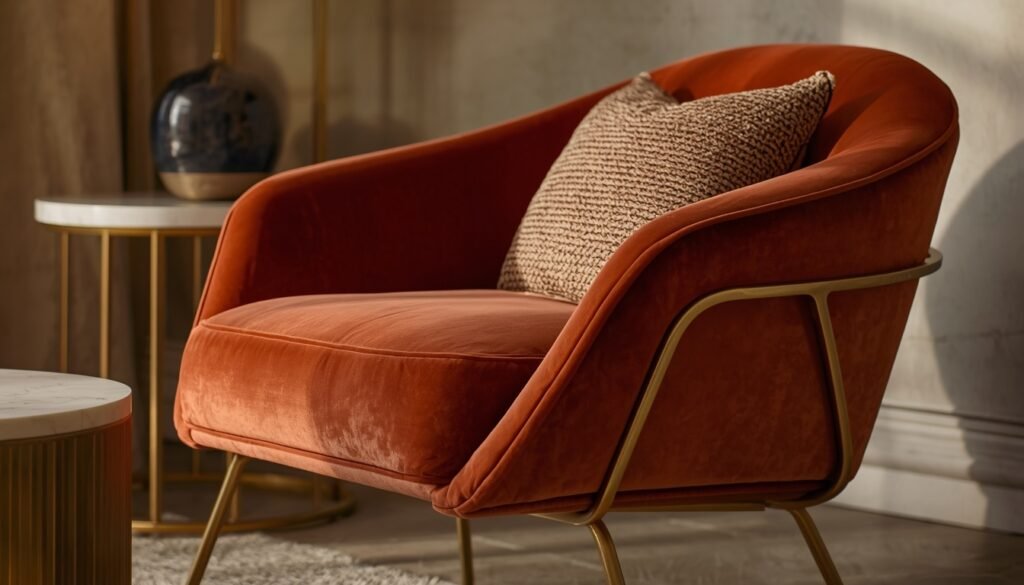
A single statement piece — a bold sculptural chair, a marble-topped console, an oversized mirror — pulls far more visual weight than five smaller purchases combined. Rooms styled by professionals almost always build around one hero item, then keep everything else quiet by comparison. Spend a third of your budget here; it anchors the whole space and makes everything around it look intentional rather than accidental.
2. Layer Textures With Affordable Throws and Pillows
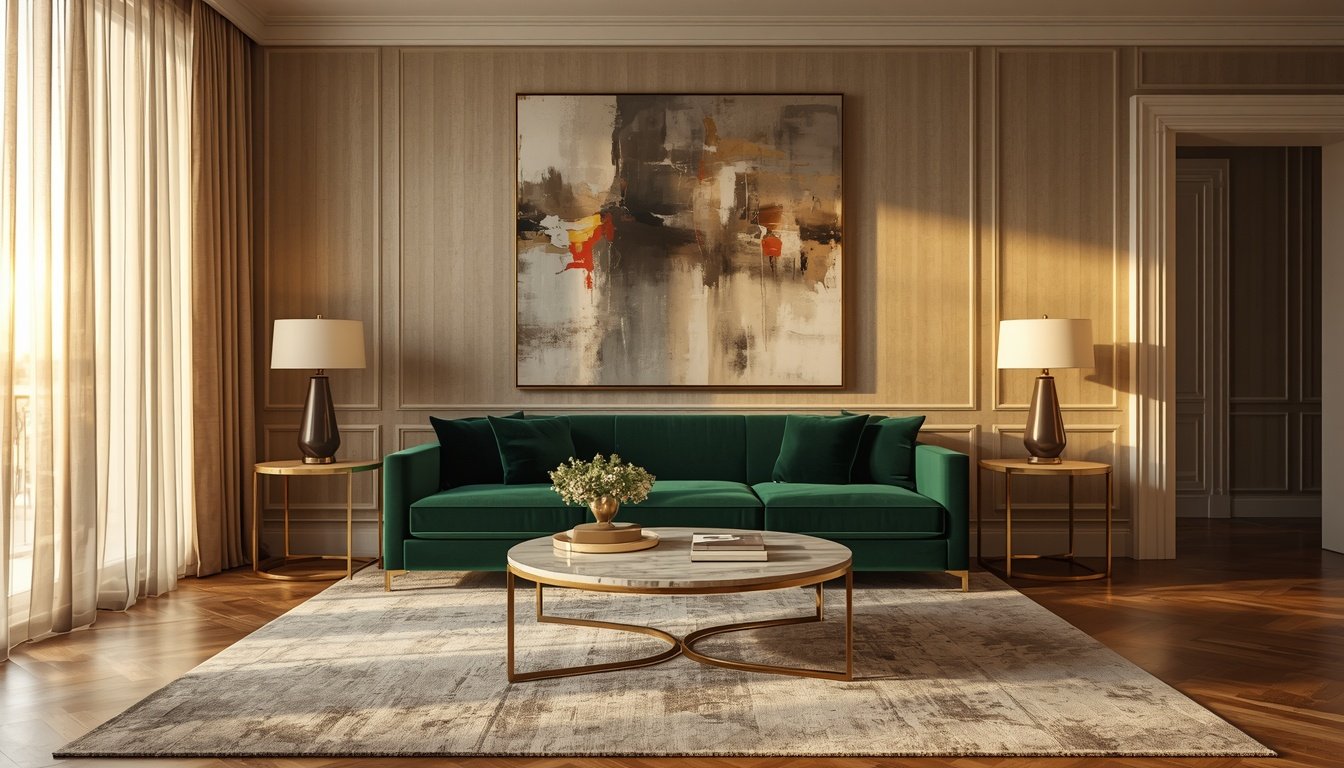
Mixing textured fabrics — bouclé, faux fur, linen, velvet fabric — instantly adds depth without adding real cost. A $20 velvet cushion next to a chunky knit throw reads as curated rather than cheap. Stick to two or three coordinating tones so the layering feels deliberate, not cluttered.
3. Use a Large Area Rug to Anchor the Room
An undersized rug is one of the fastest ways to make a living room look budget rather than boutique. Go bigger than instinct suggests; furniture legs should sit on the rug, not beside it. This one swap does more for perceived cost than almost any other single change, and a mid-range area rug easily achieves it.
4. Swap Hardware and Fixtures for Brass or Gold Accents
Small brass accents and gold accents — drawer pulls, lamp bases, picture frames — catch light and read as expensive even at low cost. Warm metals photograph beautifully and pair well with almost any existing color scheme. A $15 hardware swap can shift the entire tone of a room in an afternoon.
5. Paint Walls in a Deep, Moody Color
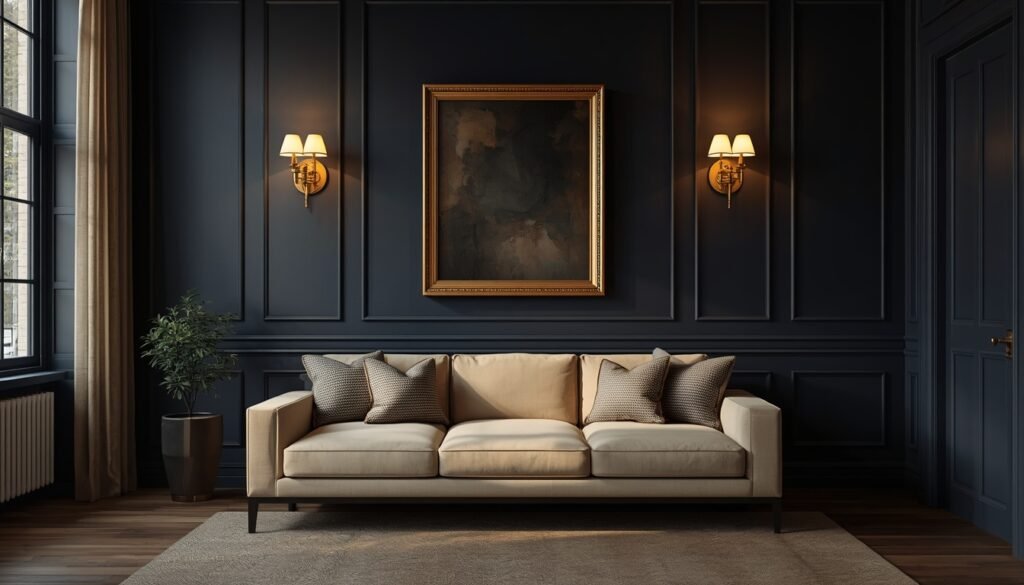
Moody wall color choices — deep green, charcoal, ink blue — create drama that flat white never will. Dark walls also make gold accents, artwork, and lighting fixtures pop harder against the backdrop. For help narrowing down a shade, this guide to picking a luxury living room color palette breaks down which tones read as high-end. A gallon of paint remains one of the cheapest ways to buy a completely different room.
6. Add Molding or Trim for an Architectural Look
Molding and trim instantly signal older, more expensive architecture, even in a builder-grade rental or new-construction home. Peel-and-stick or lightweight MDF trim kits keep this upgrade well within a modest budget. Paneling below chair-rail height is a particularly high-impact, low-cost option.
7. Choose Oversized Art (Even Prints Work)
Oversized artwork fills wall space the way small framed prints simply can’t, and scale reads as confidence rather than cost. A large print from an online marketplace, framed simply, often outperforms several smaller “real” pieces. For placement guidance, this breakdown on layering living room wall art to optimize focal points covers height and grouping. Hang it at eye level and let it anchor a seating area.
8. Upgrade Your Lighting With a Statement Fixture
Statement lighting — a sculptural pendant, an oversized floor lamp — does double duty as both function and art. Overhead lighting in particular gets overlooked, yet it’s one of the fastest tells between a “finished” room and an unfinished one. A single striking fixture, placed correctly, elevates everything beneath it.
9. Reupholster Instead of Replacing Furniture
Reupholstering furniture costs a fraction of buying new, and it lets outdated pieces keep their (often superior) bones. A well-built older sofa reupholstered in a rich fabric frequently looks more luxurious than a brand-new budget one. This is where home decor on a budget gets genuinely resourceful.
10. Add Symmetry With Matching Side Tables or Lamps
Symmetry in decor reads as calm, intentional, and expensive — asymmetry, unless done deliberately, tends to read as unfinished. A pair of matching side tables or lamps flanking a sofa creates instant visual balance. It’s a small purchase with an outsized effect on how “put together” a room feels.
11. Use Sheer or Floor-Length Curtains
Sheer curtains hung close to the ceiling, rather than the window frame, make ceilings look taller and rooms feel grander. Floor-length panels — even inexpensive ones — outperform short, stiff curtains every time. This is one of the cheapest tricks on this entire list and one of the most effective.
12. Declutter and Style With Fewer, Better Objects
Decluttering tips from professional stagers all circle back to one idea: empty space is a design element, not a void to fill. A shelf with three well-chosen objects looks more expensive than one crammed with a dozen mismatched trinkets. Editing down is free, and it’s often the single highest-impact change on this list.
13. Bring in Greenery With One Large Statement Plant
Greenery and plants — specifically one oversized option like a fiddle-leaf fig or olive tree — show up in nearly every high-end living room ideas feature for a reason. A single large plant in a simple pot reads as far more sophisticated than several small ones scattered around. It also softens hard lines and adds life to an otherwise static room.
14. Mix Metals Intentionally
Mixing metals — brass with matte black, or nickel with warm gold — used to be a design no-no and is now a hallmark of a curated, modern living room. The key word is intentional: pick two metals max and repeat them consistently across fixtures, frames, and hardware. Done randomly, it looks chaotic; done deliberately, it looks collected over time.
15. Layer Lighting (Ambient, Task, and Accent)
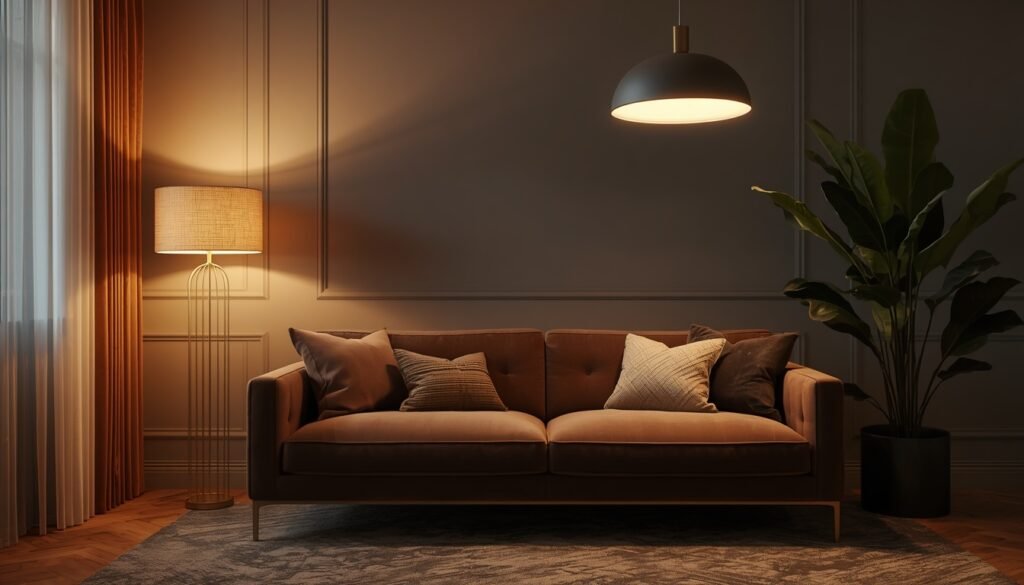
Layered lighting — a mix of overhead, table, and accent sources — creates the warm, dimensional glow found in high-end interiors, instead of the flat wash of a single overhead bulb. Three lighting sources at different heights do more for ambiance than one expensive fixture ever could. This finishing touch ties every other idea on this list together.
Budget Breakdown: Where to Splurge vs. Save
Not every dollar needs to work equally hard. Some purchases genuinely benefit from a higher price point, while others deliver nearly identical results at a fraction of the cost. Knowing which is which keeps a budget decorating plan realistic instead of wishful.
The table below breaks down a sample $2,000 allocation across the ideas covered above, splitting spend between splurge-worthy items and safe places to save.
| Category | Splurge or Save | Suggested Budget |
|---|---|---|
| Statement piece (chair/console) | Splurge | $500–$700 |
| Area rug | Splurge | $250–$400 |
| Lighting fixture | Splurge | $150–$250 |
| Throw pillows/textiles | Save | $60–$100 |
| Hardware and accents | Save | $40–$80 |
| Wall paint | Save | $80–$120 |
| Molding/trim kit | Save | $100–$150 |
| Wall art | Save | $80–$150 |
| Plants and greenery | Save | $50–$80 |
| Curtains | Save | $60–$100 |
This split keeps roughly two-thirds of the budget on three high-impact items and the rest spread across smaller, still-meaningful upgrades. Adjust the ratios based on which existing pieces in the room already look expensive versus which ones are actively working against the space.
Common Mistakes to Avoid When Decorating on a Budget
Even with a solid plan, a few habits quietly undercut an otherwise good budget decorating effort. The most common one is buying too many small items instead of committing to fewer, better ones — clutter reads as cheap regardless of what any individual piece cost. A close second is ignoring scale, whether that’s an undersized rug, a too-small piece of art, or furniture that leaves the room feeling empty.
Mismatched finishes without any unifying logic is another frequent misstep; mixing metals only works when it’s consistent and repeated, not scattered at random. Skipping lighting altogether is a mistake too — a beautifully styled room under harsh, flat overhead light will still look unfinished. Avoiding these traps costs nothing extra; it just requires slowing down before checkout.
Final Thoughts
None of these 15 ideas require a design degree or a five-figure budget — just a willingness to prioritize impact over quantity. A luxury living room on a modest budget comes down to smart allocation: splurge where it’s visible, save where it isn’t, and edit ruthlessly along the way.
Start with one or two changes from this list rather than attempting all 15 at once. Even a single new statement lighting fixture or a properly sized area rug can shift how the entire room feels, proving that affordable luxury is less about spending more and more about spending smart.