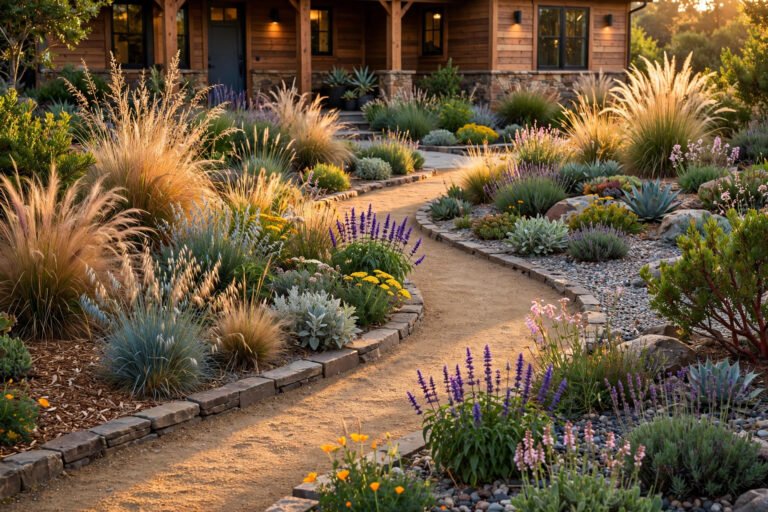
17 She Shed Interior Ideas That Feel Like a Retreat (2026)
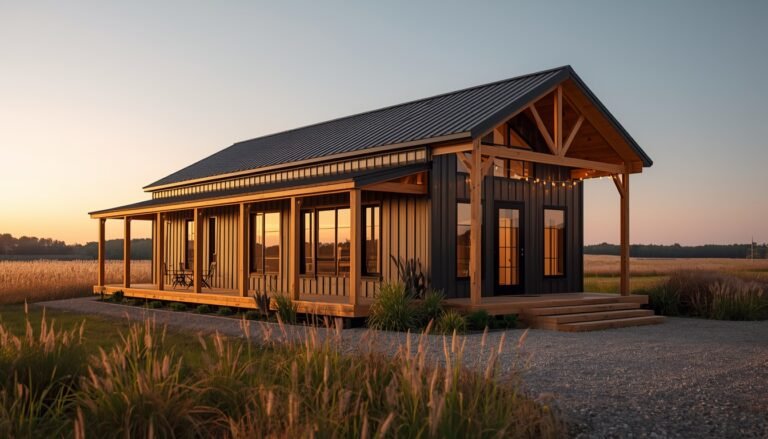
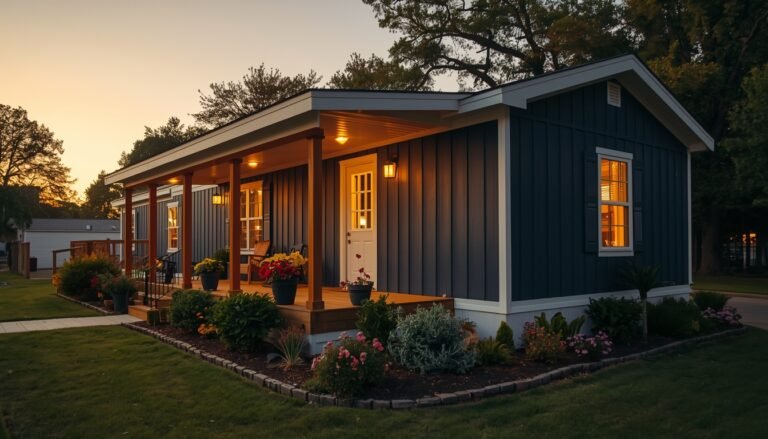
A shed full of rakes is a storage problem. A shed with a rug, a lamp, and a good chair is a she shed interior — your own private retreat ten steps from the back door. And it’s one of the cheapest rooms you’ll ever decorate, because the shell already exists.
Whether you want a reading nook, a craft studio, or a garden office, these 17 she shed interior ideas cover the unglamorous stuff first (insulation, power, flooring) and then the fun part — styling it so it feels like a getaway, not a garage.
Key Takeaways
- Insulate and seal BEFORE decorating — comfort is what separates a she shed from a hot, dusty box.
- A reading nook needs just three things: a comfortable chair, a side table, and light from a window or lamp.
- Budget realistically: a cozy starter shed costs $300–$800; a year-round garden office runs $2,000–$5,000.
- Light colors, mirrors, and vertical storage make even an 8×10-foot shed feel twice as big.
- Thrifted furniture is the she shed secret weapon — secondhand pieces add character for a fraction of retail.
- Check power and Wi-Fi reach early; a $40 Wi-Fi extender solves most “dead zone” sheds.
She Shed Budgets at a Glance
| Tier | What you get | Budget |
|---|---|---|
| Starter refresh | Paint, rug, thrifted furniture, solar lights | $300–$800 |
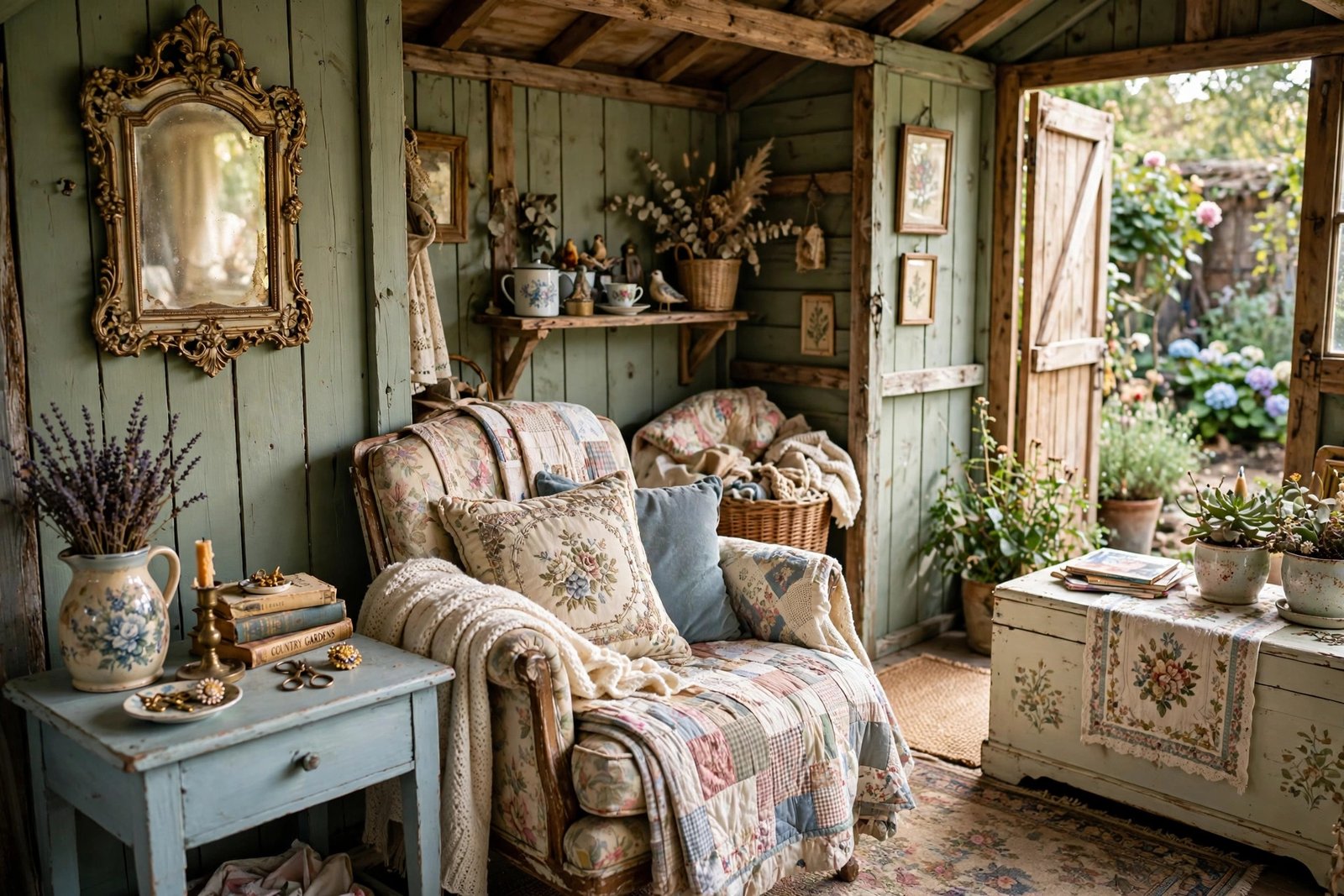
| Cozy retreat | Insulation, vinyl flooring, heating, real lighting | $1,200–$2,500 |
| Year-round office | Full insulation, mini-split, wired power, Wi-Fi | $2,000–$5,000 |
1. The Reading Nook Corner: Armchair + Window Light
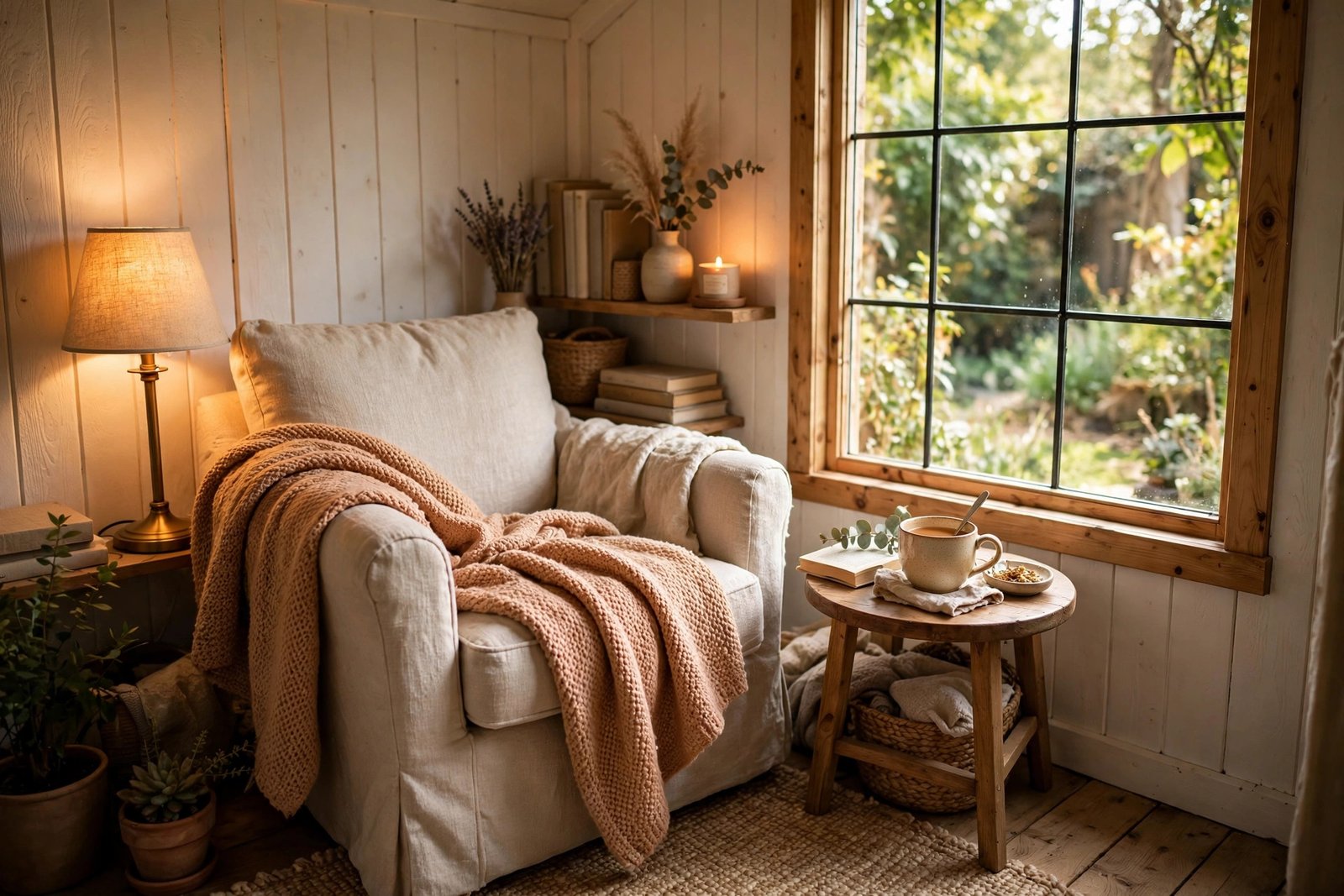
Every great she shed starts with one corner that begs you to sit down. Tuck a comfortable armchair ($80–$250 secondhand, $300–$600 new) at a 45-degree angle to the window, add a small side table for tea, and a floor lamp ($40–$90) for cloudy days. Tip: a window seat works even better if your shed has a wide sill — see our DIY window seat with storage ideas for the build. Keep the nook near the door’s opposite corner so entering feels like arriving somewhere.
2. Craft Room Wall: The Fold-Down Work Table
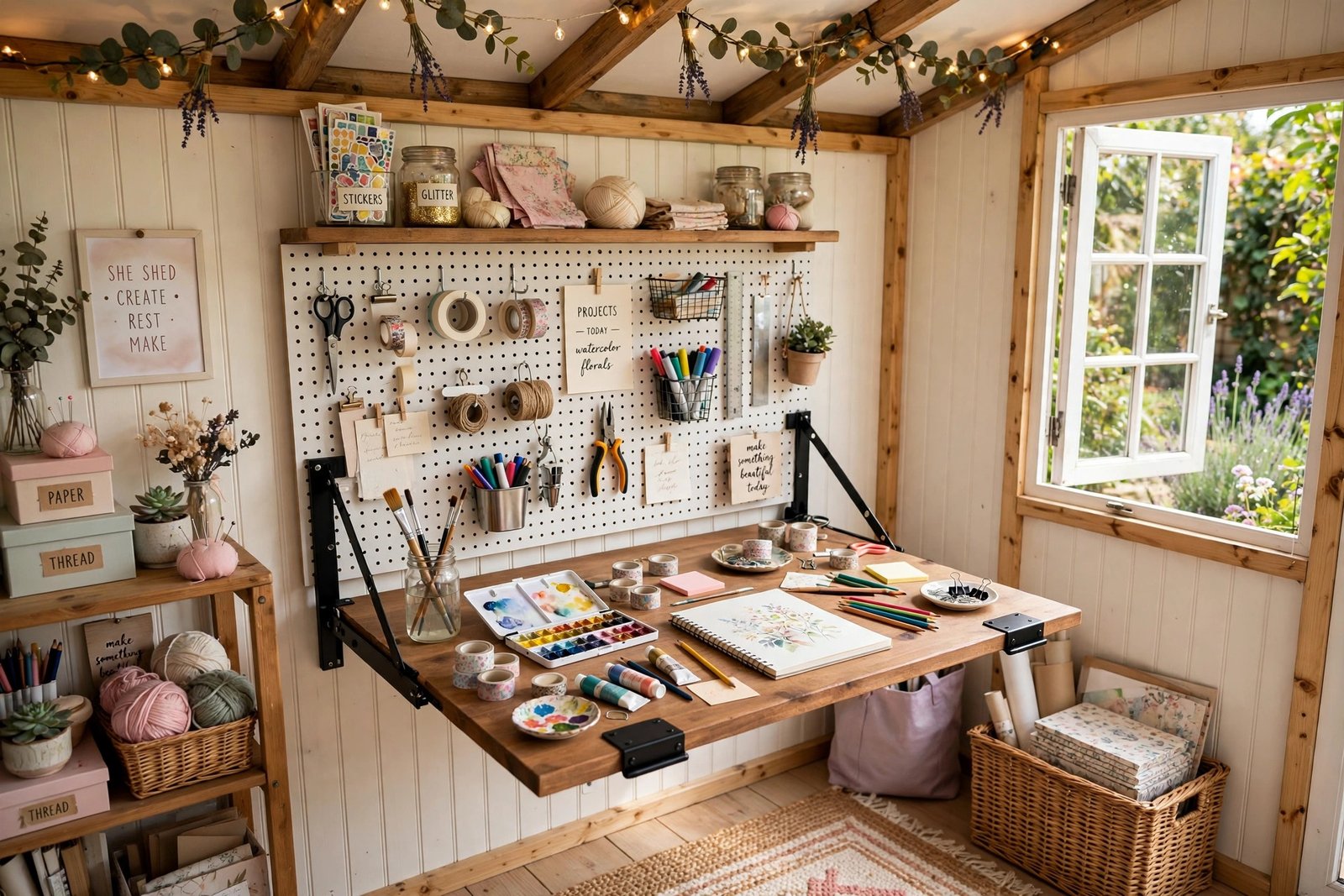
Crafters need table space but can’t sacrifice floor space. A wall-mounted fold-down table ($60–$150) gives you a 4-foot work surface that disappears when you’re done. Above it, mount a pegboard ($25–$60) for tools and supplies — everything visible, nothing cluttering. In my experience, the projects that actually get finished live in rooms where setup takes under a minute. Keep a small rolling cart ($30–$70) for the current project so you can wheel it away mid-mess.
3. The Garden Office Desk Setup
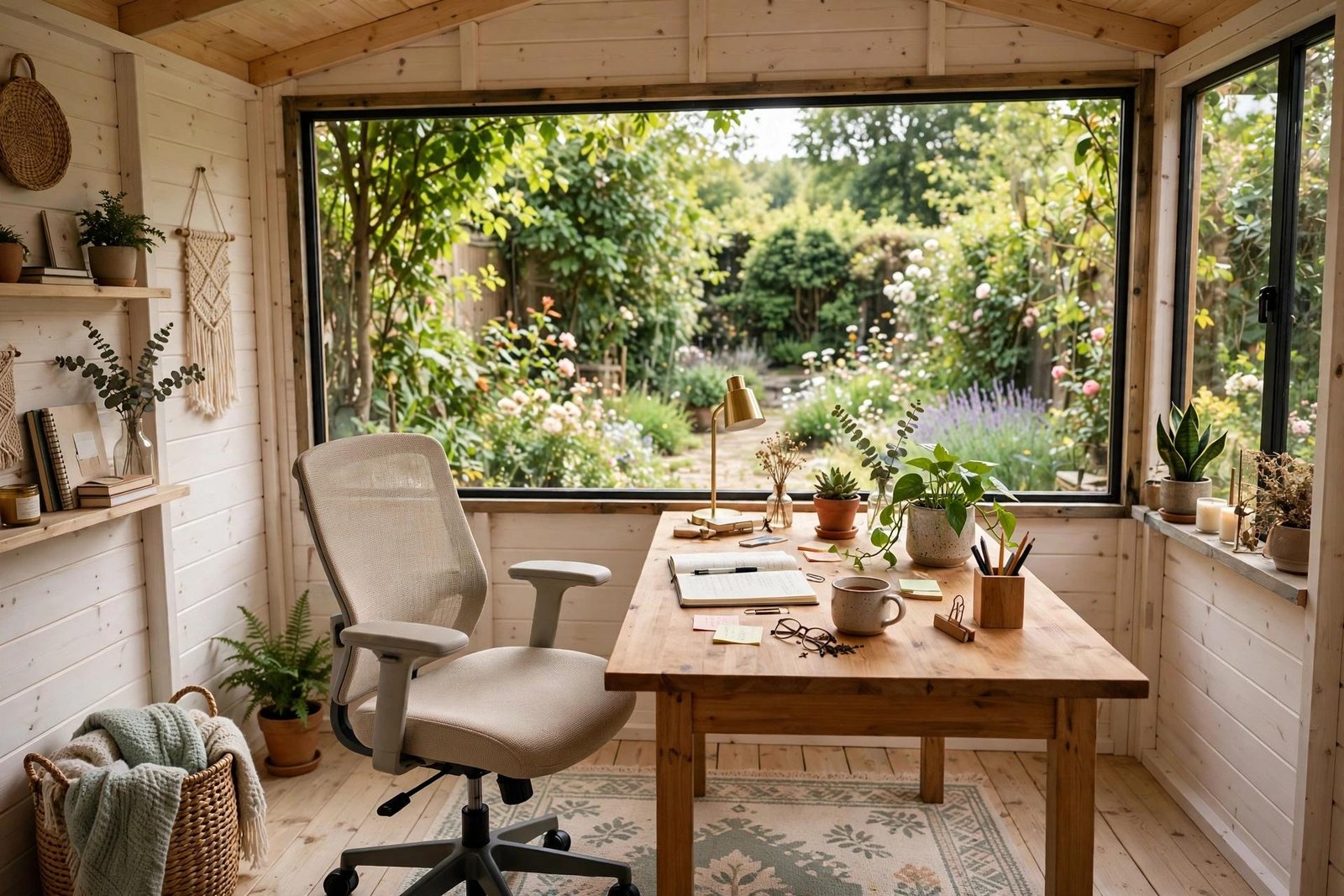
Remote work from a shed is the dream — until the chair hurts and the Wi-Fi drops. Place your desk ($100–$300) facing the window (natural light beats any lamp for video calls), invest in a genuinely ergonomic chair ($150–$400, non-negotiable for 8-hour days), and test your Wi-Fi before moving in. A mesh extender or outdoor access point ($40–$120) fixes most dead zones. Add a small rug under the desk to kill the echo on calls — your coworkers will thank you.
4. Insulation First: What Actually Keeps It Cozy
Skip this and you’ll own a sauna in July and an icebox in January. Rigid foam boards ($1–$2 per sq ft) on walls and ceiling are the DIY-friendly pick; fiberglass batts are cheaper ($0.50–$1 per sq ft) but fussier to install. Seal gaps with expanding foam ($6–$10 per can) and add a vapor barrier before any drywall or paneling. An 8×10 shed typically costs $200–$500 to insulate properly. Do it once, do it before the pretty stuff, and your shed becomes a genuine four-season room.

5. Lighting Layers: Beyond the Single Bare Bulb
One overhead bulb makes a shed feel like a shed. Three light sources make it feel like a room. Combine a ceiling fixture ($30–$80), a task lamp at the desk or craft table ($25–$60), and something warm and low — string lights or a small table lamp ($20–$50). If there’s no wired power yet, solar string lights ($15–$35) and rechargeable lanterns ($20–$40) get you surprisingly far. Tip: warm-white bulbs (2700K) always — cool white turns a cozy retreat clinical.

6. Small-Space Layout: The 8×10 Footprint Plan
The classic 8×10-foot shed fits more than you’d think with zones: desk or craft table along one long wall, seating in the far corner, storage on the short wall by the door. Leave a clear 24-inch walkway — anything narrower feels like a hallway. Float furniture 2–3 inches off walls where possible; it reads as breathing room. Sketch it on graph paper before buying a single thing. I’ve seen people buy the furniture first and then discover nothing fits through the door — measure the doorway, not just the room.
7. Paint Colors That Make a Shed Feel Bigger
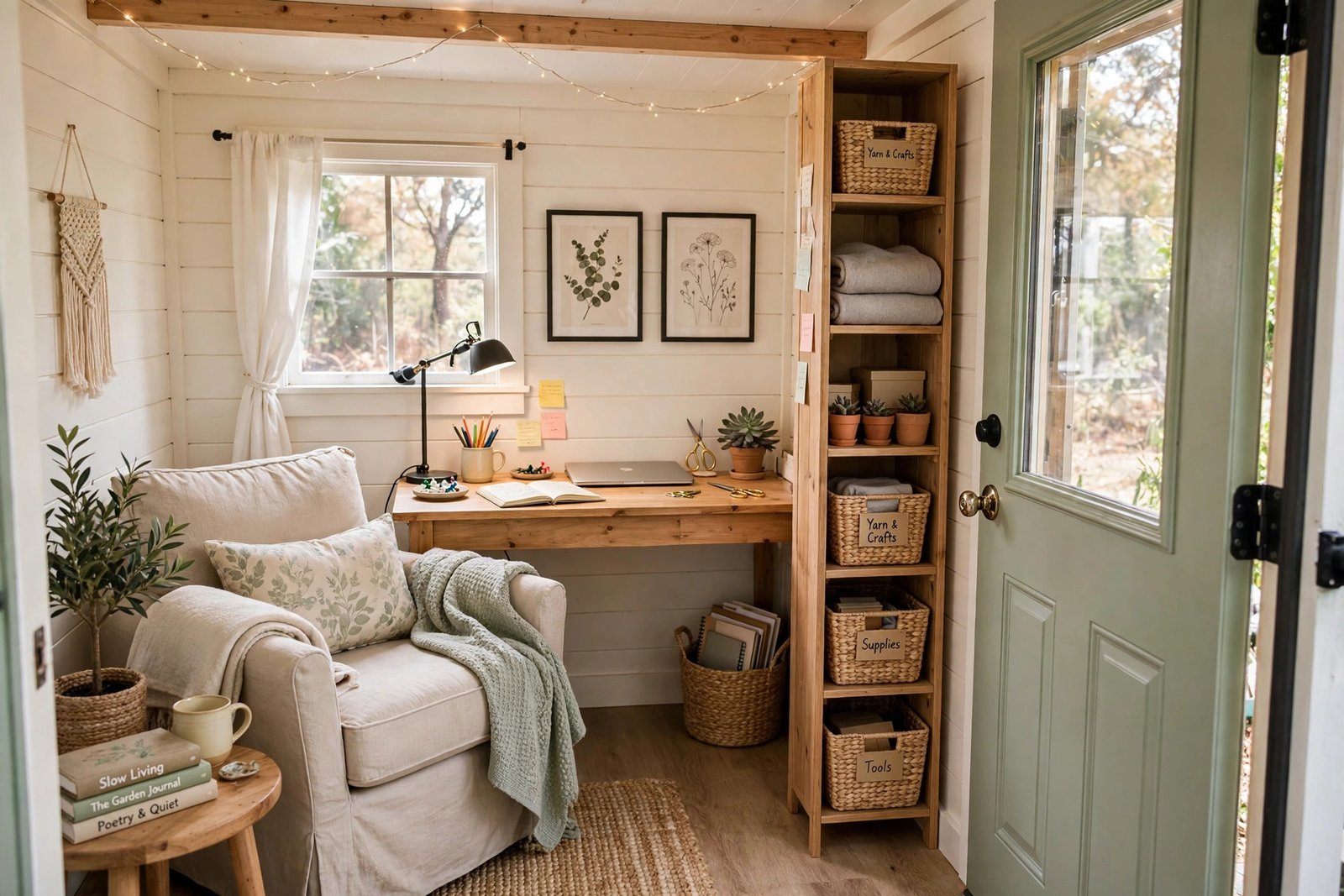
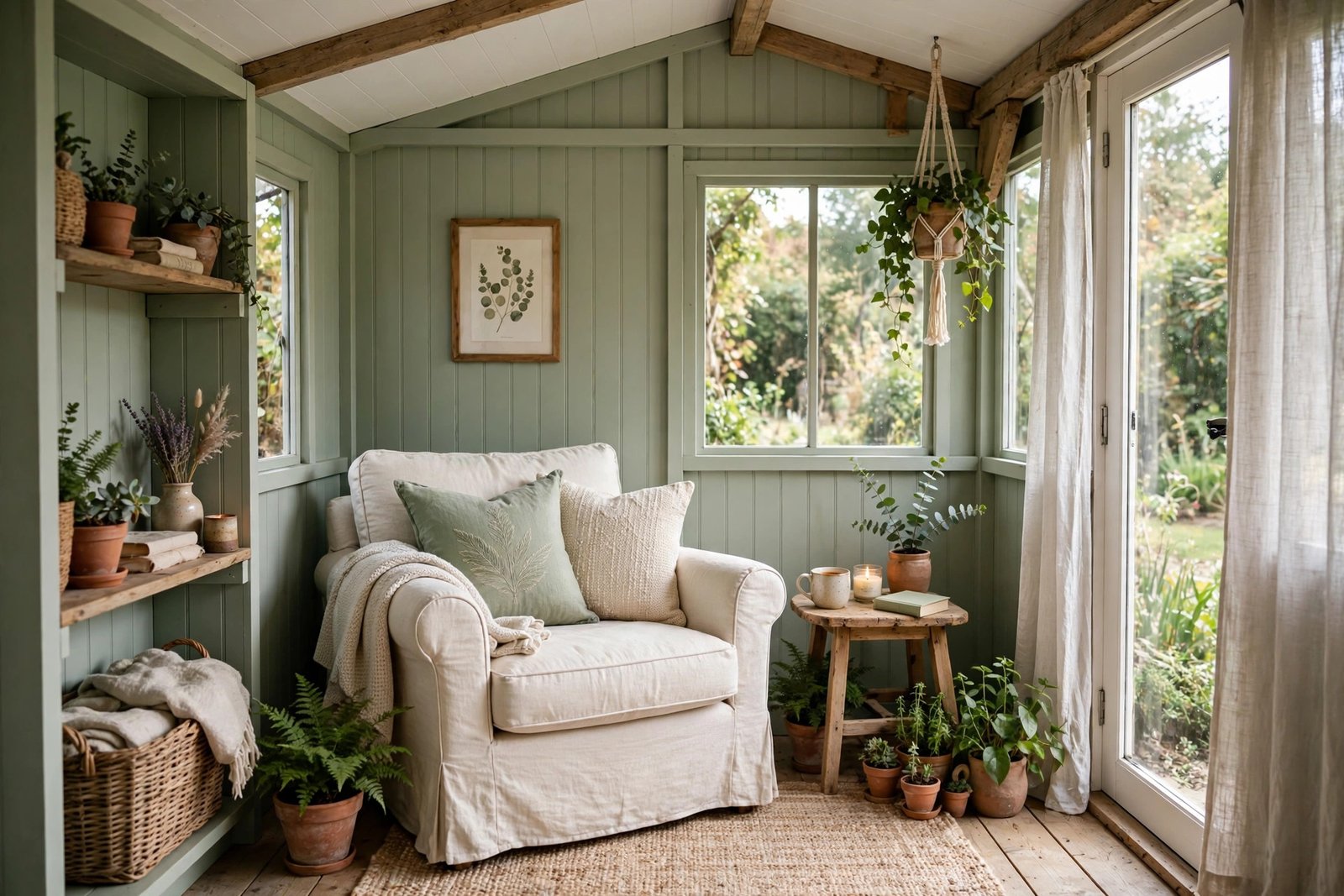
Dark sheds feel like caves; pale ones feel like cottages. Warm white, soft sage, or pale blush on the walls ($30–$60 per gallon, one gallon usually covers an 8×10 shed) bounce light and visually push walls outward. Paint the ceiling the same color — contrasting ceilings chop small rooms in half. If you crave drama, do one darker accent wall behind the seating, never all four. A quart of paint is the cheapest square footage you’ll ever buy.
8. Flooring That Handles Muddy Boots
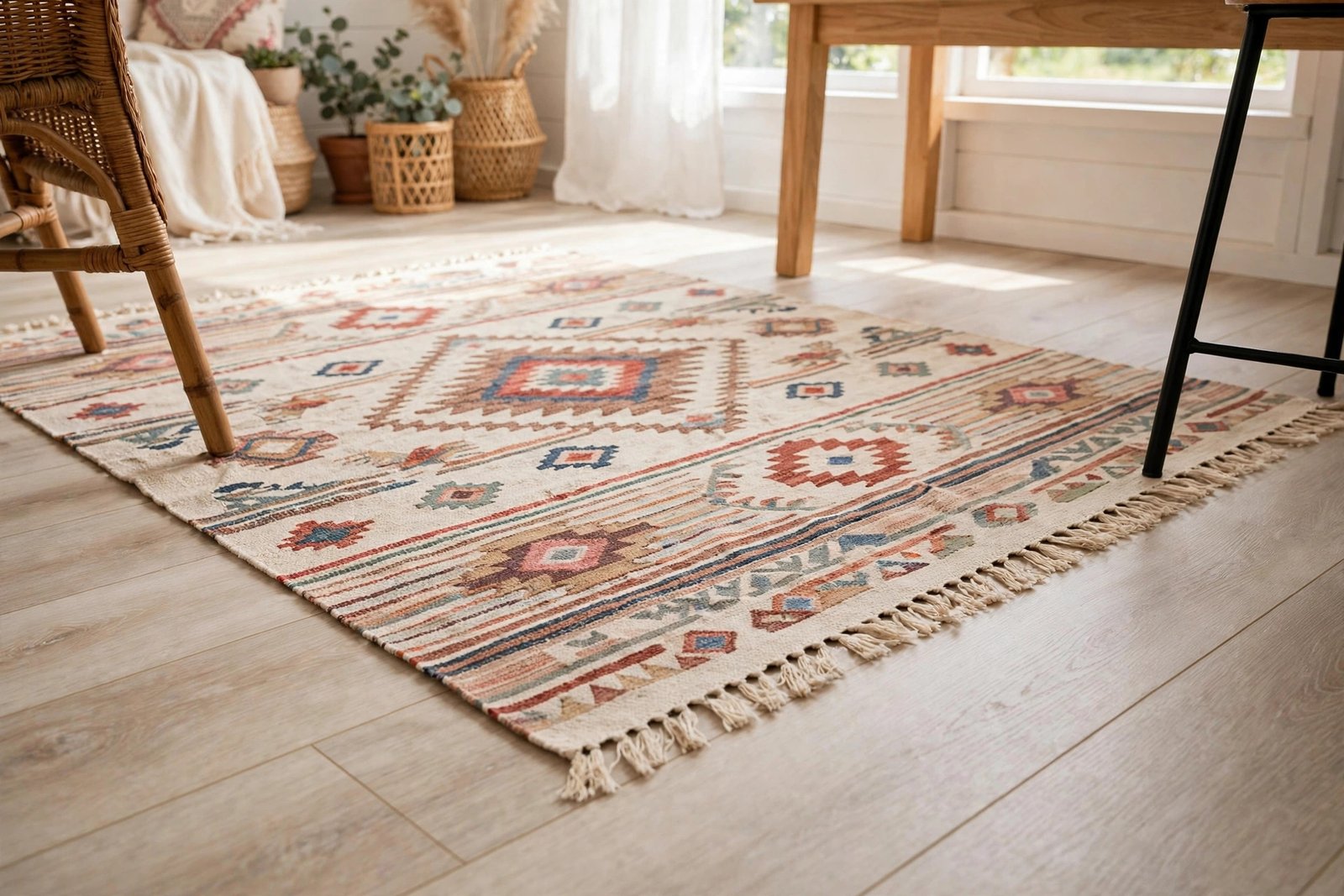
Bare plywood or concrete kills the retreat vibe. Peel-and-stick vinyl planks ($1–$3 per sq ft, ~$100–$250 for a shed) are the sweet spot: waterproof, forgiving, and installable in an afternoon. Interlocking foam tiles ($0.75–$1.50 per sq ft) work for craft or yoga sheds but look less refined. Lay a washable flat-weave rug ($40–$120) over the top for warmth. Whatever you choose, make it moisture-tolerant — sheds breathe differently than houses, and damp happens.
9. Heating and Cooling on a Budget
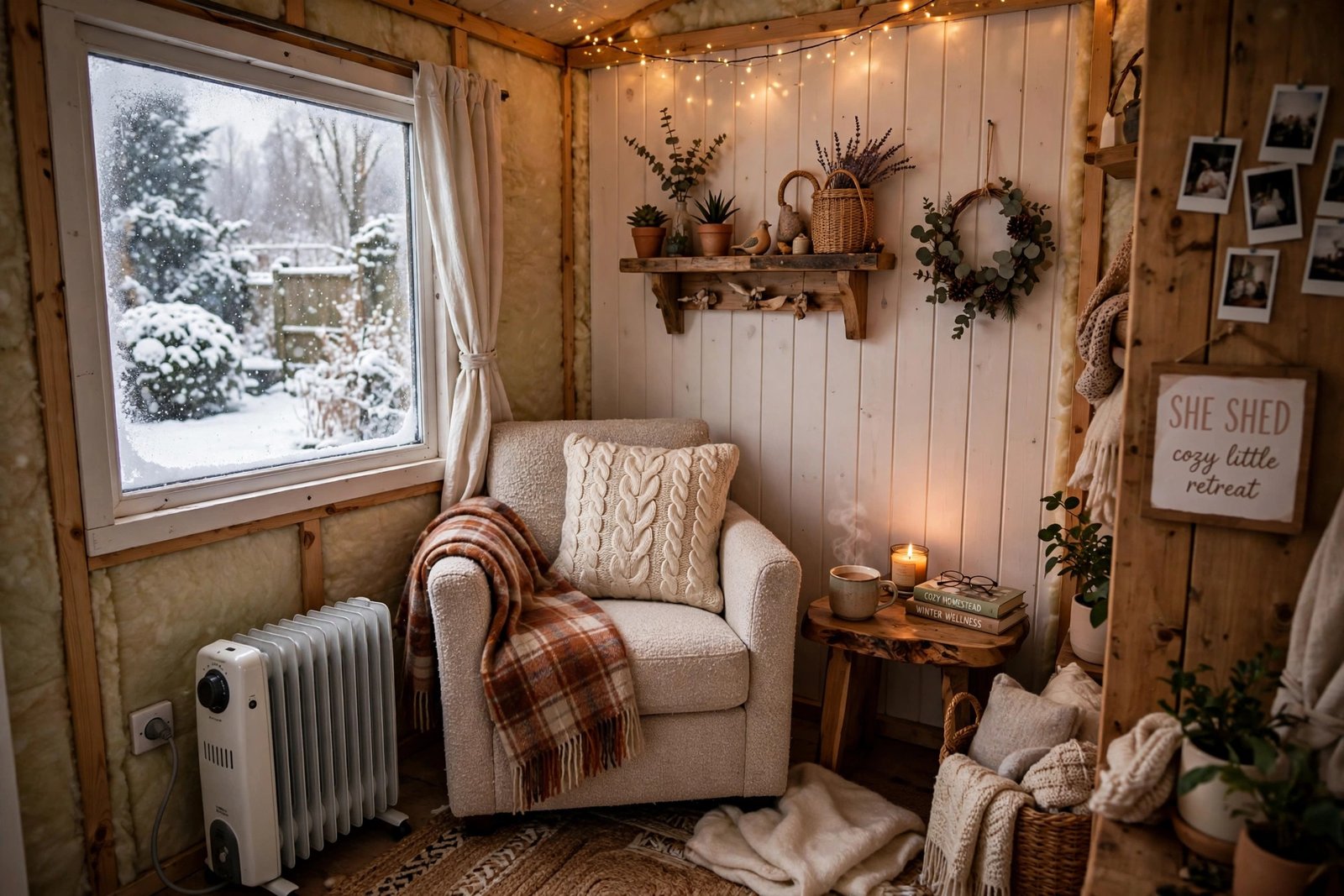
A year-round she shed needs climate control, and it doesn’t have to cost much. A small oil-filled radiator ($50–$90) safely heats an insulated 8×10 shed; a portable AC or window unit ($150–$350) handles summer. For the dream setup, a mini-split system ($800–$2,000 installed) heats and cools whisper-quiet. Who should skip it: if you’ll only use the shed spring through fall, a $60 fan and the insulation you already installed are honestly enough. Match the system to your real seasons of use.
10. Storage That Doesn’t Eat the Room
Sheds are small, so storage must work vertically. Floating shelves ($15–$40 each) above the desk, a tall narrow bookcase ($60–$150), and lidded baskets ($10–$25 each) that stack keep supplies accessible without devouring floor space. The rule: if it doesn’t fit on the wall or under furniture, it probably doesn’t belong in the shed. Clear bins beat opaque ones — you’ll actually find things, and neatly labeled supplies look intentional rather than chaotic.
11. Cozy Textiles: Rugs, Throws, and Curtains
Textiles do the heavy lifting in a she shed — they turn “outbuilding” into “retreat” faster than anything else. Layer a flat-weave rug ($40–$120) over your flooring, drape a chunky throw ($25–$60) over the chair, and hang simple curtains ($20–$50 per panel) even on small windows. Fabric absorbs sound, softens hard shed walls, and adds the color story. Tip: washable everything — sheds get dustier than house rooms, so choose textiles you can toss in the machine without a second thought.
12. Window Treatments for Privacy and Glow
She shed windows face the yard — lovely by day, fishbowl by night. Café curtains ($15–$35 per panel) cover the lower half for privacy while keeping the top open for light. Linen-look panels ($25–$60 per pair) filter harsh afternoon sun into a golden glow. For garden offices on video calls, a simple roller shade ($20–$50) gives instant blackout. Whatever you pick, hang rods 3–4 inches wider than the window on each side — it makes small shed windows look generously sized.
13. Power and Wi-Fi: The Practical Checklist
Pretty means nothing if you can’t plug in a lamp. Options: a heavy-duty outdoor extension cord ($30–$60) for basic needs, or a proper buried line by an electrician ($500–$1,500) for a real office. Test Wi-Fi from the shed before committing to the office plan — a mesh node or outdoor extender ($40–$120) solves most issues. Add a small power strip with USB ports ($20–$35) at the desk. Honest note: if trenching power costs more than the shed is worth to you, solar string lights plus a battery bank ($80–$150) handle evenings fine.
14. Secondhand Furniture: The Thrifted She Shed
The she shed is the perfect room for thrifted furniture — small scale, big character, tiny budget. A vintage armchair, a painted side table, a mirror with a great frame: each piece costs $10–$80 at thrift stores versus hundreds new. Sand and repaint wood pieces in your palette ($15–$30 in paint and supplies per piece) for a cohesive look. For the full approach, our thrift store furniture makeover ideas walk through the refinishing basics. Mismatched-on-purpose beats showroom-matching in a shed every time.
15. Plants and Garden-View Styling
You’re sitting in the garden — lean into it. Trailing pothos on a high shelf ($10–$20), a snake plant in the corner ($15–$30), and a small vase of cut flowers from your own yard (free) blur the line between shed and garden. Position seating to face the best view, even if that means the desk goes elsewhere — the view is the whole point. If the shed has only one window, a mirror opposite it ($25–$60) doubles the greenery visually. Sheds with plants get used; sheds without them become storage again.
16. Multi-Use Magic: Guest Room + Studio Combo
Short on space? Make the shed earn double duty. A daybed ($200–$500) works as a reading lounge by day and a guest bed by night — add a trundle for kid sleepovers. Keep craft or office gear in closed storage (a cabinet, not open shelves) so “guest mode” takes five minutes: clear the desk, fluff the bedding, done. In my experience, the sheds that survive longest as retreats are the ones the whole household uses — a guest-ready studio gets defended from becoming a junk room.
17. The Under-$500 Starter She Shed Makeover
Proof you can start this weekend: one gallon of warm-white paint ($45), a 5×7 washable rug ($70), a thrifted armchair ($60), a side table ($25), solar string lights ($25), curtains ($40), a basket for throws ($20), a potted plant ($20), and peel-and-stick floor tiles if the budget stretches ($150). Total: roughly $300–$455. It’s not insulated or wired — but it’s a real retreat by Sunday evening, and you can add the serious upgrades (sections 4, 9, 13) one season at a time.
Mistakes to Avoid With She Shed Interiors
- Decorating before insulating — paint over bare, unsealed walls peels within a year; comfort work comes first.
- Skipping the moisture check — fix leaks and add a vapor barrier before flooring, or you’ll redo it.
- Buying furniture before measuring the door — shed doors are narrow; that dreamy armchair has to fit through.
- One sad overhead bulb — layered lighting is the difference between “shed” and “sanctuary.”
- No plan for winter — even a $60 radiator decision made in October beats a frozen retreat in January.
Frequently Asked Questions
How much does it cost to turn a shed into a she shed?
A cozy starter makeover runs $300–$800 using paint, a rug, and thrifted furniture. A comfortable three-season retreat with insulation and heating costs $1,200–$2,500. A fully wired, year-round garden office typically lands at $2,000–$5,000.
Do I need to insulate my she shed?
If you’ll use it beyond mild spring and fall days, yes. Insulation ($200–$500 for an 8×10 shed) plus sealed gaps turn a shed from a temperature extreme into a genuinely comfortable room. Decorating an uninsulated shed is fine for fair-weather use only.
How do I get Wi-Fi and power to my she shed?
Test your Wi-Fi signal from the shed first — a mesh extender ($40–$120) fixes most dead zones. For power, a heavy-duty outdoor extension cord ($30–$60) covers lamps and laptops; a buried line by an electrician ($500–$1,500) is the permanent office-grade solution.
Can a she shed be used as a home office year-round?
Yes, with three upgrades: full insulation, a heat source (a $50–$90 radiator or $800–$2,000 mini-split), and reliable power plus Wi-Fi. An ergonomic chair ($150–$400) matters more than you’d think for full workdays. Check local rules about running a business from an outbuilding.
Your Retreat Is Waiting
Start with comfort (insulation, flooring, light), then layer in the pretty — browse our outdoor living and patio ideas for the garden around it, and these thrift store furniture makeover ideas to furnish it for pennies.