Greenhouse Layout Tips That Make It Feel Like Home
There’s a funny thing that happens when people build their first greenhouse. They spend weeks researching seed varieties, irrigation systems, and heating options — and then, on the day they finally step inside, they realize the space feels cold and clinical. Functional, sure, but not somewhere you’d want to linger over a morning coffee or spend a slow Sunday afternoon. It feels like a utility shed rather than a sanctuary.
That gap between a working greenhouse and a welcoming one comes down to layout. How you arrange your benches, pathways, storage, and personal touches determines whether the space invites you in or simply processes your plants. The good news is that thoughtful design doesn’t cost much — it mostly requires slowing down before you bolt everything to the floor and asking yourself how you actually want to move through and spend time in the space.
Start With How You Move, Not Where Things Fit
The single biggest mistake in greenhouse layouts is designing around storage capacity rather than movement. People cram in as many bench rows as physically possible, squeeze walkways down to 18 inches, and end up with a space that’s technically productive but genuinely miserable to work in. You bump into things, you can’t turn around comfortably with a flat of seedlings in your hands, and you avoid going in there unless you absolutely have to.
A good rule of thumb is to keep your main central path at least 36 inches wide — wide enough to walk through comfortably while carrying something, wide enough for a small cart, wide enough that two people can pass each other without doing an awkward sidestep dance. Secondary paths running between bench rows can be narrower, around 24 inches, but that central corridor matters more than anything else. It’s the spine of the whole space.
Before you anchor anything permanently, walk the layout as you imagine using it. Mime reaching across a bench to water something at the back. Crouch down as if you’re checking on seedlings at the lowest shelf level. Drag a chair to wherever you might sit and actually rest for a moment. These aren’t silly exercises — they’re the difference between a greenhouse that works with your body and one that fights it every single day.
Bench Height and Layering Make or Break Comfort

Standard greenhouse benches sit at around 30 to 32 inches — roughly counter height. That works for most people when they’re standing and potting, but it’s worth thinking about whether you want some variety. A section at standing height for active work, maybe a lower run for heavy containers that are difficult to lift, and if space allows, a sitting-height area where you can pull up a stool and do detail work without straining your back.
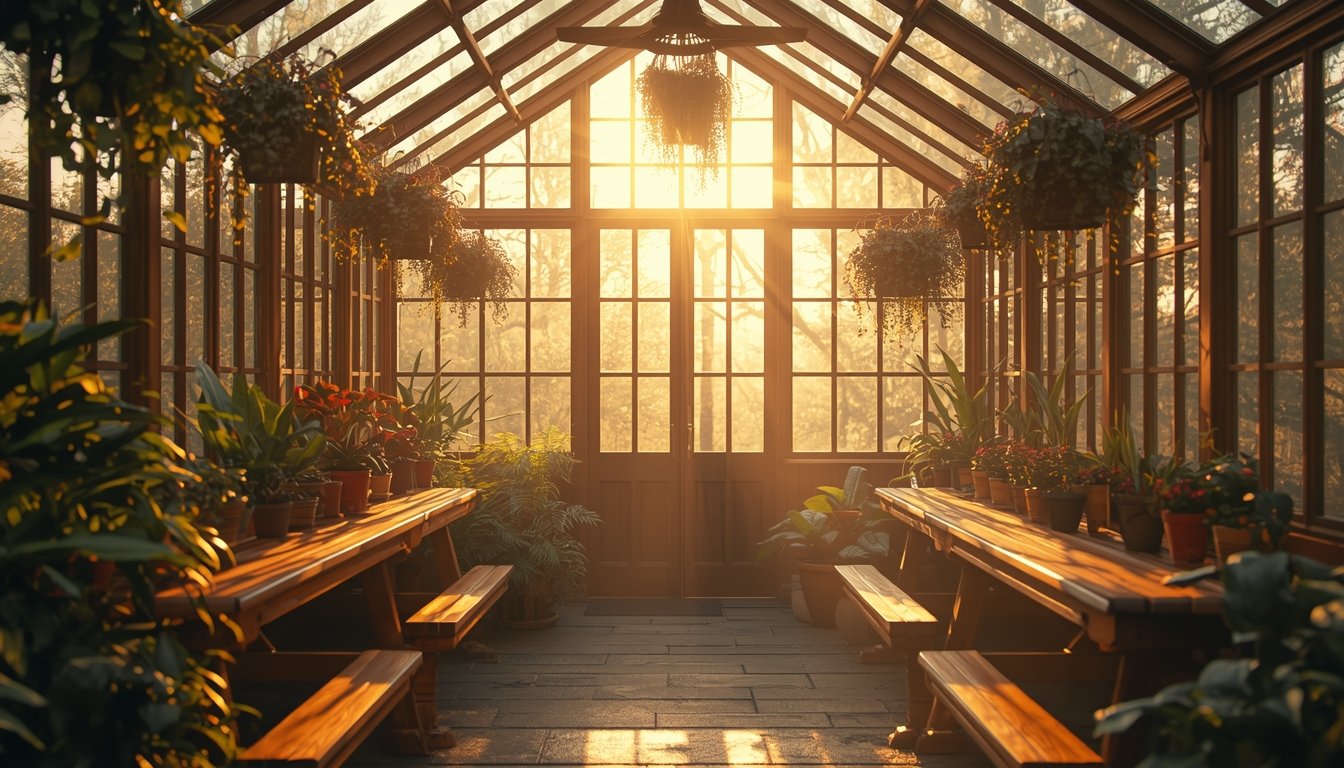
Vertical space is where a lot of greenhouse owners miss serious opportunity. The area above your benches — often stretching four or five feet up to the glazing — can hold hanging baskets, tiered shelving for propagation trays, or trailing plants that soften the whole visual atmosphere of the space. Taking advantage of that height doesn’t just increase your growing capacity; it transforms a flat, institutional-looking layout into something that feels genuinely lush and alive.
Under-bench space deserves attention too. Most people leave it completely empty or use it as a dumping ground for random supplies. With a few simple shelves or rolling crates, the zone beneath your benches becomes useful storage for pots, tools, bags of compost, and seasonal gear — keeping the surfaces above clear and visually calmer. A tidy greenhouse is a more pleasant greenhouse, and that’s not just an aesthetic observation; it genuinely affects how long you want to stay and work.
Create a Dedicated Potting Zone

One of the most transformative things you can do for your greenhouse layout is carve out a specific area for potting and repotting, separate from where your plants actually live. When potting happens on the same bench where your seedlings are growing, everything gets muddled — soil spills onto young plants, your tools end up buried under containers, and the general chaos of a repotting session contaminates the calmer energy of the growing space.
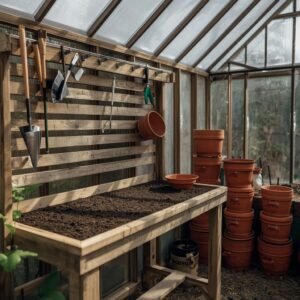
A dedicated potting station doesn’t need to be elaborate. A section of bench near the door with a lip to contain soil, hooks for your most-used tools, a shelf for compost and perlite, and good lighting overhead is everything you need. Position it near the entrance so you’re not tracking soil through the whole space, and near a water source if possible. Once you’ve worked at a proper potting station, you’ll wonder how you ever managed without one.
Lighting Shapes the Atmosphere More Than You’d Expect
Natural light is obviously the whole point of a greenhouse, but the quality of that light shifts dramatically with the seasons, the time of day, and cloud cover. Many greenhouse owners install supplemental grow lights purely for the plants’ benefit, but those same lights have an enormous effect on how the space feels to be in. Warm-spectrum LEDs cast a golden glow that makes a winter greenhouse feel genuinely cozy rather than merely functional.
Think about where you want task lighting versus ambient light. Bright, focused light over the potting bench makes detail work easier on your eyes. Softer, diffused light spread across the main growing area creates a more relaxed atmosphere. A few string lights threaded along the ridge beam might sound whimsical, but they do something real for the emotional quality of the space on a grey November afternoon when the sun sets at four o’clock.
Give Yourself Somewhere to Sit
This sounds obvious, but a remarkable number of greenhouse owners never include seating in their layout. They design the space entirely for production — benches, paths, storage — with no acknowledgment that a human being is going to spend time there, sometimes just to be there rather than to accomplish a specific task. The result is a space you visit rather than inhabit.
Even a small stool tucked into a corner changes the psychological character of a greenhouse. It signals that this is a place for you, not just for the plants. If you have the square footage, a proper chair with good back support near a spot with interesting plants to look at becomes one of the best seats in the house. Plenty of gardeners will tell you that some of their most valuable thinking happens while sitting quietly in a warm, plant-filled space, listening to rain on the glass.
Organize by How You Actually Garden

Generic advice about greenhouse organization tends to group plants by type or by light requirements. That’s not wrong, but it overlooks a more personal consideration: how do you actually use your greenhouse across the seasons? If you’re primarily a vegetable grower who starts tomatoes and peppers from seed in late winter, your layout during February looks completely different from your layout in July. The space needs to flex with your rhythms rather than hold a single fixed configuration.
Consider positioning your most frequently visited plants closest to the door. Not for any horticultural reason, but because you’ll check on them every single day. Putting your daily-attention plants in the far corner means you’re walking past everything else twice, twice a day. Over a whole growing season, that adds up to a lot of unnecessary steps and a lot of disruption to the quieter areas of the greenhouse.
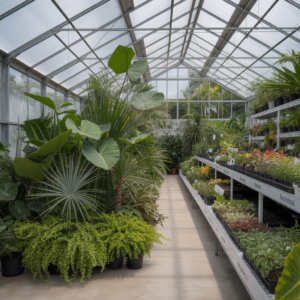
Group your tender tropicals and humidity-loving plants together if possible, since they often benefit from being in the same microclimate and also tend to be the plants people enjoy looking at most. A dense, layered cluster of exotic foliage in one corner creates a focal point that draws the eye and anchors the whole visual composition of the space — which matters more than most practical gardeners are willing to admit.
Small Details That Add Up to Something Real
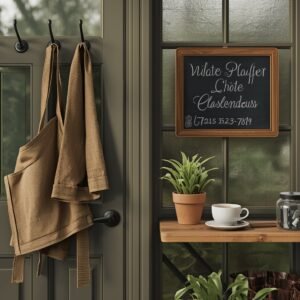
A few hooks near the door for your apron and gloves means you never have to hunt for them. A small shelf for a water bottle or a cup of tea makes the space hospitable. A blackboard or notebook for jotting sowing dates, plant names, and observations turns a working space into a thinking space. None of these elements cost much or take much room, but collectively they shift the feel from shed to studio.
Pay attention to the floor surface too. Bare concrete is cold and hard underfoot; even a rubber mat at the main work area makes a noticeable difference over a long session. Gravel paths drain well and look appealing. Wooden duckboards add warmth underfoot and visually. These aren’t frivolous choices — your feet are in contact with the floor for every minute you spend in there.
The Greenhouse That Calls You Back
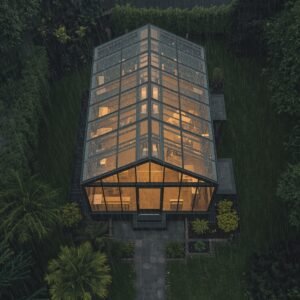
The measure of a well-designed greenhouse isn’t the yield per square foot or the efficiency of the irrigation system. It’s whether you find yourself drifting out there on a rainy afternoon just because it’s a pleasant place to be. That pull — the one that draws you into the space even when you don’t have a specific task waiting — is what separates a greenhouse that works from a greenhouse that genuinely feels like yours.
Layout is the foundation of all of that. Get the paths right, the bench heights comfortable, the storage logical, the lighting warm, and the seating present, and you’ve built something that serves you as well as it serves your plants. That balance — between productivity and pleasure, between function and feeling — is what makes a greenhouse a place worth building in the first place.