Choosing the Right Wood for Your Fence: Cedar, Redwood, Pine, or Ipe
A practical, honest guide for homeowners who want beauty, durability, and value — all in one backyard decision.
There is something deeply satisfying about a well-built wooden fence. It frames your yard, adds warmth to the landscape, and quietly says something about how you take care of your home. But before a single post goes into the ground, you are faced with a question that trips up even seasoned DIYers: which wood should you actually use? Walk into any lumber yard and the options can feel overwhelming. Cedar, redwood, pine, ipe — each has its loyal fans, and each comes with real trade-offs that are worth understanding before you spend a single dollar.
This guide breaks down all four of the most popular fence wood choices in plain, honest language. No fluff, no filler — just what you need to make a smart decision that suits your climate, your budget, and the look you are going for.
Cedar: The Classic That Earns Its Reputation
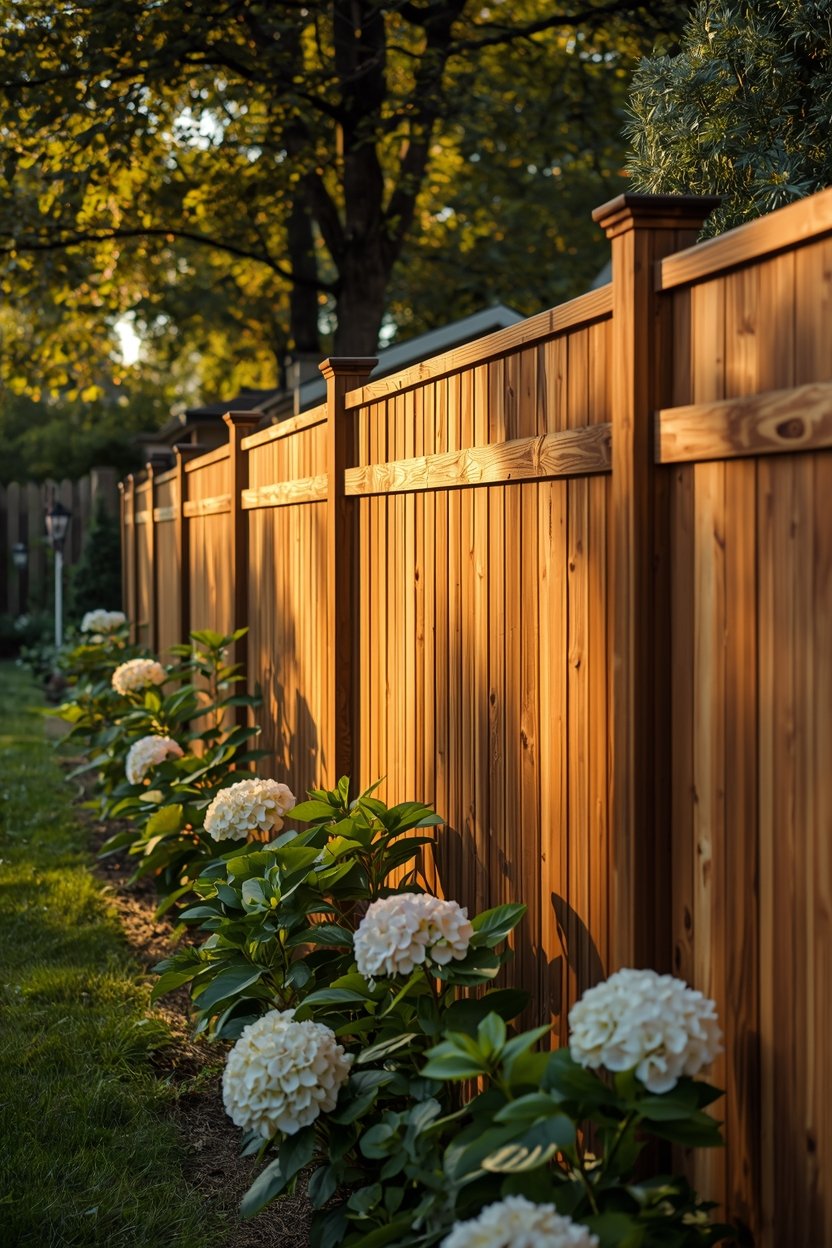
Ask almost any experienced fence builder what wood they would put around their own yard, and a large number of them will say cedar without hesitation. Western red cedar has been a go-to fencing material for generations, and the reasons are not hard to understand. It is naturally resistant to moisture, insects, and rot — not because it has been chemically treated, but because of oils that occur in the wood itself. Those natural oils are what give fresh cedar boards that gorgeous, honey-reddish tone and that faint, pleasant aroma that new cedar fences are known for.
Dimensionally, cedar is also forgiving to work with. It is lightweight compared to hardwoods, which makes installation far less exhausting, and it holds nails and screws without splitting as aggressively as denser species. If you are a DIY homeowner handling this project yourself, cedar’s workability is a genuine advantage.
Left untreated, cedar will weather to a soft silvery grey over time — a look many people actually love. If you prefer to maintain the original warm tone, a UV-blocking stain or sealant applied every couple of years will do the job. With basic upkeep, a cedar fence can last 15 to 30 years depending on your local climate. In dryer regions, it may even outlast those estimates. The one thing to keep in mind is that cedar varies significantly in quality. Premium grades with tight grain will outperform lower-grade boards that have more knots and sapwood, so it pays to be selective at the lumber yard.
Best for: Homeowners who want a balanced combination of natural beauty, manageable cost, and solid longevity. Cedar performs especially well in moderate climates and humid regions where rot resistance matters.
Redwood: Premium Choice with Unmatched Character
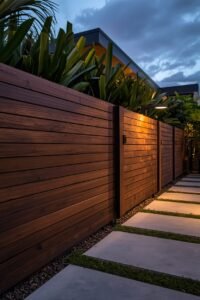
If cedar is the reliable workhorse, redwood is the show horse. Harvested primarily from the Pacific coast of California and Oregon, genuine redwood is one of the most visually striking fence materials available. The rich, deep reddish-brown tones are hard to replicate with stains, and the wood’s natural grain has a texture that simply photographs beautifully — which is probably why you have seen it on so many Pinterest boards in the first place.
Beyond its looks, redwood shares many of cedar’s best qualities. The heartwood is naturally resistant to decay and insects, it is relatively stable meaning it expands and contracts less than many other species with seasonal moisture changes, and it accepts paint and stain exceptionally well. High-quality, clear-grade redwood boards are among the finest fence materials you will encounter at any price point.
The catch, of course, is availability and price. Redwood grows in a narrow geographic range, and sustainable harvesting has rightly become a priority for the industry. Outside of the West Coast, finding premium-grade redwood can be difficult, and you will likely pay a meaningful premium over cedar in most markets. Lower-grade redwood — which has more sapwood mixed in — does not carry the same resistance properties and will need more maintenance to perform well over time.
Best for: Those on the West Coast or anyone willing to invest in a genuinely premium look. Redwood makes a strong statement on upscale properties and holds up beautifully in coastal environments where salt air and moisture are constant concerns.
Pine: The Budget-Friendly Option That Deserves Respect

Pine tends to get underestimated in fence conversations, often written off as the lesser option. That reputation is not entirely undeserved when it comes to untreated pine, which has very little natural resistance to rot or insects. However, pressure-treated pine is a completely different story, and it accounts for a significant share of fences installed across North America every year — and for good reason.
Pressure-treated pine is infused with preservatives under high pressure, forcing them deep into the wood fibers. The result is a board that resists rot, fungal decay, and termite damage far better than its natural state would suggest. Modern treatments have moved away from the older arsenic-based chemicals that raised health concerns, and today’s pressure-treated pine is considered safe for residential use. The greenish tint that fresh boards often have fades over time, and the wood can be stained or painted once it has dried out, typically after a few weeks to a couple of months.
Pine is widely available virtually everywhere lumber is sold, and its price point is genuinely difficult to argue with. For large properties where you need a lot of fencing footage, or for homeowners working within a tighter budget, pressure-treated pine is a practical and honest choice. Expect a well-maintained treated pine fence to last anywhere from 15 to 25 years.
Best for: Cost-conscious homeowners and large fencing projects where total material expense adds up quickly. Pine is also a smart pick in areas with heavy termite pressure, since pressure treatment gives it solid insect-resistance credentials.
Ipe: The Hardwood That Outperforms Everything Else
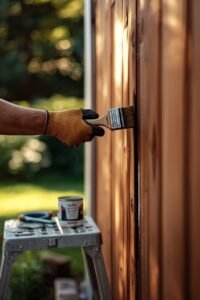
If you want a fence that will likely outlive the people who installed it, ipe (pronounced ee-pay) deserves serious attention. This dense tropical hardwood, sourced primarily from South American forests, is in a category of its own when it comes to raw durability. Ipe is so dense and hard that it is genuinely resistant to rot, insects, scratches, and even fire without any chemical treatment whatsoever. Many ipe products carry a Class A fire rating, the same designation given to concrete and steel.
The material has an extremely tight, uniform grain and a rich dark brown color with subtle olive undertones that deepen and develop over time. It is used on some of the most prestigious outdoor projects in the world — boardwalks, decks on high-end properties, and commercial installations where longevity is the top priority. A properly installed ipe fence can realistically last 40 to 75 years with minimal intervention.
That durability, however, comes with real challenges. Ipe is extremely heavy — roughly three times denser than most softwoods — which makes handling and installation physically demanding. Its hardness also means it requires pre-drilling for fasteners, or you risk splitting boards and stripping screws. It also dulls cutting tools faster than softer species, so professional installation is often the more practical route. And then there is the price: ipe typically costs two to four times more than cedar per linear foot, sometimes more depending on your location and the current market.
Sustainability is also a conversation worth having. The demand for tropical hardwoods has historically contributed to deforestation. Look for ipe sourced from certified, responsibly managed forests — FSC certification is a reliable indicator that the wood has been harvested with environmental accountability in mind.
Best for: Homeowners who view their fence as a long-term investment and want the absolute best performance over decades. Ipe is ideal for coastal properties, harsh climates, or simply anyone who never wants to replace a fence again.
How to Match the Wood to Your Situation
Every one of these woods can build a beautiful, functional fence. The right choice depends on three things: your climate, your budget, and how much ongoing maintenance you are genuinely willing to commit to — not what you think you will get around to, but what you actually will.
In wet, humid climates where rain is frequent and moisture lingers, cedar and ipe both shine. Cedar handles it gracefully at a reasonable price; ipe handles it permanently at a premium. In dryer, sunnier regions, pine can hold up remarkably well with proper sealing, and even without it will degrade more slowly than it would in a wet environment. Redwood excels wherever the combination of coastal moisture and elevated aesthetics makes the investment worthwhile.
If maintenance is something you would rather minimize, lean toward cedar or ipe. Both require far less intervention than pine to stay looking good and structurally sound. If you enjoy outdoor projects and do not mind applying a fresh stain every couple of years, pine becomes a much more attractive option economically.
One thing that often goes underestimated is the importance of post material. Even if you invest in premium fence boards, wooden posts buried directly in the ground are a common failure point. Many experienced builders recommend using concrete-set pressure-treated posts, metal post anchors, or even composite posts regardless of what wood species you choose for the fence boards themselves. The best boards in the world will look shabby if the posts rot out in eight years.
Final Thoughts Before You Buy
A wooden fence is one of those home improvements that you will look at every single day, so it is worth getting right. Cedar offers a middle path that satisfies most homeowners — natural beauty, genuine durability, and a price that does not require a second mortgage. Redwood elevates things aesthetically for those who want something special and are near a quality source. Pine makes solid economic sense when the budget is the primary constraint and you are willing to put in some maintenance work. And ipe is the once-and-done solution for those who want to invest big and never think about their fence again.
Whatever direction you go, buy the best grade of that species you can afford within your budget, seal the end grains, set your posts properly, and give the fence at least one good coat of sealant before winter hits if you are in a colder region. The wood you choose matters — but how you install and maintain it matters just as much. Get both right, and you will have a fence that looks great and stays standing for a long, long time.
— Happy building. Your yard will thank you.