15 Small Pool Design Ideas That Turn Your Backyard Into an Oasis (2026)
Some of the most breathtaking pools I have ever seen are barely bigger than a parking space. That is the thing about small pool design ideas: when the square footage is limited, every single choice — the depth, the tile color, the plants, the light — works harder, and the result can feel more luxurious than a sprawling resort pool. A compact pool is not a compromise. Done right, it is the whole point.
In this guide you will find 15 small pool design ideas covering pool types, layouts, finishes, and styling tricks that make a modest backyard feel like a private escape. Along the way I have included real cost ranges and size minimums, because a pretty picture is only half the decision.
Key Takeaways
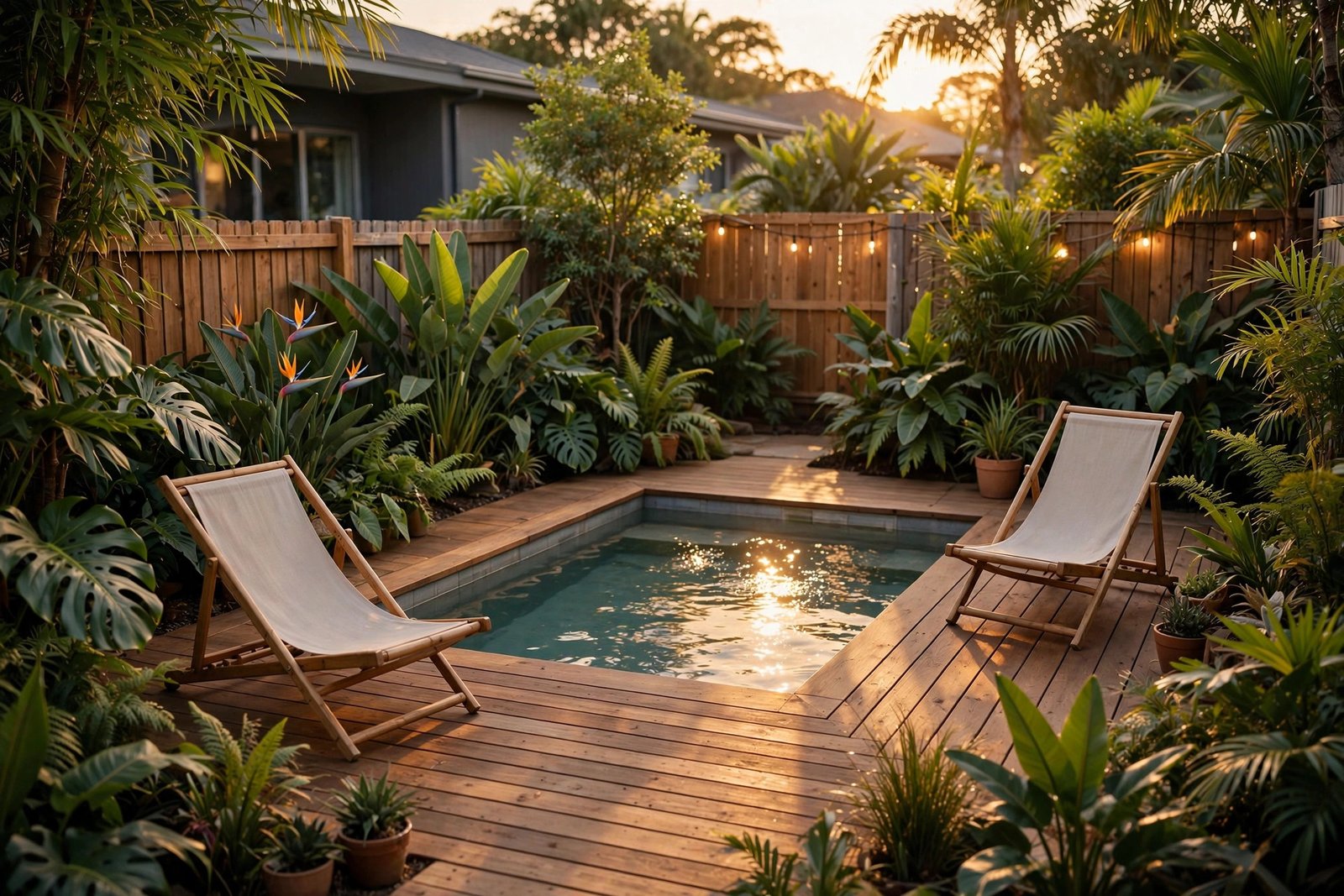
- Go deeper, not wider: a plunge pool just 6–10 feet long can feel like a resort if it is 5–7 feet deep with a quality finish.
- Dark tile (charcoal pebble, black quartz) makes water look richer and deeper; it is the single highest-impact finish upgrade for a small pool.
- Budget from both ends: a stock tank setup lands around $2,000–$4,000 all-in, while a custom concrete plunge pool runs $20,000–$50,000.
- Build upward for privacy: tall bamboo, trellised jasmine, or columnar cypress screens neighbors without eating your limited floor space.
- Evening lighting multiplies the payoff — a small pool costs far less to light dramatically than a large one.
- Check setback rules first: most cities require 5–10 feet of clearance from property lines, which decides your pool’s footprint before anything else.
How to Choose the Right Small Pool for Your Backyard
Choosing a small pool starts with three questions: how will you use it, how much room do you have, and what can you spend? To cool off and soak, a plunge pool is the smartest pick: typically 6 to 12 feet long and 5 to 7 feet deep, built for immersion rather than laps, and going deep instead of wide is the trade that makes a small pool feel luxurious. A plunge pool as small as 6 by 10 feet works beautifully if it is at least 5 feet deep; a custom concrete one typically runs $20,000 to $50,000 installed, less for a prefab shell. For exercise, a swim spa is the fastest route: usually 12 to 20 feet long, delivered by crane onto a reinforced pad, swim-ready within days, for typically $20,000 to $45,000 including electrical work. A slim lap lane is the other exercise option, 8 to 10 feet wide and 30 to 40 feet long, with a counter-current jet system (typically $3,000 to $6,000) for swimming in place; installation typically runs $35,000 to $70,000. For entertaining, a spool, a small pool crossed with a hot tub, often 12 by 14 feet or smaller with bench seating and jets, typically costs $25,000 to $60,000 and leaves room for dining and lounging. On a tight budget, a stock tank pool is the cheapest real pool by an enormous margin: an 8 to 10 foot galvanized tank with pump, filter, liner, and deck surround lands around $2,000 to $4,000 all-in, set on compacted gravel. A fiberglass shell is the middle ground: small models 10 by 20 feet and under, typically $40,000 to $70,000 all-in, swim-ready in two to three weeks, though you pick from manufacturer molds. Before you fall in love with any of them, check setback rules: most cities require 5 to 10 feet of clearance from property lines, and that decides your pool’s footprint. Spend the finish budget where it shows most: dark tile in charcoal pebble or black quartz makes the water look richer and deeper, the highest-impact finish upgrade for a small pool. Add a Baja shelf, a shallow 6 to 9 inch platform for loungers, roughly $1,500 to $4,000, and layer evening lighting with underwater LEDs (typically $800 to $2,500 installed) plus path and string lights: three layers of warm light beat one bright floodlight every time. Decking, fencing, and landscaping typically add roughly 20 to 30 percent on top of the pool itself. Costs vary by location, size and materials — get 2-3 local quotes before you decide.
Frequently Asked Questions About Small Pool Designs
Which small pool is best for a small backyard?
It depends on how you will use it. A plunge pool is best for cooling off and soaking, a swim spa is best for exercise, and a spool is best for entertaining. A stock tank pool is the best choice when the budget is tight.
How long does it take to install a small pool?
Prefabricated options are fastest: swim spas are usually swim-ready within days of delivery, and fiberglass shells can be swim-ready in two to three weeks. Custom concrete pools take longer, since they are built on site.
Do I need a permit for a small pool?
Above-ground options like stock tanks, container pools, and swim spas often face simpler permitting than in-ground pools. Either way, check your local setback rules first, since most cities require 5 to 10 feet of clearance from property lines.
What finish makes a small pool look more luxurious?
Dark tile in charcoal pebble or black quartz makes the water look richer and deeper, and it is the single highest-impact finish upgrade for a small pool. Going deeper rather than wider helps too, since depth reads as luxury while width just reads as square footage.
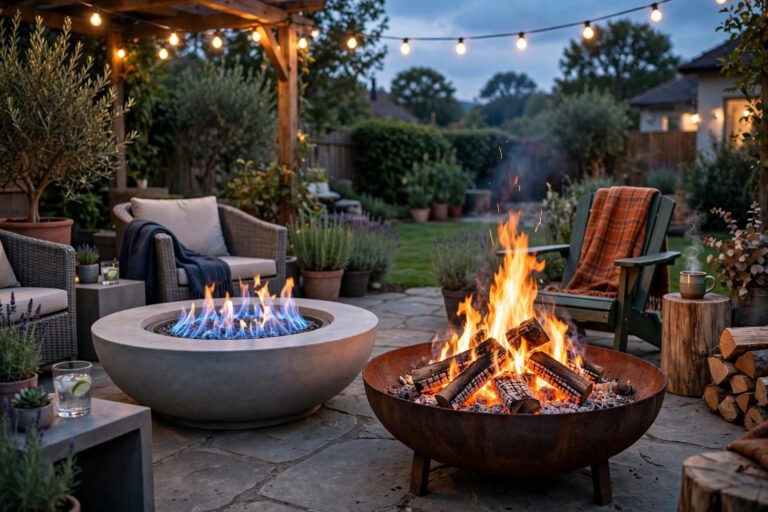
For the edge that frames the water, pool coping tile ideas can lift a plain shell into a luxe look. If you already have a raised pool, above-ground pool ideas show how to style the surround without a full rebuild. Once the pool is ready, backyard dinner party ideas turn an evening swim into a proper gathering. The deck around it matters just as much, so deck decorating ideas help the whole yard feel finished. And for cooler evenings, fire pit seating ideas give everyone a warm place to gather after a swim.
1. The Deep Plunge Pool
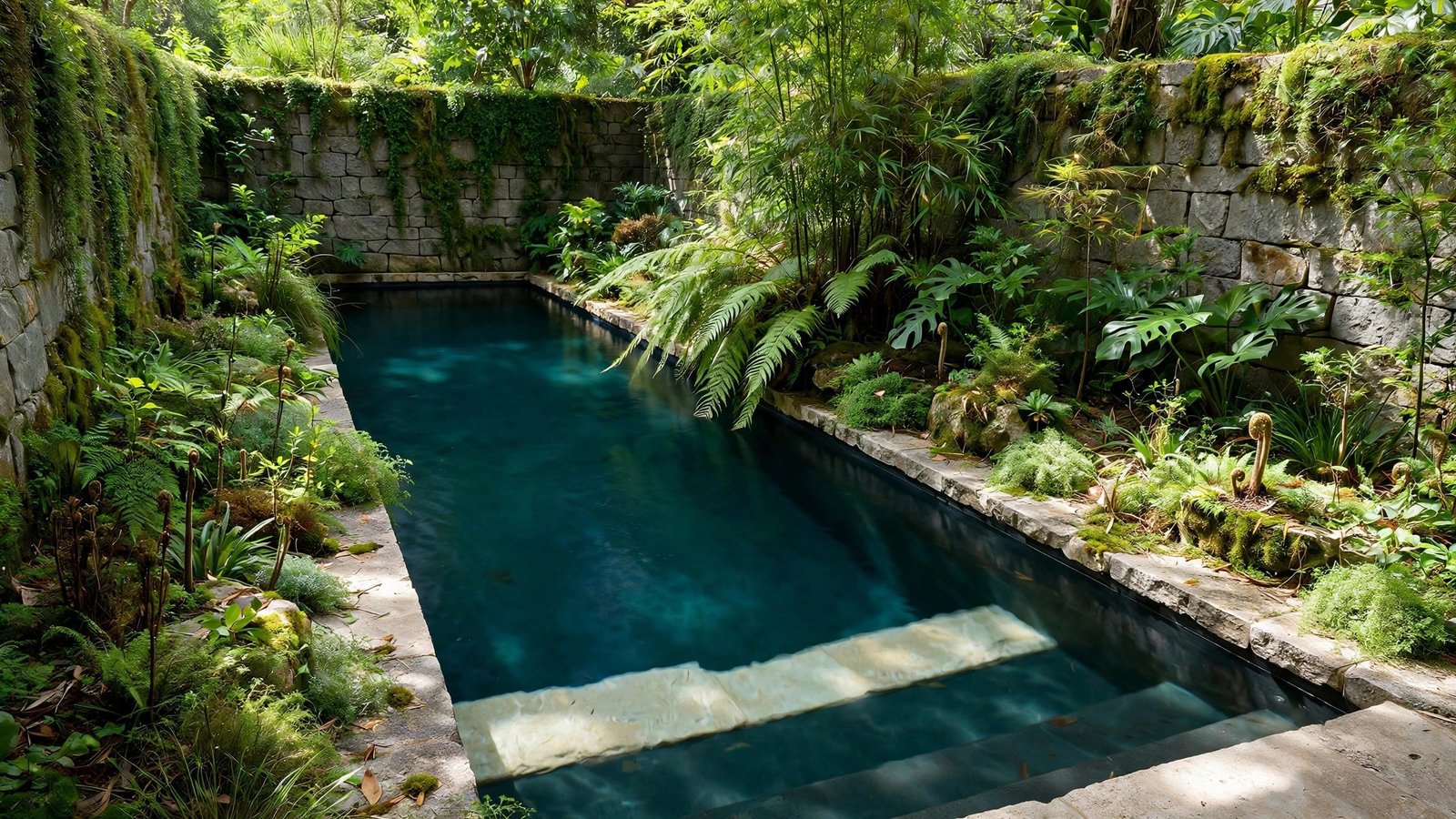
A plunge pool is a small pool designed on purpose — typically 6 to 12 feet long and 5 to 7 feet deep — built for immersion and cooling off rather than laps. Going deep instead of wide is the smartest trade in small pool design, because depth reads as luxury while width just reads as square footage. Expect $20,000–$50,000 installed for a custom concrete plunge pool, less for a prefabricated shell. Tip: add a built-in bench ledge around one side; it doubles as a seat and a step, and it makes the pool usable for conversation, not just dipping.
2. The Cocktail Pool, a.k.a. the Spool
A spool is a small pool crossed with a hot tub: compact (often 12×14 feet or smaller), with bench seating around the perimeter and therapy jets, sometimes with a heater so it works as a spa in cooler months. It is the perfect answer when you want swimming, soaking, and socializing in one footprint. Budget $25,000–$60,000 installed depending on finish and equipment. Spools shine in entertaining-focused yards where a full pool would swallow the patio — they leave room for dining and lounging around the water instead.
3. A Slim Lap Lane for Narrow Yards
If your yard is long and skinny, a lap lane turns the awkward shape into an asset. At 8–10 feet wide and 30–40 feet long, it fits side yards and narrow lots that could never hold a conventional pool. Add a counter-current swim jet system ($3,000–$6,000) and you can swim in place endlessly in a lane barely longer than a car. Full installation typically runs $35,000–$70,000. Keep the coping flush with the deck and the lane reads as an elegant water feature even when nobody is swimming.
4. Swim Spas for Exercise in Tight Spaces
A swim spa is a prefabricated unit — usually 12 to 20 feet long — with powerful jets at one end that create a current to swim against, plus a separate hot-tub zone in many models. It is the fastest route to a pool: delivered by crane and set on a reinforced pad, most are swim-ready within days rather than months. In my experience, swim spas are the most underrated option for small yards, because you get exercise, hydrotherapy, and a hot tub in roughly 150 square feet. Expect $20,000–$45,000 delivered and installed, including the electrical work.

5. Stock Tank Pools
The humble galvanized stock tank — 8 to 10 feet in diameter — has become a genuine small-pool movement, and for good reason. The tank itself costs a few hundred dollars; with a pump, filter, liner, and a simple deck surround, a full setup lands around $2,000–$4,000. That makes it the cheapest real pool option by an enormous margin. Style the surround with cedar decking, string lights, and potted plants, and a stock tank reads as intentional farmhouse-chic rather than improvised. Tip: place it on level compacted gravel, not bare soil, to keep it stable and rust-free for years.

6. Fiberglass Shell Drop-In Pools
A prefabricated fiberglass shell is craned into an excavated hole and can be swim-ready in two to three weeks — a fraction of a concrete pool’s timeline. Small models (10×20 feet and under) suit compact lots, and the smooth non-porous surface needs less chlorine and far less brushing than plaster. All-in costs typically run $40,000–$70,000 including excavation, equipment, and basic decking. The trade-off is shape: you choose from the manufacturer’s molds rather than designing freely, so pick the shell before you finalize the yard layout, not after.
7. Container Pools for Industrial Charm
A converted shipping container — 20 or 40 feet long — makes a strikingly modern small pool with a genuine industrial edge. Because the structure is the container itself, these can be installed above ground, half-sunk, or even relocated later, which no other pool type offers. Finished container pools typically cost $25,000–$50,000. They pair beautifully with minimalist landscaping: pale gravel, ornamental grasses, and a single sculptural tree. Just confirm your soil and access first — a crane needs a clear path, and that delivery day is the part most buyers underestimate.
8. Natural Swim Ponds
A natural swim pond replaces chlorine with a planted regeneration zone — a shallow planted area, roughly equal in size to the swim zone, where aquatic plants filter the water. The result feels like swimming in a private lagoon, with dragonflies instead of chemical smell. This is a premium option at $50,000–$80,000, and it needs more square footage than a plunge pool because of the planting zone. But for a garden-first backyard, nothing beats it: the pool and the landscaping become one living system, and maintenance is mostly seasonal plant care.
9. Dark Tile and Finish Colors
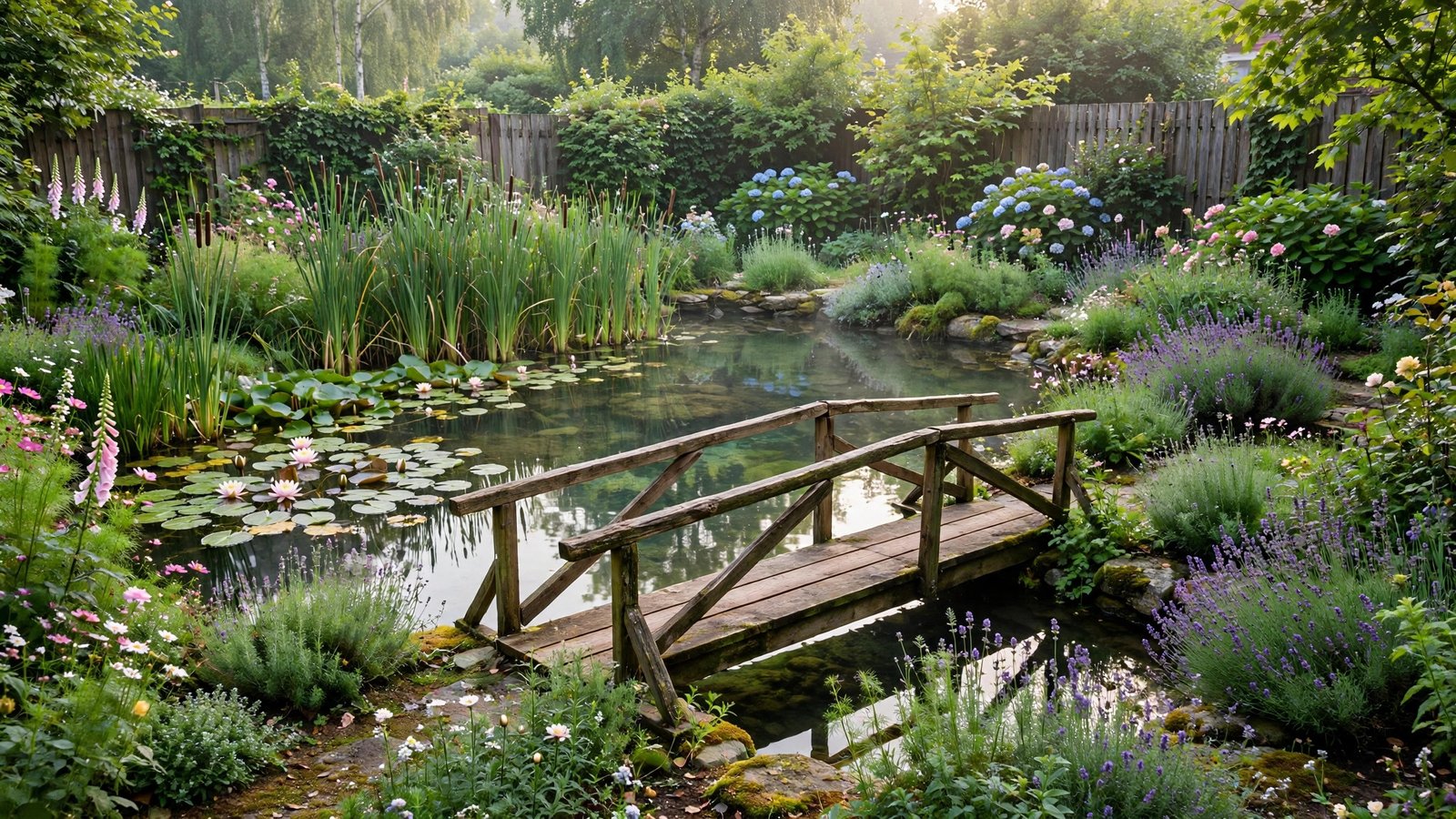
If you change one thing about a small pool, make it the interior finish. Standard white plaster reads flat and municipal; charcoal pebble, black quartz, or deep navy tile makes the same water look deeper, richer, and almost jewel-like as the light shifts through the day. In my experience, dark finishes also make compact pools look intentional and architectural — a small dark pool reads as a design feature, while a small white one can read as an afterthought. Expect a $3,000–$8,000 premium over basic white plaster, and pair it with warm-white underwater lighting for the full effect after dusk.

10. Infinity and Raised Edges
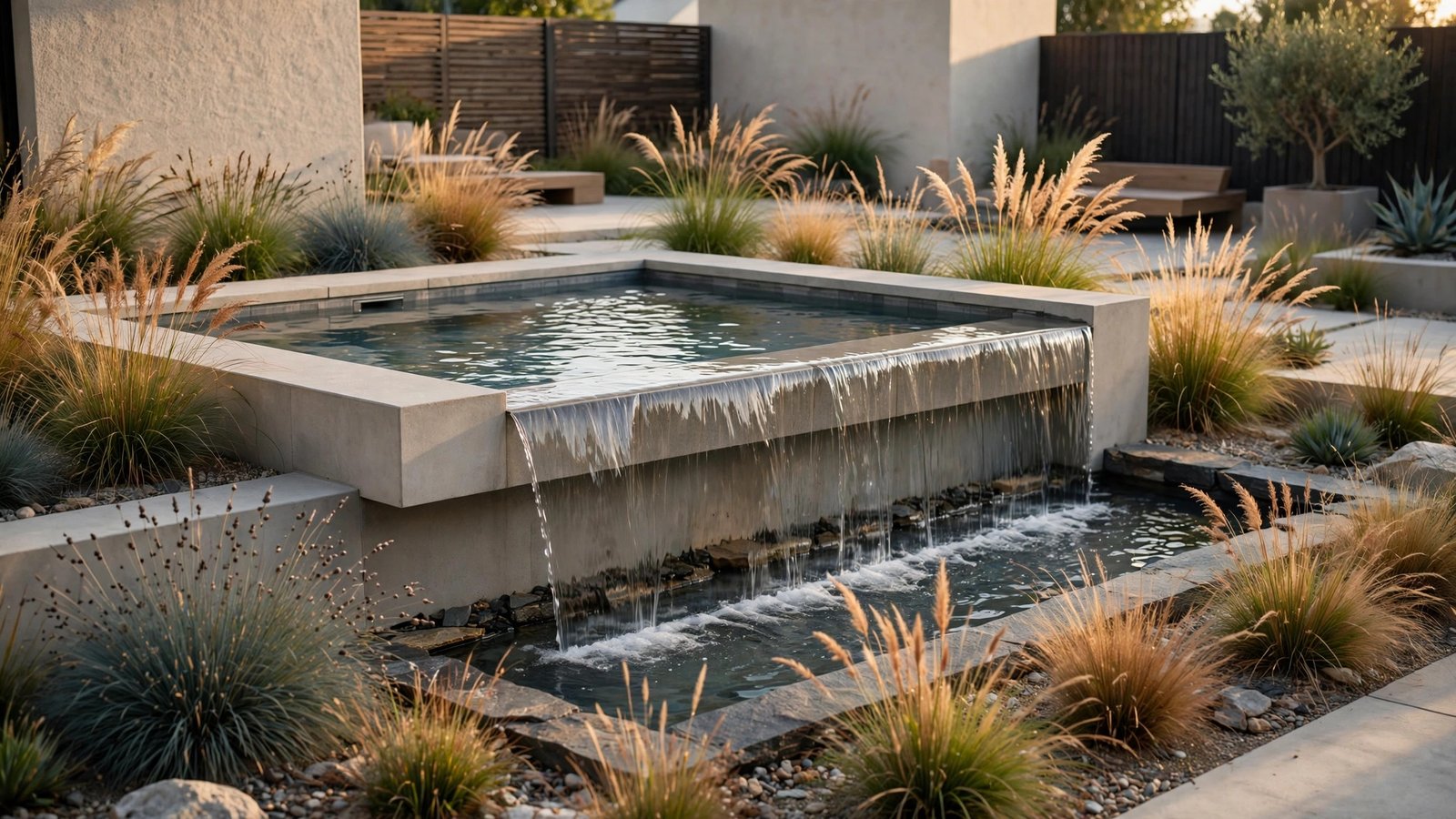
You do not need a cliffside lot for an infinity edge. On a small pool, a single negative edge — or a raised bond beam with water sheeting over it — creates that coveted vanishing line, and it works beautifully on gently sloped yards where one side sits higher than the other. A sheer-descent waterfall off the raised edge adds sound and movement for $1,200–$5,000. Budget $5,000–$15,000 extra for the edge detail itself. Tip: keep the planting low on the vanishing side so nothing interrupts the sightline; the edge only works if the eye travels uninterrupted.
11. A Baja Shelf for Shallow Lounging
A Baja shelf (or tanning ledge) is a shallow platform — 6 to 9 inches deep — built into the pool’s edge, sized for a lounger or two to sit half-submerged. It is the single most resort-coded feature you can add to a small pool, because it creates a social, lounge-in-the-water zone without needing extra square footage. Adding one at construction costs roughly $1,500–$4,000. Position it where it catches afternoon sun and add an umbrella sleeve in the shelf itself; a shaded shallow ledge with a drink ledge nearby is the spot everyone will fight over.
12. Waterfall and Sheer-Descent Features
Sound is the most underrated luxury in small pool design. A wall-mounted sheer-descent blade sends water falling in a clean glassy sheet that catches the light and fills the air with soft rushing sound — masking traffic and neighbor noise far better than its size suggests. Deck jets that arc water from the coping into the pool are another compact option, adding movement without taking up a single square foot. Simple spillways start around $1,200 installed; a full stone waterfall feature can reach $5,000. Either way, moving water turns a still pool from pleasant to genuinely transportive.
13. Layered Evening Lighting That Glows
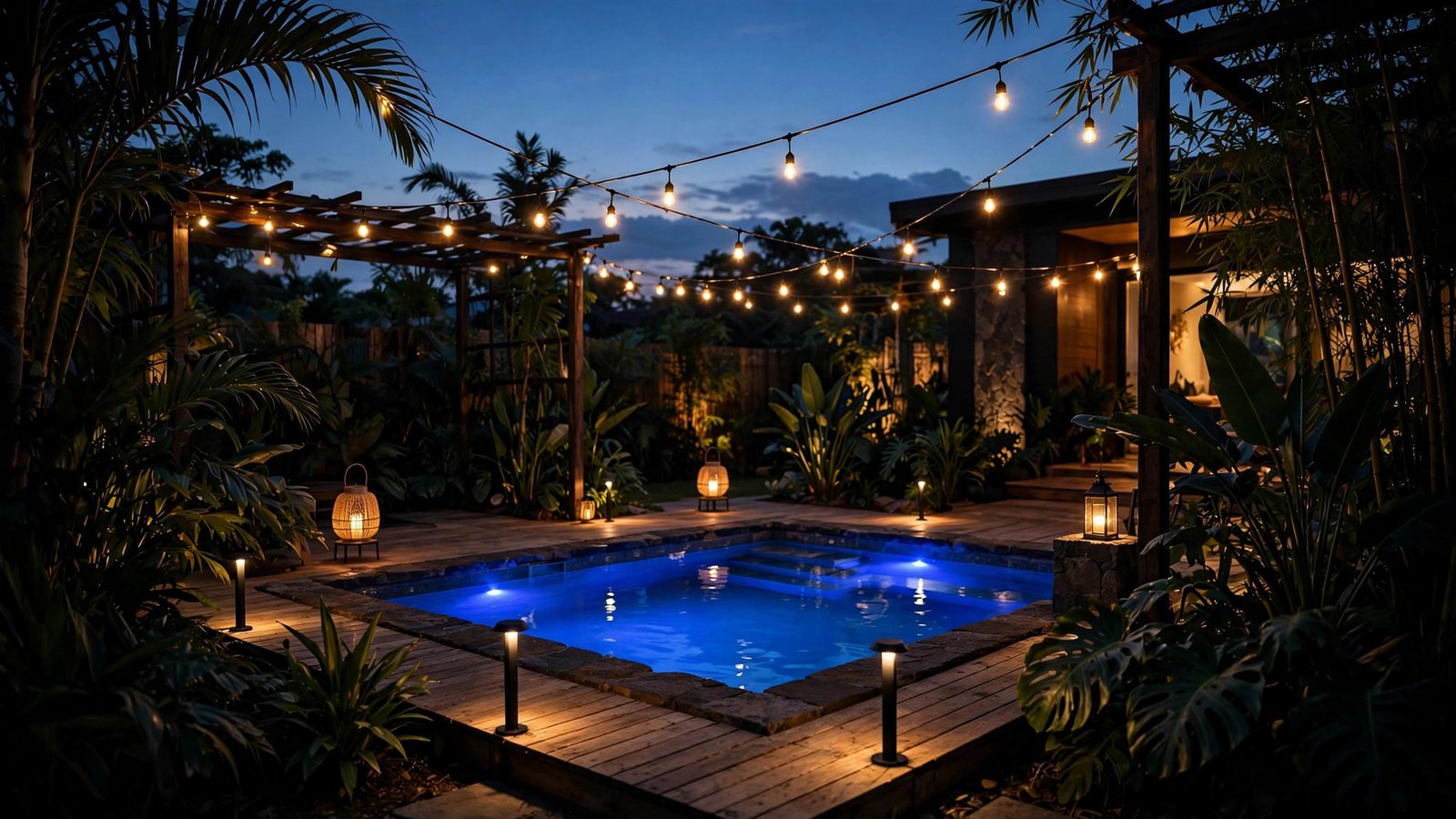
Daytime pools are lovely; properly lit evening pools are magnetic. A small pool has a real advantage here — it costs far less to light dramatically than a large one. Start with underwater LEDs in warm white or deep sapphire ($800–$2,500 installed), then layer the surroundings: low path lights along the deck, uplights aimed at one or two specimen plants, and string lights or lanterns overhead for that resort-terrace glow. I have found that three layers of warm light beat one bright floodlight every time — a single overhead source kills ambiance instantly, while layered light makes the pool a destination every single night.
14. Vertical Planting for Privacy and Lushness
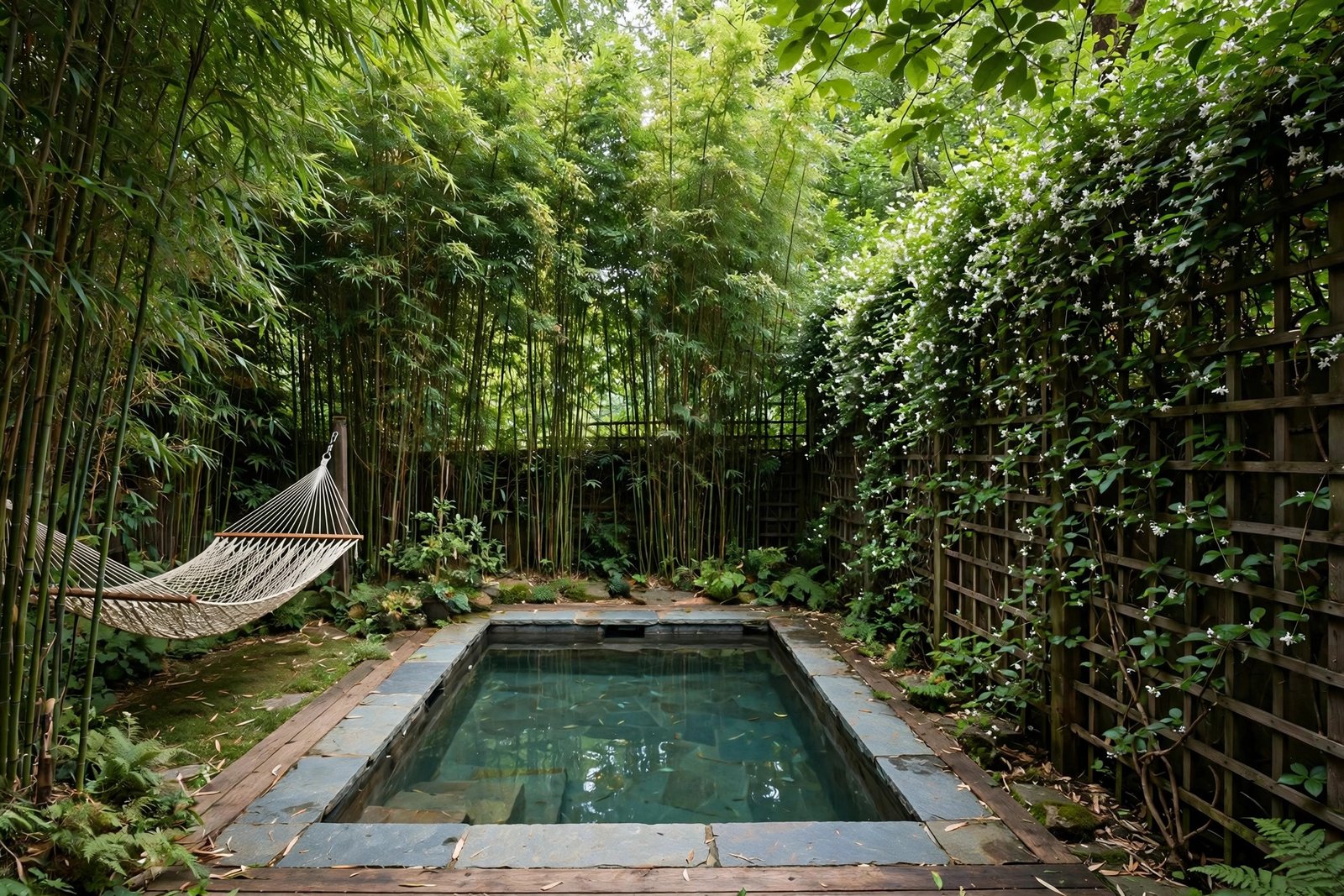
The world around the pool matters more than the pool’s size, and vertical planting is how you build that world without sacrificing floor space. Tall clumping bamboo, star jasmine on trellises, or a row of columnar Italian cypress creates total privacy and the enclosed, somewhere-else feeling every great resort pool delivers. Building upward instead of outward keeps your limited deck clear. Budget $500–$3,000 depending on plant maturity — and buy the tallest specimens you can afford, because waiting three years for privacy is the most common landscaping regret I hear.
15. A Pergola for Shade and Structure
Every great resort pool has a deliberate patch of shade, and in a compact yard a pergola at one end of the pool does triple duty: shade, architecture, and a defined outdoor room. Soften the structure with climbing plants, hang a pendant light or two from the beams, and place just two quality loungers beneath it — overcrowding is the fastest way to kill the resort feeling. A cedar or aluminum pergola runs $2,500–$8,000 installed. Tip: align the pergola with your main indoor view, so the shaded pool scene becomes the picture you see from the living room every day.

Frequently Asked Questions
What is the smallest practical size for a backyard pool?
A plunge pool as small as 6×10 feet works beautifully for cooling off and soaking, provided it is at least 5 feet deep. For actual swimming, a lap lane needs roughly 8×30 feet, or consider a swim spa (12–20 feet long) with a counter-current system that lets you swim in place in a much shorter footprint.
How much does a small pool cost?
A stock tank setup runs $2,000–$4,000 all-in, making it the budget king. Prefabricated options like swim spas ($20,000–$45,000) and fiberglass shells ($40,000–$70,000) sit in the middle. Custom concrete plunge pools typically cost $20,000–$50,000, while natural swim ponds reach $50,000–$80,000. Decking, fencing, and landscaping usually add 20–30% on top.
Can I install a small pool in a tiny yard?
Usually yes, but check two things first: local setback rules (most cities require 5–10 feet from property lines) and access for excavation equipment or crane delivery. Above-ground options like stock tanks, container pools, and swim spas sidestep most excavation constraints and often face simpler permitting than in-ground pools.
Do small pools add value to a home?
A well-designed small pool generally adds appeal and can add value, especially in warm climates where outdoor living sells homes. The key word is well-designed: a thoughtfully finished plunge pool with good landscaping reads as luxury, while a cramped, poorly finished pool can actually narrow your buyer pool. Quality of execution matters more than size.
Your Backyard Oasis Is Closer Than You Think
The resort feeling is not something you buy outright — it is built layer by layer, from the depth of the water to the color of the tile to the sound of a waterfall at dusk. Pick one idea from this list and start there; a small pool designed with real intention will always outperform a big one that was simply dropped into a yard. For more outdoor inspiration, browse these outdoor ideas that won’t break the budget, steal these lush, grass-free yard tricks, and learn styling outdoor planter boxes like a landscaper.

2 Comments