12 Pro Tips for Styling Outdoor Planter Boxes Like a Landscaper
You know that feeling when you pull up to someone’s house and their front porch stops you dead in your tracks? The planters are overflowing with color, the greenery is lush and intentional, and everything looks like it was plucked straight out of a design magazine — yet somehow it still feels warm and lived-in. You stand there for a second too long, half envious and half inspired, whispering to yourself, “How did they do that?”
Here’s the thing: most of those stunning outdoor planter box arrangements were not the result of a massive budget or a professional landscape design degree. They were the result of knowing a handful of simple, intentional principles — and applying them consistently. Styling outdoor planter boxes is genuinely one of the highest-return upgrades you can make to your home’s exterior, and once you understand the rules, you can break them beautifully.
This guide walks you through 12 pro tips that landscapers and garden stylists use every single season. Whether you’re working with a sun-drenched front stoop, a shady balcony, or a long window-facing ledge, these principles will transform your outdoor planter boxes from an afterthought into the most talked-about feature of your home.
1. Start With the Thriller, Filler, Spiller Rule
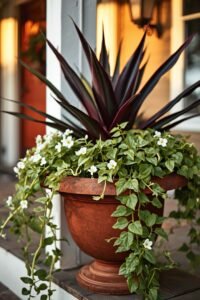
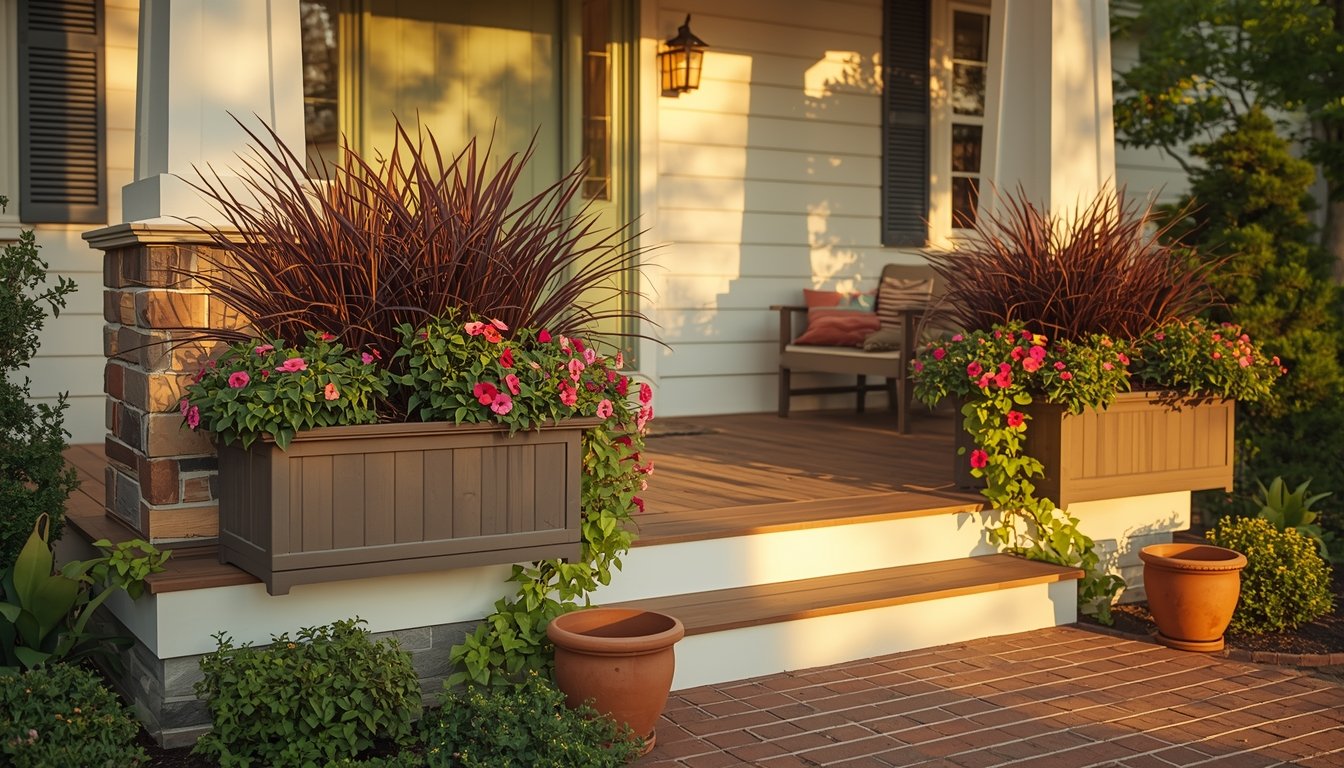
If there is one rule every professional landscaper swears by when styling outdoor planter boxes, it is the thriller-filler-spiller method. The thriller is your tall, dramatic anchor plant — something that draws the eye upward and commands attention, like ornamental grasses, a bold spike, or a deep-hued coleus. The filler does exactly what its name implies: it fills out the middle of the box with lush volume, often in the form of flowering plants, heucheras, or compact shrubs. The spiller drapes softly over the edge, giving that effortlessly abundant look that makes a planter feel luxurious rather than sparse.
The genius of this formula is that it works in almost any season, with almost any plant selection, in almost any climate. Once you train your eye to see these three layers, walking through a nursery becomes a completely different experience. You stop buying plants based on what catches your eye individually and start thinking in compositions.
2. Choose a Color Story and Commit to It
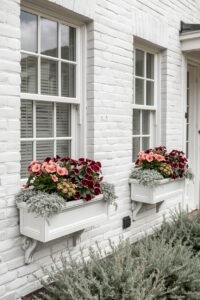
The fastest way to make outdoor planter boxes look amateurish is to fill them with every color that catches your eye at the garden center. The result is chaos — beautiful chaos, perhaps, but chaos nonetheless. Landscapers always start with a color story, usually pulling from the tones of the home’s exterior: the siding color, the front door, the stone or brick finish.
A tight palette of two or three complementary colors will always look more elevated than a rainbow mix. Try pairing deep purples and silvers against a white or grey home, or go warm with terracotta, coral, and chartreuse against a brick facade. If your home is a neutral beige or cream, almost anything works — but you still need to pick a lane and stay in it. Think of your planter box as a painting: restraint is sophistication.
3. Scale Your Planters to Your Space
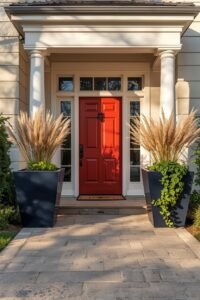
One of the most common mistakes people make with outdoor planter boxes is choosing containers that are too small. A petite planter on a wide porch looks like a potted plant nervously waiting to be moved inside. It has no presence, no weight, no design intention. Landscapers always size up — when in doubt, go bigger than you think you need.
As a general rule, the planter should be proportional to the architectural element it sits beside. A tall front door needs tall planters. A long ledge or windowsill needs a box that fills the span generously, not one that sits in the middle looking lost. Wide steps benefit from planters that are at least knee-high when planted. Pay attention to proportion the way a photographer pays attention to framing — the relationship between elements is everything.
4. Match (or Intentionally Contrast) Your Container Material
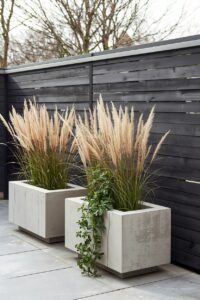
The material of your outdoor planter box communicates style before a single plant is ever added. Terracotta whispers Mediterranean warmth and casual abundance. Sleek concrete says modern, architectural, and intentional. Wooden window boxes evoke cottage gardens and English charm. Glazed ceramic in a bold color makes a statement all on its own. The key is to match your container’s material to the broader visual language of your home’s exterior — or to deliberately contrast it for dramatic effect.
A carved stone planter on a contemporary home can work beautifully as an unexpected contrast, but it needs to be a conscious decision, not an accidental one. When styling outdoor planter boxes, treat the container itself as part of the design, not just the vessel for it. Sometimes, the box is the focal point before you even start thinking about what grows inside.
5. Think in Odd Numbers
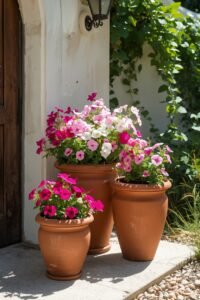
This is a design principle borrowed from interior styling, and it applies just as powerfully outdoors: arrangements in odd numbers — three, five, seven — look more natural and visually interesting than even-numbered groupings. Two matching planters flanking a door is a classic, symmetric move (and it absolutely works), but for clustered arrangements on a porch, patio, or garden step, odd numbers create rhythm and movement.
Try grouping three outdoor planter boxes of varying heights together at an entryway or corner of a deck. Vary the sizes slightly — one tall, one medium, one low — and repeat a color or plant variety across all three to create cohesion. It feels casual and abundant rather than stiff and formal, and it photographs beautifully, which might explain why this approach is so popular on every gardening inspiration board in existence.
6. Layer Heights for Visual Drama
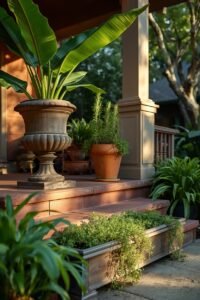
Flat, same-height plantings read as one-dimensional and forgettable. The moment you introduce height variation into your outdoor planter box arrangement, the entire scene comes alive. Landscapers use tall planters, short ground-level boxes, and everything in between to create a layered landscape that guides the eye up, down, and across the space.
You do not need to buy new containers to add height — a simple wooden riser, an upturned pot, or even a stack of bricks underneath a planter can elevate it literally and figuratively. At the nursery, look for plants with architectural height like fountain grass, rudbeckia, or salvia to add vertical interest within individual boxes as well. Height layering is free drama, and in garden design, drama is almost always the goal.
7. Never Skip the Seasonal Refresh
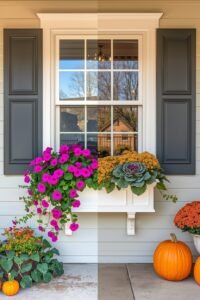
One of the clearest signals that a landscaper styled a set of outdoor planter boxes — versus someone who just dropped in some annuals and hoped for the best — is the seasonal refresh. Planters that look incredible in June and then slowly decline into brown, leggy, frost-bitten sadness by October tell a story of neglect. The pros plan for transitions.
Every season offers its own palette and personality. Spring calls for tulip bulbs, violas, and snapdragons. Summer is the reign of petunias, lantana, and sweet potato vine. Fall belongs to ornamental kale, mums, asters, and decorative gourds. Even winter planters can be stunning with evergreen boughs, holly, dried seed heads, and twiggy branches. Commit to at least two seasonal transitions per year and your outdoor planter boxes will always look intentional and alive.
8. Mind Your Sun and Shade Conditions
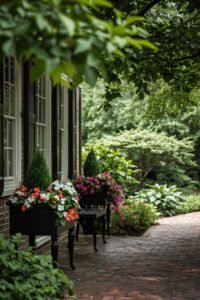
Styling beautiful outdoor planter boxes is half aesthetics and half horticulture, and the plants you choose have to actually survive in the conditions you are working with. Nothing unravels a gorgeous arrangement faster than sun-loving petunias planted in full shade, or shade-dependent impatiens frying in six hours of direct afternoon sun. Before you design, observe.
Spend a day noting how much direct sunlight your planter location receives. Full sun means six or more hours of direct light; part shade means two to four hours; full shade means little to no direct sun. Once you know your conditions, let that guide your plant selection, not just your aesthetic preference. The good news is that beautiful options exist for every light level. Shade gardens can be just as lush and dramatic as sun-filled ones — they just speak a different visual language, one of texture and foliage rather than bloom.
9. Use Foliage as the Foundation, Not Just the Background
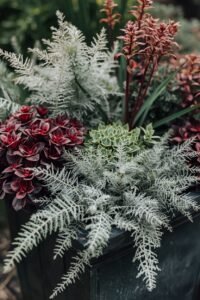
Flowers are the showstoppers, but foliage is the backbone of every great outdoor planter box. Amateur stylists fill their boxes with blooms and wonder why the arrangement looks bare or chaotic between flowering cycles. Professionals lead with foliage — interesting leaf shapes, dramatic color contrasts, varying textures — and let flowers play a supporting role.
Reach for plants like coleus, heuchera, caladium, dusty miller, and ornamental sweet potato vine to build a rich, textural foundation. These plants look stunning even without a single bloom in sight, and they provide the visual continuity that holds an arrangement together as different flowers come in and out of peak season. Think of foliage as the furniture and flowers as the throw pillows — you need both, but one sets the stage for the other.
10. Do Not Neglect Drainage
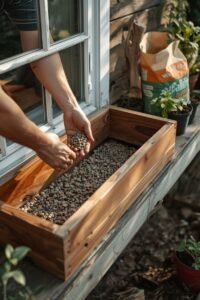
This tip is less glamorous than choosing color palettes, but it is the one that separates planters that thrive from ones that slowly decline and puzzle their owners. Outdoor planter boxes without adequate drainage drown roots, promote rot, and create an anaerobic soil environment that suffocates even the most resilient plants. Every planter must drain, full stop.
If your box lacks drainage holes, add them. If you are using a liner or working with a waterproof box, layer a generous bed of perlite or gravel at the base before adding soil. Always use a quality container mix — never garden soil in a planter, which compacts and prevents drainage entirely. Proper drainage is the invisible foundation of every stunning outdoor planter box arrangement, and neglecting it means investing in beautiful plants only to watch them slowly fail.
11. Repeat Elements to Create Cohesion
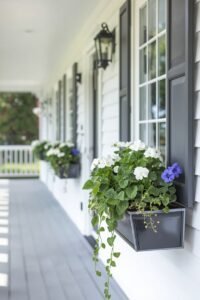
When you look at a home exterior that just looks right — where everything feels pulled together and intentional — repetition is almost always the secret. Landscapers use repetition as a design tool to create visual rhythm, guiding the eye from one element to the next in a way that feels satisfying and deliberate rather than random.
In practice, this means using the same container style in multiple locations, repeating a signature plant across different boxes, or echoing a particular color in every planter arrangement on a given facade. You do not need to make every planter identical — in fact, slight variation keeps things interesting — but the repetition of at least one element per box ties the whole composition together. When in doubt, repeat the container material, repeat a foliage plant, or repeat the dominant color. Cohesion is the difference between a collection of nice planters and a truly designed exterior.
12. Water, Feed, and Deadhead Without Fail
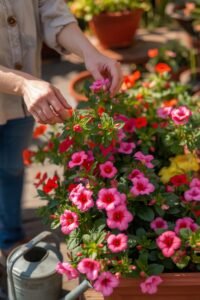
You can execute every other tip on this list with precision and still end up with disappointing outdoor planter boxes if you neglect the basics of maintenance. Containers dry out faster than in-ground beds — especially in heat or wind — and the dense plantings that make boxes look so lush are also the ones that deplete soil nutrients rapidly. Consistent watering, regular feeding, and diligent deadheading are the non-negotiable habits behind every planter that looks effortlessly gorgeous all season long.
Water when the top inch of soil feels dry, and water deeply enough that moisture reaches the roots rather than just wetting the surface. Feed container plants with a slow-release granular fertilizer at the start of the season, and supplement with a liquid fertilizer every two to three weeks during peak growing months. Deadhead spent blooms regularly — this signals to the plant to keep producing flowers rather than setting seed, and it keeps the arrangement looking fresh and intentional. Great outdoor planter boxes are not just designed; they are tended.
A Final Word on Intention
The thing about styling outdoor planter boxes that nobody really talks about is that it is a practice, not a one-time event. Your taste will evolve. Your eye will sharpen. A combination that thrills you this summer might feel ordinary by next spring, and that is not failure — that is growth. The landscapers whose work stops people on the sidewalk are not people with more money or more talent; they are people who pay attention, who experiment without fear, and who understand that a planter box is one of the smallest canvases available to us and one of the most forgiving. Start where you are, use what you have, apply these principles one at a time, and watch what happens to your front porch. The results might just stop someone dead in their tracks.