7 Heuchera Plant Ideas That Transform Your Front Yard
A gardener’s guide to the most dramatic, most versatile, and most underrated perennial you’re probably not growing yet.
The Front Yard That Stopped Me in My Tracks

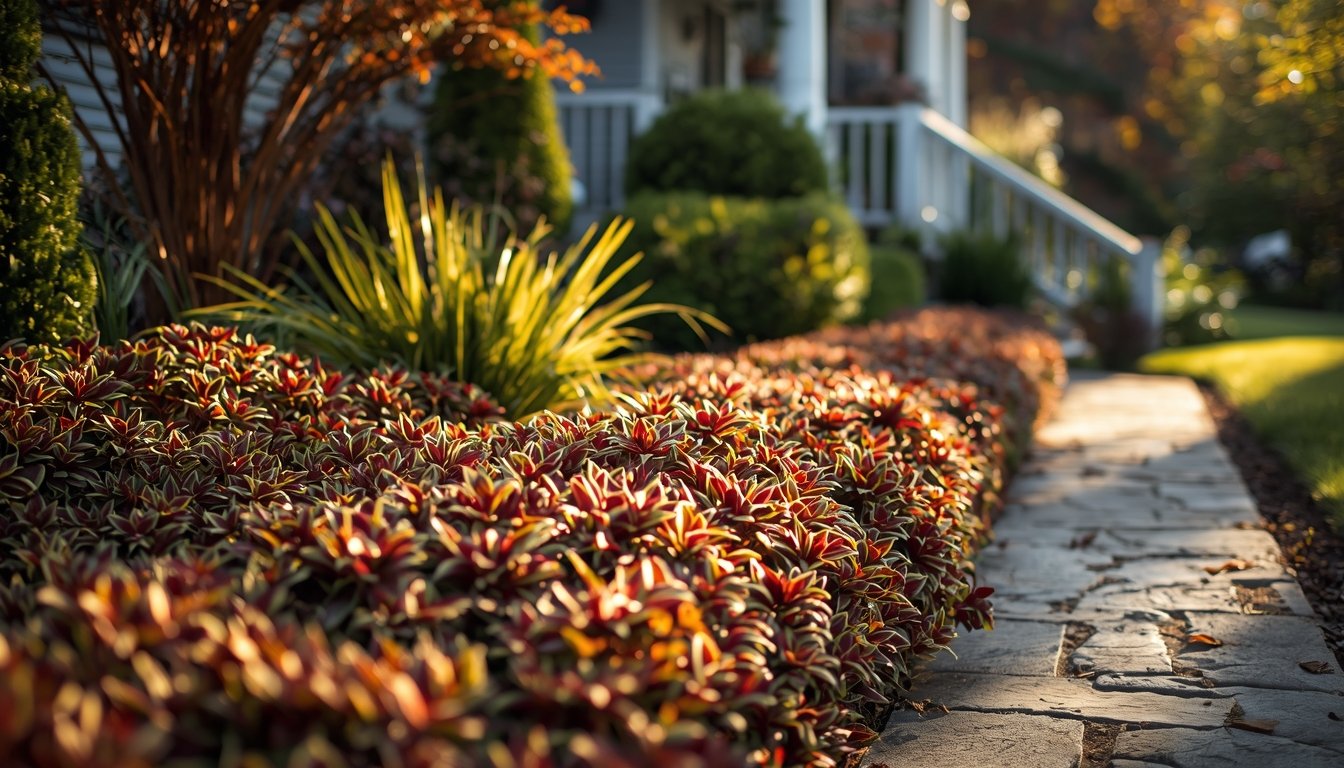
It was a Tuesday in early October, and I was doing what most of us do on Tuesday mornings: rushing past everything without really seeing it. But then I stopped dead on the sidewalk in front of a neighbor’s house, because something was happening in their front yard that I could not walk past. A sweep of plants hugged the edge of a stone path, each one a different shade of burgundy, caramel, lime green, and deep plum. The leaves looked like velvet. The whole thing glowed in the low morning light like something out of a magazine, yet somehow it also looked completely effortless, like it had simply decided to be beautiful all on its own.
I stood there an embarrassingly long time before I finally knocked on the door and asked what those plants were. The answer was Heuchera. I had never heard of it. By that evening, I had ordered four varieties online, and by the following spring, my own front yard had been quietly, completely transformed.
Heuchera, also called coral bells, is one of those plants that garden designers whisper about while the rest of us are still wrestling with finicky roses and perpetually disappointing annuals. It is a shade-tolerant, drought-resistant, deer-resistant perennial that comes in a staggering range of foliage colors, holds its look across all four seasons, and asks for almost nothing in return. If you have been searching for a way to make your front yard look intentional, layered, and genuinely stunning without spending a fortune or rebuilding your entire landscape from scratch, Heuchera is very likely the answer you did not know you were looking for.
1. The Bold Burgundy Border: Drama Without the Effort
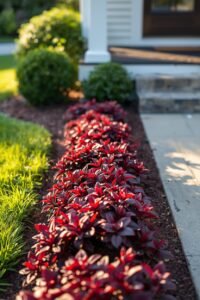
If there is one Heuchera idea that consistently appears on the front yards of professional garden designers, it is the burgundy border. Varieties like ‘Palace Purple,’ ‘Obsidian,’ and ‘Dark Secret’ produce deeply saturated, near-black leaves that look like they belong in a high-end estate garden. Planted in a clean, continuous line along a front path or along the base of a porch, they create a formal, polished look that takes almost no effort to achieve or maintain.
What makes this idea work so well is the contrast principle. Dark Heuchera leaves pop against light-colored concrete, pale gravel, or a white or cream-colored house exterior. The burgundy reads as rich and intentional, not just dark. When the sun hits these leaves in late afternoon, they develop a warm, almost iridescent quality that catches the eye from the street. Visitors will assume your yard required a professional. You do not need to correct them.
To get the most dramatic effect, plant in groups of three or five rather than single specimens. Odd numbers create a natural, flowing rhythm that feels curated rather than planted. Give each plant about 18 inches of space, and pair the border with a low-growing groundcover like creeping thyme or ajuga to soften the front edge and fill any gaps. The result is a front yard border that looks expensive, requires no deadheading, and comes back bigger and better every single spring.
2. The Mixed Tapestry Bed: Where Color Gets to Play
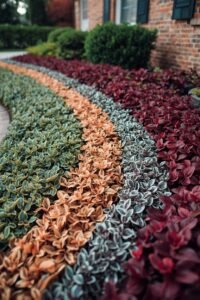
One of the most liberating things about Heuchera is that virtually every variety looks beautiful next to every other variety. This is not a plant that clashes. It coordinates. A mixed tapestry bed uses several different Heuchera cultivars planted in sweeping drifts, creating a mosaic of color that shifts and changes as the light moves across the yard throughout the day. Think caramel and plum alongside silver-veined green alongside coral-bronze, and you begin to understand why garden designers describe Heuchera as a living palette.
For a tapestry bed in a front yard, you want somewhere between five and nine varieties, planted in flowing, irregular groupings rather than rows. The key is to vary not just color but also texture and scale. Some Heuchera varieties have large, deeply ruffled leaves while others are more compact and smooth. Combining different leaf forms within your color palette gives the bed a three-dimensional quality that photographs beautifully and looks even better in person.
The tapestry approach works particularly well in front yards with a wide, open bed along the foundation of the house. It draws the eye across the whole front of the property rather than pulling focus to a single point, which makes the house itself look wider and more substantial. If you have ever wanted your home to have that quietly impressive look that makes people slow down as they drive by, a Heuchera tapestry bed is one of the most effective and affordable ways to get there.
3. The Shaded Corner Rescue: Turning a Problem Spot into a Feature

Nearly every front yard has one: that dim, unloved corner under a tree or beside the garage where nothing seems to want to grow. Most gardeners have made a kind of peace with these spots, planting something hopeful each spring and watching it slowly give up by July. The Heuchera, to its considerable credit, does not give up. It genuinely thrives in partial to full shade, and it does so with a color richness and vibrancy that makes other shade plants look like they are simply surviving rather than living.
Turning a shaded problem corner into a Heuchera showcase requires only a few things: decent soil amended with some compost, good drainage, and a selection of varieties chosen specifically for their shade performance. ‘Caramel,’ ‘Marmalade,’ and ‘Southern Comfort’ are particularly outstanding in low-light conditions, holding their warm amber and peach tones even when the sun barely reaches them. Pair them with a hosta or two for large-leaf contrast, and add a few ferns for vertical movement.
The transformation is almost unfair. That corner you once apologized for when visitors arrived will become the thing you point out first. Guests will ask about it. Neighbors will photograph it for their own inspiration. A previously ignored patch of struggling grass becomes a composed, woodland-inspired vignette that says more about your garden sensibility than any expensive annual planting ever could. Problem solved, permanently, with very little fuss.
4. The Seasonal Container Display: Front Door Drama That Moves

Not everyone has the benefit of a wide garden bed running along the front of their home. Townhouses, row homes, and houses with minimal foundation planting still deserve beautiful front yards, and this is where Heuchera in containers becomes one of the most exciting design tools available to any gardener. A large ceramic pot or a pair of matching planters on either side of the front door, planted with a combination of Heuchera and complementary companions, creates an immediate sense of arrival and personality.
The most successful front door container plantings using Heuchera follow the classic thriller, filler, spiller formula, with Heuchera often playing the role of the filler, providing a rich middle layer of color and texture. Pair a deep purple ‘Blackout’ or a silvery ‘Frosted Violet’ with a tall, dramatic Phormium in the center and a trailing sweet potato vine spilling over the edges. The Heuchera ties the whole composition together, bridging the colors and providing visual density that makes the pot look finished rather than random.
One of the underappreciated advantages of using Heuchera in containers is its seasonal longevity. While most container plantings look spectacular in summer and ragged by September, Heuchera holds its foliage color and structure well into fall and even through mild winters. A container planted in spring can look genuinely beautiful all the way through November, which means you are getting real value from every dollar spent. Move the containers to a sheltered spot for the coldest months, and they will often return in spring ready to perform all over again.
5. The Cottage Garden Edge: Romance at the Pathway Border
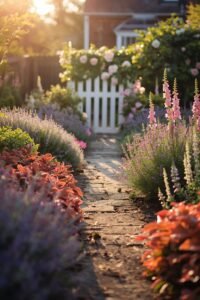
Heuchera in a cottage garden setting is one of those combinations that seems almost too good to be true until you see it in person, at which point it becomes very hard to imagine the garden without it. The cottage garden aesthetic relies on a sense of joyful abundance, of plants tumbling over each other in the best possible way, and Heuchera, with its mounding form and varied foliage, provides the kind of reliable, low-growing structure that keeps a cottage planting from tipping over into chaos. It is the quiet organizer of an otherwise exuberant scene.
For a cottage garden front yard path, plant Heuchera in warm coral and caramel shades as a continuous low border, then layer behind it with traditional cottage garden favorites: lavender, catmint, foxglove, and climbing roses on a low fence or trellis. The Heuchera foliage bridges the gap between the bare soil and the taller flowering plants, creating a visual foundation that makes the whole border look fuller and more established than it actually is. This trick alone is worth the price of admission.
The other advantage of including Heuchera in a cottage garden planting is that it remains interesting when nothing else is flowering. Cottage gardens can look spectacular in June and a little thin in August, but the Heuchera never stops contributing. Its foliage is the constant thread running through the seasonal changes, the thing that makes the garden look cared for and composed even during the awkward weeks between bloom cycles. It is, in the most practical and lovely sense, the backbone your cottage garden may not know it is missing.
6. The Four-Season Front Yard: Heuchera When Everything Else Has Gone

One of the most compelling arguments for investing in Heuchera is a practical one: it simply does not stop. While the rest of your front yard garden retreats into brown dormancy from October through March, Heuchera maintains its foliage, holds its color, and continues to give the front of your home a cared-for, intentional appearance throughout the months when most gardeners have essentially given up. In areas with mild winters, it stays fully evergreen. In colder zones, it may become semi-evergreen, but the leaves remain on the plant, providing visual interest that most other perennials cannot offer.
This is significant for curb appeal in ways that go beyond aesthetics. A front yard that looks maintained and alive in November and February suggests a homeowner who pays attention. It signals care. For anyone considering selling their home, or simply for anyone who takes pride in the way their property presents to the neighborhood, this year-round performance is genuinely valuable. Heuchera planted in autumn is already working for you, holding the front yard together while you wait for spring.
For maximum four-season impact, combine Heuchera with other persistent plants: ornamental kale for late autumn drama, hellebores for late winter blooms, and early-emerging spring bulbs like crocus and snowdrops planted between the Heuchera clumps. The bulbs will push through the soil in February and March, emerging between the Heuchera leaves like a surprise, then retreat when summer arrives and the Heuchera fills back in. It is a layered, continuous performance that takes very little planning and rewards you every single month of the year.
7. The Woodland Walk: Creating Depth and Mystery at the Entry

If your front yard includes a tree canopy, even a partial one, you are sitting on an opportunity that most homeowners entirely overlook. The dappled shade beneath trees is Heuchera’s natural habitat, the setting in which it performs most joyfully and with the least intervention. A woodland-inspired entry planting, using Heuchera as the primary groundcover beneath existing trees, creates a front yard experience that is unlike almost anything else in residential landscape design: layered, intimate, slightly mysterious, and genuinely beautiful.
Build the planting in layers. At the upper level, the existing tree canopy provides the ceiling. At the middle level, add a few shade-loving shrubs, itea, oakleaf hydrangea, or native spicebush, for structural height and seasonal interest. At the lower level, sweep broad drifts of Heuchera in varied tones across the ground, weaving them with ferns and native ginger. Stepping stones set into the planting create a path that invites visitors to move through the space rather than simply view it from the street.
The experience of approaching a home through this kind of entry planting is profoundly different from walking up a conventional lawn path. There is a sense of transition, of moving from the busy public world into something private and considered. Garden designers spend careers creating that feeling in clients’ front yards. Heuchera, a packet of fern fronds, and a handful of stepping stones can take you most of the way there for a fraction of the price. It is the kind of transformation that makes visitors pause and take a breath before they reach your door, and that is a very good way to set the tone for any occasion.
A Front Yard Worth Coming Home To
There is a particular kind of satisfaction in a front yard that you genuinely look forward to seeing every time you turn into your street. Not because it is extravagant or expensive, but because it is composed, and alive, and obviously loved. Heuchera plant ideas are among the most accessible pathways to that feeling available to any homeowner, regardless of budget, yard size, sunlight conditions, or gardening experience. The plant is adaptable, forgiving, generous in its beauty, and steadfast across every season.
These seven ideas, the bold burgundy border, the mixed tapestry bed, the shaded corner rescue, the container display, the cottage path edge, the four-season planting, and the woodland walk, are starting points. Once you begin growing Heuchera and discovering its particular magic, you will find yourself moving it, dividing it, combining it with new companions, and looking at your front yard with a creativity and confidence that tends to expand outward into the rest of your gardening life as well. That is one of the quietly extraordinary things about a plant that genuinely works: it teaches you something.
Plant one Heuchera this spring. Just one. Watch what it does to your front yard, and see if you do not find yourself, by autumn, already planning for more.